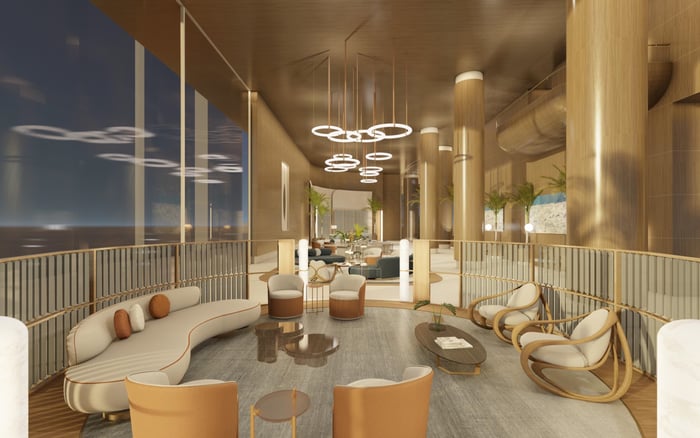
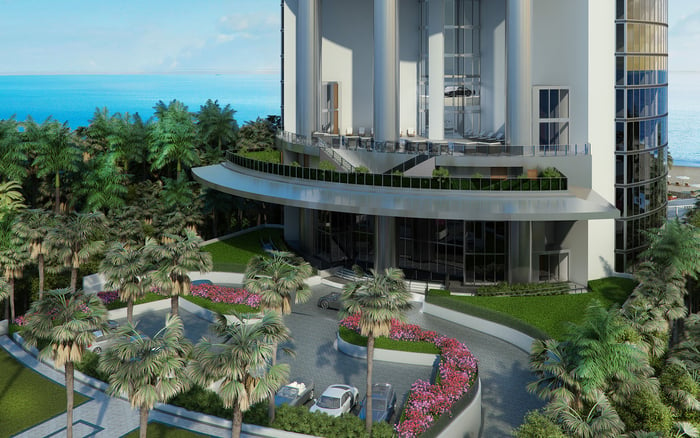
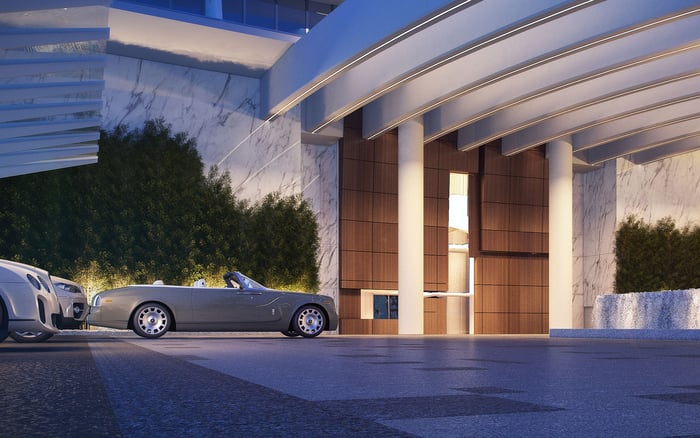
Two of Sunny Isles’ most coveted oceanfront towers express luxury differently: Turnberry Ocean Club leans into a private-club, vertical resort lifestyle, while Jade Signature emphasizes design-driven calm and residential privacy. This MILLION Luxury comparison focuses on lived experience, buyer fit, and how each building supports daily routines, entertaining, and long-term ownership.
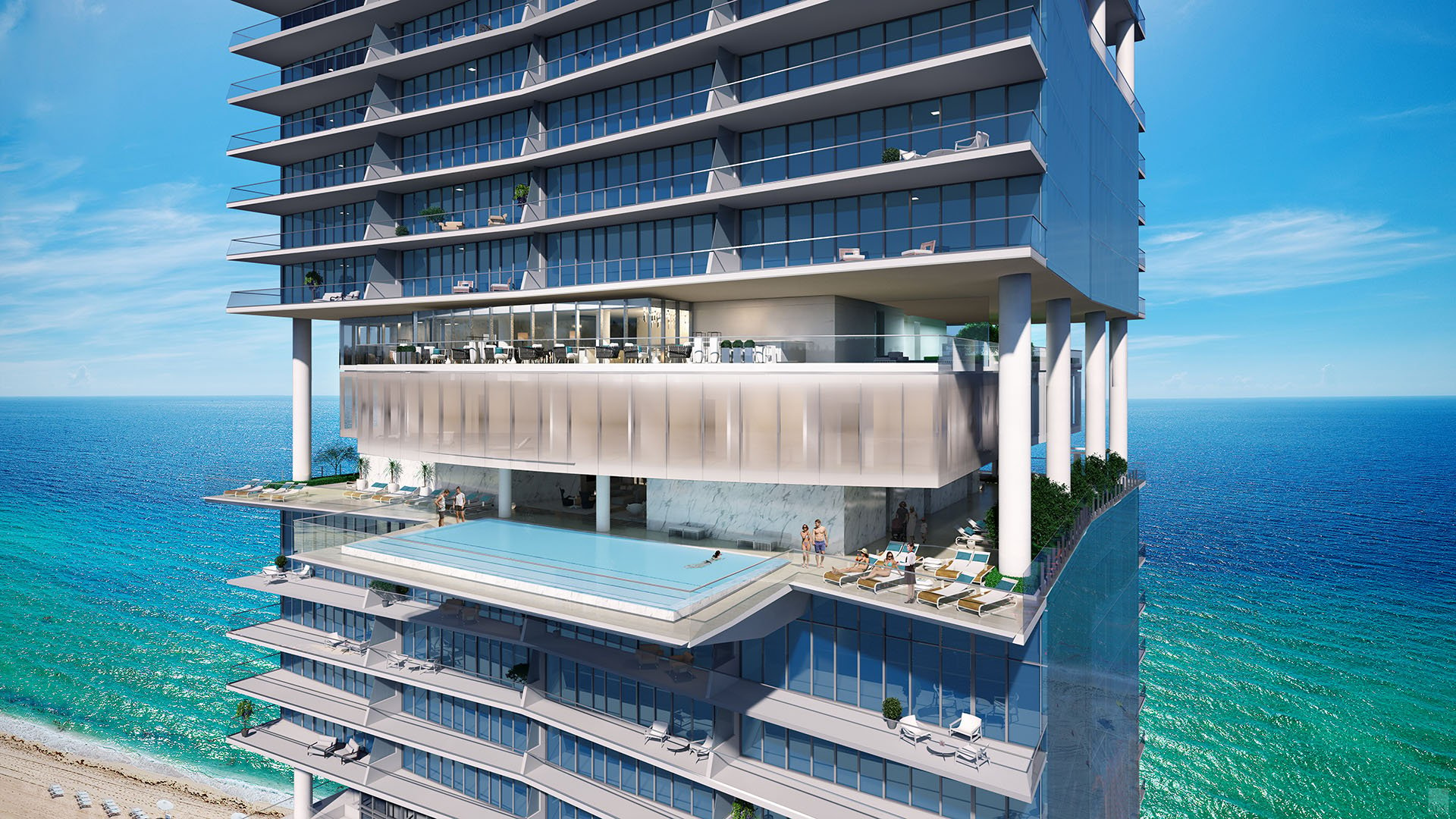
Sunny Isles has become a shorthand for high-rise, oceanfront living that still reads as distinctly residential-even when the amenity decks feel hotel-caliber. Within that narrow stretch of coastline, Turnberry Ocean Club Sunny Isles and Jade Signature Sunny Isles Beach are frequently cross-shopped by buyers who want more than a view. They want a complete system: arrival, security, wellness, entertaining, and a service culture that protects time.
MILLION Luxury’s lens for this comparison is straightforward: the best building is the one that matches how you actually live. The distinction here is less about “better” and more about philosophy. One leans into a vertical resort idea-a private club translated into a tower. The other leans into restraint, design, and a quiet control that feels closer to a private residence than a destination.
A vertical resort concept isn’t just a long amenity list. It’s the sense that life can stay largely within the building without feeling boxed in. To work, it needs a confident arrival sequence, layered spaces for different moods, a wellness program that feels credible, and a social infrastructure that holds whether you’re solo for a weekend or hosting.
In a resort-forward tower, you should expect:
Multiple ways to spend a day without leaving the property: fitness, spa-like recovery, lounging, and dining rhythms.
Amenity spaces designed to absorb “peak moments” without friction.
A social atmosphere that supports casual encounters as well as formal entertaining.
In a more design-forward residential tower, you should expect:
A quieter tone across common areas.
A stronger separation between private home life and shared spaces.
An emphasis on clean lines, light, and calm over programmed activity.
That’s why buyers can love one and feel surprisingly indifferent about the other, even when both are Sunny Isles, oceanfront, and undeniably luxury.
Turnberry Ocean Club tends to resonate with owners who want the building itself to communicate membership. The vertical resort framing suggests a place built for movement: arriving, shifting from day to night, bringing guests, heading out for a reservation, then returning for oceanfront decompression. If your life revolves around hosting, long weekends with friends, or a calendar that benefits from services being close at hand, that club-forward identity becomes a practical advantage.
Jade Signature, by contrast, reads as intentional restraint. Its identity leans less on spectacle and more on composition. For many buyers, that translates into confidence that the atmosphere will stay consistent. It’s the kind of environment where you can land from a flight, go straight to your residence, and feel the mental volume drop. If you see a Sunny Isles home as a counterweight to an active life, that calm isn’t a detail-it’s the point.
Both approaches are valid. The real question is whether you want your building to feel like a destination, or like a sanctuary.
Amenities are often reduced to checklists, but the deciding factor is how you’ll use them on an ordinary Tuesday. A vertical resort tower typically delivers spaces that flex between private routines and public-facing moments. You can work out, reset, and meet friends without ever feeling like you’ve “left” your day.
A design-forward tower typically treats amenities as a continuation of residential life rather than the center of gravity. Pool and wellness areas can feel like carefully framed rooms, not stages. The difference is subtle: you may use amenities less often, but when you do, it can feel more private and less performative.
If you’re weighing amenity value, consider:
Do you want to entertain within the building, or primarily in your residence?
Do you prefer seeing familiar faces, or do you prefer anonymity?
Will you use services year-round, or mostly during seasonal stays?
For context, Sunny Isles includes other reference points that help buyers calibrate style. Regalia Sunny Isles Beach often sits at the ultra-private end of the spectrum, while newer branded entries like Bentley Residences Sunny Isles signal a different kind of lifestyle packaging. Seeing where Turnberry Ocean Club and Jade Signature land between those poles can clarify personal fit.
Luxury buyers often speak about privacy as a single feature, but in practice it’s a bundle of behaviors: how many transitions you make from car to elevator to residence, how often you cross shared spaces, and how much ambient energy you absorb in common areas.
Turnberry Ocean Club’s resort posture can be ideal if you enjoy the hum of a well-run property. There’s comfort in a building that feels staffed, active, and socially coherent. It can also be the right match for a household that hosts often, because guests tend to intuit the “rules” of a club-like environment.
Jade Signature’s appeal, conversely, is frequently the preservation of quiet. If you work remotely, keep irregular hours, or want your oceanfront home to behave like a private retreat, a calmer building rhythm becomes its own form of luxury. Design-forward towers often reward owners who value visual serenity and minimal friction over constant programming.
Without leaning on unit-specific claims, the most useful way to think about residences here is experiential.
A resort-forward residence should support entertaining: fluid circulation, a sense of arrival within the home itself, and a layout that can handle intimate evenings as well as larger gatherings. Owners who gravitate to this style often want their residence to be the “after” location-the place where the night continues with the ocean as backdrop.
A design-forward residence tends to read as a frame for daily living. The best versions make ordinary routines feel elevated: morning light, quiet materials, and a sense that the space is composed rather than filled. If you collect art, prefer fewer but better pieces, or want interiors to feel timeless, this sensibility can align naturally.
When you tour, focus less on finishes and more on how you would move through the home: where you set down keys, where guests naturally gather, where you’d actually sit with a book, and how the view integrates with the interior rather than competing with it.
Both buildings can work for primary living and second-home use. The difference is what you want the building to do for you.
If Sunny Isles is your base and you value structure, a vertical resort environment can simplify life. It can also make ownership feel more predictable, because so much of the lifestyle is contained and professionally managed.
If Sunny Isles is your decompression address and your priority is a protected sense of calm, the design-forward choice can better preserve psychological distance between daily demands and private time.
Either way, think in terms of legacy. A building with a strong identity tends to remain legible to future buyers. The most resilient properties are the ones that stay true to their original intent-whether that intent is private club energy or architectural restraint.
Sunny Isles isn’t one-note. If you’re torn between Turnberry Ocean Club and Jade Signature, touring a third reference point can help you triangulate preference.
For example, Muse Residences Sunny Isles Beach can clarify whether you prefer an intimate, boutique-leaning feel versus a broader, resort-orchestrated environment. And The Estates at Acqualina Sunny Isles can show how far hospitality-inflected living can go when amenities become a defining part of the value proposition.
The goal isn’t to add more options-it’s to sharpen your decision. Once you understand your preferred pace and social temperature, the right building becomes obvious.
When MILLION Luxury clients evaluate two top-tier towers, we recommend a simple framework that resists overthinking:
How do you live when no one is visiting?
How often do you entertain, and where do guests spend time?
Do you want a “club” to take friction away, or do you want privacy to take noise away?
Do you like high-touch environments, or do you prefer visual quiet?
Are you here year-round or in concentrated bursts?
If your answers point to movement, programming, and sociability, the vertical resort concept will likely feel like a luxury multiplier. If your answers point to stillness, design discipline, and sanctuary, a calmer residential posture will likely feel more correct.
Is Turnberry Ocean Club more of a resort than Jade Signature? It generally presents more like a private club, while Jade Signature reads more purely residential in tone.
Which building feels quieter day to day? Jade Signature typically aligns with buyers seeking a calmer, more sanctuary-like atmosphere.
Which is better for entertaining guests? Turnberry Ocean Club often suits owners who host frequently and enjoy a club-style setting.
Are both buildings appropriate for a second home? Yes, both can work well as second homes, with lifestyle preference driving the decision.
Do I need to be highly amenity-focused to choose Turnberry Ocean Club? Not necessarily, but the vertical resort concept is most rewarding if you will use on-site lifestyle spaces.
Can Jade Signature still deliver a “resort” feeling? It can, but in a more design-forward, understated way rather than a programmed, club-like way.
How should I compare them if I have not toured either? Start by defining your default day: social and active versus quiet and restorative.
What other Sunny Isles buildings help benchmark the vibe? Touring Bentley Residences or Regalia can help you gauge branded energy versus ultra-private minimalism.
Is one option better for full-time living? Either can work, but full-time owners should prioritize daily rhythm, privacy needs, and service expectations.
What is the most important deciding factor between the two? Choose based on whether you want your building to feel like a destination or a sanctuary.
For a discreet conversation and a curated building-by-building shortlist, connect with MILLION Luxury.
If branded residences are on your mind — as a home or as an allocation — we would be glad to share what we are seeing, privately.
Begin a quiet conversation