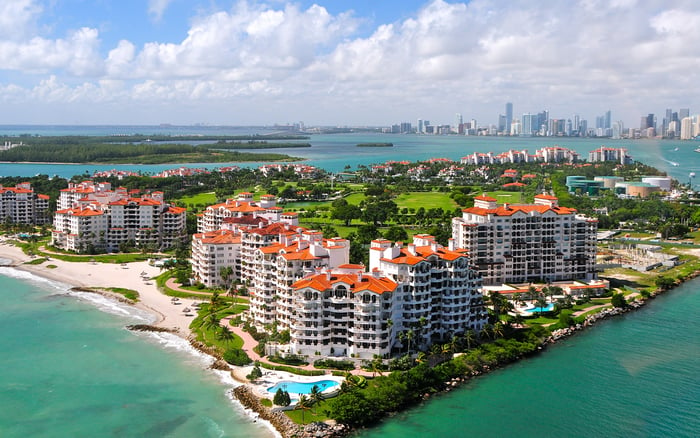
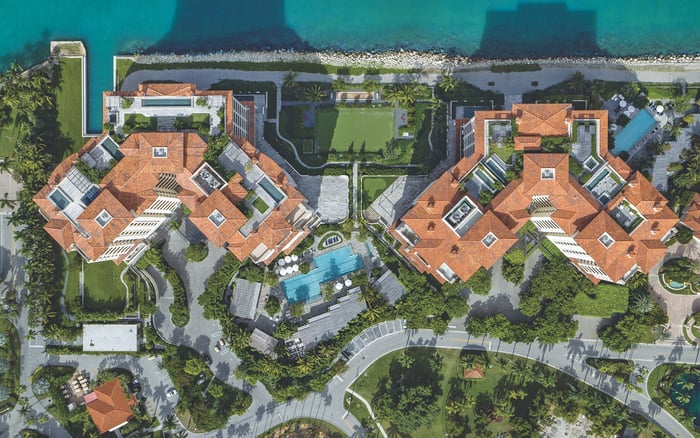
A discreet, buyer-oriented comparison of how security is experienced day to day at Fisher Island’s two marquee palazzo properties, with a practical framework for due diligence.
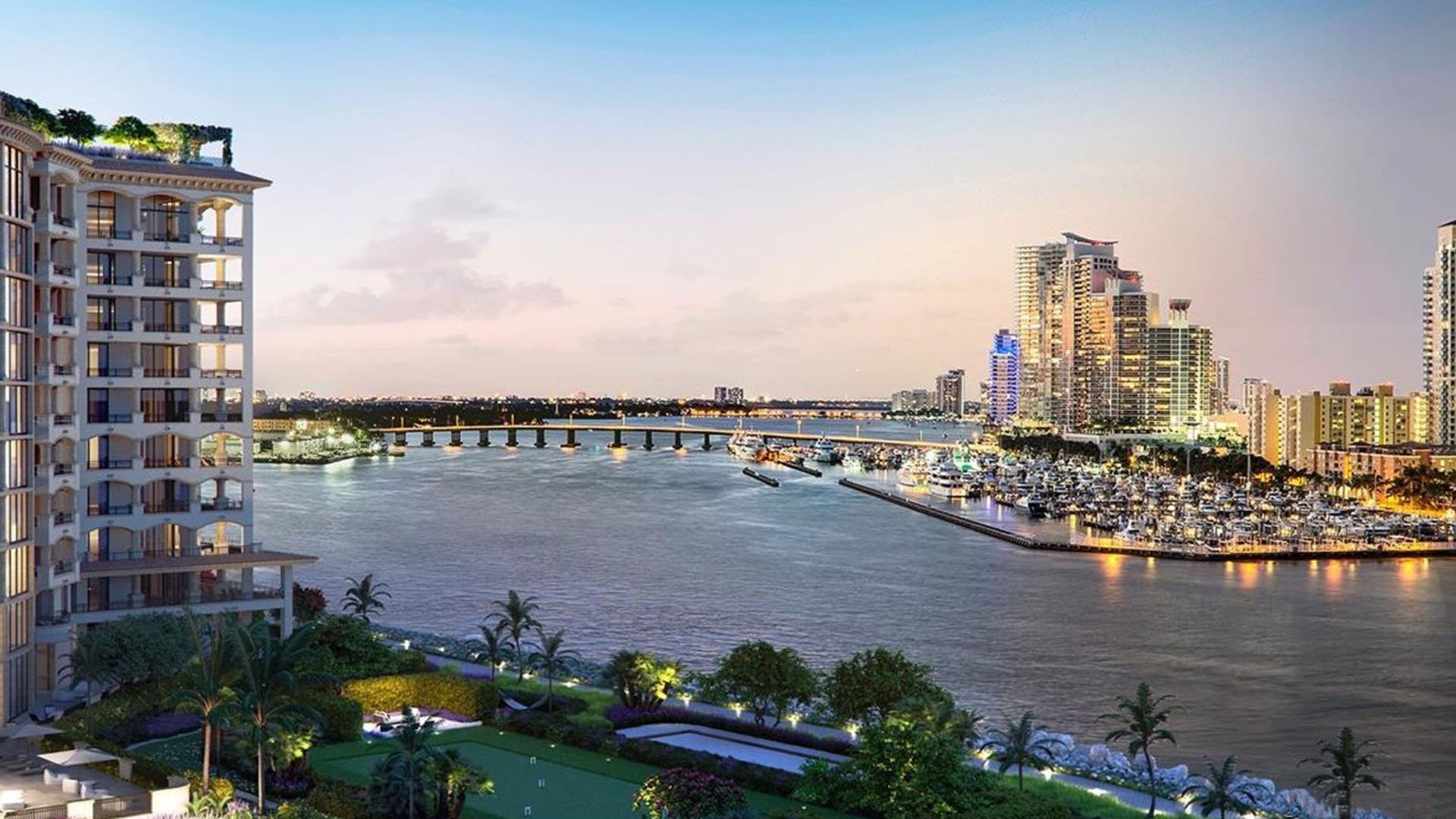
For ultra-premium buyers, “security” is rarely a single feature. It’s a lived sequence: how you arrive, how you’re recognized, how your guests are managed, how deliveries are handled, and how quietly the building resolves exceptions. On Fisher Island, that sequence is amplified because the island itself operates as a first perimeter, with the buildings serving as the second and third.
That’s where comparisons between Palazzo del Sol and Palazzo della Luna become nuanced. Both sit on Fisher Island, both are positioned for privacy, and both draw residents who expect discreet operations. The real differences tend to show up in daily practice: proximity to arrival points, circulation from drop-off to residence, and the front-of-house operating culture.
Rather than assuming one is “more secure,” the sharper approach is to map how each property supports your actual rhythm-household staff, entertaining frequency, and the level of visibility you’re willing to accept in shared spaces.
Private-island living changes the baseline. Before anyone reaches the lobby, they typically move through multiple control points: transit to the island, arrival procedures, and then building access. That distance reduces the street-level unpredictability that defines many mainland luxury towers.
But private-island security isn’t simply about gates. It’s about continuity between perimeters. When the handoff from island arrival to building entry is seamless, the environment reads as calm and controlled. When it isn’t, security can feel performative rather than effective.
In practical terms, buyers weighing Palazzo del Sol versus Palazzo della Luna should consider:
Whether your typical arrival is by ferry, private vessel, or car service-and how predictable that journey is.
How guest access is managed when you aren’t physically present.
How service entries, deliveries, and vendor access are separated from resident circulation.
A useful mindset is to treat the island as your privacy buffer, and the building as your personal governance system.
On Fisher Island, arrival is part of the security posture-and it’s also where the most “public” moments occur. The objective isn’t to eliminate interaction; it’s to control it.
When comparing Palazzo del Sol and Palazzo della Luna, think like a principal, not a tourist. Keep your questions operational:
Is there a natural separation between resident arrivals and guest arrivals?
How does the property support discreet handoffs-luggage, packages, or personal security?
What is the visual exposure at drop-off, and how quickly can you move into a controlled environment?
Adjacency matters here as well. A building that’s more exposed to pedestrian flow may need tighter procedures to deliver the same discretion. Conversely, a building that naturally channels movement into fewer, more controllable points can feel calmer even with less visible “security theater.”
For context, mainland towers often compensate for street exposure with heavier lobby formality. By contrast, some of the best-run coastal properties rely on calm competence. Consider how that’s executed at other high-end addresses such as Apogee South Beach, where the resident experience is shaped by controlled access and predictable front-of-house routines.
Security hardware is commoditized. People are not.
At this level, the most decisive factor is front-of-house culture: how reliably the team recognizes residents, how visitors are verified, and how edge cases are handled without unnecessary friction. A lobby can be architecturally private yet operationally porous if staff aren’t empowered to enforce process.
When touring Palazzo del Sol and Palazzo della Luna, watch for the subtle indicators:
Do staff greet by name or request clarification with discretion?
Is the visitor process consistent, or does it change depending on who’s on shift?
Do vendors move through resident spaces, or are service pathways clearly respected?
Ask for specifics in a way that respects discretion. You’re not asking for sensitive details-you’re confirming the building is designed and managed for an ultra-premium clientele.
In buyer terms, this is the difference between privacy as a promise and privacy as a practice.
After arrival and reception comes the crucial second act: how quickly-and privately-you can transition to your residence.
Vertical privacy is shaped by:
Elevator programming and access control.
The number of residences sharing a landing.
Sightlines from corridors to unit doors.
The degree to which amenity traffic intersects with resident-only circulation.
When comparing Palazzo del Sol against Palazzo della Luna, focus on how the design reduces incidental contact. Some buyers prefer a club-like, social atmosphere; others want to minimize it. Neither preference is “more secure,” but one will align better with your profile.
If your household includes staff who come and go frequently, prioritize operational pathways that preserve discretion. If you entertain often, focus on guest routing-and whether the transition from lobby to residence feels protected rather than exposed.
This is similar to what discerning buyers evaluate in dense urban cores like Brickell, where privacy hinges on circulation design as much as staffing. Properties such as 2200 Brickell offer a useful reference point for how newer luxury development often emphasizes managed access and resident-only zones.
Amenities create community, but they also create visibility. Pools, fitness spaces, and shared terraces can produce what security professionals sometimes call “soft exposure”: moments when residents are identifiable and routines become easier to predict.
Your due diligence should include:
How amenities are monitored, and whether access is resident-only or guest-permissive.
Whether amenity entries are separated from primary residential circulation.
How the property handles private events, vendors, and set-up crews.
In private-island buildings, this matters because the island already filters the outside world. What remains is primarily internal exposure. The real question becomes how internal access is managed-and how the building maintains exclusivity without feeling restrictive.
If you want a comparative reference outside Fisher Island, consider the contrast between a boutique oceanfront environment like 57 Ocean Miami Beach and larger-format towers. Boutique settings can feel inherently more controlled due to fewer residents and less circulation, but only when the operating model supports it.
With limited publicly disclosed specifics in this context, the most responsible comparison is lifestyle-first. These profiles typically clarify the decision between Palazzo del Sol and Palazzo della Luna:
If you value minimal exposure, prioritize whichever building offers the most private arrival-to-elevator-to-residence path for your specific unit placement. Request a walk-through that mirrors your real arrival routine-not a curated tour.
If you entertain regularly, evaluate guest handling: staging, waiting areas, and the ability to admit guests without broadcasting your movements. The most secure setup is the one that lets you stay gracious while the building stays firm.
If you employ full-time staff or have frequent service visits, separate circulation isn’t a luxury-it’s an operational necessity. The right building makes service movement routine, controlled, and effectively invisible.
If you’re in residence part-time, continuity matters. You want consistent procedures and stable staffing so your absence doesn’t create gaps. Ask how absentee-owner access and package handling are managed.
The right answer is rarely about which property is “tighter.” It’s about which property’s day-to-day governance fits how you live.
Use this checklist to compare Palazzo del Sol and Palazzo della Luna in a way that translates directly into lived experience:
Arrival: Walk the path from drop-off to residence as if you’re coming home late.
Visitors: Ask for the protocol for guests you didn’t pre-register.
Contractors: Understand vendor access rules, hours, and supervision expectations.
Deliveries: Confirm how packages are accepted, stored, and released.
Elevators: Clarify how access is controlled-and what happens when systems fail.
Staffing: Ask about front desk coverage patterns and management responsiveness.
Privacy: Look for sightlines, choke points, and areas where residents naturally cluster.
This is also where reviewing comparable “managed-access” properties can sharpen your instincts. A well-run, high-profile branded environment such as St. Regis® Residences Brickell can illustrate how service standards and security posture can coexist without feeling intrusive.
If your goal is private-island living that feels effortless, prioritize three things:
A consistent, calm protocol beats sporadic strictness.
Service separation and controlled circulation matter more than visible cameras.
The most elegant security is delivered by people who understand discretion.
Viewed through that lens, Palazzo del Sol and Palazzo della Luna are less a “winner vs. loser” comparison and more two variations on the same rare promise: an island buffer paired with a highly curated residential environment.
Is Fisher Island inherently more secure than the mainland? Private-island access can add layers of control, but day-to-day security still depends on building operations.
Which matters more: cameras or staff? Staff consistency typically drives outcomes; cameras are most effective as verification, not as a substitute.
How do I evaluate guest access without being intrusive? Ask the property to describe the standard visitor flow, and note whether the procedures sound consistent.
Do amenities increase privacy risk? They can if access is loose; well-managed amenities reduce soft exposure through controlled entry.
What should I look for during a tour? Focus on arrival-to-elevator transitions, sightlines, and whether service activity is separated.
How important is elevator access control? Very important; it shapes vertical privacy and reduces incidental contact outside your residence.
Does a boutique building automatically mean better security? Not automatically; fewer residents can help, but operations and culture still decide effectiveness.
What is the biggest privacy mistake buyers make? Falling in love with finishes while ignoring circulation patterns and front-of-house discipline.
Should I consider my staff routine in the decision? Yes; deliveries, schedules, and vendor access can become friction points if they aren’t well supported.
What is the smartest next step after my first visit? Revisit at a different time of day and simulate your real routine, including guests and deliveries.
For a tailored shortlist and next-step guidance, connect with MILLION Luxury.
If branded residences are on your mind — as a home or as an allocation — we would be glad to share what we are seeing, privately.
Begin a quiet conversation