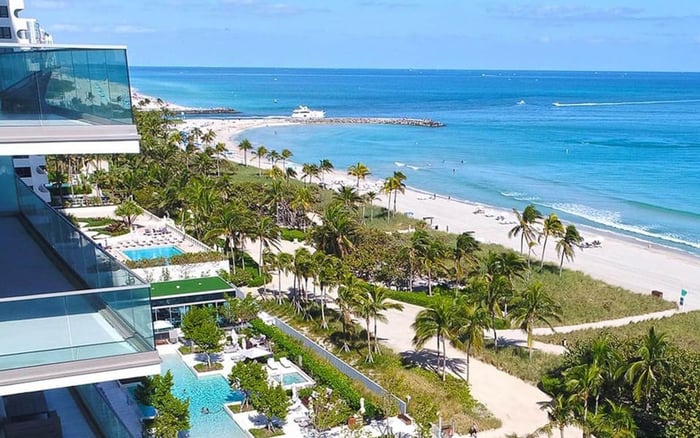
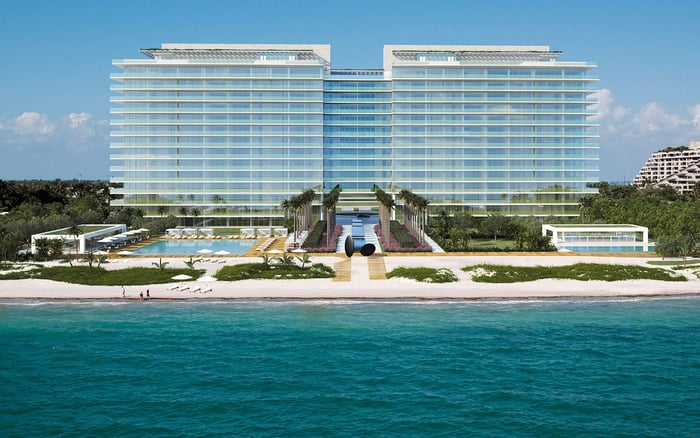
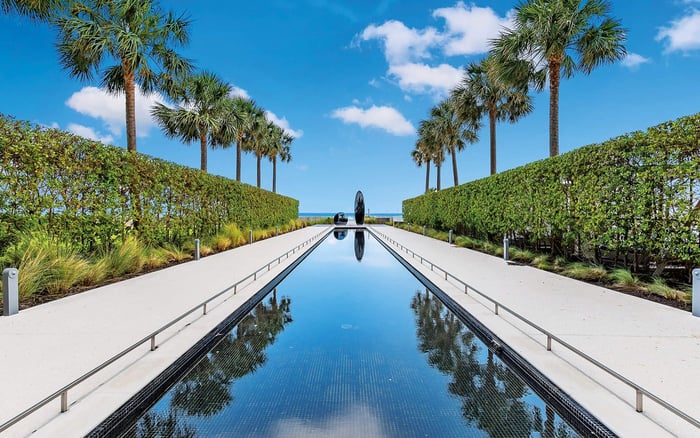
A discreet, buyer-oriented comparison of gated-entry security expectations at Oceana Key Biscayne versus Oceana Bal Harbour, focusing on approach, access control, and everyday resident experience without speculating on undisclosed protocols.
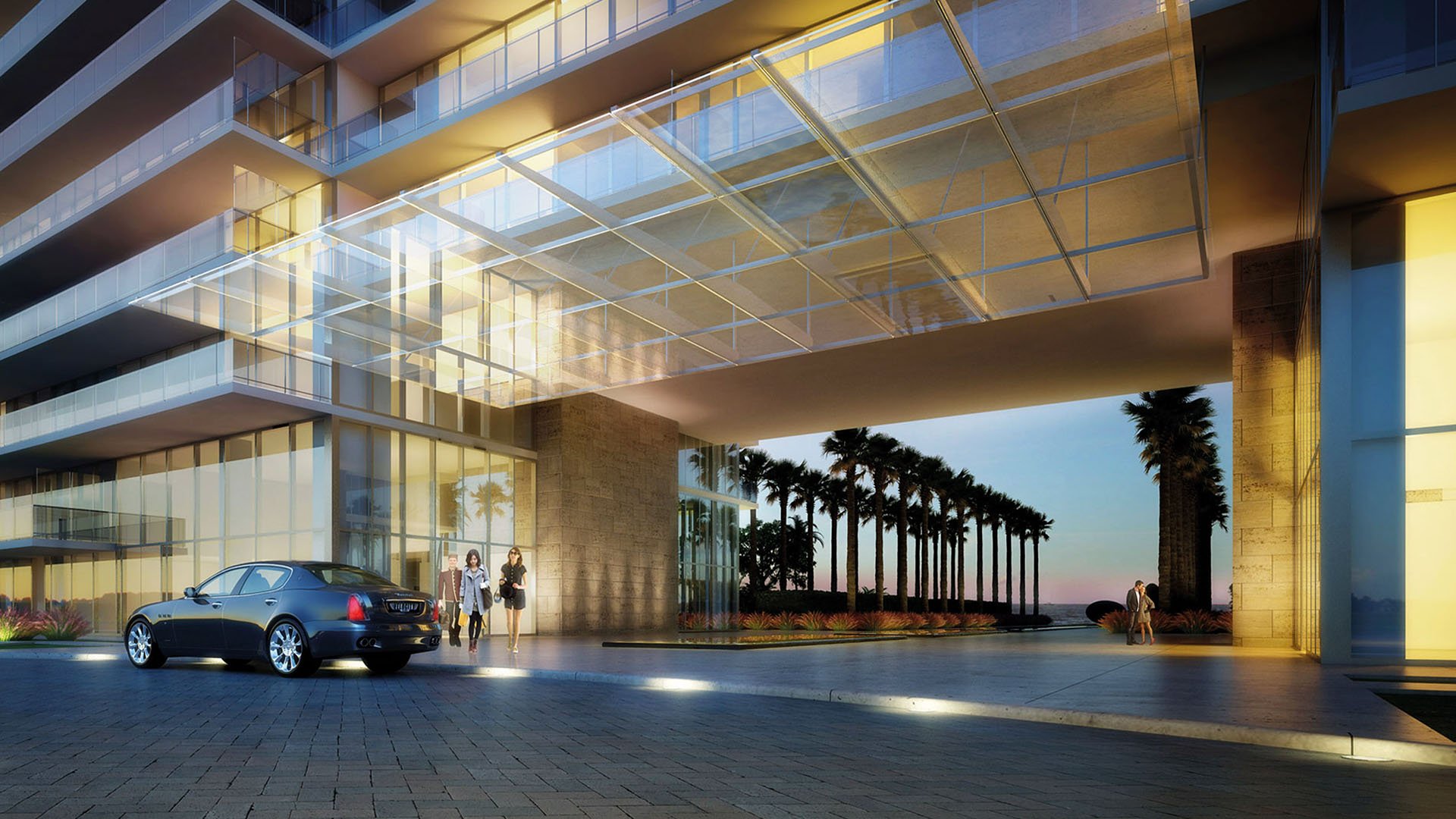
In South Florida’s top-tier coastal enclaves, “security” is rarely a single feature. It’s a layered sequence of decisions that begins at the curb and continues through the gate, the motor court, the lobby, the elevator, and even the service entrance. For buyers weighing Oceana Key Biscayne and Oceana Bal Harbour, the most consequential differences often appear at the very start of the arrival: the gated entrance.
Both neighborhoods are synonymous with privacy, but they function differently day to day. Bal-harbour is a globally recognized, highly trafficked luxury node, with steady visitor flow, deliveries, and hospitality-adjacent movement nearby. Key-biscayne typically reads more residential and island-contained, with fewer reasons for non-residents to circulate near a building. That difference in “ambient activity” matters because an entry gate is not only a barrier-it’s a filter that must perform under real-world pressure: peak arrival windows, ride-hail drop-offs, vendors, guests, and weekend density.
What follows is a practical, buyer-oriented lens on gated-entry security-built for private showings and board-level diligence-without speculating on any building’s undisclosed protocols.
A gate can look formidable and still underperform if operations are loose. When assessing a gated entrance at any ultra-luxury Oceanfront condominium, evaluate five interlocking layers:
Approach control: How early does the property begin to manage movement and slow vehicles? A long, landscaped approach can support calm screening. A short, abrupt curb cut can create decision pressure.
Credentialing: The mechanism used to verify residents, guests, vendors, and services. Strong systems reduce discretion and increase consistency.
Staffing and escalation: Security staffing levels, training culture, and clarity around “what happens next” when something doesn’t match.
Design deterrence: Lighting, sightlines, camera coverage placement, and whether personnel have a protected position.
Resident experience: The balance between privacy and hospitality. Overly rigid procedures can be circumvented informally; overly relaxed procedures can harden into habit.
This framework is especially useful when you tour Oceana Key Biscayne and Oceana Bal Harbour because the buildings can feel equally refined, yet gate operations may be shaped by different neighborhood dynamics.
A gated entrance performs best when its environment supports it. Context dictates how often the gate must interpret “unknowns,” and how much traffic is inherently non-resident.
In Key-biscayne, island geography naturally narrows access. That doesn’t eliminate risk, but it can reduce random pass-through traffic. In practice, an island setting can support stronger “pattern recognition” because repeat vehicles, regular contractors, and familiar service providers tend to appear in predictable cycles. When those cycles stay consistent, staff can apply exceptions with more confidence because the baseline is stable.
For buyers, the priority is confirming that comfort hasn’t turned into complacency. Ask whether visitor access is managed proactively, whether vendor arrivals are pre-cleared, and whether ride-hail drop-offs are treated as controlled entries-or informal curbside moments.
In Bal-harbour, prestige brings visibility and, often, higher ambient flow nearby. A gate in this context may face more “legitimate but unfamiliar” arrivals: shoppers, guests, drivers, and time-sensitive service calls. Strong operations don’t depend on memorizing everyone; they rely on a consistent credentialing method that holds up even when staff rotates.
For an ultra-luxury buyer, the goal isn’t simply “more security.” It’s security that stays smooth under volume. When traffic increases, gates can drift toward expediency unless procedures are built for speed and verification.
Even without access to internal policies, the entrance offers clear signals-physical and behavioral-that indicate how the system is likely to perform.
A gatehouse should function like a control room, not a decorative kiosk. Look for protected glazing, controlled door access, and a layout that allows personnel to observe without stepping into the lane. If staff routinely leaves the post to manage cars, it’s a sign the system isn’t supporting the role.
Queue design is operational leverage. A property that can stack a few cars without spilling into public lanes reduces pressure to “just wave people through.” A smooth arrival lane also improves observation: the slower and more controlled the approach, the more time staff has to verify.
At night, lighting should be bright enough for facial recognition and plate visibility, without feeling theatrical. Landscaping should stay elegant without creating blind corners. If you notice shadows that could conceal someone near a pedestrian path, that’s a design issue-not an operational one.
Many gated communities prioritize vehicles and neglect the pedestrian edge. A strong gated entrance also accounts for walk-in points: side gates, beach access corridors, and service walkways. Ask how pedestrian entry is managed after hours.
At luxury properties, the most sensitive vulnerabilities often come through “good faith” access-guests, vendors, deliveries, and temporary workers. Keep due-diligence questions practical and specific.
Ask what resident entry looks like in real time. Is it purely tag-based, app-based, or a combination? Does the system still require human confirmation at certain times? The best arrangements keep resident entry fast while maintaining a clear audit trail.
A strong gate operation typically prefers pre-authorization. It can be as simple as resident notification with clear time windows and car identifiers. When guest access is purely ad hoc, you’re relying on discretion under pressure.
Service access should be managed with separate rigor. Ask whether vendors must present identification and whether service calls must be scheduled. Also ask how the property handles “I’m here for unit X” claims when the resident is unreachable.
High-end buildings often see frequent short-stay arrivals: food delivery, ride-hail, and on-demand services. The security question isn’t whether these are allowed-it’s whether they’re channeled into a controlled handoff, or whether drivers routinely move deeper into the property.
Two buildings can share similar hardware and produce very different outcomes based on culture. During tours, watch for subtle but telling signals:
Consistency: Does every car receive the same initial attention, or do procedures shift with mood and traffic?
Communication: Do staff communicate quietly and efficiently, or rely on informal hand waves and last-minute improvisation?
Authority: Do personnel appear empowered to slow the process when something is unclear, or pressured to keep traffic moving?
Gate security is an active role. The best properties treat it as a professional position with clear escalation paths-not a concierge-adjacent courtesy.
Because many security details are intentionally not public, the cleanest comparison is behavioral and procedural-not promotional.
When you visit Oceana Key Biscayne, evaluate how the property uses a more residential context. Does the entrance feel calm because it’s well-controlled, or because safety is assumed? Look for structured visitor handling, especially on weekends and during events.
When you visit Oceana Bal Harbour, focus on throughput and verification. Does the gate maintain composure amid higher ambient activity? Is the process standardized enough to hold during seasonal peaks?
A practical technique is to schedule showings at different times-one midweek daytime, one early evening. You’re not trying to “test” staff. You’re observing whether procedures stay consistent as conditions change.
Use this checklist discreetly, and keep it buyer-practical.
Approach: Is there clear signage before the gate, and can cars queue privately?
Verification: Does staff verify identity consistently, or default to quick approvals?
Visitor protocol: Are guests directed to a specific process (call-up, registry, QR, etc.)?
Service separation: Is there evidence of distinct routing for service traffic?
Pedestrian control: Are side gates controlled, monitored, and well-lit?
Camera presence: Do you observe camera placement that covers plates and faces at entry?
Behavior under pressure: Does the gate process remain calm when multiple cars arrive?
If you want to calibrate expectations across the market, it can also help to observe how other trophy properties handle arrival moments, such as Arte Surfside, Fendi Château Residences Surfside, or The Surf Club Four Seasons Surfside. Not to compare one-to-one, but to sharpen your sense of what “controlled hospitality” looks like when executed at the highest level.
For ultra-premium buyers, the best gated entrance isn’t the one that feels most imposing-it’s the one that feels consistently managed. In Key-biscayne, the opportunity is maintaining professional rigor within an inherently calmer context. In Bal-harbour, the opportunity is preserving strong verification even when the surrounding environment is busier.
Ultimately, a gated entrance is a promise: every arrival is intentional, every exception is documented, and every moment of convenience doesn’t become a permanent vulnerability.
Is a gated entrance enough to consider a building secure? No. It is only the first layer, and it must be supported by lobby and elevator controls.
What is the single biggest weakness at many gated entrances? Informal exceptions for guests and vendors that gradually become routine.
Should I prioritize technology or staffing at the gate? Prioritize consistent procedures. Technology helps, but culture determines follow-through.
How can I evaluate security without asking for sensitive details? Watch consistency, identity checks, and how visitor access is handled during peak times.
Do busier neighborhoods automatically mean weaker gate security? Not necessarily. A busier setting can be well-managed if credentialing is standardized.
What should I ask about ride-hail and deliveries? Ask where drivers are allowed to go and whether handoffs occur in controlled zones.
Are pedestrian side gates as important as vehicle gates? Yes. Uncontrolled pedestrian access can undermine even an excellent vehicle entry.
What does “good queue design” accomplish? It reduces pressure to rush approvals and gives staff time to verify properly.
How do I compare two buildings fairly during showings? Visit at different times of day and observe whether procedures remain consistent.
What is a discreet indicator of strong security culture? Calm, repeatable steps that do not change when traffic increases.
When you're ready to tour or underwrite the options, connect with MILLION Luxury.
If branded residences are on your mind — as a home or as an allocation — we would be glad to share what we are seeing, privately.
Begin a quiet conversation