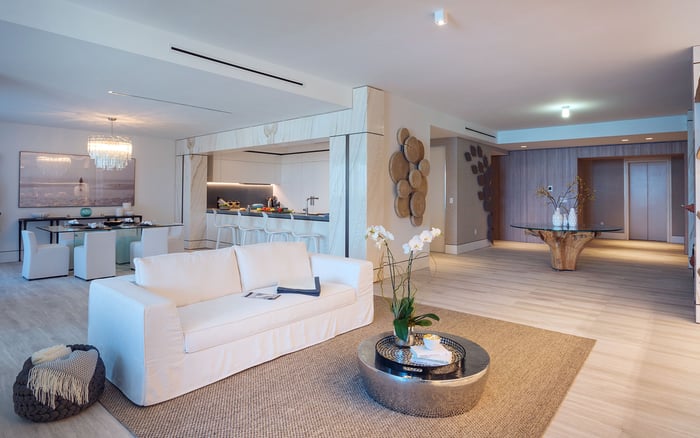
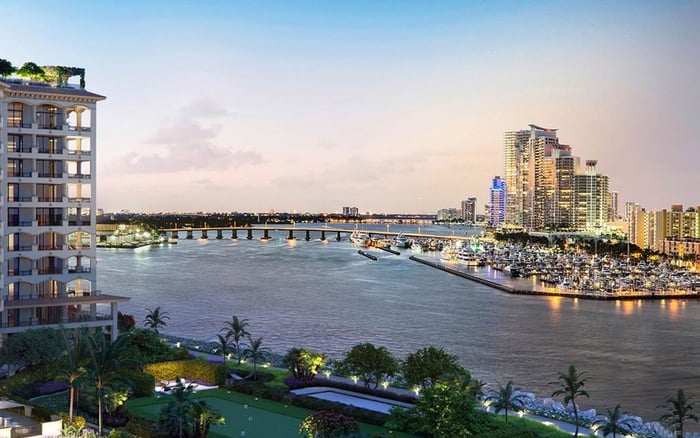
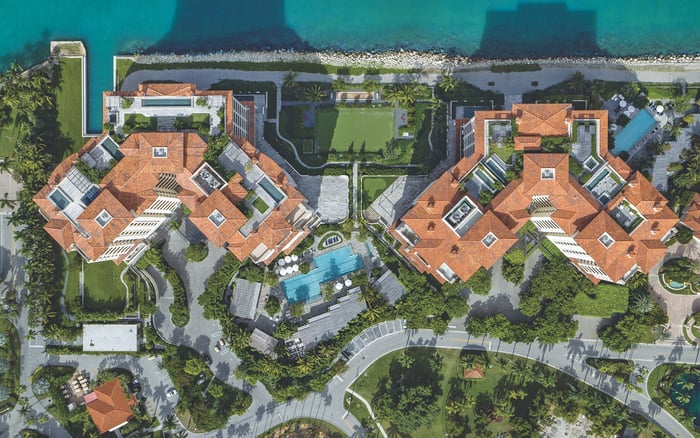
On Fisher Island, privacy is not a feature you add at the end. It is engineered into circulation, enforced by community rules, and expressed through design choices that influence how a residence feels the moment you arrive. Here, MILLION Luxury compares Palazzo del Sol and Palazzo della Luna through the buyer’s lens that matters most on the island: controlled access, low-friction arrivals, and a day-to-day rhythm that stays quiet by default.
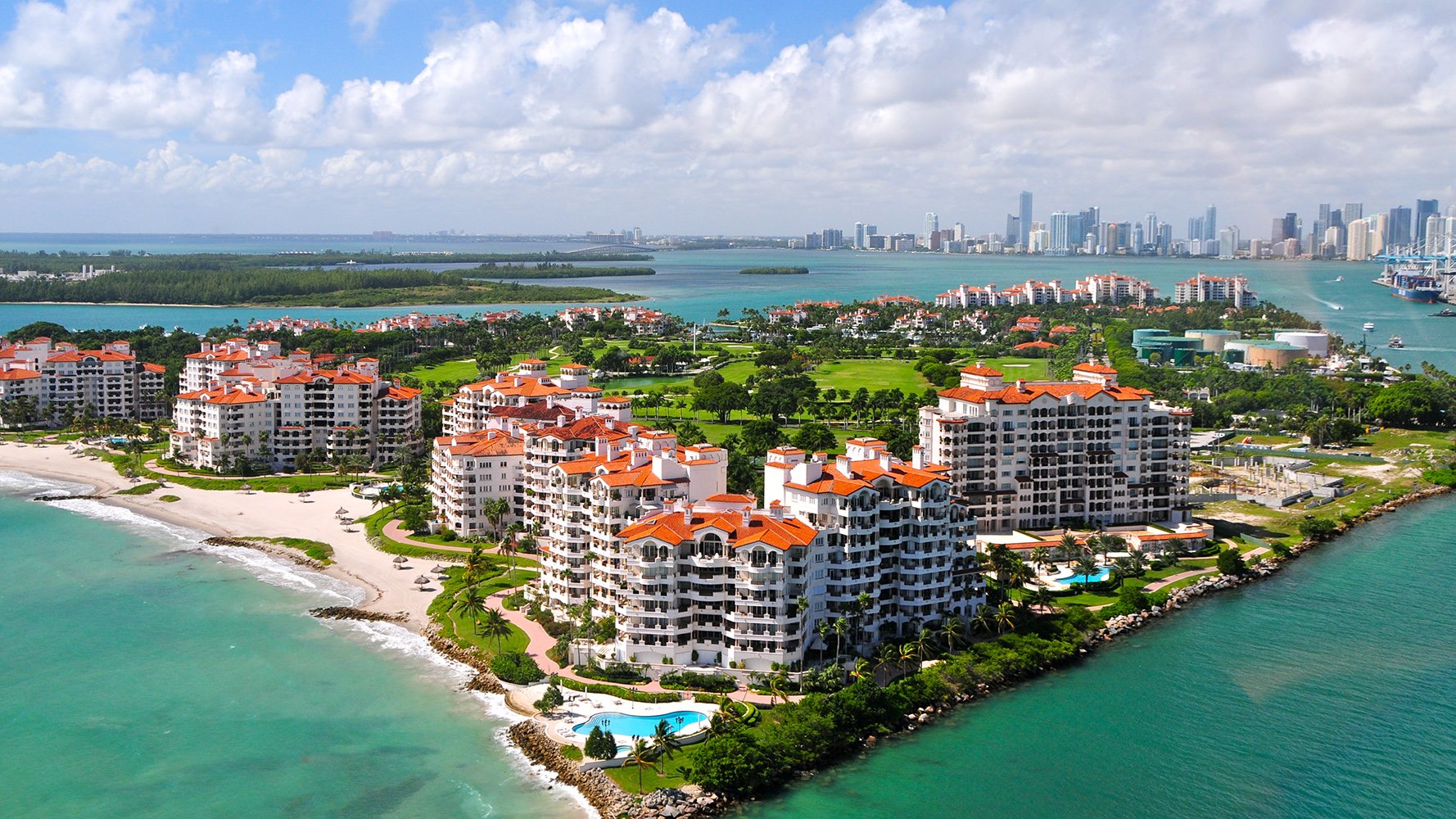
Fisher Island is known for being difficult to access and effortless to keep to yourself. That reputation is not incidental. Daily life is shaped by the Fisher Island Community Association framework, including a 19 mph speed limit and rules that constrain when construction work can occur in occupied structures, typically within limited daytime windows. The outcome is practical, not theoretical: a community where the ambient noise floor is structurally lower than most coastal enclaves in South Florida.
For buyers who define luxury as control, this is the real starting point. Privacy is not only about who can enter a lobby. It is also about whether the island itself operates like a gated community: calmer movement, fewer interruptions, and a rhythm that stays quiet by default.
Within that Fisher Island baseline, Palazzo del Sol and Palazzo della Luna feel like close relatives with different temperaments.
Palazzo del Sol is widely described as a 10-story condominium building delivered in 2016. It is associated with architect Kobi Karp and is often positioned around expansive water views, an architectural choice that emphasizes light, horizon, and openness.
Palazzo della Luna is likewise widely described as a 10-story condominium building delivered in 2019 and is also associated with Kobi Karp. Coverage often points to interior design direction from Champalimaud Design, with descriptions emphasizing a tranquil, restrained palette and natural materials. In practice, that translates into a quieter emotional register: less arrival theater, more ease.
If you are comparing “Palazzo del Sol Fisher Island” to “Palazzo della Luna Fisher Island,” begin here: both can deliver seclusion, but they communicate it through different sensory cues. One leans into brightness and view. The other leans into calm.
In ultra-premium buildings, privacy is rarely secured by signage or staff alone. It is engineered into circulation. Both towers emphasize a feature that matters disproportionately to owners who value discretion: private elevator access shown on published floor plans.
Private elevator access changes the day-to-day experience in three practical ways.
First, it reduces the need for shared hallway life. Many residents are not stepping into a long corridor lined with doors. Instead, the arrival sequence is organized around a private entry, creating a more deliberate threshold between “public” and “home.”
Second, it limits accidental interactions. In denser towers, lobbies and elevator banks can become social mixing bowls. In a boutique environment, especially when elevator-to-residence arrival is thoughtfully sequenced, cross-traffic can feel optional rather than inevitable.
Third, it makes service and security easier to understand. Even when staff is excellent, the most persuasive privacy is the kind you do not have to think about. A controlled arrival path is design discipline made tangible.
Indoor-outdoor living is an expectation on Fisher Island, and both buildings are marketed with significant terraces and outdoor space. That is an obvious luxury advantage and an equally real privacy question.
Terraces allow you to enjoy sun, air, and water views without depending on shared amenity areas. For owners who prefer to keep routines private, that independence can be its own form of discretion.
At the same time, larger outdoor rooms can increase exposure to exterior sightlines. Privacy outdoors becomes a function of orientation, elevation, and how you furnish the terrace to create soft screening without sacrificing the openness you came for.
The buyer takeaway is simple: evaluate the terrace the way you would evaluate a primary living room. Stand where you would actually sit. Look back at what can see you. Consider how view-forward design, the very quality that makes Fisher Island special, can also make you more visible if you do not plan for it.
Privacy is technical, but it is also psychological. Two residences can have comparable access control and still feel dramatically different.
Palazzo del Sol is often framed around water views and an airy relationship to the exterior. That brightness can feel exhilarating, particularly for buyers who want their home to signal “escape” the moment they arrive. Openness, however, is not the same as anonymity. The more a building celebrates the outside, the more intentional you should be about glazing, lighting, and evening routines that can make interiors readable from afar.
Palazzo della Luna’s widely covered interior direction, by contrast, is described as intentionally tranquil. A restrained palette and natural-material focus can shape the perception of privacy before you ever reach your door. When finishes absorb light rather than bounce it, and when spaces read quieter by design, the entire experience becomes more cocooning.
This is not about which is better. It is about alignment with your definition of quiet luxury: bright and expansive, or calm and inwardly composed.
Most luxury conversations center on finishes and amenities. On Fisher Island, community rules are part of the value proposition because they regulate friction.
A 19 mph speed limit influences more than safety. It changes the pace of the island and reduces the feeling of rush that can follow you even into premium zip codes. Likewise, restrictions on construction work hours in occupied structures help preserve a baseline of peace. For second-home owners and full-time residents alike, fewer disruptions can be the deciding factor that separates a beautiful building from a genuinely livable one.
In practical terms, these guardrails amplify what boutique buildings already do well: they protect a smaller, more controlled community experience.
When you tour, do not let “privacy” remain a mood. Make it a checklist.
Elevator-to-entry sequence. Confirm how the private elevator access is organized and how much shared circulation exists at your landing.
Threshold design. Look for a deliberate entry moment that buffers the main living areas. A true privacy-forward plan avoids placing primary spaces directly in line with the door.
Terrace usability. Measure how often you will actually use outdoor space, then test the sightlines and wind exposure that could push you back inside.
View orientation. View-forward architecture is seductive. Pair it with strategies that preserve discretion at night, when interior lighting can turn glass into a display.
Noise expectations. In a place governed by FICA standards that encourage quiet, your remaining noise exposure often comes down to immediate neighbors, service patterns, and your own floor plan’s separation between bedrooms and social areas.
Some buyers want Fisher Island seclusion. Others want Miami Beach energy with a similarly curated approach to privacy and arrival.
In Miami Beach, the strongest analogs are buildings that emphasize controlled circulation and a residential experience that feels intentional rather than transient. Consider how the ultra-luxury buyer experience is framed at Setai Residences Miami Beach, where branding and service culture can support discretion when you prefer your time to stay private.
For those drawn to a more design-forward, limited-collection sensibility, Shore Club Private Collections Miami Beach offers a distinct positioning that resonates with buyers who value a refined, less crowded lifestyle.
And for an owner who wants the reassurance of a globally recognized service standard paired with residential calm, The Ritz-Carlton Residences® Miami Beach is worth evaluating through the same lens: arrivals, elevator privacy, and how often you are required to share space when you do not feel like being seen.
Across these comparisons, the common thread is not “more amenities.” It is the ability to move through your building the way you move through your life: deliberately, quietly, and on your own terms.
What makes Fisher Island feel more private than the mainland? Fisher Island’s community framework sets a calmer baseline, including a 19 mph speed limit and rules that limit construction work hours in occupied structures.
Are Palazzo del Sol and Palazzo della Luna both considered boutique buildings? They are commonly described as boutique condominium offerings, which generally supports lower resident density and less cross-traffic.
Which building is older, Palazzo del Sol or Palazzo della Luna? Palazzo del Sol is widely reported as delivered in 2016, while Palazzo della Luna is widely reported as delivered in 2019.
Do both towers offer private elevator access? Published floor plans for both buildings depict private elevator access to residences.
Why does private elevator access matter so much for privacy? It reduces shared hallway exposure, limits chance encounters, and creates a more controlled arrival sequence.
Do large terraces increase or reduce privacy? Both. They can reduce reliance on shared amenities, but they may increase visibility depending on sightlines and nighttime lighting.
Is Palazzo della Luna’s design approach different from Palazzo del Sol? Yes. Coverage often emphasizes Palazzo della Luna’s tranquil interior direction by Champalimaud Design, while Palazzo del Sol is frequently framed around expansive water views.
Are the towers associated with the same architect? Both buildings are associated with architect Kobi Karp in published coverage.
How should I evaluate privacy during a tour? Focus on elevator-to-entry flow, shared circulation, terrace sightlines, and how the plan buffers bedrooms from social areas.
If I want privacy but prefer Miami Beach, what should I look for? Prioritize controlled circulation, a quieter residential culture, and a layout that minimizes shared-space dependency.
For a private consultation tailored to your priorities, connect with MILLION Luxury.
If branded residences are on your mind — as a home or as an allocation — we would be glad to share what we are seeing, privately.
Begin a quiet conversation