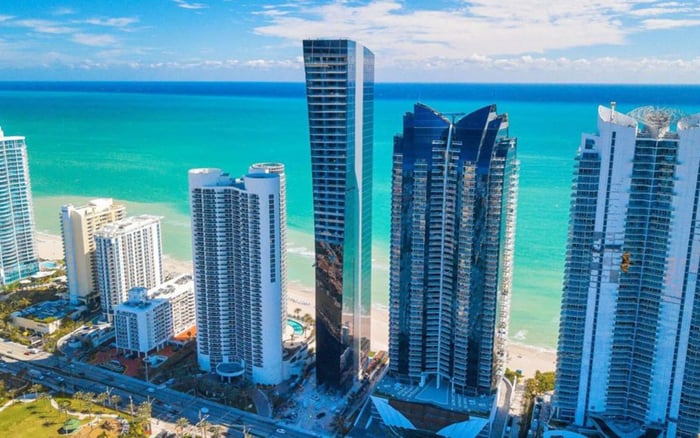
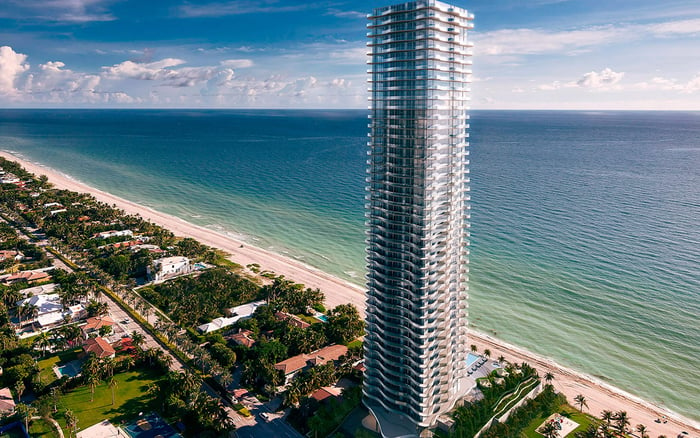
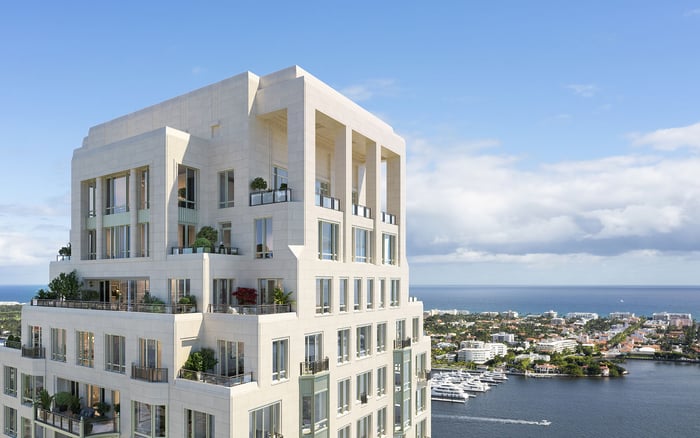
In Sunny Isles, two oceanfront philosophies sit on opposite ends of the spectrum: the boutique discretion many buyers associate with Regalia, and the breadth of services and resident ecosystem that define The Ritz-Carlton Residences. This MILLION Luxury comparison focuses on the lived experience of privacy versus scale, from arrival rituals and elevator strategy to amenity traffic, staffing, and resale considerations, with practical guidance for buyers who value quiet, security, and seamless hospitality.
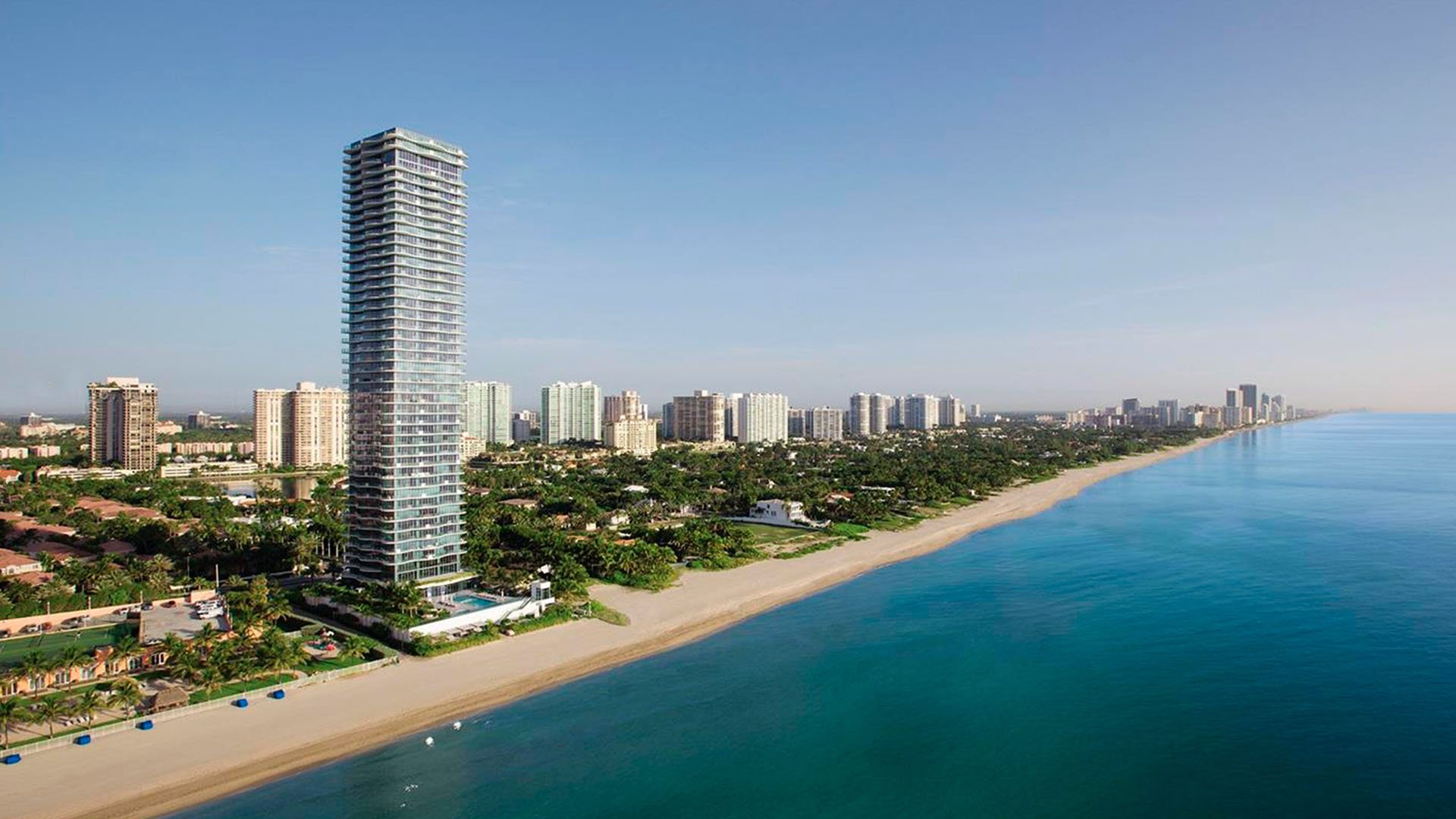
In Sunny Isles, the privacy conversation is rarely about a single feature. It’s an ecosystem shaped by how many neighbors you share the building with, how the lobby is used, how staff is deployed, and how guests move from curb to residence.
Buyers drawn to Regalia Sunny Isles Beach often frame the appeal in lifestyle terms: fewer touchpoints, a quieter cadence in common areas, and a building identity that reads as residential first. By contrast, The Ritz-Carlton Residences® Sunny Isles tends to resonate with buyers who want a broader service platform and a larger resident community-one that can support more amenities, deeper staffing, and more programmed experiences.
Neither philosophy is universally “more private.” Privacy is personal. For some owners, it’s anonymity in the elevator. For others, it’s never having to manage vendors, deliveries, or household operations themselves. The right decision is the one that matches how you actually live.
For ultra-premium buyers, privacy begins at the curb. A boutique building can feel inherently calmer because there’s less visible traffic, fewer simultaneous arrivals, and fewer reasons for guests to linger. The sequence often feels simple and efficient: pull in, greet a familiar face, and get upstairs quickly.
In a larger, brand-driven residential environment, arrival can carry a luxury-hotel cadence-even when the function is entirely residential. That can create two competing effects:
More movement in public areas, because more residents and guests are circulating.
More operational structure, because a robust team is built to manage that movement.
If your definition of privacy is silence and minimal interaction, boutique living often delivers. If your definition is controlled access, professional handling of guests, and the ability to delegate, scale can be an advantage rather than a tradeoff.
Vertical circulation is one of the most under-discussed privacy variables in high-rise living. The elevator is where neighbors meet, guests overlap, and service flows can intersect. The ideal is straightforward: residents move efficiently and predictably, visitors are directed appropriately, and service operations remain discreet.
A boutique tower often reads as more private simply because there are fewer elevator trips overall. That reduces chance encounters and the feeling of being “observed,” even in an otherwise normal, secure environment. It can also create familiarity with staff-something many owners value for continuity and pattern recognition.
A larger, residence-by-brand environment may benefit from broader staffing coverage and clearer protocols, which can reduce friction for owners who entertain often. The tradeoff is shared infrastructure across more households, which puts a premium on exceptional management to keep the resident experience calm.
If you prioritize arriving home unnoticed and moving from car to residence with as few steps as possible, ask pointed questions during a tour: how visitors are announced, how deliveries are routed, and what the building defines as a “resident-only” elevator experience.
Amenities can either reinforce privacy or dilute it, depending on how they’re used and programmed. Larger amenity suites can create a richer lifestyle, but they can also generate more cross-traffic: more activity in fitness areas, more energy at the pool, and more guests invited for celebrations.
The privacy paradox is simple: the more complete the on-site world becomes, the less you need to leave the building. For many buyers, that is privacy at its highest level. You can work out, meet friends, and decompress without stepping into the public realm. The tradeoff is that the building becomes your neighborhood-and neighborhoods come with motion.
If your priority is quieter shared spaces, you may prefer the controlled simplicity boutique living often provides. If you want an ecosystem that supports a fuller calendar and service-led living, scale can be compelling-especially if you like hosting without personally orchestrating every detail.
For comparison shopping within the same coastal conversation, some buyers also evaluate the vibe at Turnberry Ocean Club Sunny Isles, where lifestyle expectations and amenity emphasis are central to the decision.
Privacy isn’t only the absence of people. It’s also the presence of competence.
In a boutique environment, staffing can feel more intimate. Owners often build rapport with a smaller team, and that familiarity can translate into a strong sense of discretion. The building can feel like an extension of your home.
In a scaled, hospitality-rooted environment, the value proposition is operational breadth. The service culture is often built to anticipate needs, coordinate vendors, and support residents who travel frequently or treat their Sunny Isles residence as part of a multi-home portfolio. In practice, that can feel deeply private because fewer personal logistics spill into your day. Deliveries, access, and household coordination are handled-without you managing it in public.
The key question is simple: do you prefer privacy as low-contact living, or privacy as high-support living? Both can exist at the highest level, but they feel fundamentally different.
Privacy-minded buyers should think about two categories of guests: yours and everyone else’s.
A boutique building can make entertaining feel more discreet because fewer unrelated guests are present in common areas at the same time. The building’s overall social footprint is naturally smaller.
A larger residential platform can make entertaining easier because staffing, policies, and infrastructure can support it. But it may also mean more ambient guest presence throughout the building, depending on the resident mix and how frequently owners host.
If you value quiet weekends, observe the pool deck and fitness areas during peak hours-not just on a weekday morning. A busy Saturday reveals more about lived privacy than any brochure.
Security and privacy are related, but they’re not interchangeable. A building can be exceptionally secure and still feel socially active. Conversely, a building can feel quiet yet lack the operational depth some buyers want.
A boutique approach often delivers a controlled atmosphere: fewer people in the lobby, fewer opportunities for confusion, and a calmer visual field. A scaled approach often delivers controlled access: more staff coverage and more formalized systems.
For buyers who want a wider Sunny Isles benchmark set, it can be helpful to tour adjacent lifestyle archetypes such as Muse Residences Sunny Isles Beach to clarify what level of social energy feels right.
Resale is ultimately about matching the next buyer’s psychology. Boutique privacy tends to attract a specific profile: an owner who wants to retreat, minimize exposure, and keep the residence low-drama. These buyers often respond to scarcity, calm, and the sense that the building is intentionally not trying to be everything.
A scaled, brand-led residence can attract buyers who value service, recognition, and an established hospitality vocabulary. For them, the brand and the operational promise are part of the asset’s identity.
Neither is inherently more liquid in every market cycle. What matters is whether the lived experience stays true to the positioning. Privacy-forward buildings must protect quiet. Scaled, service-forward buildings must protect smoothness.
When choosing between Regalia’s privacy bias and The Ritz-Carlton Residences’ scale bias, bring the decision back to observable realities:
If you want near-silence in the lobby, boutique tends to win.
If you want a strong service platform, scale can feel more private.
Frequent hosting benefits from structure; intimate hosting benefits from calm.
Multi-home owners often prioritize staffing depth and continuity.
Also consider how Sunny Isles compares with other luxury coastal submarkets. A buyer drawn to privacy may find a different kind of discretion in Surfside or Bal Harbour, while a buyer drawn to a broader amenity ecosystem may compare against lifestyle programming found in other branded environments.
Is Regalia Sunny Isles Beach generally considered more private? Many buyers perceive boutique towers as more private because there is less overall traffic and fewer shared-space encounters.
Does a larger building automatically mean less privacy? Not necessarily; scale can bring staffing depth and tighter protocols that feel very private in daily life.
What should I watch during a tour to gauge privacy? Focus on the arrival sequence, elevator flow, and how staff handles visitors and deliveries.
Which lifestyle suits a service-focused residence best? Owners who travel often, entertain frequently, or prefer to delegate household logistics usually benefit most.
Which lifestyle suits a boutique residence best? Buyers who want low-contact living, minimal lobby energy, and a quieter building rhythm often prefer it.
How important are amenity areas to the privacy experience? Very important; amenities can increase on-site convenience while also increasing shared-space activity.
Can privacy be improved through personal choices? Yes; timing amenity use, limiting guest circulation, and establishing staff preferences can help.
Do branded residences always feel like hotels? Not always, but they can have a hospitality cadence that some buyers love and others avoid.
Should I compare more than two buildings in Sunny Isles? Yes; touring a few archetypes helps you define whether you prefer quiet scarcity or service scale.
What is the simplest way to decide between these two options? Choose the environment you will enjoy on an ordinary weekend, not only during special occasions.
When you're ready to tour or underwrite the options, connect with MILLION Luxury.
If branded residences are on your mind — as a home or as an allocation — we would be glad to share what we are seeing, privately.
Begin a quiet conversation