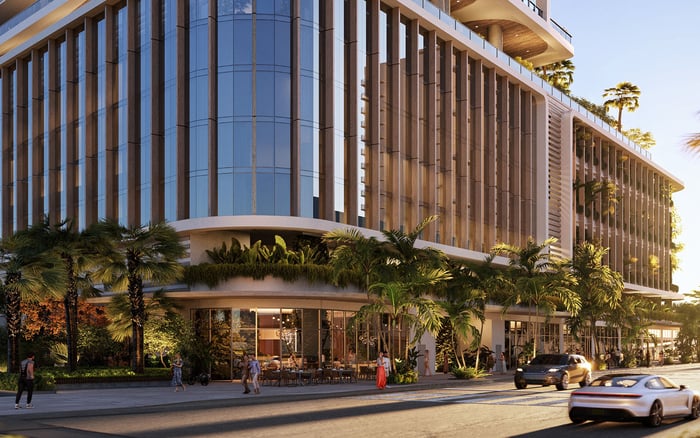
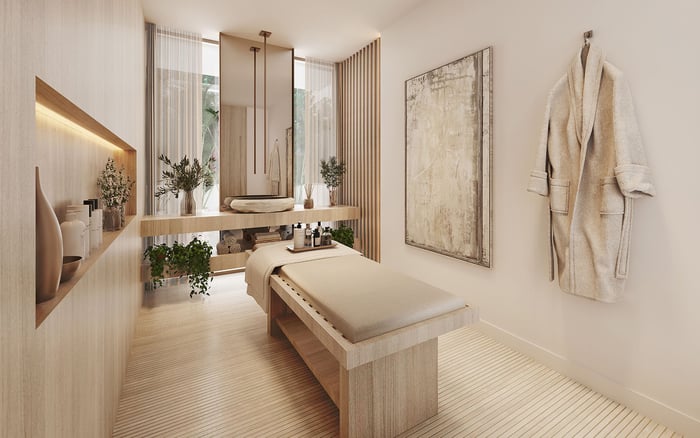
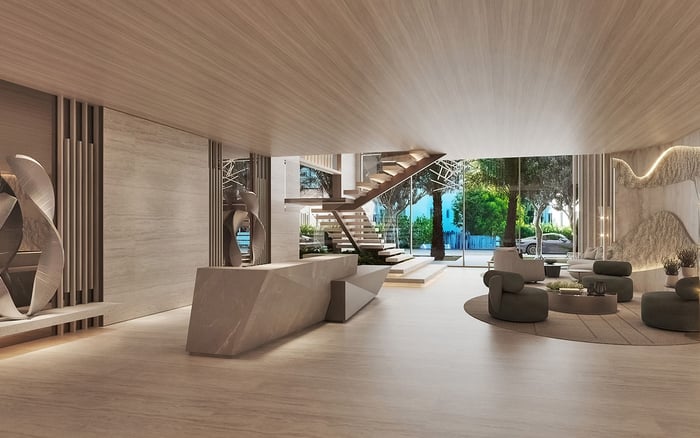
A buyer-oriented comparison of boutique mid-rise living in Bay Harbor Islands versus the supertall tower lifestyle in Miami, focusing on privacy, operations, wellness, views, and day-to-day convenience.
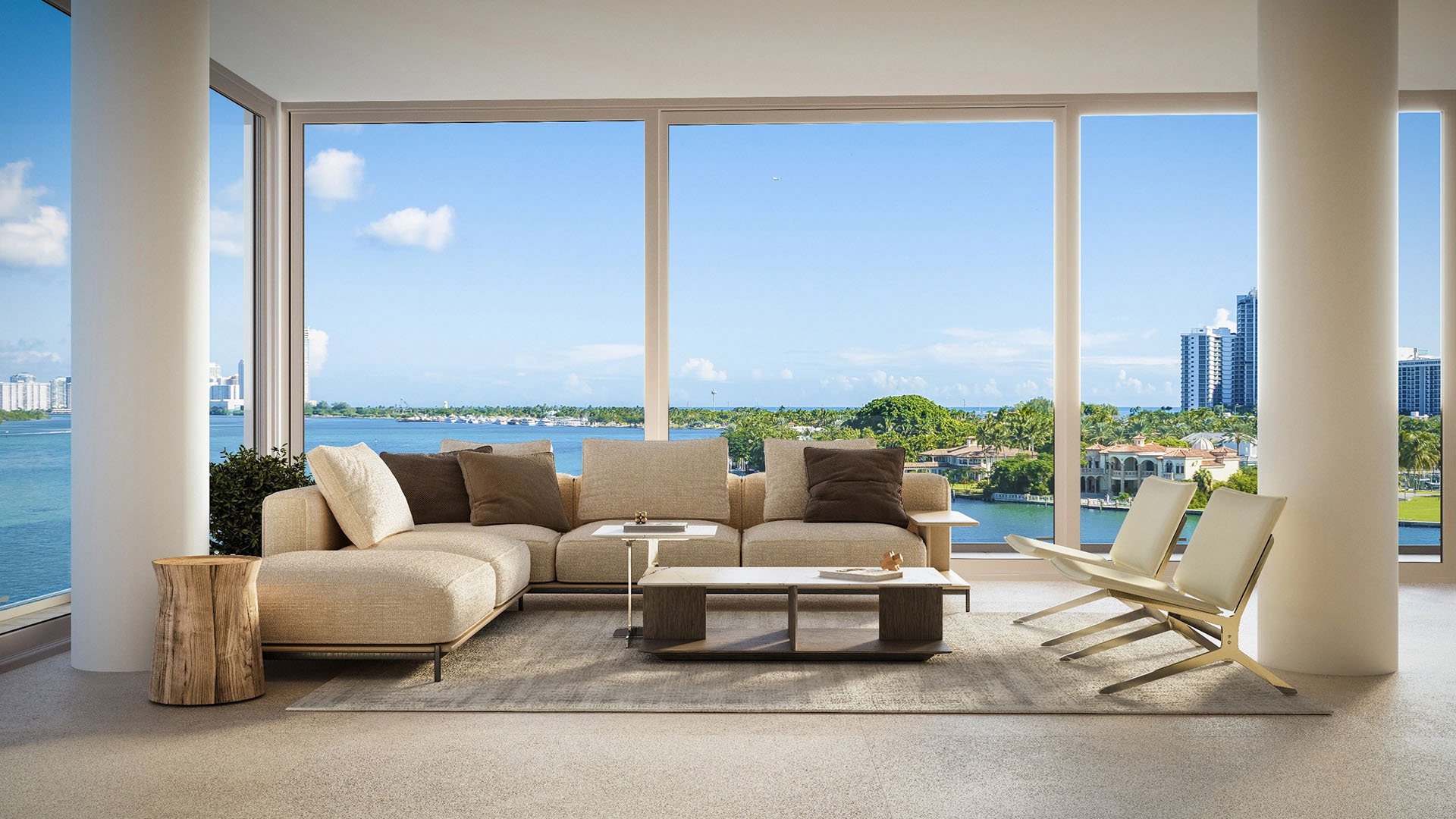
South Florida buyers rarely debate only square footage. They debate tempo. A boutique mid-rise and a supertall can both be impeccably finished, professionally staffed, and well located-yet the lived experience diverges the moment you turn off the main road.
A boutique mid-rise like La Maré in Bay Harbor Islands is built around proximity and familiarity: fewer neighbors, fewer elevator stops, and a building that reads more like a private address than a destination. A supertall, by contrast, is about scale and theater: dramatic arrival sequences, expansive amenity decks, and a skyline profile that functions as a statement.
MILLION Luxury frames this decision as less about “which is better” and more about which lifestyle aligns with how you actually spend your week-especially in a market where many residents split time between Miami, New York, Europe, and Latin America.
Boutique mid-rises tend to remove friction from the day. The lobby is quieter. Valet queues, if present, move faster. Deliveries are simpler to manage because the flow of residents, vendors, and guests is naturally limited. For owners who value discretion, this can matter as much as any finish schedule.
In places like Bay Harbor Islands, the neighborhood rhythm amplifies that ease. It feels residential, not performative-a meaningful distinction for buyers who treat Miami as a home base rather than a stage. This is the appeal behind La Maré Bay Harbor Islands: a boutique positioning that prioritizes privacy and a refined, low-drama cadence.
The trade-off is not a lack of luxury. It is a different expression of luxury: the confidence that your building will not feel like a resort at peak weekend hours, and that “running downstairs” truly means a short, unhurried trip.
A supertall organizes life vertically-and that can be electrifying. The views are a daily reminder of why Miami has evolved into a global city, and the sensation of living above the skyline is difficult to replicate elsewhere in South Florida.
Yet the same scale that creates iconicity also creates a larger ecosystem. There are more residents, more guests, more staffing cycles, more service providers, and typically more formalized rules around move-ins, deliveries, contractor access, and amenity reservations. Practically speaking, you are sharing a complex machine.
For some buyers, that is precisely the appeal. A supertall can feel like a private club with constant energy. If you value an active social atmosphere, frequent entertaining, and the ability to tap into a wide menu of experiences without leaving the building, the supertall model fits.
Privacy is not only about security. It is about exposure.
In a boutique building, repeated encounters are expected and typically limited to residents, a small staff, and a consistent set of vendors. The building becomes legible quickly-you learn the faces, the pace, and the norms.
In a supertall, anonymity cuts both ways. You may feel less “seen” because there are more people, yet more exposed because lobbies and amenity decks carry higher volume. For buyers who travel frequently and prefer a lock-and-leave routine, that anonymity can be reassuring. For those who want a deliberately quiet social environment, the bustle can register as ambient noise.
Luxury living is often won-or lost-in operations. The most beautiful residence can still feel exhausting if arrivals are complicated.
Boutique mid-rises generally offer simpler vertical circulation: fewer floors, fewer stops, and fewer simultaneous demands during peak windows. The result is less waiting, fewer elevator “rush hours,” and a cleaner flow for guests.
Supertalls can be operationally excellent, but they require more choreography. Multi-zone elevator banks, security checkpoints, package rooms, and separate service corridors can be efficient-yet they also ask the resident to live within a system. If you keep irregular hours, travel often, or host frequently, consider how the building handles:
deliveries and refrigeration holding
guest arrivals and ride-share pickup
contractor access and renovation protocols
peak-time elevator demand
These details rarely lead glossy marketing, but they determine day-to-day satisfaction.
Boutique mid-rises often concentrate on high-use amenities executed well: a serene pool environment, a well-designed fitness studio, a discreet lounge, and-depending on location-an occasionally marina-adjacent lifestyle. The advantage is access: spaces are easier to use and more likely to retain a calm atmosphere.
Supertalls often deliver an amenity universe: multiple pools, private dining, coworking, spa programs, screening rooms, and expansive wellness concepts. The experience can feel like living inside a private members’ club-especially if you actually use those spaces.
A useful self-check: if you already belong to a gym, a club, and prefer dining out, you may not want to pay for redundant programming. If you want your building to function as the center of gravity for your routine, the supertall format can be compelling.
There is no substitute for altitude if your priority is horizon-line views, dramatic light, and psychological distance from street-level activity.
Boutique mid-rises can still deliver excellent water and skyline perspectives, particularly in well-sited neighborhoods, but they more often frame views as composed vignettes: canal, bay, treetops, and the city held at a distance.
A supertall is immersive. It can change how you experience weather, sunsets, and the city’s scale. For some owners, that is the primary value proposition.
Your building is only half the lifestyle. The neighborhood does the rest.
Bay Harbor Islands leans residential. It suits buyers who prioritize quiet mornings, walkable daily errands, and a more insulated feel near the water. The area’s appeal also connects naturally to other boutique-minded addresses nearby, including Onda Bay Harbor and Origin Bay Harbor Islands, which reflect a similar preference for refined, low-density living.
By contrast, the supertall lifestyle is often anchored in districts like Brickell and Downtown, where the city’s momentum is part of the draw. If you want to step out into restaurants, culture, and a faster social current, the vertical city makes sense. In that orbit, the branding-forward, high-design tower experience typified by 888 Brickell by Dolce & Gabbana captures the supertall buyer’s appetite for statement living.
Boutique mid-rise buyers often share a few traits:
They value discretion and predictable quiet.
They prefer fewer residents and less transient activity.
They want amenities that are elegant, not expansive.
They care about operational simplicity as much as design.
Supertall buyers often share different traits:
They want the emotional payoff of height and panoramic views.
They enjoy a building with a social ecosystem.
They use amenities as part of daily life.
They accept more rules and structure in exchange for scale.
If you are split, anchor the decision to your most non-negotiable weekly routines: school runs, boating, frequent entertaining, work-from-home needs, and travel frequency. Lifestyle alignment will outlast any short-term market narrative.
Set marketing language aside and evaluate both building types through the same operational checklist:
Staffing and service culture: Is the experience consistent day to day?
Delivery and privacy protocols: How are packages, food deliveries, and guests handled?
Elevator performance: Observe peak hours in person.
Noise and exposure: Visit on a weekend afternoon, not only on a quiet weekday.
Reserve discipline and maintenance posture: Ask how proactively the property is cared for.
This is where boutique buildings can feel effortlessly “owned,” while supertalls can feel professionally “managed.” Either can be excellent-but the feel is different.
A boutique mid-rise like La Maré Bay Harbor Islands offers a quieter, more intimate expression of luxury: fewer interactions, simpler logistics, and a neighborhood cadence that rewards buyers who value discretion.
A supertall offers a vertical, skyline-defining lifestyle: views that recalibrate daily life, amenities that can replace external memberships, and an energetic ecosystem that feels distinctly metropolitan.
Choosing well is not about chasing a category. It is about selecting the building that disappears into the background of your best days.
Is a boutique mid-rise always quieter than a supertall? Often, yes-because fewer residences typically means less lobby and amenity traffic.
Do supertalls have better security? They can, but privacy also depends on guest policies, staffing, and building culture.
Which lifestyle is better for frequent entertaining? Supertalls often suit it due to larger amenity options and dramatic views.
Will a boutique building feel less “full service”? Not necessarily; many boutique properties deliver highly personal service at a smaller scale.
What should I watch for in elevator experience? Visit at peak times and note wait times, access controls, and guest flow.
Is the view premium worth it in a supertall? If views materially shape your daily enjoyment, height can be the most valuable feature.
Which is better for a lock-and-leave second home? Either can work, but supertalls often have systems built for higher resident turnover.
Does Bay Harbor Islands fit a more residential lifestyle? Yes, it generally caters to a calmer cadence than core Downtown districts.
How do amenities differ in real use? Boutique buildings focus on essentials; supertalls provide breadth that rewards frequent use.
What is the simplest way to decide between the two? Choose based on your weekly routines and tolerance for shared activity in common areas.
For a discreet conversation and a curated building-by-building shortlist, connect with MILLION Luxury.
If branded residences are on your mind — as a home or as an allocation — we would be glad to share what we are seeing, privately.
Begin a quiet conversation