In South Florida’s premier towers, domestic staffing is less about headcount and more about choreography: access, privacy, building rules, and service standards that must align with condominium governance. This MILLION Luxury guide outlines the day-to-day operational systems that protect discretion while keeping a residence running flawlessly, from service-elevator protocols to vendor onboarding, scheduling, and turnover. For owners, family offices, and managers, the difference between a “staffed home” and a truly effortless one is a set of repeatable processes designed for high-rise realities.

A staffed single-family estate operates as a largely private ecosystem. A staffed luxury condominium does not. In a tower, nearly every domestic routine intersects with shared infrastructure-staffed lobbies, security desks, service corridors, loading areas, and building rules enforced by management. In practice, the owner’s experience depends as much on operational alignment as it does on hospitality.
The defining difference is constraint. Even in a full-service environment, staff cannot move freely, stage supplies wherever convenient, or schedule heavy cleaning whenever the residence is unoccupied. Service elevators may be required for deliveries, certain hours may be restricted for moves or large items, and access badges may be time-bound. The best-run residences treat the building as a partner system and design staffing to be compliant by default.
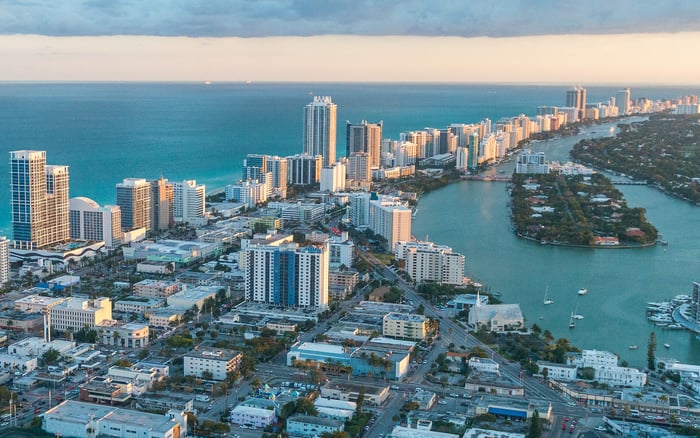
For South Florida buyers evaluating Brickell and Miami Beach towers, it helps to view staffing as a building-integrated service model. Your standards can remain estate-level; the choreography simply needs to be fluent in high-rise realities.
Luxury staffing most often breaks down at the edges: unclear responsibilities, redundant visits, and avoidable visibility in hallways and common areas. High-rise living benefits from roles built around predictable presence and minimal movement.
Common role groupings include:
House manager or estate manager (even part-time) to own building relations, calendars, and standards.
Housekeeper(s) focused on daily reset, deep-clean rotation, and linen systems.
Laundress or combined housekeeping-laundry function for garments, pressing, and closet order.
Private chef (event-based or scheduled) paired with a disciplined provisioning routine.
Personal assistant coverage for appointments, shopping, and household admin.
In a tower, the manager function matters early. Someone must own recurring interactions with management and security, coordinate badges, understand package and delivery policies, and keep service disruptions away from the principal. In Downtown and Brickell, where owners frequently travel, continuity is a luxury in itself.
Discretion is not only about behavior-it’s about systems. High-rise staffing should be built around a clear privacy perimeter: what staff can access, when they can access it, and which routes they use.
Operational best practices typically include:
Building-approved access lists with defined roles and scheduled hours.
Separate routines for lobby-facing arrivals versus service-side arrivals.
“No loiter” expectations in common areas and strict phone etiquette.
A lock-and-key policy designed for turnover, emergencies, and vendor visits.
The building’s security posture sets the baseline. Some owners prefer staff to enter exclusively via service entrances and service elevators, while others want a discreet front-lobby arrival for a principal-facing role. Either approach works when it’s consistent, documented, and clearly communicated to management.
When evaluating towers in Miami Beach or Brickell, ask a direct question: can your preferred staffing model operate without constant exceptions? A residence can be extraordinary, but if staffing depends on routine policy workarounds, daily life will feel negotiated instead of seamless.
High-rise life has traffic patterns. Elevator banks surge, loading areas fill, and vendor arrivals stack. Your staffing schedule should be built around the building’s rhythm.
A practical approach is to divide work into:
“Invisible hours” tasks: deliveries, trash runs, heavy laundering, and deep cleaning timed to low-traffic periods.
“Owner-facing” tasks: morning reset, turn-down, meal service, and guest readiness aligned to your lifestyle.
“Building-sensitive” tasks: anything involving carts, large packages, or service elevators.
A disciplined weekly cadence reduces constant micro-decisions. For example, assign specific days for deep kitchen work, closet rotation, and linen inventory, and reserve pre-arrival days for a full residence reset. This is especially relevant for second-home use, where the goal is arrival perfection with minimal staff footprint.
In towers that emphasize curated services and hospitality, owners often synchronize staffing with building operations. A concierge can be briefed ahead of arrival, while a housekeeper times the final reset to bypass elevator congestion.
Even with a robust staff, vendors will touch the residence-window treatments, AV, art handlers, floral, appliance servicing, and specialty cleaners. In a luxury high-rise, vendor management is a compliance and risk issue, not merely a convenience.
A refined vendor protocol includes:
A pre-approved vendor list with points of contact and insurance requirements aligned to building standards.
A defined arrival pathway: where vendors check in, which elevator they use, and who escorts them.
A scope-confirmation step before arrival so a vendor isn’t diagnosing in your living room.
Post-visit verification: photo confirmation, invoice review, and a final walk-through.
Owners in South-of-fifth and Miami Beach often prioritize quiet, low-friction visits. That outcome is easier to achieve when vendor work is batched on a designated service day and any trade moving through common areas with tools or carts is escorted.
For buyers drawn to highly serviced environments, a well-run residence benefits from a building that understands luxury workflows. In that context, consider how a staff program might complement the lifestyle positioning of Aston Martin Residences Downtown Miami without relying on the building to run in-residence operations.
High-rise luxury interiors often feature delicate materials: natural stone, wide-plank wood, specialty wall finishes, high-gloss cabinetry, and designer hardware. Staff performance is measured less by effort and more by preservation.
A high-function housekeeping program is built on standardized operating procedures (SOPs), including:
Room-by-room checklists with approved products and dilution ratios.
A “finish map” that specifies what may touch each surface.
A linen and towel par system that prevents over-washing and last-minute shortages.
Garment care protocols: steaming versus pressing, storage humidity awareness, and shoe care.
Laundry is where many luxury residences quietly lose time. A dedicated process helps prevent clothing damage and avoids the common high-rise inefficiency of multiple trips for pickup and drop-off. When in-unit laundry is used, staff should treat the laundry area like a professional station, with clear labeling, mesh bags, and seasonal rotation.
For towers that lean toward contemporary, high-design living in Brickell, owners often align a tailored housekeeping program with the “showroom standard” expected in an ultra-prime home. That pairing can be especially harmonious in contexts like 888 Brickell by Dolce & Gabbana, where interiors are expected to remain photo-ready without feeling staged.
Chef service in a tower is only as elegant as its logistics. Deliveries, refrigeration, packaging, and waste removal are where operational reality shows.
A workable provisioning model typically includes:
A standing pantry and beverage inventory with clear reorder thresholds.
Delivery windows aligned to service elevator availability.
A receiving protocol for cold items: time stamps, storage placement, and disposal of outer packaging.
Waste routines that respect building rules and avoid odors in chutes or corridors.
If you entertain often, the operational goal is to keep event energy inside the residence while moving supplies outside of guest view. The strongest teams pre-stage glassware, verify ice capacity, and coordinate discreet vendor arrivals. In many Miami Beach residences, a calm, quiet setup is a clear marker of a well-run home.
Luxury towers have security and life-safety systems, but your residence still needs an internal plan. Staff should know what to do before you have to ask.
A simple incident framework includes:
Emergency contacts and escalation: building security, management, preferred vendors, and family office.
Shutoff knowledge: water, HVAC, and any in-unit panels staff are authorized to access.
A leak response kit and immediate containment steps.
Clear rules for calling emergency services versus contacting building personnel first.
Information security matters just as much. Staff should be trained on discretion around travel schedules, guest names, and visible valuables. In a high-rise, privacy can be compromised in elevators, hallways, and amenity spaces. The operational solution is training paired with a strict need-to-know culture.
Condominium governance is part of the operating environment. Owners who thrive in towers treat rules as a design constraint, not an obstacle.
Key practices include:
Maintain a written summary of building policies that affect staffing: deliveries, move-in procedures, amenity reservations, contractor access, and quiet hours.
Introduce your house manager to the building’s key contacts early.
Resolve friction privately and quickly. Public disputes in common areas create reputational residue.
This is especially important in ultra-prime buildings where residents expect calm, not commotion. If you value a strong service culture, align staffing to the building’s standards from day one.
In newer, hospitality-forward environments, owners often find it easier to maintain a consistent operational cadence-particularly when the residence is used intermittently. Consider how a staffing plan could complement the rhythm of Waldorf Astoria Residences Downtown Miami without blurring boundaries between building amenities and private household responsibility.
The most luxurious staffing programs feel effortless because they’re structured. Owners and family offices should expect:
A master calendar covering arrivals, departures, deep cleans, vendor visits, and events.
Weekly reporting that is short and actionable: completed tasks, issues found, upcoming needs.
Photo-based verification for turnover cleans and post-vendor sign-off.
Inventory control for consumables, linens, and owner preferences.
Accountability is easiest when standards are visible. A concise residence manual-including brand preferences, product lists, finish care, and guest protocols-turns staff performance into a repeatable outcome.
In a true penthouse-level lifestyle, the objective isn’t simply to have staff. It’s to maintain a residence that can shift from private sanctuary to entertaining venue with minimal friction.
If you prefer a quieter coastal rhythm, the same discipline applies in Miami Beach: schedule, access, and discretion. A staffing program that supports that sensibility can pair naturally with an ownership experience like Five Park Miami Beach, where owners often want both design-forward living and predictable operational flow.
What is the first operational decision to make when hiring staff for a condo? Define the access model, including routes, hours, and who can be in owner-facing spaces.
Should staff use the service elevator or the main lobby? Use the route that matches the building’s policies and your privacy goals, then standardize it.
How do I prevent common-area exposure and elevator congestion? Batch deliveries and heavy tasks into low-traffic windows and avoid peak elevator times.
Do I need a house manager in a high-rise? If you travel often or entertain regularly, a manager reduces friction with building operations.
How do I handle vendors without disrupting privacy? Pre-approve vendors, confirm scope before arrival, and require check-in and escort protocols.
What systems keep finishes and furnishings in pristine condition? Room-by-room SOPs, approved products, and a finish map prevent accidental damage.
How should laundry be managed in a luxury condominium? Treat it as a station with labeling, garment protocols, and a par system for linens and towels.
What should staff do during a leak or mechanical incident? Follow a written escalation plan, contain immediately, and coordinate with building personnel.
How can I align staffing with condo rules without constant exceptions? Build your schedule and vendor plan around building policies and keep a clear compliance file.
What makes a staffed condo feel truly effortless for the owner? Predictable routines, documented standards, and discreet communication that anticipates needs.
To compare the best-fit options with clarity, connect with MILLION Luxury.
If branded residences are on your mind — as a home or as an allocation — we would be glad to share what we are seeing, privately.
Begin a quiet conversation