Virtual reality golf simulators have become a quietly decisive amenity for buyers in Sunny Isles, especially those who want year-round practice without leaving the building. This MILLION Luxury comparison looks at how the concept tends to be integrated at Bentley Residences Sunny Isles and The Estates at Acqualina Sunny Isles, focusing on planning, privacy, acoustics, programming, and resale relevance rather than marketing claims. With limited publicly consistent detail on exact simulator brands and room counts, the emphasis is on what sophisticated buyers can verify during tours, plan review, and amenity negotiations.
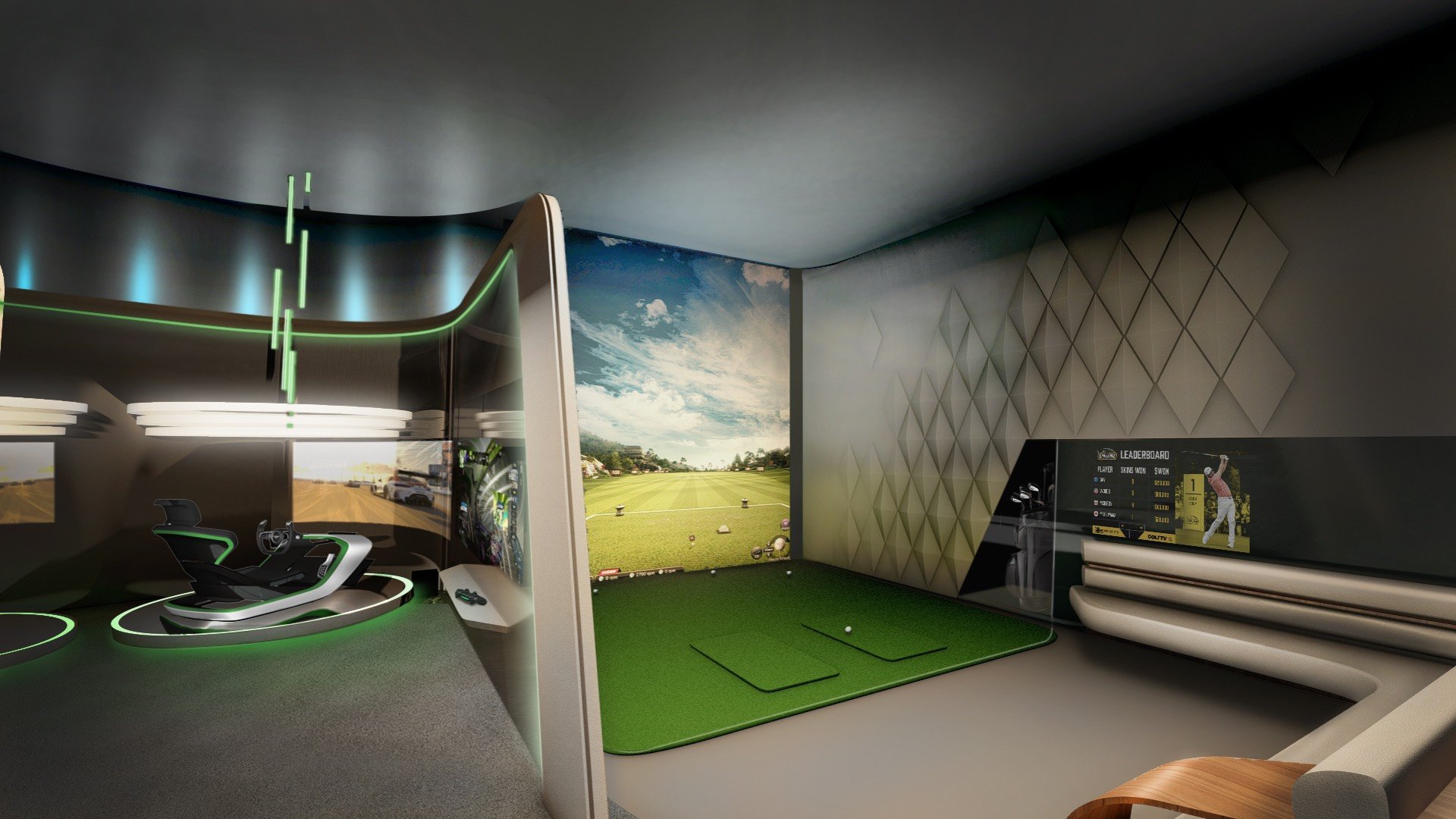
For today’s luxury buyer, a golf simulator is rarely about gimmickry. Executed properly, it becomes a functional extension of wellness, social life, and schedule control-especially for residents who split time between South Florida and other global hubs. In Sunny Isles, where oceanfront living and design-led amenity decks set a high bar, the virtual reality golf simulator has matured into a year-round training and entertainment space: private when you want focus, social when you want company, and restorative when you need a quiet reset between meetings.
The nuance is integration. A simulator can feel like an afterthought-tucked into a loud game room-or it can present as a purpose-built studio with the right dimensions, lighting, ventilation, and reservation workflow. In this comparison, MILLION Luxury looks at how buyers should evaluate the integration of VR golf simulators at Bentley Residences Sunny Isles versus The Estates at Acqualina Sunny Isles, with an emphasis on what you can verify in real life rather than what renderings suggest.
Before comparing any two addresses, define the standard. In the ultra-premium tier, integration isn’t the mere presence of a simulator-it’s how the simulator is designed into the building’s circulation, acoustics, staffing, and culture.
Buyers should think in five layers:
Architecture and volume: Simulators require ceiling height, safe swing clearance, and adequate depth for accurate ball tracking. If the room is tight, the experience feels compromised and less credible.
Acoustic separation: The strongest rooms anticipate impact noise, conversation, and music-without bleeding into adjacent lounges, spa corridors, or quiet work areas.
HVAC and lighting: Simulators generate heat and depend on controlled lighting. If the space runs warm, humid, or glare-prone, usage drops quickly.
Operational design: Reservation systems, peak-hour management, and guest rules determine whether the room feels like a benefit-or a friction point.
Lifestyle adjacency: A simulator near a bar, cigar lounge, sports theater, or billiards can be intentionally social. A simulator near a spa, fitness, or private studios can feel performance-oriented and discreet.
Even without granular public specs, you can assess these layers on a tour and in plan sets. The goal is to determine whether the amenity was conceived as a signature experience or treated as a checkbox.
The Bentley name signals a specific expectation: tailored, polished, and experiential. In that context, a VR golf simulator performs best when it supports a club-like rhythm-a place to host a small group, take a call afterward, or transition naturally into another curated amenity.
When evaluating Bentley Residences Sunny Isles through a buyer lens, focus on whether the simulator environment is treated as a destination rather than a corner of a multipurpose arcade. Markers of stronger integration include a dedicated arrival moment, a door you can close, seating designed for spectating, and finishes that feel consistent with the broader amenity collection.
Also consider the behavioral intent. Some buildings position the simulator as a social magnet; others make it quietly reservable. If Bentley’s simulator is set up as an extension of an owners’ lounge, that distinction can matter for residents who want their “third place” inside the building.
A practical note for buyers: get clear on how bookings are handled and whether residents can reserve blocks for guests. Even a beautifully designed room can underdeliver if access feels unpredictable.
The Estates at Acqualina Sunny Isles is often discussed through the lens of resort-caliber living-and resort logic changes how a simulator may be integrated. In a more family-forward environment, the golf simulator can be designed to accommodate a wider range of ages and skill levels, and may sit alongside other entertainment and recreation programming.
For buyers planning multi-generational usage, the key question is simple: does the simulator read like a serious training tool, or does it function more like a high-end game-room feature built for group fun? Neither is inherently better; the answer should align with your household.
When touring, evaluate how the space manages traffic flow and “waiting energy.” If the simulator sits near other high-activity zones, the room may feel lively-ideal for weekends and group use. If it’s positioned to be quieter and more controlled, it may better serve residents who plan to practice frequently and prefer fewer interruptions.
Because The Estates at Acqualina Sunny Isles appeals to a broad, high-net-worth audience, the best outcome is flexibility: a room that can feel social when you want it to, and focused when you don’t.
With any amenity as technical as a simulator, sophisticated buyers should move beyond the headline and confirm the physical and operational inputs. During walkthroughs, ask to see the room itself if available-and if not, request drawings that show key dimensions.
Pay particular attention to:
Ceiling height and swing clearance: A comfortable driver swing shouldn’t feel constrained. If a resident has to choke down or adjust posture, the simulator becomes a novelty.
Room depth and screen distance: Credible ball flight and safe impact require proper spacing.
Acoustic treatment: Look for wall and ceiling treatments, door seals, and separation from quiet zones.
Ventilation: A full simulator room heats up quickly. Strong HVAC is essential.
Storage and staging: Is there an intuitive place for clubs, shoes, gloves, and personal items? Luxury shows up in the frictionless details.
Booking rules and etiquette: Time limits, guest policy, and staff oversight determine whether residents actually use the room.
These questions aren’t confrontational-they communicate that you understand how amenity value translates into daily experience.
In ultra-luxury, the same amenity can serve opposite emotional needs. Some residents want a simulator that feels like an intimate studio: quiet, controlled, almost meditative. Others want a simulator that reads as a social room, where friends gather and the energy is part of the appeal.
Bentley Residences Sunny Isles may attract buyers who prefer privacy, a more tailored atmosphere, and a club-like cadence. The Estates at Acqualina Sunny Isles may suit buyers who want a broader resort sensibility that accommodates family dynamics and group usage.
The right choice is personal. What matters is whether the building’s design makes your preferred mode effortless. A privacy-oriented resident shouldn’t have to fight for quiet. A social resident shouldn’t feel like they’re disrupting others.
A VR golf simulator is also a story. It photographs well, reads clearly in a listing, and signals that a building is competing in the modern luxury arena. But resale relevance ultimately depends on whether the simulator is actively used and properly maintained.
The risks are familiar: outdated software, worn impact screens, inconsistent calibration, or a room that quietly becomes overflow storage. Buyers should ask how updates and maintenance are handled, and whether staffing supports the experience.
In Sunny Isles, where buyers compare buildings aggressively, amenity integrity matters. When a simulator feels current, clean, and thoughtfully managed, it reinforces the perception of overall building stewardship.
For context, the broader luxury market in South Florida continues to raise the bar on lifestyle programming. A building like Armani Casa Sunny Isles Beach helps define what “fully branded” expectations can look like in the same coastal corridor, and that halo shapes how buyers judge every amenity-including a simulator.
While this comparison is about Sunny Isles, the underlying trend is regional: buyers increasingly underwrite buildings based on how they live day-to-day, not just how the lobby presents.
In Brickell, for example, newer high-rise concepts have conditioned buyers to expect elevated, programmed amenity ecosystems that operate like private clubs. That expectation carries north. When a buyer can tour 2200 Brickell or experience the design-forward messaging of 888 Brickell by Dolce & Gabbana, they begin asking sharper questions everywhere else: Who is curating the experiences? How is access managed? What feels timeless versus trendy?
In that sense, a golf simulator becomes a proxy for a building’s operational sophistication. If it’s integrated with the same intentionality as the spa, fitness, and resident lounge, it signals a cohesive standard.
If you view a VR golf simulator as a personal practice studio, prioritize privacy, acoustics, and reservation control. You want the room to function as a serious space with minimal friction-not a shared attraction.
If you view a simulator as social entertainment, prioritize adjacency to hosting spaces, spectator seating, and a layout that can hold energy without disrupting quieter amenities.
If you are buying with family usage in mind, prioritize flexibility and durability: a room that welcomes beginners while still satisfying experienced golfers.
Bentley Residences Sunny Isles and The Estates at Acqualina Sunny Isles both sit in a market where buyers can be exacting. The most effective approach is to treat the simulator as a livability feature you can test: ask the questions, walk the distances, listen for noise bleed, and map it against your weekly routine.
Is a VR golf simulator a meaningful luxury amenity or just marketing? It’s meaningful when the room is properly sized, quiet, and easy to reserve; otherwise, it becomes underused.
What should I ask to verify simulator quality during a tour? Ask about room dimensions, ceiling height, acoustics, HVAC, and how reservations and guests are handled.
Does simulator placement inside the amenity deck matter? Yes. Adjacency to quiet zones or social lounges influences whether it feels like a studio or an entertainment room.
Which is better for privacy: Bentley Residences or The Estates at Acqualina? It depends on the specific layout and rules. Verify door separation, booking control, and noise bleed.
Can a simulator affect resale appeal in Sunny Isles? Yes. It reads well in listings and can signal strong amenity design-especially when it’s well maintained.
What maintenance issues should buyers watch for? Watch for worn impact screens, outdated software, poor calibration, and a room that feels unmanaged.
How important is soundproofing for an indoor simulator? Very important, because impact noise and voices can disrupt adjacent spaces and reduce resident satisfaction.
Do I need to be a golfer to value this amenity? Not necessarily. Many residents use simulators as a social activity that complements entertaining at home.
Should I assume every simulator offers the same experience? No. Differences typically come down to room volume, climate control, lighting, and operational rules.
What is the simplest way to compare the two buildings on this feature? Tour the amenity spaces, ask for the booking policy, and evaluate whether the room matches your lifestyle.
To compare the best-fit options with clarity, connect with MILLION Luxury.
If branded residences are on your mind — as a home or as an allocation — we would be glad to share what we are seeing, privately.
Begin a quiet conversation