A buyer-focused editorial guide to evaluating internet redundancy, carrier diversity, failover, and smart-home continuity at The Estates at Acqualina in Sunny Isles Beach.

At the top of the Sunny Isles Beach market, luxury is increasingly measured by what continues working when conditions are imperfect. A residence may offer beach frontage, privacy, service, and architectural presence, but the 2026 buyer is asking a quieter question: what happens when the primary internet connection fails?
That question is especially relevant at The Estates at Acqualina Sunny Isles, an ultra-luxury residential development associated with the Acqualina brand and positioned as a premier beachfront destination for high-net-worth buyers. The property’s identity is unmistakably elevated, but internet redundancy should not be assumed from luxury positioning alone. It belongs in the buyer’s diligence file, supported by documentation from the appropriate building, association, developer, management, or telecom parties.
In other words, the issue is not simply whether a residence has high-speed internet. It is whether the building and unit have a credible continuity plan if the primary connection is interrupted. For buyers who trade globally, work remotely, manage family offices, rely on cloud-based security, or operate connected residences, that distinction is material.
The phrase “high-speed internet” is often used broadly in residential marketing. Redundancy is narrower and more technical. True redundancy generally requires more than a single provider connection. It asks whether multiple internet service providers serve the property through independent infrastructure, whether those providers use diverse routes into the building, and whether any backup path activates automatically rather than manually.
For Sunny Isles Beach buyers comparing oceanfront residences, the difference can be meaningful. A building may offer excellent everyday connectivity and still have a single point of failure if service ultimately depends on one path, one riser, one equipment room, or one internal distribution point. A buyer should therefore separate speed from resilience. Speed answers the question, “How fast is the connection when everything is working?” Resilience asks, “What still works when something breaks?”
That is the more sophisticated test. It reflects the way ultra-luxury homes are actually used: video calls from private offices, building access systems, in-unit automation, surveillance, climate control, entertainment, telehealth, and secure digital workflows. If those systems depend on one fragile path, the residence may be less operationally elegant than it appears.
The first question is carrier diversity. Does the building have access to more than one internet service provider serving the property through independent infrastructure? A second provider is useful, but the independence of the path matters. If multiple services enter through the same physical route or rely on the same vulnerable distribution point, the practical redundancy may be weaker than the service menu suggests.
The second question is failover. If the primary connection fails, does backup connectivity switch automatically, or does the owner, staff member, or technician need to intervene manually? Automatic failover creates the more seamless experience. Manual backup can still be valuable, but it should be understood for what it is: a contingency, not necessarily uninterrupted continuity.
The third question is systems continuity. Will in-unit smart-home systems, security systems, access controls, and work-from-home setups continue functioning during a primary internet outage? Buyers should ask this at the unit level, not only at the building level. A residence can be technically connected to more than one provider while its internal configuration still leaves critical systems exposed.
The fourth question is internal distribution. Even if the exterior telecom options are robust, does the building’s internal telecom distribution create a single point of failure? This is where riser diagrams, equipment rooms, unit wiring, and network architecture become relevant. For the right buyer, those documents can be as important as appliance schedules or finish packages.
Sunny Isles Beach offers the appeal that defines a certain segment of South Florida luxury: beachfront living, high-floor water views, resort-style service, and proximity to the broader Miami and Aventura lifestyle corridor. The same coastal setting that makes the address compelling also makes storm resilience and post-event connectivity sensible diligence topics.
This does not mean a buyer should approach the market with suspicion. It means the buyer should approach it with precision. In a coastal environment, the strongest buildings are not merely beautiful in calm weather. They are thoughtfully operated before, during, and after disruption. Connectivity is part of that operating standard.
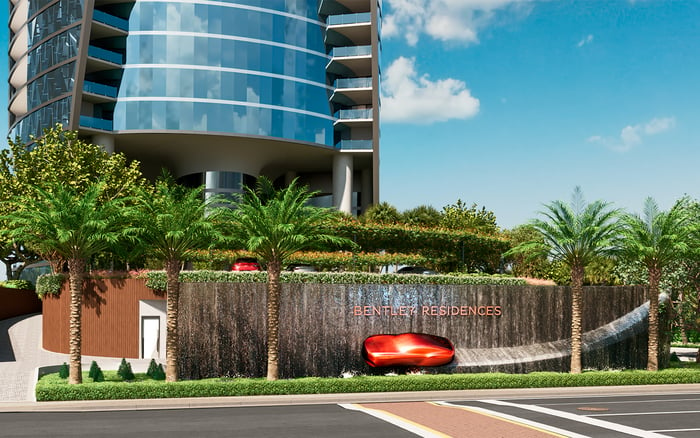
The same line of questioning applies across the upper end of the Sunny Isles market. Buyers looking at Bentley Residences Sunny Isles, The Ritz-Carlton Residences® Sunny Isles, or Jade Signature Sunny Isles Beach should not treat brand, height, or design ambition as substitutes for infrastructure diligence. Each property is its own operating environment. The right question is always building-specific and unit-specific.
For search shorthand, some buyers may refer to the submarket as Sunny Isles, but the diligence standard should remain more exacting than the label. A beachfront address deserves a beachfront-grade review of resilience, including power, access, water management, staffing protocols, and digital continuity.
A serious buyer should request clear answers before the end of diligence, preferably in writing. The request should cover the number of internet service providers available to the property, whether their routes into the building are independent, and whether any backup service can take over automatically during an outage.
The buyer should also ask how telecom service reaches the individual residence. Are there shared risers or distribution points that could affect multiple units? Are critical building systems dependent on the same connectivity path as residential service? Are any smart-home, alarm, camera, or access-control systems configured to operate locally if the internet drops?
For new-construction and recently delivered luxury residences, the question should be framed early, before customization decisions are finalized. For resale residences, the buyer should review what is actually installed in the unit, not only what the building can theoretically support. A prior owner’s network choices may not match the expectations of a buyer who needs secure remote work, media reliability, or household staff access across multiple devices.
There is also a service-level conversation. Residential internet is not always sold with the same repair commitments or uptime assurances as enterprise service. A buyer who requires business-grade resilience may need to explore whether dedicated service, cellular backup, satellite backup, or a managed network solution is permitted and practical within the residence.
The most compelling residences do not announce their resilience. They simply function. Doors open, calls connect, cameras record, elevators communicate, climate systems respond, and private offices remain useful. That quiet continuity is now part of the language of ultra-premium ownership.
The Estates at Acqualina may be evaluated as a trophy coastal address, but the buyer test for 2026 is more operational than ornamental. Until confirmed documentation establishes the details, internet redundancy should be treated as an open diligence question rather than a guaranteed amenity. That distinction protects the buyer and respects the seriousness of the asset.
A well-advised purchaser will ask for diagrams, provider details, management confirmation, association materials where applicable, and a clear explanation of failover behavior. The goal is not to complicate the purchase. The goal is to make sure the residence performs at the standard its price, setting, and owner lifestyle imply.
Does The Estates at Acqualina publicly confirm internet redundancy? Current positioning does not establish verified multiple carriers, diverse fiber paths, or automatic failover. Buyers should request direct documentation before relying on redundancy.
Is high-speed internet enough for a luxury buyer? Not always. High speed describes performance during normal operation, while redundancy describes continuity during an outage.
What is the first question buyers should ask? Ask whether more than one internet service provider serves the property through independent infrastructure. Provider diversity without path diversity may still leave risk.
Why does automatic failover matter? Automatic failover can keep systems running with minimal interruption. Manual backup may require intervention and may not preserve a seamless experience.
Should smart-home systems be tested separately? Yes. Lighting, climate, access, security, and other connected systems may have different dependencies than general internet service.
Can internal building wiring create a weak point? Yes. A shared riser, equipment room, or distribution point can create a single point of failure even when outside providers are available.
Is this issue unique to The Estates at Acqualina? No. Internet redundancy is a sensible diligence topic across ultra-luxury coastal condominiums and branded residences.
Why is storm resilience part of the conversation? Sunny Isles Beach’s coastal South Florida setting makes post-event connectivity relevant for owners who expect continuity after disruption.
When should the buyer raise these questions? Raise them before the diligence period ends, while there is still time to request documents, confirmations, and technical review.
Who should verify the answers? Appropriate parties may include building management, the association, telecom providers, technical consultants, or building engineering representatives.
When you're ready to tour or underwrite the options, connect with MILLION.
If branded residences are on your mind — as a home or as an allocation — we would be glad to share what we are seeing, privately.
Begin a quiet conversation