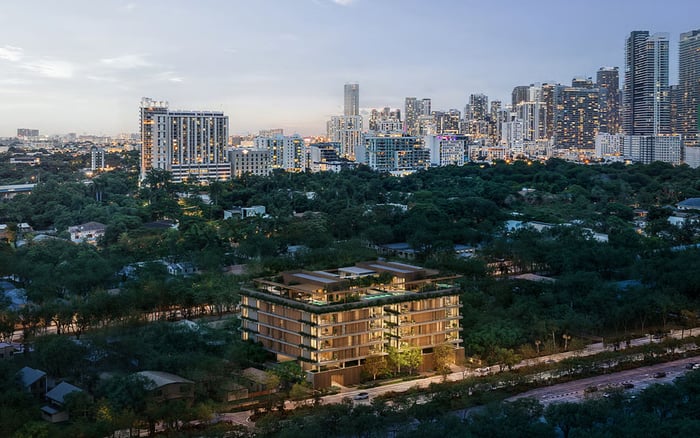
Guest parking is one of the quiet determinants of daily luxury: it shapes entertaining, staffing, and even how “easy” a building feels over time. For buyers considering The Residences at 1428 Brickell, the right question is not only whether guest spaces exist, but how tightly they are managed and how that management will align with your lifestyle in Brickell.
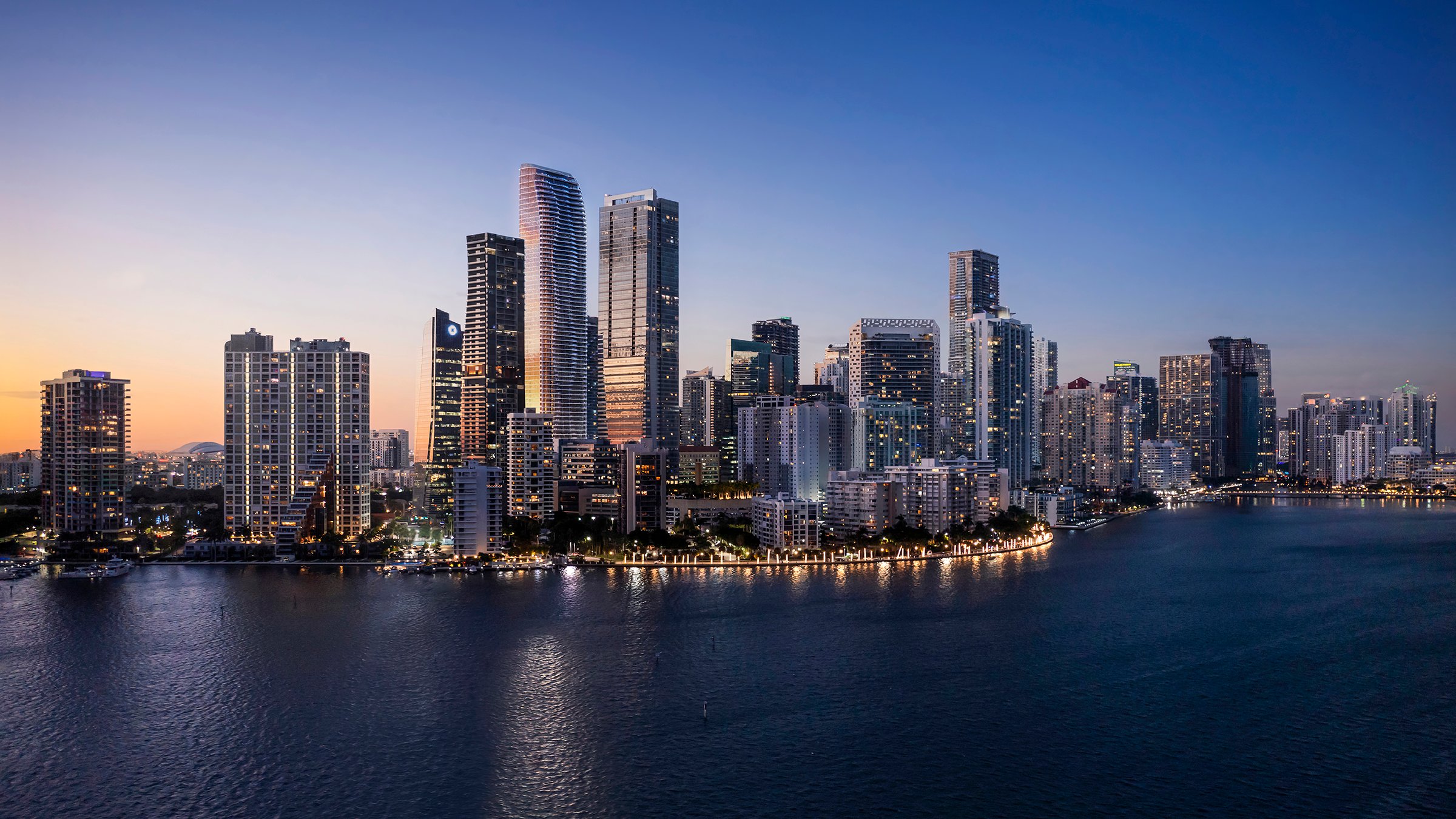
In ultra-vertical neighborhoods, guest parking isn’t a convenience-it’s an operating philosophy. The difference between a building that feels effortless and one that feels restrictive often comes down to how management interprets “guest,” how the valet is staffed during peak arrivals, and how consistently rules are applied.
At The Residences at 1428 Brickell, evaluating strictness is less about counting spaces and more about understanding how access is managed when demand spikes: holiday weekends, dinner parties, a full calendar of contractors, or multiple households arriving at once.
Brickell’s density amplifies every friction point. Limited curb frontage, competing drop-offs, and commuter traffic mean a policy that reads reasonable on paper can feel rigid at 7:30 p.m. on a Friday. The objective is to anticipate those moments before you sign-and to align expectations with the building’s likely operational posture.
In South Florida luxury towers, guest parking strictness typically shows up in four areas.
First, time limits. Some buildings treat guest parking as genuinely short-term, with tight caps that effectively discourage long dinners, extended meetings, or social visits that run late. Others allow a wider window, particularly when valet operations can absorb demand.
Second, validation and sponsorship. A strict policy often requires residents to actively sponsor each vehicle via an app, concierge desk, or pre-registration workflow. That can be excellent for security and privacy, but it adds steps when hosting is spontaneous.
Third, overnight treatment. Overnight guest parking is often where a building draws its clearest line. If overnight access is rare, tightly controlled, or reserved for specific circumstances, entertaining out-of-town guests may require planning, ride services, or off-site arrangements.
Fourth, enforcement consistency. A rule that’s occasionally ignored is not the same as a rule enforced uniformly. In top-tier buildings, consistency is often the point: it protects residents from abuse of the amenity and preserves a calm lobby experience. But for buyers who equate luxury with flexibility, that same consistency can register as strictness.
Without relying on assumptions, you can get clarity quickly by focusing on operational specifics that materially shape daily life.
Ask whether guest access is primarily valet-only, or whether there is any self-park component for visitors. Valet-only systems can feel seamless when the team is properly staffed, but they can also concentrate pressure into a single pinch point: the arrival queue.
Ask how the building defines a “guest.” Is a recurring housekeeper treated differently from a social guest? Is a personal driver or security detail considered guest parking, or handled through a separate protocol? Many luxury households run on a cadence of service providers that is closer to “regular” than “occasional,” and strictness often emerges when those visits are treated as one-off guests every time.
Ask what happens during peak usage. Does the building limit guest vehicles per residence at a given time? Does management reserve capacity for resident arrivals first and throttle guest intake as the garage nears capacity? In Brickell-where simultaneous arrivals are common-priority rules can be as consequential as the absolute number of spaces.
Finally, ask for the policy in writing. Where expectations are precise, written rules are often thoughtfully drafted and operationally realistic. That is typically a strong signal, even if it leaves less room for improvisation.
There’s a counterintuitive truth in elite residential operations: strictness can be a feature.
When guest parking is carefully controlled, it’s harder for non-residents to blend in. The lobby stays quieter. Elevators feel less crowded. The arrival experience is less chaotic. In a neighborhood like Brickell, where high-profile residents often prioritize discretion, tighter policies can support the privacy the market prizes.
Strict guest parking can also protect residents from a familiar pain point: the informal conversion of guest capacity into de facto overflow parking for households that already have full-time vehicles. A building that enforces guest rules is more likely to preserve the amenity for its intended purpose-genuine guest access rather than unregulated storage.
The key is matching the building’s stance to your lifestyle. If you host frequently, you may still prefer strict rules if the system is predictable, well staffed, and designed to minimize friction. Predictability is its own luxury.
Before you decide whether a policy is “too strict,” run three practical stress tests.
Entertaining at scale.
If you host dinners, charity events, or business gatherings, confirm whether guest parking can handle a wave of arrivals in a short time window. If the policy requires pre-registration, verify how many vehicles can be registered and how far in advance.
Out-of-town guests.
If family visits for a long weekend, you need to know whether overnight guest parking is allowed and under what conditions. If it’s tightly limited, your plan may shift toward ride services, nearby garages, or ensuring your own assigned spaces can cover a second vehicle.
Household operations.
If your home relies on a steady cadence of service providers, ask whether the building offers a distinct approach for recurring staff. Some towers implement vendor check-ins and separate rules, which can feel strict but ultimately faster and more secure.
If any of these stress tests are central to your day-to-day, compare the policy posture to other high-end options in the neighborhood. For example, a buyer weighing Brickell may also look at 2200 Brickell, or consider how a hospitality-forward environment might handle arrivals at Baccarat Residences Brickell. The point is not that one approach is better, but that each building expresses luxury differently through operations.
Brickell luxury is increasingly defined by managed experiences: curated lobbies, controlled access, and service models that resemble private clubs. Guest parking policies tend to follow that direction. In practice, this often means:
More structured guest intake rather than casual, unlimited visitor parking.
Greater reliance on valet operations to protect the arrival experience.
A preference for predictable protocols over exceptions.
When you evaluate strictness at The Residences at 1428 Brickell, ask yourself what you value more: flexibility or consistency. In high-demand corridors, consistent rules are often what keeps the building performing at the level residents expect.
If your lifestyle is split between Brickell and other submarkets, the contrast can be instructive. A wellness-oriented residential model like The Well Coconut Grove may communicate luxury through a quieter, neighborhood cadence, while an ultra-vertical tower such as Aston Martin Residences Downtown Miami often has to manage heavier arrival patterns. These comparisons help you interpret whether a rule feels unusually strict-or simply calibrated for density.
Guest parking strictness is easiest to assess when you pair documentation with observation.
On the documentation side, review house rules and any parking addenda for:
Definitions: guest vs. vendor vs. resident additional vehicle.
Limits: per-residence guest vehicle limits and time caps.
Overnight: whether it is prohibited, limited, or permitted with approval.
Fees: valet or guest charges, if any, and how they are communicated.
Enforcement: towing, immobilization, or escalation steps.
On-site, spend a few minutes watching the arrival sequence. Does the curb feel congested? Do vehicles stack? Is the concierge triaging efficiently? A building can run strict rules and still feel graceful if the front-of-house team is proactive and the circulation pattern is well designed.
Also consider the “soft” signals: how easy it is to communicate guest arrivals, whether the concierge answers operational questions clearly, and whether the process reads as hospitality or bureaucracy. That difference is often where buyers form their lasting impression.
For The Residences at 1428 Brickell, the strictness of guest parking allowances is best evaluated as part of a broader operational identity: privacy, security, and order versus spontaneity and elasticity.
A strict policy can be exactly what a discreet household wants, especially in Brickell where the curb is busy and the audience is discerning. But if your definition of luxury is fluid entertaining and frequent overnight visitors, confirm that the rules are not only clear, but workable for your calendar.
Treat guest parking as you would any other essential: not as a brochure line, but as a lived experience. The right building makes the rules feel invisible.
What does “guest parking” typically include in Brickell towers? Usually valet-managed guest access, sometimes with pre-registration or time limits.
Is a strict guest parking policy automatically a negative? No. It can protect privacy, reduce congestion, and preserve a calm arrival experience.
What is the most important rule to confirm before buying? Overnight guest parking policy, since it affects visiting family, friends, and drivers.
How can I tell if enforcement is truly strict? Ask how violations are handled and whether exceptions are common or rare.
Will guest parking rules affect household staff and contractors? Yes. Clarify whether vendors have separate procedures and whether recurring staff is treated differently.
Does valet-only guest parking feel restrictive? It can if staffing is light at peak hours, but it can also feel seamless when well run.
Can guest parking limits impact entertaining at home? Yes. Limits per residence and time caps can shape event planning and arrival waves.
How do I benchmark strictness against other luxury buildings? Compare written policies, arrival flow, and how the concierge handles guest intake.
Should I expect guest parking fees in luxury buildings? It varies; confirm any guest charges and how they are applied before you commit.
What is one practical on-site test to run during a visit? Observe the curb at peak evening hours to see whether the process feels calm or congested.
For a tailored shortlist and next-step guidance, connect with MILLION Luxury.
If branded residences are on your mind — as a home or as an allocation — we would be glad to share what we are seeing, privately.
Begin a quiet conversation