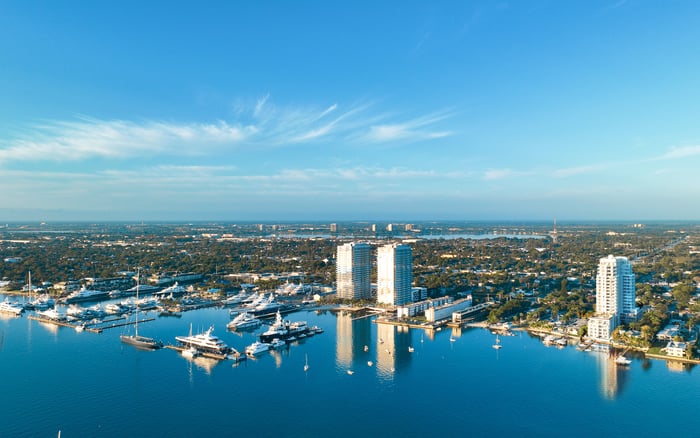
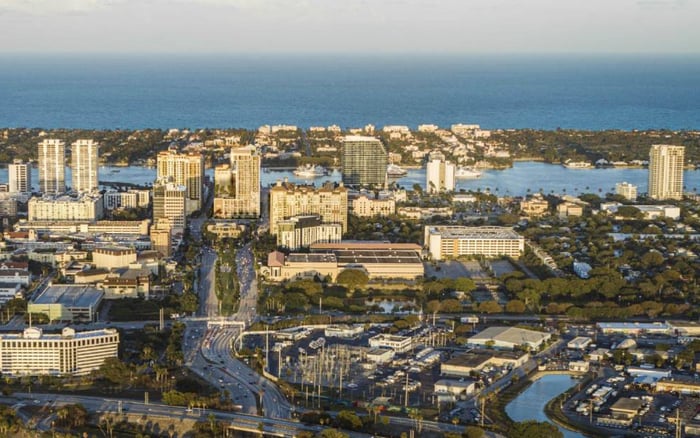
For luxury buyers in West Palm Beach, an on-site restaurant is not a perk. It is a daily lifestyle engine that shapes routines, hosting, service expectations, and even how a building reads to guests. In this MILLION Luxury editorial, we compare what “culinary anchor” can mean at Mr. C Residences West Palm Beach versus Forté on Flagler, then translate those differences into buyer-relevant considerations: privacy, service culture, entertaining flow, and long-term livability. With no single disclosed set of verified, property-specific culinary details available here, this comparison focuses on what discerning buyers can evaluate in person and in contracts: operator identity and control, room-service like functionality, the choreography between lobby and dining, the acoustics of arrival, and how food and beverage integrates with amenities, wellness, and waterfront living along Flagler Drive. The goal is not to crown a winner, but to help you choose the culinary ecosystem that matches how you actually live.
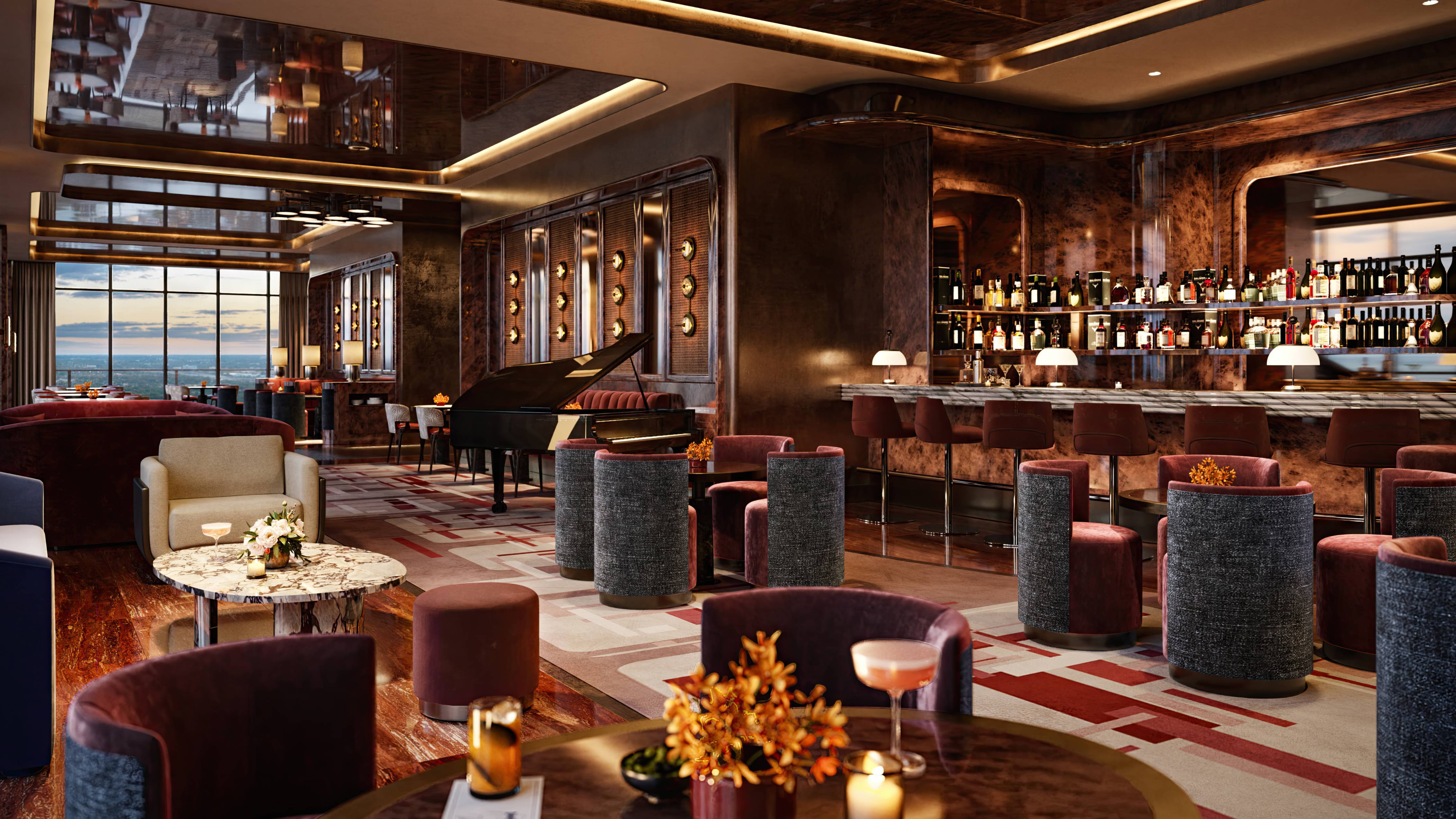
In ultra-premium condominiums, food and beverage is rarely just about convenience. It signals how a building approaches service, privacy, and social life. In West Palm Beach-where a quiet morning on Flagler can turn into a black-tie evening across the bridge-a well-conceived culinary anchor becomes the hinge between residential calm and city-facing energy.
MILLION Luxury views culinary anchors as a three-part system:
A venue residents actually use on ordinary days, not only for celebrations.
An operating model that treats residents as the primary constituency, even when the room is full.
A spatial plan that protects the residential experience: discreet entries, controlled circulation, and thoughtful acoustic separation.
Against that framework, the comparison between Mr. C Residences West Palm Beach and Forté on Flagler is less about menus and more about the kind of living each building implies. Both sit in a market where buyers often expect turnkey ease. Yet “ease” can mean two different things: a hospitality-forward building that reads like a private club, or a more residential-forward tower where dining is present but not necessarily the social center.
Mr. C, as a brand, typically telegraphs a hotel-minded approach to residential life. For buyers, the practical takeaway is that dining is treated as an extension of service-not an amenity relegated to the margins. If you value a consistent, staffed experience, the culinary component is often designed to do more than feed you. It shapes arrival, hosting, and how the building presents to guests.
What to evaluate on a tour:
The boundary between restaurant energy and residential quiet. If the dining venue is intended to be a destination, the building must also demonstrate control-separate paths for guests, residents, staff, and deliveries.
The rituals of daily life. Ask how coffee, casual meals, and take-away are handled. The strongest setups feel effortless without pushing you into a public scene.
The hosting advantage. A hospitality-forward culinary anchor can operate like an extension of your dining room-especially when private dining or catered service can be executed with minimal friction.
This is especially relevant for buyers who split time between cities and want West Palm Beach to feel operationally “solved.” In that worldview, dining is less about novelty and more about reliability and polish.
Forté on Flagler, by name and positioning, reads as a classic waterfront residential tower where the primary promise is the view, the address, and the daily calm of Flagler Drive. For many luxury buyers, that is the point: your home should feel like a residence first, with any culinary component supporting the lifestyle rather than defining it.
The culinary anchor in a residential-forward building is often judged by different criteria:
Does it enhance the building without inviting unnecessary public traffic?
Is it scaled for residents rather than engineered to draw a broader audience?
Does it support a quieter pattern of living-where entertaining is more often in-home, with food arriving discreetly and on time?
Buyers who prioritize serenity over scene tend to care less about a restaurant’s social gravity and more about how the building protects their day: controlled access, calm lobbies, predictable service response, and minimized “event” dynamics.
When you compare culinary anchors between Mr. C Residences West Palm Beach and Forté on Flagler, the most useful question is not “Which restaurant is better?” It is: “What behavior is the building designed to encourage?”
A destination-minded restaurant can elevate the building’s aura. It can also introduce peak-hour congestion, valet pressure, and more non-resident touchpoints. A resident-first dining model is usually quieter, but may feel less like a lifestyle centerpiece.
Here is how to pressure-test the difference with buyer-grade specificity:
Stand at the front door during a busy window. Does the first impression read as a residence, a hotel, or a restaurant with residences above it? None is inherently wrong-but each attracts a different kind of owner.
If you prefer a social, cosmopolitan feel, you may want a lobby with energy and a sense of theater.
If you value discretion, look for separation and controlled sightlines so dining activity never dominates the residential arrival.
The clearest differentiator is what happens on a Friday night when every table is taken.
Can residents secure a table without planning days ahead?
Is there a true resident preference-and is it operationally enforced?
Can food be delivered to your home in a way that feels like service rather than a handoff?
Even without specific promises in marketing language, you can often infer the real-world answer from staffing levels, management presence, and how tightly the venue is integrated with the building.
Luxury is often measured by what you do not see. Ask how deliveries are handled and where food waste and linen move.
A well-run culinary anchor keeps service corridors out of resident areas, schedules deliveries to avoid rush periods, and prevents kitchen odors from drifting into the lobby and elevators.
West Palm Beach living often extends outdoors. If the restaurant includes terrace seating or an indoor-outdoor bar, confirm the acoustic strategy.
Where does sound travel at night?
Are there hard surfaces that amplify noise into the street canyon?
Do nearby residences face the active zone?
In a destination model, sound control is an engineering choice. In a resident-first model, it is often a design priority.
Culinary anchors are strongest when they align with how you actually entertain.
If your hosting style is “effortless and public-facing,” a hospitality-forward environment can feel like a genuine upgrade. You meet guests in a polished dining room, linger at the bar, then return upstairs-without coordinating cars or competing for reservations elsewhere.
If your hosting style is “private and curated,” a quieter, residential-forward environment can be the better canvas. You may prefer bringing in a chef, using catering, or staging intimate dinners at home where the building’s role is to make logistics invisible.
In both cases, ask how the building supports private events. The answers that matter are operational: elevator control, staff coordination, loading access, and how common areas are protected during events.
High-net-worth buyers often decide based on weekday routines rather than weekend fantasy.
Evaluate the culinary anchor as a weekday utility:
Can you get a high-quality breakfast quickly?
Is there a quiet corner for a low-key meeting?
Does the space support a refined, healthy routine without feeling like a scene?
This is where Mr. C Residences West Palm Beach may resonate with buyers who want the building to function as an “operating system” for life. Forté on Flagler may fit buyers who want their home to remain the calm center, with dining as an option rather than a focal point.
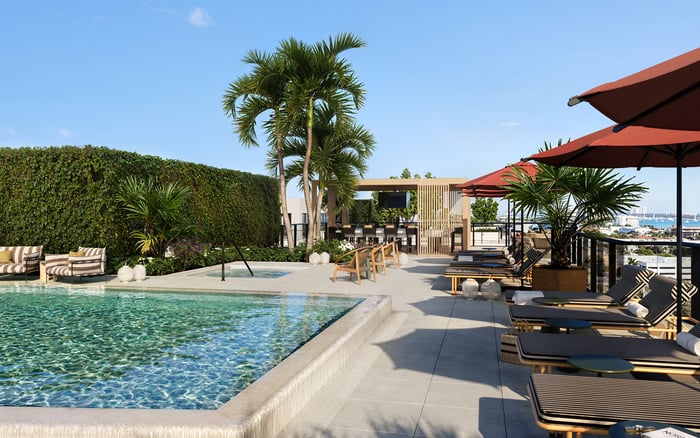
Flagler Drive changes the sensory experience of dining. Sun, wind, and water views can make even a simple lunch feel elevated. Yet outdoor dining also introduces practical considerations: wind management, shade design, and how closely dining terraces sit to resident sightlines.
When comparing these two properties, watch how outdoor space is zoned. The best buildings create outdoor dining moments that feel exclusive while protecting residential terraces from visibility and noise.
Even when a culinary program is compelling, buyers should verify the mechanisms that keep it compelling over time.
Ask for clarity on:
Governance and control: who makes decisions about hours, music, and private events?
Resident access: how reservations, priority seating, and any delivery or in-residence dining are handled.
Operational boundaries: where staff circulates, how deliveries occur, and how the building preserves quiet hours.
Long-term flexibility: whether the culinary space can evolve without undermining the residential experience.
The objective is to avoid a mismatch: expecting serenity in a building designed for destination energy-or expecting a vibrant scene in a building designed for privacy.
West Palm Beach is increasingly discussed in the same breath as other South Florida lifestyle markets, even though the cadence is different. Buyers moving between neighborhoods often notice how culinary anchors shape a building’s identity.
In Miami’s Downtown corridor, for example, hospitality-forward living can feel like part of the proposition, while Coconut Grove can skew more residential in tone, with dining as a neighborhood extension rather than a building centerpiece. Along the coast, certain addresses emphasize discreet service and privacy, while others lean into social visibility.
If you are cross-shopping across the region, keep your non-negotiables consistent: resident priority, acoustic control, and the degree to which you want your building to function as a destination.
To decide between Mr. C Residences West Palm Beach and Forté on Flagler, consider four buyer profiles.
The “always hosted” owner: You want the building to provide a polished setting for spontaneous gatherings. A hospitality-forward culinary anchor can feel like a lifestyle multiplier.
The “private principal” owner: You prefer a quieter rhythm, controlled access, and minimal public overlap. A residential-forward approach tends to fit.
The “weekday maximalist” owner: Your decision hinges on breakfast, coffee, and convenience that feels seamless. Evaluate the operational details, not the marketing language.
The “long-term custodian” owner: You care about longevity and governance. Prioritize how the building controls the culinary program over time.
Ultimately, culinary anchors are not only about taste. They are about power dynamics, operational discipline, and the way a building makes you feel every time you come home.
Which building has the better restaurant, Mr. C Residences West Palm Beach or Forté on Flagler? “Better” depends on whether you want destination energy or a quieter, resident-first atmosphere.
What should I look for first when touring a building with an on-site restaurant? Watch the arrival sequence and circulation to see whether restaurant traffic compromises residential privacy.
Do culinary anchors typically increase noise for residents? They can, especially during peak dinner hours, if acoustics and access are not tightly controlled.
How can I tell if residents are truly prioritized for reservations? Ask about resident-preference policies and observe how peak-time requests are handled in practice.
Is in-residence dining or delivery a meaningful differentiator? Yes-because it shows whether the restaurant is integrated as a service model or operates primarily as a standalone venue.
Can a destination restaurant help resale perception? It can enhance brand cachet, but only if operations remain consistent and the resident experience stays protected.
What’s the biggest risk with a strong culinary scene in a residential tower? Increased non-resident traffic can strain valet, lobbies, and privacy when boundaries are not well designed.
What’s the biggest risk with a quiet, residential-first approach? The dining component may feel less compelling day-to-day if you rely on the building for social energy.
How should buyers evaluate outdoor dining along Flagler? Focus on wind, shade, sound travel, and whether terraces are separated from residential sightlines.
Should my choice be driven by lifestyle or investment logic? Lifestyle should lead, because day-to-day satisfaction hinges on service, privacy, and routines.
For a tailored shortlist and next-step guidance, connect with MILLION Luxury.
If branded residences are on your mind — as a home or as an allocation — we would be glad to share what we are seeing, privately.
Begin a quiet conversation