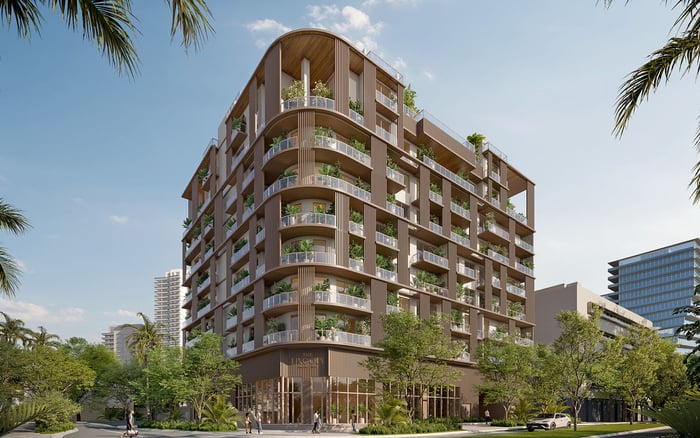
A buyer-oriented aesthetic comparison of wood-clad ceilings and plaster ceilings, framed through Coconut Grove’s Ziggurat and The Lincoln, with practical guidance on light, acoustics, maintenance, and resale positioning.
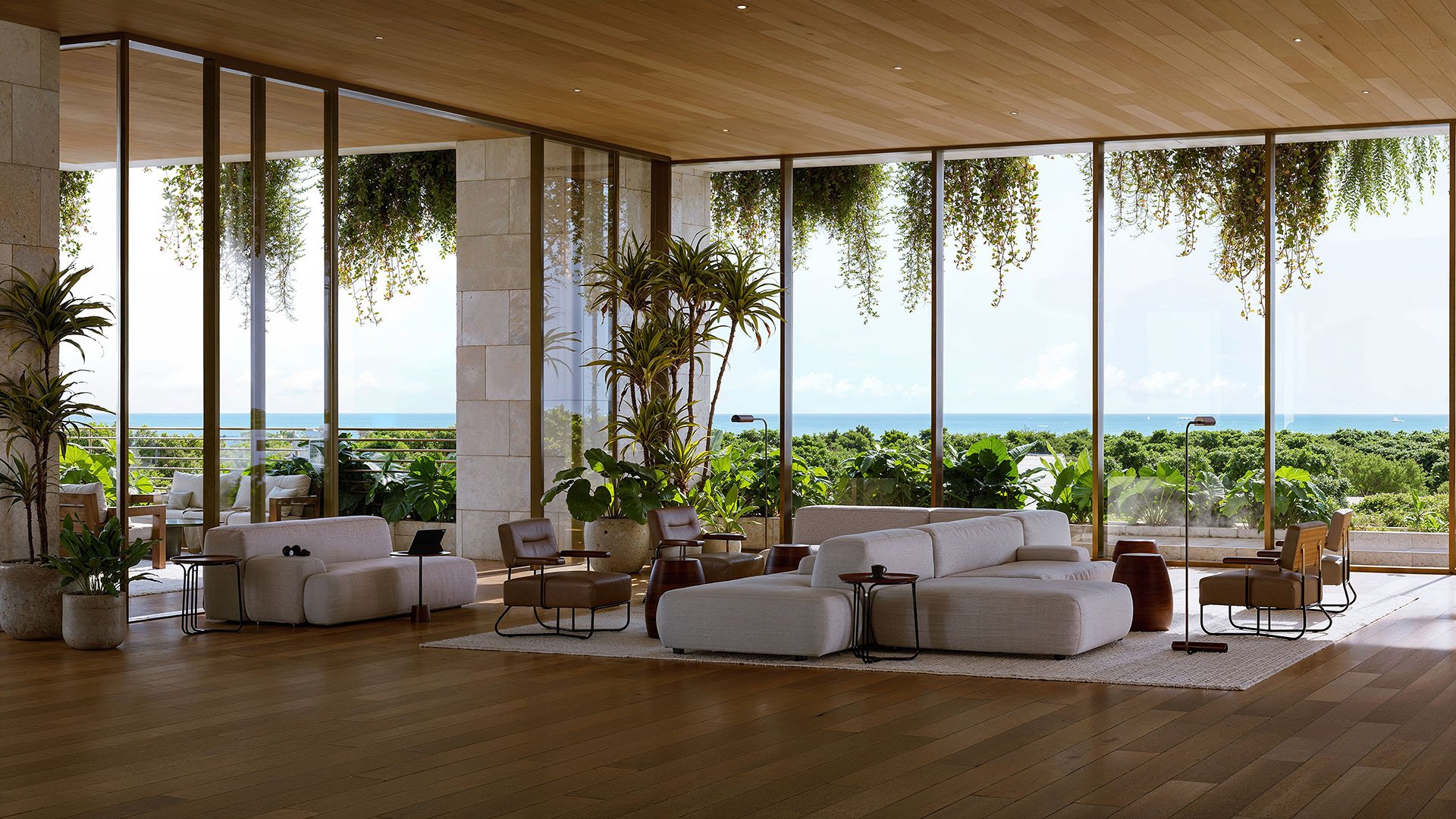
In South Florida’s top-tier residences, ceilings are not background. They’re the largest uninterrupted plane in the room, they shape how daylight lands and travels, and they decide whether an interior reads coastal and relaxed or crisply metropolitan. When you compare the aesthetics of wood-clad ceilings versus plaster, you’re really weighing two different expressions of luxury: warmth and grain versus silence and seamlessness.
This conversation becomes especially relevant in Coconut-grove, where buyers often want calm, low-profile sophistication that still feels connected to the landscape. In that setting, the ceiling is a powerful lever for continuity. A wood ceiling can visually extend the canopy of palms and hardwoods into the home; a plaster ceiling can make the room feel like a curated gallery, letting views, art, and furnishings do the talking.
Using Ziggurat Coconut Grove and The Lincoln Coconut Grove as conceptual anchors, this editorial breaks down how each ceiling language reads, what it does to the room, and which lifestyle it best serves.
A wood-clad ceiling is fundamentally narrative. Grain adds legibility, joints introduce rhythm, and tone creates a sense of shelter. In a city of glass, wood is one of the fastest ways to make a residence feel designed rather than merely finished.
In Coconut-grove, wood tends to feel native, not trendy. It echoes the neighborhood’s layered greenery and its long-standing preference for refined, residential scale over overt flash. Visually, it lowers perceived ceiling height even when the actual height is generous, creating intimacy. That effect is especially flattering in open-plan living areas, where a large volume can otherwise read like a showroom.
A wood ceiling also shapes the way shade behaves. Under strong South Florida sun, wood can absorb and modulate brightness-reducing glare and introducing dimensional shadow lines. The room feels settled earlier in the day, even before window treatments are drawn.
Wood ceilings pair beautifully with tactile materials: linen, boucle, leather, honed stone, matte metals. They’re forgiving of mixed woods as long as undertones are handled with care. For collectors, wood can be a supportive backdrop for art, but it isn’t neutral. It can compete with pieces that depend on crisp negative space-especially minimalist works where the edge of the frame matters.
Wood’s character is also its risk: it becomes a feature, and features can date. The most timeless wood ceilings tend to be restrained-consistent tone, minimal sheen, and a layout that reads architectural rather than decorative.
Plaster, by contrast, is about absence. It removes visual noise and puts proportion in command. A plaster ceiling can make a home feel more expensive simply because everything else appears more intentional against it.
For buyers drawn to The Lincoln’s style of urban-residential polish, plaster reads disciplined and modern. It creates a continuous plane that visually edits the room. Lighting becomes the jewelry: coves, recessed lines, and carefully placed fixtures stand out without competing with grain or seams.
Plaster also supports a collector’s mindset. If you rotate art, invest in statement furniture, or want the view to be the primary composition, plaster is a safer, longer-lived canvas. It’s the ceiling choice that suggests the home is a vessel for taste, not a pre-written story.
In bright climates, plaster’s reflectance is a powerful tool. It bounces daylight deeper into the plan and can make spaces feel larger and more open. If your preferred interior is tonal and minimal, plaster helps hold that clarity across changing light.
Plaster can be breathtaking, but it demands a complete composition. Without warmth in flooring, textiles, or millwork, a plaster ceiling can push a space toward austere. In other words: plaster rewards restraint, but it punishes emptiness.
Aesthetic decisions in luxury real estate are rarely only aesthetic. They shape how a home performs during a dinner party, on a quiet morning, and through the months when windows stay closed and climate control does the heavy lifting.
Wood acts like a filter. It calms and deepens. Plaster acts like an amplifier. It spreads light and sharpens perceived crispness. If you entertain with candlelight, warm-dim lighting, and layered lamps, wood ceilings can feel cinematic. If you prefer daytime hosting, bright art lighting, and a clean palette, plaster keeps the room looking precise.
Hard, flat surfaces can create reverberation, especially in modern plans with stone or large-format tile. Wood ceilings can introduce acoustic softness, particularly when the assembly includes slats, joints, or backing that breaks up reflections. Plaster is smooth and continuous; while visually elegant, it can benefit from acoustic strategy elsewhere-rugs, drapery, upholstered seating, and thoughtfully placed art.
South Florida buyers are discerning about long-term stewardship, even when a home is used as a second-home. Ceiling finish is part of that calculus.
Wood’s appeal is its ability to age gracefully, developing subtle depth over time. The challenge is consistency. Repairs, touch-ups, or shifts in UV exposure can read as patchwork if not handled expertly. Wood also asks for an owner comfortable with natural variation. If you want a ceiling that looks identical year after year, wood may feel emotionally busy.
Plaster’s promise is uniformity. Its vulnerability is that uniformity shows everything: hairline cracks, imperfect patches, and inconsistent paint. The best plaster ceilings look effortless because execution is disciplined-and because lighting is calibrated to avoid raking glare that reveals minor flaws.
Think of Ziggurat Coconut Grove as the thesis for warmth and crafted atmosphere, and The Lincoln Coconut Grove as the thesis for restraint and edited elegance. Both can be undeniably luxurious. The distinction is experiential.
Choose a wood-clad ceiling mindset if you want:
A room that feels emotionally warmer the moment you enter.
A home that reads residential even with contemporary architecture.
A background that supports layered, tactile furnishings and relaxed hosting.
Choose a plaster ceiling mindset if you want:
A cleaner visual frame for art, views, and statement furniture.
A more modern, gallery-like calm that prioritizes proportion.
A ceiling that disappears, making lighting and layout the primary design moves.
In Coconut-grove specifically, the decision often comes down to how much you want the home to feel like a sanctuary versus a salon. Wood leans sanctuary. Plaster leans salon.
In the ultra-premium segment, resale isn’t about broad appeal. It’s about attracting the right buyer quickly-and letting the product feel inevitable.
Wood ceilings can signal:
Intentional design investment.
A hospitality-forward lifestyle.
A preference for warmth over stark minimalism.
Plaster ceilings can signal:
Taste that is collector-friendly and adaptable.
A modern point of view that prioritizes architecture.
A cleaner baseline for a buyer who will personalize through furniture and art.
If you’re comparing two residences with similar view corridors and floor plan logic, ceiling finish becomes a proxy for the entire interior philosophy. Buyers notice, even when they can’t articulate it.
Ceiling preference also tracks with neighborhood energy. A few reference points clarify the aesthetic map.
In Brickell, where skyline living and architectural sharpness often lead, plaster ceilings typically align with the prevailing mood. A residence such as 2200 Brickell sits naturally within a design culture that values clean planes, crisp detailing, and lighting-driven drama.
Along the ocean, where sunlight is intense and the palette leans bright, plaster can feel especially effortless-amplifying daylight and keeping interiors visually cool. Consider how a coastal address like 57 Ocean Miami Beach tends to benefit from quiet, continuous surfaces that let the horizon dominate.
In more residential, garden-forward enclaves like Coconut-grove, wood ceilings often feel less like a statement and more like an extension of the landscape. Projects such as Arbor Coconut Grove underscore how warmth and discretion can read as the most confident kind of luxury.
If you want a practical filter, use these questions in your next showing:
When you step inside at noon, do you crave more calm or more clarity?
Is your art collection graphic and minimal, or layered and textural?
Do you host at night with warm lighting, or in the day with bright rooms?
Do you enjoy patina and natural variation, or do you prefer pristine uniformity?
Neither ceiling is universally better. The right answer is the one that makes your preferred lifestyle feel inevitable-and makes the home’s architecture feel coherent.
Do wood-clad ceilings make a room feel smaller? They can lower perceived height, often in a flattering, more intimate way.
Are plaster ceilings always more modern-looking? Typically yes, because they read as seamless and emphasize clean geometry.
Which ceiling finish is better for showcasing art? Plaster is the safer canvas; wood can compete with highly minimalist work.
Does wood help with acoustics in open-plan living areas? It can, especially when detailing introduces texture that breaks up sound.
Will plaster show imperfections more than wood? Yes. Its uniform surface can reveal minor flaws, particularly under sharp light.
Is a wood ceiling too “trendy” for long-term value? Not if it is restrained in tone and layout; overly decorative patterns date faster.
Can plaster feel cold in a tropical setting? It can if the room lacks warmth elsewhere; textiles and millwork balance it.
Which feels more aligned with Coconut-grove living? Many buyers lean warm and residential, but the best choice is lifestyle-specific.
Should ceilings match throughout the home? Consistency reads elevated, though selective shifts can define key public spaces.
What is the simplest way to decide between the two? Choose wood for atmosphere and shelter; choose plaster for clarity and flexibility.
For a tailored shortlist and next-step guidance, connect with MILLION Luxury.
If branded residences are on your mind — as a home or as an allocation — we would be glad to share what we are seeing, privately.
Begin a quiet conversation