A discreet buyer’s guide to evaluating district construction in Surfside, from building oversight and neighboring sites to lifestyle continuity, resale posture, and due diligence before contract.

Living in Surfside has long appealed to buyers who prefer a quieter oceanfront address, a more intimate municipal scale, and immediate proximity to Bal Harbour, Miami Beach, and the broader coastal corridor. For ultra-luxury buyers, however, the conversation is no longer limited to views, finishes, and amenities. It now includes a more practical question: how will district construction shape the daily experience of ownership?
That question is not a reason to step away from Surfside. It is a reason to become more disciplined. In a compact coastal town, construction is not an abstract background condition. It can affect arrival routes, beach access patterns, valet timing, perceived privacy, noise, vibration, dust control, and the way a residence feels from season to season. The most sophisticated buyers treat those variables with the same seriousness they give to floor height, exposure, and building services.
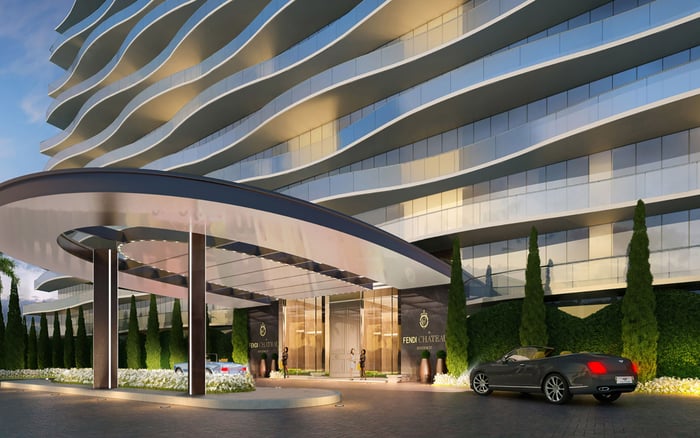
Surfside also sits in a market where the language of luxury is unusually specific. A buyer comparing the quiet formality of The Surf Club Four Seasons Surfside, the design identity of Fendi Château Residences Surfside, the contemporary edge of Eighty Seven Park Surfside, or the next chapter represented by The Delmore Surfside is not simply choosing an address. They are choosing a long-term relationship with a district, its construction cycles, its governance, and its standards.
Before falling in love with a residence, ask your advisor to map active, proposed, and recently completed construction in the immediate area. The focus should extend beyond the building you are buying. In Surfside, adjacent and nearby activity can matter almost as much as the asset itself, especially when the residence is valued for serenity, direct light, or a particular view corridor.
A buyer should ask which nearby lots may be redeveloped, where staging could occur, whether trucks may use adjacent streets, and whether any public-realm work could affect access. Even when details are not fully settled, the exercise is revealing. It clarifies whether the asking price properly reflects current conditions, near-term disruption, and long-term upside.
The right question is not simply, “Is there construction?” In a high-value coastal market, there usually is or will be. The better question is, “What is the construction relationship between this residence, this block, and my daily life?”
In Surfside, the elegance of a residence should be matched by the discipline of the building behind it. Buyers should review how a condominium association communicates, how frequently it updates owners, how it handles capital planning, and how transparent it is about maintenance priorities.
This is especially important for resale and legacy ownership. A building with refined interiors but weak governance can become a source of friction. A building with strong oversight, clear records, and a thoughtful approach to long-term stewardship can preserve both lifestyle and value. For buyers accustomed to private banking, family-office reporting, or institutional asset review, this level of scrutiny should feel familiar.
Ask about the rhythm of board communication, the process for owner notifications, and the framework for handling repairs or improvements. Luxury is not only marble, millwork, and service. It is the confidence that the building is being managed with seriousness.
Construction due diligence should include the building’s own condition, not just external activity. Buyers should ask about inspection history, engineering reviews, maintenance schedules, insurance posture, reserves, and anticipated assessments. The goal is not to create alarm. It is to understand the full cost and operational profile of ownership.
For new construction, the questions shift. What is the delivery expectation? How are warranties structured? What standards apply to materials, waterproofing, façade systems, mechanical systems, and amenity areas? How will the developer transition control, and what documentation will be available to owners?
For existing luxury buildings, the key is continuity. Has the building invested consistently in its physical plant? Are improvements reactive or planned? Does the association appear to think in years rather than months? A buyer who asks these questions early will have a stronger negotiating position and a calmer ownership experience.
Oceanfront real estate is often priced through the lens of what can be seen today. In a construction-sensitive district, luxury buyers should also evaluate what may be seen tomorrow. A view that feels open during a showing may change if nearby parcels evolve. A terrace that feels private at noon may feel different once neighboring activity begins.
This is not unique to Surfside, but the town’s scale makes it more personal. The relationship between tower, street, beach, and neighboring property is tight. Buyers should ask for sightline analysis, not just sunset photography. They should visit at different times of day, listen from the terrace, and consider how light enters the residence from morning through late afternoon.
The strongest residences are not only beautiful in the present. They have a credible future. They hold their poise even as the district around them continues to mature.
For many Surfside buyers, the residence is a primary home, winter base, or multigenerational retreat. That means construction impact should be translated into lifestyle terms. Will deliveries be simple? Will staff and guests have predictable access? Will beach routines remain convenient? Will children, pets, or older family members be affected by temporary changes in circulation?
These questions are not minor. At the top of the market, convenience is part of value. A residence with exceptional design but complicated access during key ownership periods may require a more careful pricing conversation. Conversely, a building with strong logistics, attentive management, and thoughtful communication may command confidence even during a changing district cycle.
The most discreet buyers often ask practical questions quietly and early. They know that a beautiful lobby is only one part of the arrival experience.
Surfside should be evaluated within its coastal context. Bal Harbour, Miami Beach, Sunny Isles, and Bay Harbor each offer a different rhythm of density, service, retail adjacency, and waterfront character. Surfside’s appeal is its balance: intimate, walkable, beach-oriented, and close to major luxury conveniences without feeling overtly urban.
That balance is also why construction matters. A single nearby project may feel more noticeable here than it would in a larger high-rise district. At the same time, thoughtful redevelopment can reinforce a neighborhood’s prestige, improve its architectural profile, and deepen the buyer pool over time.
Use comparisons carefully. Do not compare only price per square foot or amenity lists. Compare friction. Compare privacy. Compare how each district feels during the week, on holidays, and in peak season. Surfside rewards buyers who understand subtleties rather than headlines.
A buyer entering Surfside today should imagine the questions a future buyer will ask. Was the building well maintained? Were assessments handled transparently? Did construction around the property ultimately enhance or diminish the setting? Did the residence retain its view logic, privacy, and ease of access?
That future-buyer mindset is useful during negotiation. It helps separate emotional attraction from durable value. If a residence has exposure to construction risk, the price, terms, or closing timeline may need to reflect that. If the building offers strong stewardship and a compelling location, the buyer may accept temporary inconvenience in exchange for long-term positioning.
In Surfside, value is rarely one-dimensional. It lives at the intersection of architecture, beach, governance, services, district context, and buyer confidence.
Before contract, luxury buyers should ask for a concise construction and governance briefing. What is happening nearby? What is planned within the building? What are the known capital needs? How does management communicate? How could work affect parking, valet, elevators, service entries, terraces, pools, or beach access?
Legal, engineering, insurance, and condominium-document review should be aligned rather than siloed. A refined purchase process brings each advisor into the conversation early, then translates technical issues into ownership decisions. The result is not more anxiety. It is better control.
Surfside remains one of South Florida’s most compelling coastal addresses for buyers who value discretion and proximity in equal measure. The opportunity is to buy with eyes open, to understand the district as carefully as the residence, and to treat construction intelligence as a luxury asset in its own right.
Why should Surfside buyers ask about district construction? Nearby construction can affect access, privacy, noise, beach routines, and resale perception, all of which matter in a luxury purchase.
Is construction always a negative for a buyer? No. Thoughtful construction can strengthen a district over time, but buyers should understand timing, disruption, and long-term context.
What should I ask a condominium association before buying? Ask about maintenance planning, owner communication, inspections, reserves, insurance, and any expected capital projects.
How should oceanfront views be evaluated? Study current sightlines, potential neighboring activity, light at different times of day, and how privacy may change over time.
Does new construction require different due diligence? Yes. Buyers should review delivery expectations, warranties, transition planning, building systems, and developer communication.
How can construction affect daily life in Surfside? It may influence valet flow, guest access, delivery timing, terrace use, pool ambiance, and the perceived calm of the residence.
Should I compare Surfside with Bal Harbour and Miami Beach? Yes. Compare privacy, density, service culture, beach access, and neighborhood rhythm, not only pricing and amenities.
Are boutique buildings more sensitive to nearby construction? They can be, because smaller settings often make street activity, staging, and neighboring work feel more immediate.
What role does governance play in resale value? Strong governance can support buyer confidence by showing that the building is maintained, documented, and managed seriously.
What is the best way to shortlist comparable options for touring? Start with location fit, delivery status, and daily lifestyle priorities, then compare stacks and elevations to validate views and privacy.
When you're ready to tour or underwrite the options, connect with MILLION.
If branded residences are on your mind — as a home or as an allocation — we would be glad to share what we are seeing, privately.
Begin a quiet conversation