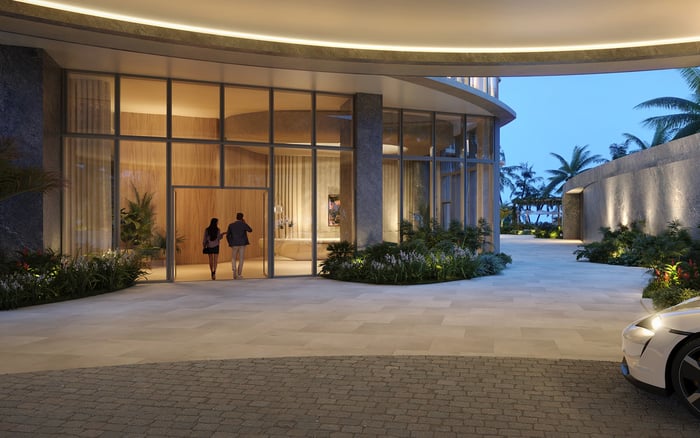
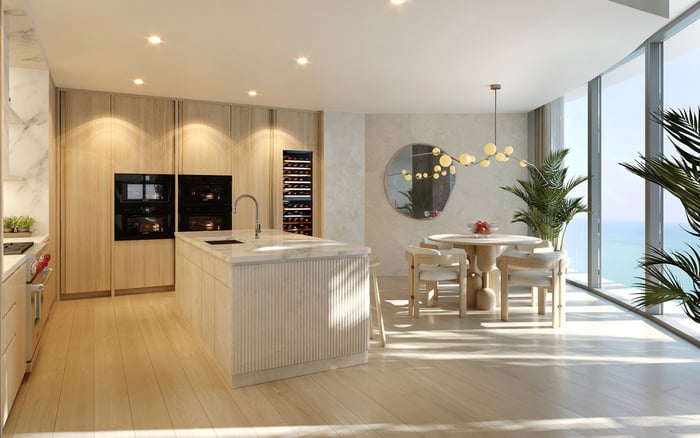
A buyer-focused first look at Rivage Bal Harbour, framed around oceanfront living, privacy, design expectations, and the questions ultra-luxury purchasers should ask before committing.
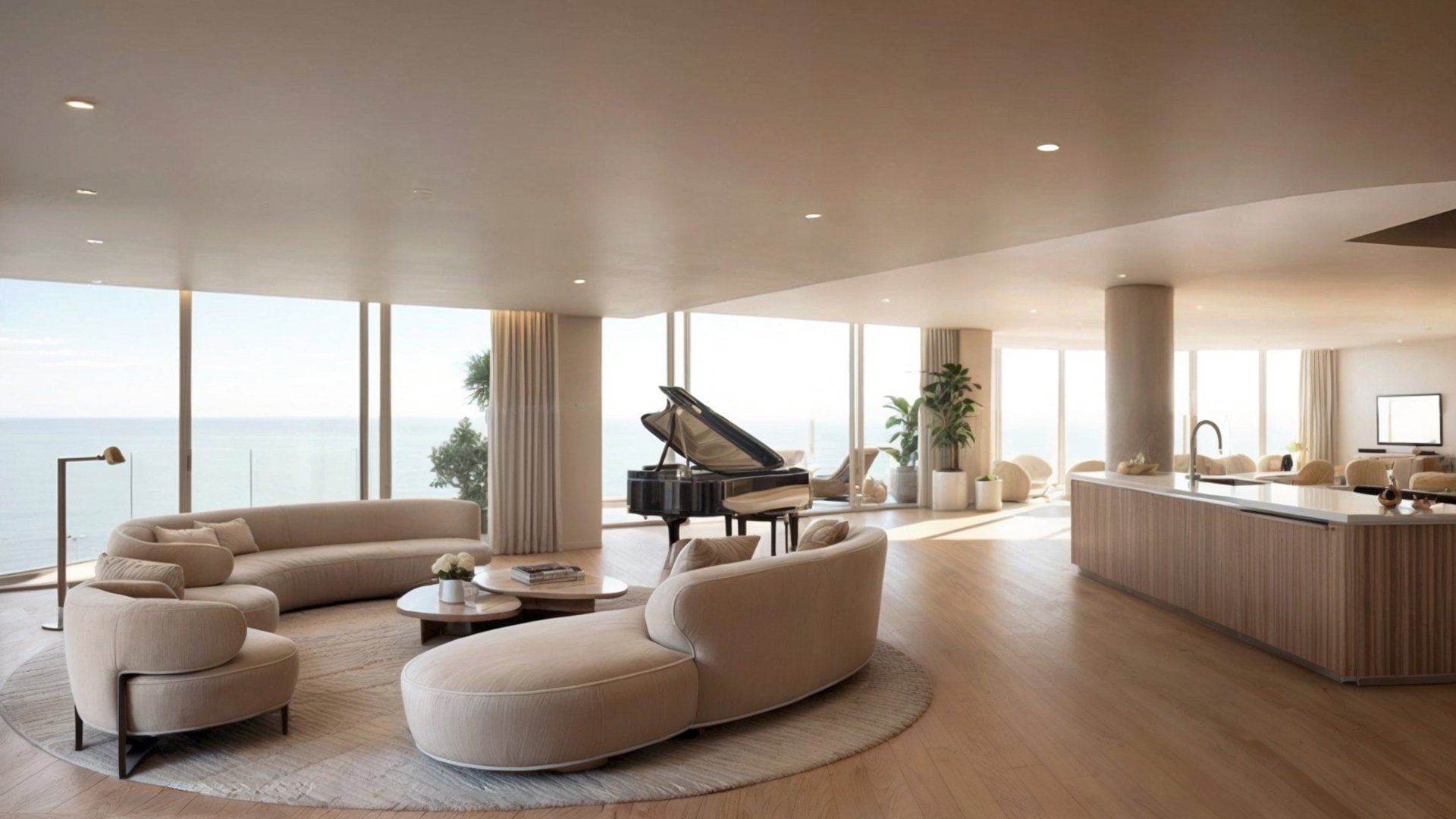
Rivage Bal Harbour arrives with a proposition that is easy to understand and difficult to replicate: a new oceanfront ultra-luxury tower in one of South Florida’s most closely watched residential settings. For the buyer who has already toured the expected addresses, the appeal is not merely newness. It is the possibility of securing a residence shaped around privacy, proportion, and daily ease before the market has fully absorbed what the building may represent.
The phrase “first look” matters. At this level, it should not imply a rush to decide. It calls for a disciplined reading of the signals: how the tower frames oceanfront living, how it may serve residents who expect discretion, and how its offering fits within a region where prime coastal land is increasingly finite. Rivage Bal Harbour is not simply another condominium name on a spreadsheet. It is a marker in the continuing evolution of South Florida’s luxury coastline.
For search and buyer taxonomy, this is clearly an Oceanfront, New-construction, Pre-construction, New Project conversation, with Rivage Bal Harbour positioned in Bal-harbour for clients who prioritize the coast over the skyline.
The Bal Harbour buyer is often different from the buyer pursuing the tallest tower, the loudest amenity deck, or the most theatrical lobby. In this pocket of South Florida, the value proposition is more restrained. The best residences are expected to feel protected without feeling sealed off, impressive without feeling performative, and resort-like without turning private life into public spectacle.
That is the lens through which Rivage Bal Harbour should be evaluated. A successful ultra-luxury oceanfront tower is not defined only by finishes or views. It is defined by how residents arrive, how few transitions they must endure, whether private and shared spaces feel properly scaled, and whether the building can maintain calm even when fully occupied.
For primary residents, that means a home that supports weekday routine as confidently as a seasonal stay. For second-home buyers, it means returning to a residence that is composed, serviced, and ready. For legacy-minded families, it means understanding how the building will age not just architecturally, but socially.
A true first look inside Rivage Bal Harbour should begin with livability. The ultra-luxury buyer may appreciate drama, but the decisive questions are often practical. Does the plan allow morning light, privacy, and entertaining to coexist? Does the main living area have a natural hierarchy, or does every room compete for attention? Is the terrace purely a visual amenity, or does it function as an extension of the home?
Residence planning matters more on the oceanfront because the view can distract from flaws. A wide blue horizon can make almost any room feel compelling during a tour. The more important test is whether the floor plan still works when the shades are drawn, guests are present, and the household is moving through its ordinary rhythms.
Buyers should also study the relationship between public and private zones. Bedrooms should feel removed from entertainment areas. Service access, storage, and staff circulation deserve the same seriousness as millwork and stone. In this segment, luxury is not the presence of a spectacular material. Luxury is the absence of friction.
In South Florida’s newest residential towers, amenities have become a language of status. Yet for the most discerning oceanfront buyers, the real question is not how many amenities appear in a brochure. It is whether the amenity program supports the way residents actually live.
At Rivage Bal Harbour, purchasers should evaluate the amenity story through three filters: privacy, frequency, and service. Privacy asks whether residents can use the building comfortably without feeling observed. Frequency asks whether spaces will be used weekly, monthly, or only during a sales tour. Service asks whether the building can deliver hospitality with consistency, particularly during peak seasonal periods.
A pool, wellness area, lounge, or dining environment can be beautiful and still fail if it is awkwardly programmed. Conversely, a quieter amenity can become indispensable if it is placed, staffed, and maintained with intelligence. In ultra-luxury real estate, the most valuable spaces often reveal themselves slowly.
South Florida’s highest-end condominium market has become increasingly nuanced. Buyers are not simply moving from large houses into towers. Many are building portfolios across lifestyle categories: an oceanfront residence, an urban pied-à-terre, perhaps a family compound elsewhere. Within that context, Rivage Bal Harbour should be assessed for the role it can play in a broader ownership strategy.
For some, it may be the primary coastal residence, offering a more managed alternative to single-family oceanfront ownership. For others, it may serve as a lock-and-leave base that preserves the emotional reward of beachfront living without the operational demands of a house. For international or bi-coastal owners, the key issue may be whether the building’s service culture can support long absences and seamless returns.
This is where new construction has an advantage. A newly delivered or forthcoming tower can incorporate contemporary expectations around wellness, access, security, technology, and service from the outset. Still, buyers should separate promise from structure. The strongest purchases are made when the building’s operating philosophy is as convincing as its visual presentation.
The first serious question is about fit. Rivage Bal Harbour may appeal to buyers who want oceanfront presence without unnecessary spectacle. If a purchaser’s ideal residence is defined by quiet arrival, direct coastal connection, and refined building culture, the project belongs on the short list.
The second question is about timing. In pre-construction and new-construction environments, early positioning can matter, but only when supported by clear understanding. Buyers should review floor plan alternatives, exposure, terrace usability, ceiling conditions, parking, storage, service protocols, and any rules that shape daily life. The best unit is not always the largest or highest. It is the one that aligns most precisely with how the owner lives.
The third question is about exit logic. Even buyers with no intention to sell should consider future demand. Oceanfront scarcity is meaningful, but resale strength is also shaped by layout, condition, building management, and the reputation the property earns after residents move in. A trophy address is built over time, not only announced at launch.
The most interesting aspect of Rivage Bal Harbour may be its restraint. In a market accustomed to grand statements, the project’s strongest potential lies in serving buyers who do not need their residence to perform for outsiders. They want the ocean, the privacy, the architecture of ease, and a building that understands the difference between luxury and volume.
That is why a first look should be measured rather than breathless. Rivage Bal Harbour is best considered as part of a long-term coastal decision, not a passing moment in the development cycle. For the right buyer, the value will be found in what the building makes effortless: arrival, retreat, entertaining, wellness, and the simple privilege of living at the edge of the Atlantic.
What is Rivage Bal Harbour? Rivage Bal Harbour is presented as a new oceanfront ultra-luxury residential tower in South Florida.
Who is the likely buyer for Rivage Bal Harbour? The likely buyer values oceanfront living, privacy, service, and a quieter expression of luxury.
Is Rivage Bal Harbour best suited for primary or second-home use? It may suit either profile, depending on the buyer’s desired level of service, access, and daily use.
What should buyers review first? Buyers should begin with floor plan livability, terrace function, privacy, arrival sequence, and service design.
Why does oceanfront positioning matter? Oceanfront positioning offers direct coastal presence, which remains one of South Florida’s most desired residential attributes.
Should buyers focus only on views? No. Views are important, but layout, privacy, storage, service circulation, and building operations are equally important.
How should amenities be evaluated? Amenities should be judged by privacy, usefulness, staffing, and how naturally they support daily life.
Is early interest in a new tower always an advantage? Early interest can help with selection, but it should be paired with careful review of plans and ownership terms.
What makes Bal Harbour appealing for this type of purchase? Bal Harbour appeals to buyers seeking a coastal setting with a more discreet residential character.
How should a buyer approach Rivage Bal Harbour now? The best approach is measured due diligence focused on lifestyle fit, long-term value, and building culture.
If you'd like a private walkthrough and a curated shortlist, connect with MILLION.
If branded residences are on your mind — as a home or as an allocation — we would be glad to share what we are seeing, privately.
Begin a quiet conversation