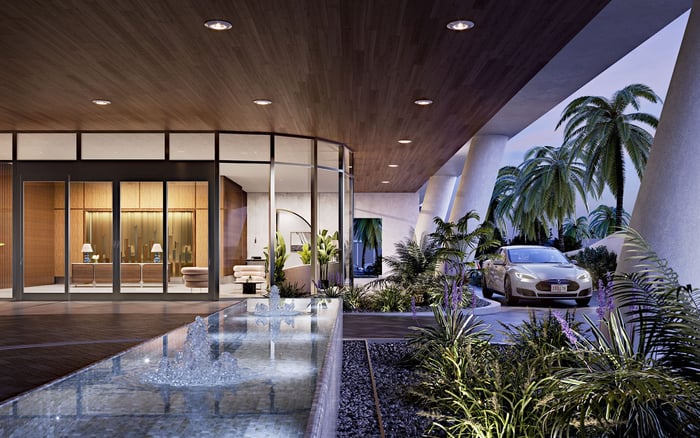
A buyer-focused guide to choosing between Coconut Grove and Bay Harbor Islands when a residence must support both private family life and independent guest quarters.
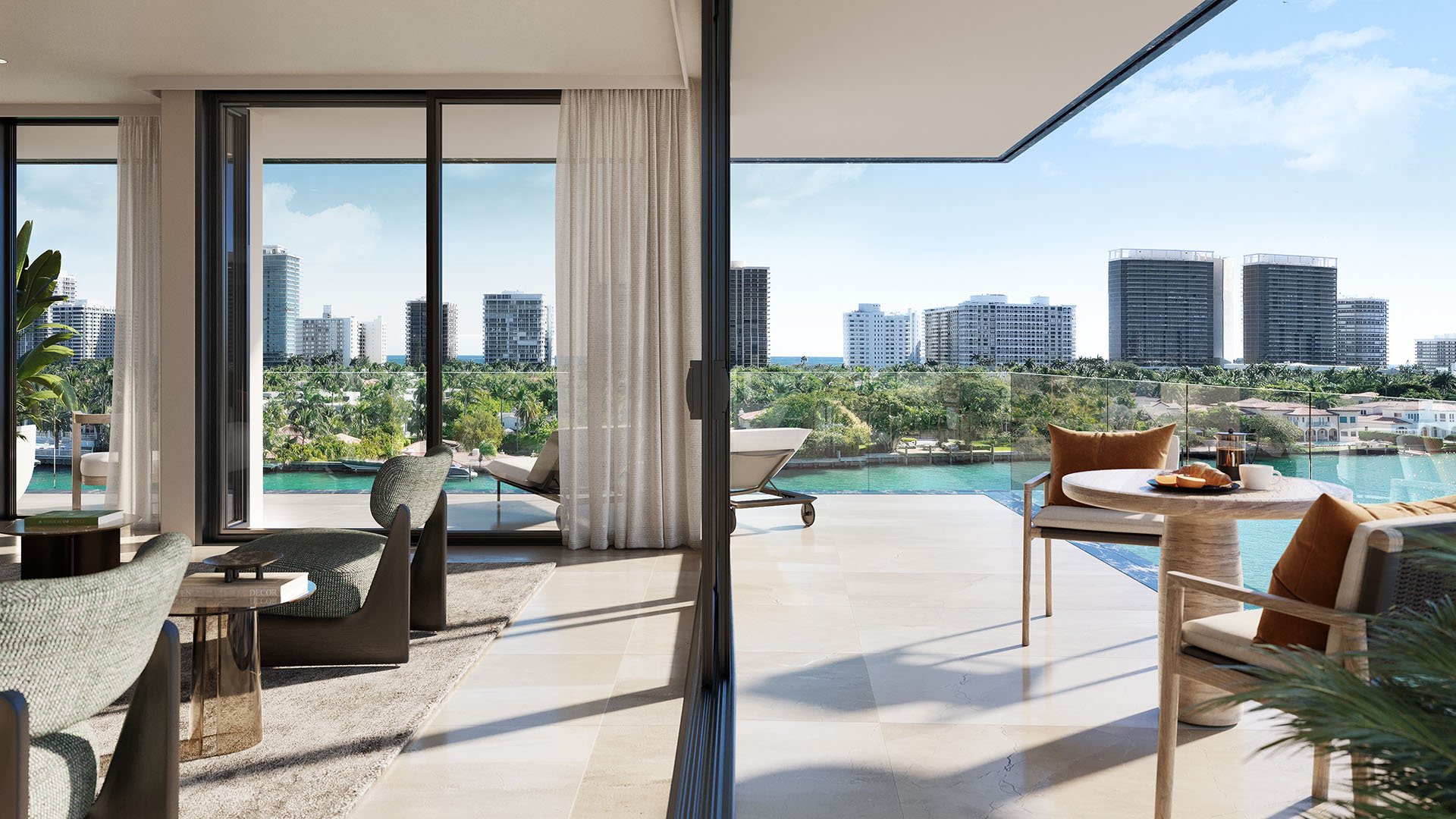
Choosing between Coconut Grove and Bay Harbor Islands is not simply a question of neighborhood preference. For a sophisticated South Florida buyer, the more revealing question is architectural: can the residence separate family life from guest life without making either side feel secondary?
Separate guest and family zones are no longer a niche request. They shape how grandparents visit, how adult children return for holidays, how household staff moves discreetly, how friends stay after a long dinner, and how owners preserve calm when the home is full. The right plan does more than add bedrooms. It creates gradients of privacy, with public entertaining areas, family-only rooms, guest suites, service paths, terraces, and bedroom wings working in sequence.
In that context, Coconut Grove and Bay Harbor Islands can both be compelling. The better choice depends on whether your household needs a family-forward daily base with flexible guest capacity, or a quieter lock-and-leave composition where visitors can operate with greater independence.
Coconut Grove tends to suit buyers who want the family zone to be the emotional center of the residence. If everyday life revolves around shared meals, children moving between study areas and bedrooms, and indoor-outdoor time with immediate family, begin by studying how a Grove floor plan organizes the main living level.
The strongest Coconut Grove layouts for this brief make family life feel natural before guests arrive. Look for a primary suite protected from secondary bedrooms, a family room that is not exposed to the formal entertaining area, and a kitchen that can support both daily use and hosted evenings. A separate guest suite should feel gracious, but it should not interrupt the owners’ routines.
This is where touring matters. A buyer comparing Coconut Grove residences might study projects such as Arbor Coconut Grove, Four Seasons Residences Coconut Grove, and The Lincoln Coconut Grove with one question in mind: where does the family retreat when guests are present? The answer should be legible in the plan, not explained away by staging.
For buyers who also consider a townhouse format, vertical separation can be useful. Guest space may occupy one level while family bedrooms sit above, or entertaining may remain below while private rooms stay protected. The tradeoff is circulation. Stairs can separate beautifully, but they can also become tiring if the plan asks the family to move constantly between levels.
Bay Harbor Islands is especially worth considering when guest independence is a leading priority. Some owners want visiting family or friends to have a calm, self-contained experience: a bedroom that does not face the children’s rooms, a bath that does not double as a powder room, and a route to the entry or elevator that avoids the family’s most private spaces.
In this scenario, the residence should behave almost like a private suite arrangement. Guests can wake early, return late, take calls, or enjoy a terrace without feeling they are borrowing the owners’ home. The family, meanwhile, maintains its daily rhythm. That balance is particularly valuable for second-home owners who expect seasonal visits, multi-generational stays, or long weekends with friends.
A Bay Harbor Islands search may naturally include residences such as The Well Bay Harbor Islands and Bay Harbor Towers, but the decision should not rest on name recognition. It should rest on the choreography of arrival, sleep, storage, and separation. Ask whether guests can feel at ease without entering the family wing. Ask whether the owners can host without surrendering the quietest rooms in the home.
For some buyers, boutique scale is part of the appeal because it can feel more personal and residential. Yet scale alone does not guarantee privacy. A small building with a poor plan may feel less private than a larger residence with thoughtful internal zoning.
The first zone is arrival. A guest-friendly residence should let visitors enter and settle without immediately passing through children’s bedrooms, workspaces, or private family storage. If the guest suite sits near the entry, it can be convenient, but it must still feel serene.
The second zone is the family core. This is the everyday heart of the home: kitchen, breakfast area, casual sitting space, media room, or study. In Coconut Grove, many buyers will prioritize this core because the home may function as a primary base. In Bay Harbor Islands, the family core still matters, but it may be balanced more evenly against visitor independence.
The third zone is the guest suite itself. Do not judge it by size alone. Consider closet depth, bath access, acoustic separation, natural light, and whether the room can support a longer stay. A beautiful guest room beside a noisy social space may disappoint in practice.
The fourth zone is service movement. Even without a large staff, modern luxury living requires a discreet path for deliveries, housekeeping, luggage, catering, and maintenance. If every practical task cuts through the living room, the home will feel less composed during busy weekends.
The fifth zone is outdoor space. A waterfront setting or expansive terrace can elevate both family and guest use, but outdoor access should not compromise privacy. If the only route to the terrace runs past the primary suite, the plan may create friction when guests are staying overnight.
Choose Coconut Grove if the home must first support family continuity. This is the buyer who wants everyday rooms to feel layered, warm, and usable, then wants guest quarters to integrate gracefully when needed. The family zone leads; the guest zone supports.
Choose Bay Harbor Islands if the residence must perform elegantly during visits. This is the buyer who wants houseguests to feel independent and owners to remain undisturbed. The guest zone carries more weight, particularly if visitors stay often or if the property will be used seasonally.
New construction can be attractive in either location because it may offer contemporary planning assumptions, but the label is not enough. A new residence can still have bedrooms placed too close together, insufficient storage, or a terrace sequence that exposes private rooms. Study the plan before studying the finishes.
Before choosing either area, walk the residence as if the house is full. Imagine two guests arriving with luggage, children watching a film, one owner on a private call, and dinner being prepared. Where does everyone go? Which doors close? Which routes overlap? Which rooms remain quiet?
The most successful purchase will be the one where privacy feels effortless. Coconut Grove may be the stronger answer for a buyer anchored in family rhythm. Bay Harbor Islands may be the stronger answer for a buyer who entertains overnight guests frequently and wants that experience to feel self-contained. In both cases, the true luxury is not simply space. It is the ability to live together without living on top of one another.
Is Coconut Grove better for families who host often? It can be, especially when the family core is the priority and guest space is secondary. The key is whether guests can be accommodated without disrupting the daily household rhythm.
Is Bay Harbor Islands better for separate guest quarters? It may be the better fit when guest independence is central to the purchase. Look for suites with privacy, storage, and a circulation path that avoids the family wing.
What is the most important floor plan feature for this decision? Separation between the primary suite, secondary bedrooms, and guest quarters is the first test. The second is whether social spaces buffer rather than expose private rooms.
Should I prioritize bedroom count or zoning quality? Zoning quality usually matters more than raw bedroom count. A smaller plan with better separation can live more luxuriously than a larger plan with poor circulation.
Can a terrace help separate family and guest areas? Yes, if it is accessible from shared spaces rather than only through private rooms. Outdoor access should expand the home without compromising the owners’ retreat.
Are townhomes useful for guest separation? They can be useful because different levels can create natural privacy. Buyers should still test whether vertical circulation feels elegant or inconvenient.
How should buyers evaluate a guest suite? Look beyond the bed wall and bath finish. Closet space, acoustic privacy, light, and the path from entry to suite are just as important.
Does new construction guarantee better family and guest zones? No. Newer residences may reflect current lifestyle preferences, but each plan still needs to be studied for privacy, storage, and circulation.
Which location is better for multi-generational stays? Either can work if the plan supports independence and togetherness. The better choice depends on whether family continuity or guest autonomy is the stronger priority.
What is the best way to shortlist comparable options for touring? Start with location fit, delivery status, and daily lifestyle priorities, then compare stacks and elevations to validate views and privacy.
If you'd like a private walkthrough and a curated shortlist, connect with MILLION.
If branded residences are on your mind — as a home or as an allocation — we would be glad to share what we are seeing, privately.
Begin a quiet conversation