In Coconut Grove, the most compelling new condominium offerings are increasingly boutique by design: fewer residences, larger floorplans, and amenities calibrated for privacy rather than spectacle. Yet for many buyers, the decisive detail is not the rooftop pool or the architect’s signature. It is the lease clause. Two of the neighborhood’s most discussed new projects, OPUS Coconut Grove and The Lincoln Coconut Grove, are both marketed with minimum six-month leasing and a cap of two leases per year. That structure can work beautifully for owners who want measured flexibility, but it is fundamentally incompatible with true short-term rental strategies. Against a backdrop of local enforcement against illegal short-term rentals, the difference between “occasional leasing” and “transient use” matters. Below, MILLION Luxury outlines what today’s boutique product is offering, how to read the rental rules like an operator, and where Miami Beach’s branded-residence lifestyle fits for buyers prioritizing service and lock-and-leave convenience over frequent turnover.
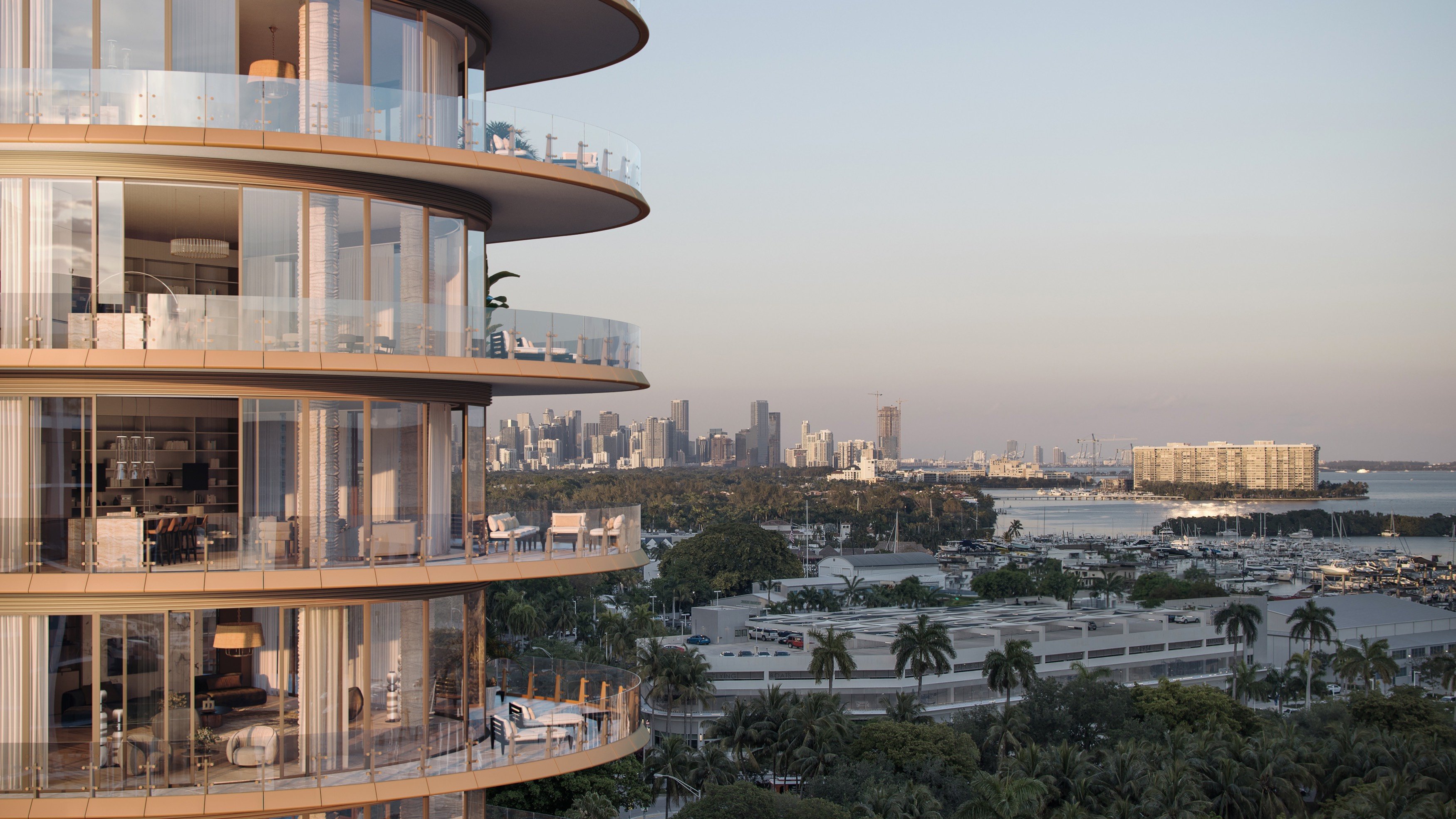
Coconut Grove is in a phase that reads less like a typical development surge and more like a refinement of what luxury means locally. The demand profile is often a primary resident or second-home buyer who values walkability, canopy streets, and a quieter, more private building culture. In that context, “boutique” is not simply branding. It is a deliberate operating model.
Fewer residences usually translate to larger floorplans, fewer elevator stops, and amenities designed to feel residential instead of resort-driven. The trade-off is that many boutique condominiums adopt stricter leasing rules to protect that lifestyle. For owners who want the option of long-term leasing, those rules can be a feature. For owners expecting short-term rental flexibility, they can be a costly misunderstanding.
Sophisticated buyers now evaluate rental policy the same way they evaluate glazing, elevation, or construction spec. It defines who lives in the building, how it feels day to day, and how the asset functions over time.
Opus Coconut Grove is positioned as intentionally limited in scale: 14 residences in a six-story format at or near 3137 SW 27th Avenue in Miami’s Coconut Grove. Publicly shared project materials describe 12 residences plus 2 penthouses, generally in 3 to 4 bedroom configurations, with interior concepts credited to João Armentano and architecture by Kobi Karp.
From a lifestyle standpoint, the headline is proportion. Residences are marketed at roughly 1,905 to 3,884 square feet depending on the home. Those dimensions tend to support actual daily living: dining areas that do not borrow from the living room, meaningful storage, and flexibility for office or guest use without compressing the main spaces.
Commercially, OPUS is marketed from around $2.5M+, with a staged deposit approach described as milestone-based and a projected completion timeframe marketed for summer 2026. The amenity lineup is framed as high-touch but restrained: 24-hour concierge, a rooftop pool, spa-style wellness, and wine storage or cellar concepts.
The operational detail to internalize is leasing. OPUS is reported to permit leases with a minimum 6-month term and to limit owners to two leases per year. In practice, that is a “seasonal plus” structure. It can work well for measured flexibility, but it is not designed for frequent turnover.
The Lincoln Coconut Grove is marketed as a 48-residence condominium at 2650 Lincoln Avenue, Miami. Compared with ultra-limited inventory projects, 48 homes can still feel intimate, yet it is substantial enough to support a broader unit mix and more varied lifestyle programming.
Public information describes an eight-story building with 1 to 4 bedroom layouts, many presented with den or office options. Reported residence sizes are marketed from about 1,227 to 3,073 square feet, with additional penthouse product beyond that. Pricing is publicly marketed from roughly $1.5M+.
The Lincoln’s amenity narrative leans into flexible living: pool, wellness, and spaces that can toggle between co-working, entertaining, and quiet. For buyers who want a home that supports weekday rhythm and weekend hosting, that programming matters, particularly in a neighborhood that already runs on convenience and walkability.
Like OPUS, The Lincoln is reported to allow leasing with a minimum 6-month term and to limit owners to two leases per year. The value proposition is not hospitality-style churn. It is a building designed to stay residential.
Luxury buyers often ask, “Does it allow rentals?” The more actionable question is, “What type of rentals are permitted, and how often can tenancy reset?” A six-month minimum paired with two leases per year is not a footnote. It is a defining constraint because it prevents the frequent check-in, check-out cadence associated with transient use.
This is where language can create confusion. Marketing summaries and aggregator pages sometimes use “short-term rentals” loosely, while the actual operating standard is a 6-month minimum. For an owner, the difference is not semantic. It changes everything from furnishing strategy to management intensity to the profile of future neighbors.
There is also a regulatory layer. Coconut Grove and the City of Miami have been reported as pursuing enforcement against illegal short-term rental activity, including significant daily fines that can reach $5,000 per day after noncompliance, with cumulative penalties in some cases. Even if an owner has no intention to violate rules, misreading what a building permits can create real exposure.
For investors, the conclusion is straightforward: if your pro forma assumes weekend demand, a 6-month minimum does not “mostly work.” It does not work. For end users, the same rule can be reassuring because it tends to stabilize occupancy, reduce corridor traffic, and protect the building’s culture.
In boutique buildings, monthly expenses are often less about surprise and more about understanding what you are paying for. Two figures commonly cited for comparison are reported monthly maintenance rates of around $2.04 per square foot for OPUS and around $1.65 per square foot for The Lincoln (both described as estimate or marketed figures).
A per-square-foot metric helps normalize different unit sizes, but it is a starting point, not a guarantee. This is the moment for operator-level questions: What is included, what is excluded, and what service level is the building underwriting? A smaller inventory paired with 24-hour concierge service can be exceptionally desirable, but the operating math has fewer residences to share staffing and amenity costs.
The disciplined approach is to use published $/sf numbers to compare relative positioning, then verify details directly in condominium documents and any updated budgets as they are released.
Not every luxury buyer is optimizing for the same variables. Coconut Grove’s appeal is often anchored in neighborhood life and residential calm. Miami Beach can deliver a different expression of luxury: more service intensity, beachfront adjacency, and a stronger hospitality rhythm.
For buyers who prioritize branded service and an arrive-and-live experience, projects such as Setai Residences Miami Beach and The Ritz-Carlton Residences® Miami Beach are frequently part of the comparison set. The point is not that they are “better” than boutique Grove offerings. They solve a different problem: managed living and convenience, often with a stronger lock-and-leave profile.
Your best filter here is usage, not aesthetics. If you are in town intermittently and want a home that feels prepared on arrival, Miami Beach may align naturally. If you want a residence that behaves like a private home with a steadier neighbor profile, Coconut Grove’s boutique model remains difficult to replicate.
In pre-construction and newly marketed condominiums, the most expensive assumption is often the one you did not realize you were making. Before committing, focus on the operating architecture as much as the finishes.
First, confirm lease minimums and frequency limits in the recorded condominium declaration and bylaws, not only in marketing summaries. The difference between “six months” and “four months,” or between “two leases” and “four,” changes the building’s day-to-day feel and the likely neighbor mix.
Second, treat deposit schedules and projected delivery dates as part of liquidity planning. If your timeline is tied to a particular season, verify what is publicly stated and plan for the reality that schedules can move.
Third, align square footage with how you actually live. Size is only valuable when the plan uses it well. In boutique buildings, strong layouts often express privacy through separation: bedroom wings, practical laundry, and storage that supports real routines.
Finally, remember that rules are not merely restrictive. They can be protective. A building that chooses a six-month minimum is signaling the culture it intends to maintain, and that can be material to long-term desirability.
Do OPUS Coconut Grove residences allow leasing?
Yes. Leasing is reported as permitted with a 6-month minimum term and a limit of two leases per year.
Does The Lincoln Coconut Grove allow short stays?
It is reported to require a 6-month minimum lease and to allow up to two leases per year, which generally prevents Airbnb-style stays.
What is the reported size range at OPUS?
Residences are marketed at roughly 1,905 to 3,884 square feet depending on the home.
How many residences are in OPUS?
OPUS is marketed as a 14-residence project with 12 residences plus 2 penthouses.
Where is The Lincoln located?
The Lincoln is marketed at 2650 Lincoln Avenue, Miami, in Coconut Grove.
What are the reported HOA fee levels?
OPUS is reported around $2.04 per square foot monthly and The Lincoln around $1.65 per square foot monthly, both described as estimates.
Why do 6-month minimums matter for investors?
They limit turnover and block frequent, hotel-like rental patterns, pushing strategy toward longer occupancy.
How serious is local enforcement against illegal rentals?
Reported enforcement can include daily fines up to $5,000 per day after noncompliance and significant cumulative penalties.
Are marketing rental details always definitive?
No. They can differ from recorded condo documents and may change, so buyers should verify declarations, bylaws, and rules.
Where can I get discreet guidance on South Florida luxury residences?
For discreet guidance, visit MILLION Luxury.
If branded residences are on your mind — as a home or as an allocation — we would be glad to share what we are seeing, privately.
Begin a quiet conversation