Miami Beach oceanfront development is shaped by the interaction of state coastal controls, local zoning, floodplain rules and resilience design. For luxury buyers and developers, the issue is less about whether a site is prestigious and more about how much of it can be built, elevated, protected and enjoyed with confidence.

In Miami Beach, oceanfront land is not measured only by frontage, views or brand cachet. It is measured by what can responsibly and legally be built within a constrained coastal environment. For ultra-prime buyers, family offices and developers, coastal setback analysis has moved from a technical appendix to a core component of value.
The term “setback” is often used casually in luxury real estate, but Miami Beach demands a more precise reading. A setback may refer to a local zoning requirement, a design decision that pulls a structure away from the shoreline, or a broader feasibility constraint shaped by dune protection, floodplain standards and state coastal permitting. Florida’s Coastal Construction Control Line, commonly known as the CCCL, is especially important because it establishes a permitting jurisdiction in areas vulnerable to erosion, storm surge and beach-dune impacts.
The CCCL is not an automatic no-build line. It is a control line that triggers heightened review of siting, design, excavation, construction and effects on the beach-dune system. For a luxury project, that distinction is critical. The question is not simply whether the parcel is oceanfront. The question is whether the building, pool, deck, crossover, landscaping, seawall condition and below-grade concept can withstand entitlement, permitting and long-term resilience scrutiny.
Miami Beach oceanfront development must navigate both state coastal construction controls and the City of Miami Beach Land Development Regulations. State rules govern construction seaward of the CCCL and are rooted in Florida’s beach and shore preservation framework. Local rules then add zoning district standards, yards, open-space requirements, height limits, design review, historic district considerations and overlay constraints.
That layered system explains why two nearby luxury parcels can produce very different outcomes. One site may have more usable depth landward of sensitive dunes. Another may face a tighter buildable envelope because of the CCCL location, dune conditions, lot geometry or local zoning controls. At the trophy end of the market, even a few feet of landward shift can alter the pool deck, lobby sequence, private garden, parking approach or residence count.
For buyers comparing properties such as The Perigon Miami Beach, Shore Club Private Collections Miami Beach and other Miami Beach offerings, the regulatory story behind the site matters as much as the architecture. Oceanfront beauty is visible immediately. Development capacity requires a deeper reading.
Coastal controls influence where the building sits and how the entire luxury experience is organized. Review can affect structures, pools, terraces, decks, dune crossovers, seawalls, landscaping and excavation near the shoreline. As a result, leading design strategies often shift toward landward building placement, elevated podiums, restored or protected dune systems, compliant beach-access routes and outdoor amenities that respect the coastal edge.
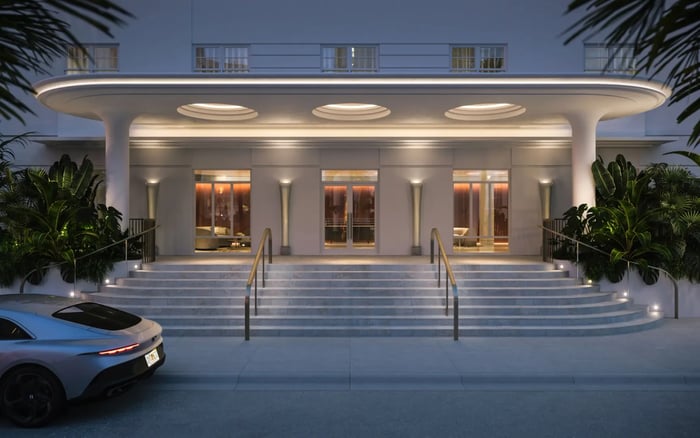
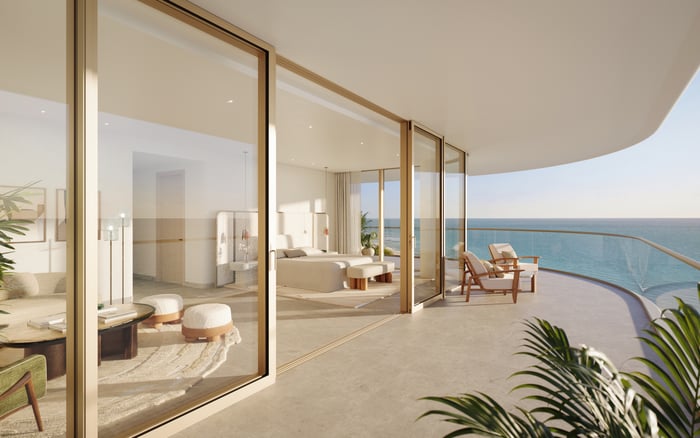
This can produce a more sophisticated product, not necessarily a diminished one. A carefully elevated arrival can create grander lobby volumes. A protected dune foreground can heighten privacy. A resilient pool deck can be choreographed as a sequence of shaded lounges, planted thresholds and framed Atlantic views rather than a hard edge pressed against the sand.
The best oceanfront design in Miami Beach now treats restraint as a luxury feature. Setbacks are not only regulatory obligations. They can become the organizing principle for privacy, landscape, storm performance and long-term value.
Miami Beach’s barrier-island setting makes erosion, storm surge, tidal flooding and sea-level-rise planning central to development decisions. Floodplain compliance can affect finished-floor elevations, parking configuration, mechanical-equipment placement, lobby design and the feasibility of below-grade or underground space. In practical terms, the ground plane is no longer merely a place for arrival and service. It is a resilience zone.
For developers, this changes underwriting. Parking may need to be configured differently. Mechanical systems may need more protected placement. Lobbies may need to reconcile hospitality-grade arrival with elevated finished floors. Below-grade concepts may become more difficult or require more conservative assumptions.
For end users, the result is a different definition of quality. The most desirable building is not simply the one closest to the water. It is the one whose design makes the shoreline feel effortless while quietly absorbing the realities of coastal risk. That is why conversations around The Ritz-Carlton Residences® Miami Beach, Faena House Miami Beach and 57 Ocean Miami Beach increasingly include resilience, elevation and site planning alongside finishes and services.
Coastal setback and CCCL permitting issues can reduce the usable building envelope on an oceanfront parcel. When that happens, the effective land cost per buildable square foot rises. In a luxury market, that can sharpen scarcity because not all oceanfront land converts equally into sellable or livable area.
This is where investment analysis becomes more nuanced. A parcel with dramatic frontage may not be superior if its envelope is severely constrained. Conversely, a site with disciplined planning, clear entitlement logic and a resilient design approach may support a stronger long-term value proposition even if its architecture appears more restrained from the beach.
New-construction projects must therefore be evaluated through an integrated lens: CCCL permitting, local zoning entitlements, floodplain compliance and resilience design should be considered together. Treating them as separate workstreams can obscure the true feasibility of the asset.
For a Miami Beach buyer, the takeaway is direct. Ask not only what the residence offers today, but how the site has been shaped by coastal rules, elevation standards and long-term adaptation expectations.
A serious review should begin with the parcel’s relationship to the CCCL, the dune system and the applicable zoning district. From there, the analysis should expand to setbacks, yards, open space, height, design review, historic overlay issues where relevant, flood-zone conditions and any implications for insurance exposure or elevation requirements.
Developers should also test the lifestyle program early. Can the desired pool be located where it belongs? Is the beach crossover feasible? Does the landscape concept protect rather than compromise the dune system? Can the lobby still feel gracious if elevations shift? Are mechanical systems protected without undermining the architecture?
For buyers, these questions are not merely technical. They are tied to privacy, service, maintenance, insurability and eventual resale. In Miami Beach, the most refined coastal properties are those where regulation, architecture and landscape have been resolved before they become visible.
Is the CCCL the same as a building setback? No. The CCCL is a state coastal permitting jurisdiction line, while setbacks may also come from local zoning or design requirements.
Does the CCCL prohibit all construction seaward of the line? No. It generally means construction requires state coastal review and permitting before work can proceed.
Why can nearby Miami Beach parcels have different development potential? CCCL location, dune conditions, lot depth, zoning district and overlay constraints can vary by parcel.
Can coastal rules affect pools and terraces? Yes. Review can influence placement of pools, decks, terraces, landscaping, dune crossovers and related shoreline improvements.
How do floodplain rules influence luxury design? They can affect finished-floor elevations, parking layouts, mechanical placement and the feasibility of below-grade spaces.
Are dune systems important in development review? Yes. Dune protection is central because dunes help buffer beaches and upland property from coastal forces.
Do local Miami Beach rules still matter if a state permit is required? Yes. A project must address both state coastal controls and local land-development regulations.
Can setbacks increase the effective cost of land? Yes. If the usable building envelope is reduced, the land cost per buildable square foot can rise.
What design strategies respond well to coastal constraints? Elevated podiums, landward siting, restored dunes, compliant beach access and resilient outdoor amenities are common strategies.
What should buyers ask before purchasing oceanfront property? They should ask how CCCL permitting, zoning, floodplain compliance and resilience planning affect the site.
For a confidential assessment and a building-by-building shortlist, connect with MILLION.
If branded residences are on your mind — as a home or as an allocation — we would be glad to share what we are seeing, privately.
Begin a quiet conversation