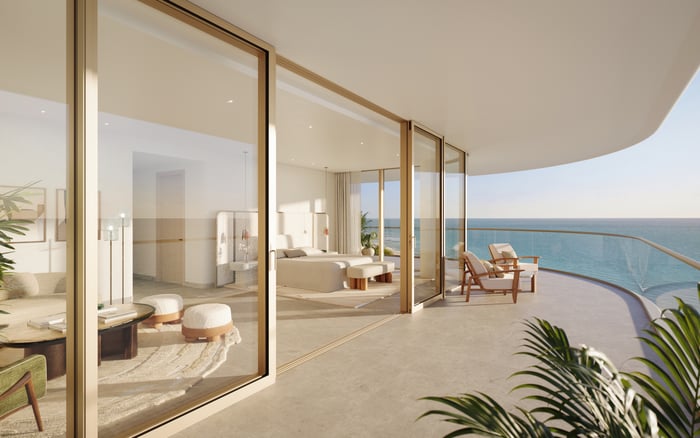
A buyer-focused look at why The Perigon Miami Beach is compelling for ultra-luxury purchasers who evaluate governance, stewardship and asset preservation with the same seriousness as design and amenities.

In the upper tier of Miami Beach real estate, the conversation has matured. Architecture still matters. So do views, service, privacy and the choreography of arrival. Yet for the most sophisticated buyers, the defining question is increasingly operational: how will the building be governed, funded, maintained and protected over time?
That is where The Perigon Miami Beach becomes more than an oceanfront address. It is positioned as an ultra-luxury condominium for buyers who want the beauty of a new coastal residence and the discipline of a governance structure oriented around long-term stewardship. The appeal is not merely aesthetic. It is fiduciary, practical and highly relevant to owners who view a Miami Beach residence as both a lifestyle asset and a store of value.
For this buyer, governance is not a back-office detail. It is part of the acquisition thesis. A well-run association, credible development sponsorship, reserve planning, risk management and clear operational priorities can shape everything from daily service quality to cost stability and resale liquidity.
The Perigon is characterized as a ground-up development rather than an older building with inherited maintenance histories or legacy decision-making patterns. That distinction matters. New-construction buyers are not simply purchasing fresh finishes. They are evaluating whether the building has been organized from inception around modern expectations for engineering, reserves, operations and ownership alignment.
The project’s governance appeal is tied to proactive oversight rather than reactive management after problems arise. In the post-Surfside market, many high-net-worth buyers have become more direct in their diligence. They ask sharper questions about reserves, engineering, insurance, inspections, maintenance protocols and the culture of the association. The Perigon’s positioning speaks directly to that shift.
This does not mean buyers should suspend diligence. It means the building belongs in the conversation for those who want governance to sit beside architecture and amenities as a core purchase criterion. In practical terms, the buyer lens is Miami Beach, oceanfront, boutique, new-construction and investment, filtered through governance quality rather than surface appeal alone.
The Perigon is described as limited-inventory and boutique ultra-luxury, tailored to a relatively small group of high-net-worth owners. In governance terms, that matters because a more controlled ownership environment can support clearer alignment around service standards, maintenance expectations and capital priorities.
Boutique does not automatically mean better governed, but it can create a setting where decision-making is more deliberate and owner expectations are more consistent. A residential club concept for globally mobile owners requires more than attractive common spaces. It requires operational fluency, discretion, continuity and a management framework capable of serving residents who may divide time across several homes and jurisdictions.
That is why The Perigon Miami Beach should be evaluated not only by what it offers on day one, but by how its structure is intended to perform over a longer horizon. The most valuable buildings in Miami Beach often become known for their culture of stewardship as much as for their architecture.
The governance thesis around The Perigon centers on reputable institutional sponsorship, association structure, reserve planning, risk mitigation and long-term operational stewardship. For a buyer accustomed to private banking, family office reporting or institutional asset management, that language resonates. It suggests that the condominium is being framed less as a collection of individual apartments and more as a shared asset requiring disciplined oversight.
That is a critical distinction in the ultra-luxury segment. A condominium is not a single-family estate where one owner controls every variable. It is a collective enterprise. The roof, façade, mechanical systems, staffing model, insurance posture, reserves and common areas are shared responsibilities. Governance determines how those responsibilities are anticipated, funded and executed.
The Perigon’s design and construction program is presented as technically sophisticated and resilience-oriented. Paired with a management framework aligned around asset preservation, that creates a more complete value proposition. The best buyers will still review documents, budgets and operating assumptions carefully, but the broader positioning is clear: governance is part of the product.
Miami Beach has no shortage of compelling residential names. A buyer considering The Perigon may also compare the privacy and coastal presence of 57 Ocean Miami Beach, the hospitality-inflected appeal of Shore Club Private Collections Miami Beach or the branded residential familiarity of The Ritz-Carlton Residences® Miami Beach.
The distinction is that The Perigon’s shortlist case is especially persuasive for a buyer who wants governance to serve as a primary filter rather than a secondary review item. The purchase question becomes less about which building is most photogenic and more about which ownership environment is likely to preserve value, manage complexity and maintain standards over time.
For globally mobile owners, that is particularly relevant. A Miami Beach home may be used seasonally, intermittently or as part of a broader portfolio. When the owner is not physically present, confidence in the association and management framework becomes essential. A residence should feel effortless, but that ease depends on systems, planning and accountability.
A governance-minded buyer should approach The Perigon with the same seriousness applied to any major asset. The conversation should include developer reputation, the proposed association structure, reserve philosophy, anticipated operating standards and the mechanisms for long-term risk management.
The most useful questions are practical. How is the building prepared for ongoing maintenance? How will reserves be planned? What professional management framework is contemplated? How does the ownership structure support consistent decision-making? How are operating costs, service levels and capital planning expected to be balanced?
None of these questions diminish the romance of an oceanfront Miami Beach residence. They enhance it. Luxury is not only the quality of stone, glass and landscape. It is the confidence that the building has been conceived for durability, accountability and long-term composure.
The Perigon belongs on the shortlist because it aligns with where the most discerning end of the market is going. Buyers still want beauty, but they also want assurance. They want amenities, but they also want reserves. They want privacy, but they also want responsible oversight. They want an address that feels rare today and remains credible tomorrow.
For those weighing Miami Beach as an investment as well as a personal retreat, governance can influence the ownership experience in ways that are not always visible during a sales presentation. It can affect future operating costs, risk exposure and the ease with which the residence is understood by the next sophisticated buyer.
That is the real argument for The Perigon. It is not simply another luxury condominium on the water. It is presented as a case study in how a new ultra-luxury building can be organized around institutional-grade oversight, asset preservation and a more deliberate ownership culture.
Why does governance matter in a luxury condo? Governance can shape maintenance quality, reserve planning, operating costs, risk management and long-term resale confidence.
Is The Perigon Miami Beach a new development? Yes. It is characterized as a ground-up ultra-luxury oceanfront condominium development in Miami Beach.
What makes The Perigon relevant to governance-focused buyers? Its positioning emphasizes developer reputation, association structure, reserves, risk mitigation and long-term stewardship.
Does limited inventory affect governance? Limited inventory can support a more controlled ownership environment, with expectations that may be easier to align over time.
Is The Perigon only about architecture and amenities? No. Its appeal is framed around design, lifestyle and a governance-oriented development structure.
Why are buyers asking more governance questions now? Many luxury buyers have become more attentive to reserves, engineering, insurance and building stewardship when evaluating condos.
Should buyers still perform diligence? Yes. Buyers should review association documents, operating assumptions, reserve planning and management structure before committing.
How does governance affect resale liquidity? Strong stewardship can help future buyers understand the building’s condition, costs and operational discipline more clearly.
Is The Perigon suited to globally mobile owners? It is framed as a residential club concept tailored to owners who may expect discretion, consistency and professional oversight.
What is the core shortlist argument for The Perigon? It combines oceanfront ultra-luxury positioning with a clear emphasis on proactive building governance and asset preservation.
To compare the best-fit options with clarity, connect with MILLION.
If branded residences are on your mind — as a home or as an allocation — we would be glad to share what we are seeing, privately.
Begin a quiet conversation