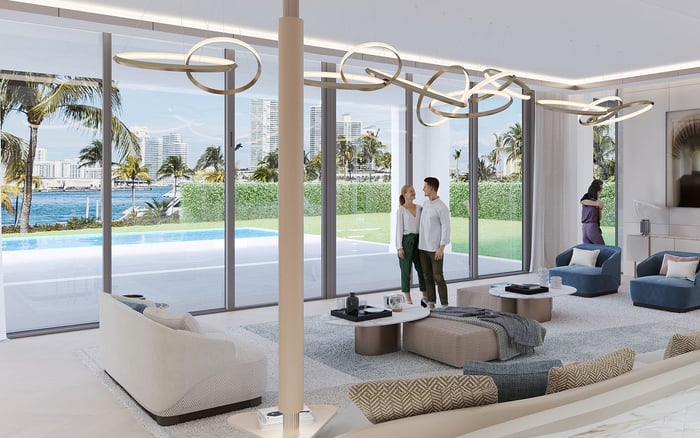
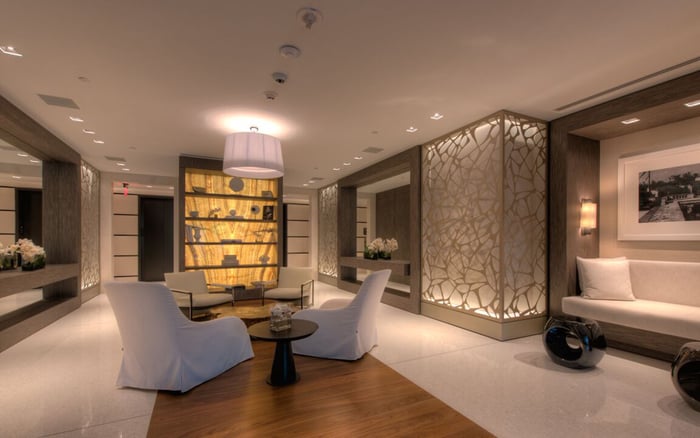
Private elevator living is most valuable when arrival design works as a complete privacy sequence. At Six Fisher Island, buyers should evaluate circulation, access control, service flow, guest handling, and backup procedures together. These details shape everyday ease and can sharpen a residence’s future resale narrative.
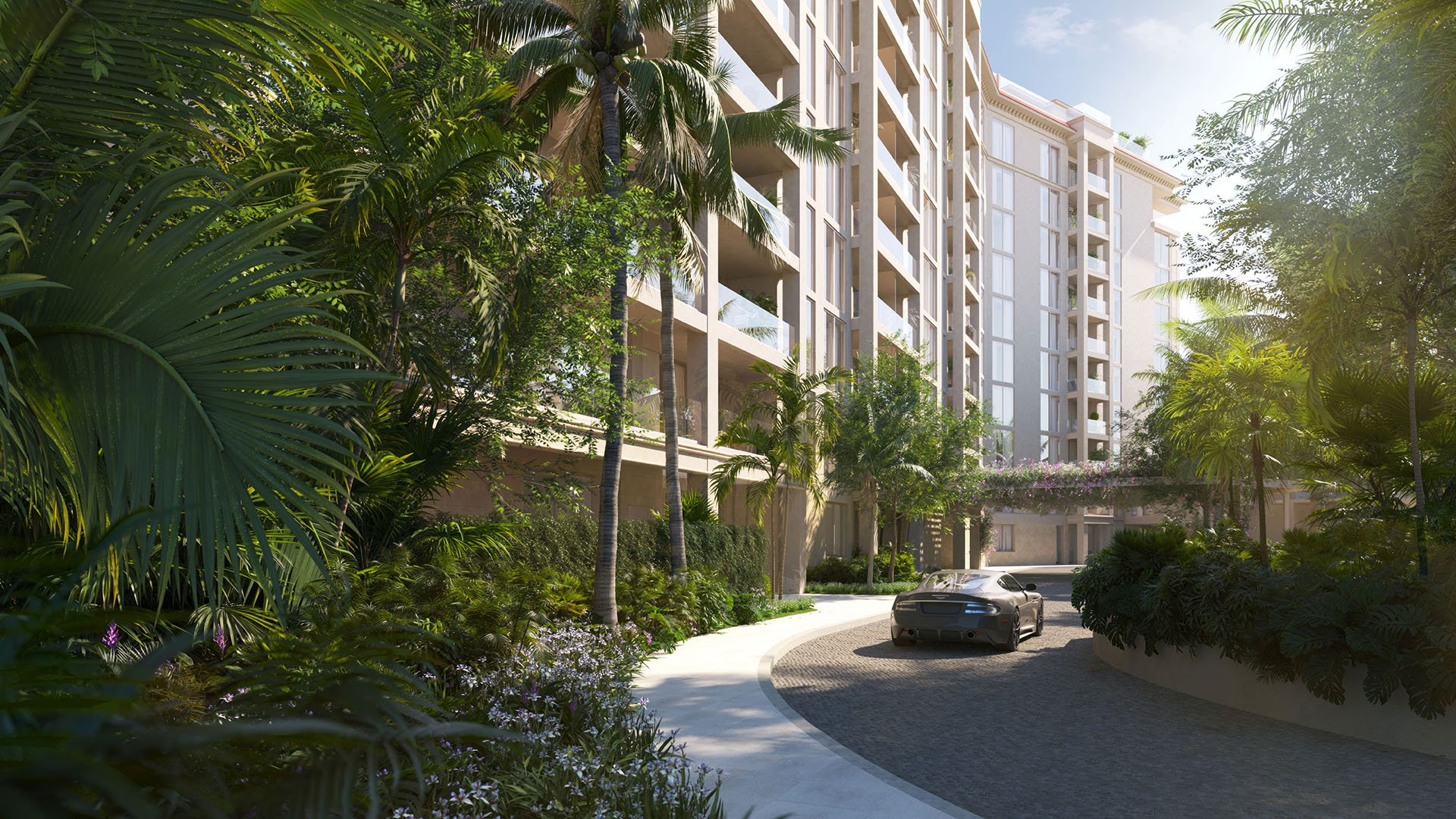
In an ultra-premium residence, arrival is more than circulation. It marks the transition from public life to private space, and its quality can determine whether a home feels genuinely discreet or merely grand. At The Residences at Six Fisher Island, the private-elevator proposition invites buyers to examine that transition with unusual care.
The essential question is not whether an elevator is described as private, but how the entire sequence functions. Buyers should understand where access is authenticated, who can call the elevator, whether the car opens into a vestibule or directly into the residence, and how permissions are managed for family, guests, staff, and vendors. Privacy is strongest when architecture, technology, and building operations function as one system.
For Fisher Island buyers, this can be particularly relevant to lifestyle expectations. A refined arrival should feel calm on an ordinary Tuesday, not only impressive during a showing.
The practical value reveals itself through repetition. Returning with shopping, welcoming dinner guests, coordinating household staff, and moving luggage each test the same circulation plan in different ways. A successful private-elevator arrangement reduces unnecessary encounters while preserving intuitive access for approved users.
Second-home ownership adds another dimension. Owners may return after an absence, host family members on different schedules, or authorize access remotely. The most useful questions are operational: Can credentials be issued temporarily? Is there an arrival log? What happens if a guest reaches the wrong floor? How are deliveries separated from the principal entrance sequence?
These details do not diminish the romance of private arrival; they protect it. A beautiful vestibule is more useful when residents understand how packages, maintenance visits, and service personnel move through the building without turning the main entrance into a working corridor.
Privacy should not make a residence cumbersome. If every guest movement requires owner intervention, or staff circulation conflicts with the principal arrival, exclusivity can become friction. Buyers should test the experience from several perspectives rather than viewing it only as residents.
Consider the routes taken by a child arriving independently, an overnight guest, a house manager, and an emergency responder. Each should have an intelligible path governed by appropriate permissions. Door positions, sightlines, acoustic separation, lighting, and the distance between the elevator threshold and living areas can matter as much as decorative finishes.
Comparable Fisher Island searches may also include Palazzo del Sol and Palazzo della Luna. The useful comparison is not a checklist of labels, but the lived sequence from arrival to residence, evaluated through the same scenarios at every property.
For a new-construction purchase, plans and specifications deserve the same scrutiny as renderings. Request the elevator and vestibule configuration for the specific residence under consideration. Confirm whether any landing is shared, how doors are secured, where cameras or intercoms are positioned, and which components the owner may control.
Backup conditions are equally important. Buyers should understand the procedures during maintenance, power interruptions, move-ins, and emergencies. They should also clarify whether service circulation is distinct, how large items reach the home, and which rules govern contractor access. Where privacy depends on software or credentials, ask who administers the system and how permissions are revoked.
Buyers considering a different residential format on the island can place The Links Estates at Fisher Island into the broader conversation. The comparison can reveal whether the buyer values vertical privacy, estate-style separation, or a particular balance between convenience and autonomy.
Resale value is never created by one feature alone. Yet private arrival can become a persuasive differentiator when it is easy to demonstrate, simple to operate, and integrated into the residence rather than added as a marketing flourish. Future buyers are likely to assess the entire experience, including access control, vestibule proportions, service routes, and confidence in backup procedures.
Documentation can reinforce that story. Keep current information on access protocols, owner-controlled features, approved alterations, and maintenance responsibilities. If the vestibule is part of the residence, confirm the applicable boundaries and rules before customizing it. Clear records help a future purchaser distinguish permanent attributes from changeable settings or furnishings.
Presentation matters as well. During a showing, the arrival should read as a functional threshold, with restrained furniture, deliberate lighting, and no operational clutter. The strongest impression is not theatrical. It is the sense that privacy has been thoughtfully resolved and will remain effortless in daily life.
Before deciding, experience the route more than once and at different times. Bring the people who will actually manage the home. Walk through guest entry, deliveries, staff access, luggage movement, and an alternative route for times when the primary elevator is unavailable.
Private elevator living earns its premium through consistency. At Six Fisher Island, the discerning evaluation is therefore less about the elevator car itself than the choreography surrounding it. When that choreography is secure, legible, and graceful, arrival privacy becomes part of the home’s daily utility and enduring market identity.
What does private elevator living mean for a buyer? It generally describes restricted elevator access associated with a residence, but buyers should verify the exact landing and entry configuration.
Does a private elevator always open directly into the home? Not necessarily. It may open into a private vestibule, so buyers should review the plans and specifications.
Why does the vestibule matter? It creates a privacy buffer and establishes the first interior impression while also affecting sightlines, acoustics, and security.
How should guest access be evaluated? Test how invitations, temporary credentials, intercom approval, and arrival guidance work in practice.
What should owners ask about staff circulation? Clarify service routes, access permissions, delivery procedures, and whether working traffic intersects with the principal arrival.
What happens when the elevator is unavailable? Buyers should request the building’s procedures for maintenance, power interruptions, and alternative access.
Can a private elevator benefit a second-home owner? It can support controlled remote access, provided credential management and oversight remain straightforward.
Does private arrival guarantee higher resale value? No single feature guarantees value, but an effective system can help distinguish a residence for privacy-focused purchasers.
Should buyers customize the elevator vestibule? First confirm ownership boundaries, design rules, safety requirements, and approval procedures.
What is the most important pre-purchase test? Walk through every arrival scenario with the people who will regularly use or manage the residence.
To compare the best-fit options with clarity, connect with MILLION.
If branded residences are on your mind — as a home or as an allocation — we would be glad to share what we are seeing, privately.
Begin a quiet conversation