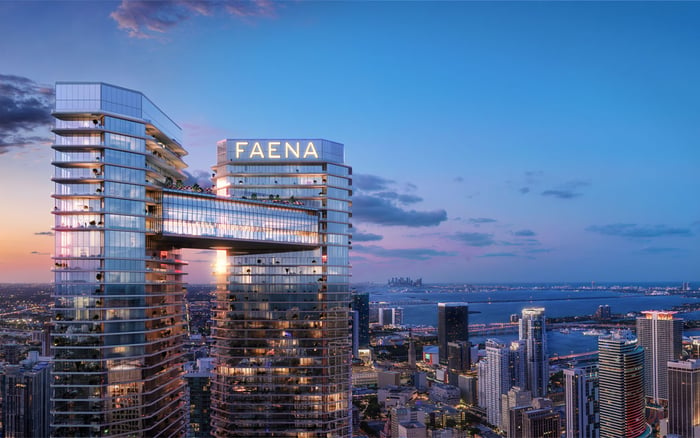
Two branded towers, two European design languages, and two Miami districts with distinct rhythms: Downtown’s cultural-verticality and Brickell’s finance-forward immediacy. This MILLION Luxury editorial compares the buyer experience through the lens of design authorship, arrival, amenity dramaturgy, and neighborhood utility, without leaning on specs that have not been publicly standardized across marketing materials. The result is a practical framework for choosing between Casa Bella’s Italian residential mood and Mercedes-Benz Places’ precision-led, product-design sensibility in Brickell.
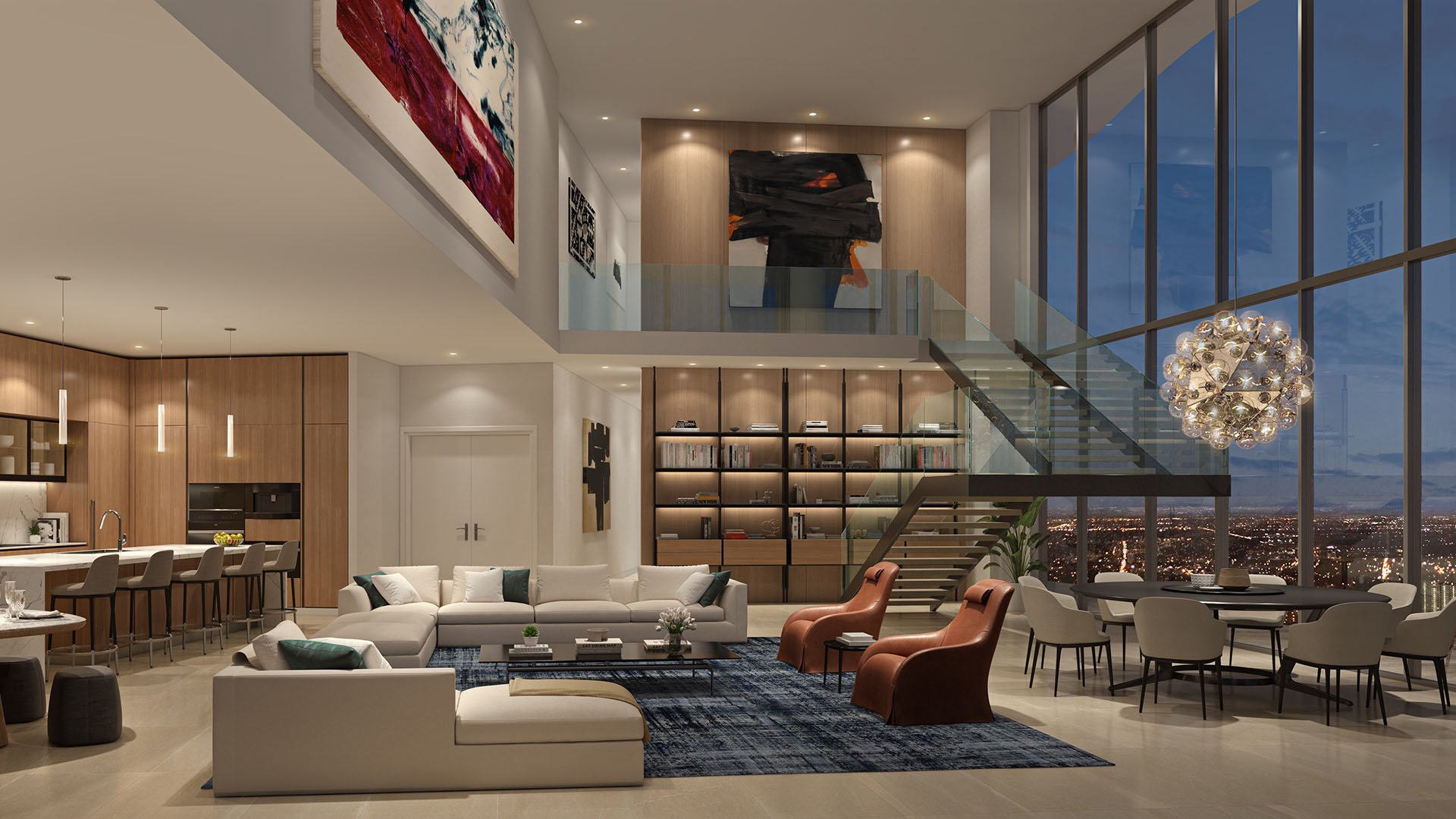
In Miami’s top tier, buyers rarely choose between “a condo” and “another condo.” They choose between design systems. Branded residences-especially those with European authorship-are less about logos and more about the daily choreography they set: how you arrive, how you decompress, how you entertain, how you retreat.
That’s what makes the contrast between Casa Bella by B&B Italia Downtown Miami and Mercedes-Benz Places Miami so useful. One leans into Italian domesticity, where proportion, tactility, and hospitality quietly define luxury. The other draws from an industrial-design lineage, where precision, performance, and user experience are the discipline.
The neighborhoods amplify the difference. Downtown and Brickell sit minutes apart but run on different clocks: Downtown’s cultural and civic gravity versus Brickell’s finance-first cadence. For a buyer who already understands Miami’s macro story, the decision becomes personal and specific: which paradigm feels right at 10 p.m., and which one improves your life at 7 a.m.
Downtown rewards buyers who want the city to feel expansive. It’s where vertical living can pair naturally with museums, arenas, and waterfront promenades-supporting a weekend itinerary that can feel complete without needing a car. The buyer who thrives here typically prioritizes vantage, skyline theater, and the sensation of being inside the city’s narrative, not simply adjacent to it.
Brickell, by contrast, is about compression and efficiency. The appeal is the short distance between high-performance workdays and high-comfort evenings. The typical Brickell buyer values immediate access to dining, fitness, offices, and transit-like convenience, even if they’re not taking public transit. At its best, Brickell is a lifestyle where errands become a walk and the line between “city” and “building” starts to blur.
If you’re also considering the broader Brickell brand-residence ecosystem, it helps to notice how the neighborhood supports multiple expressions of prestige in close proximity, from 888 Brickell by Dolce & Gabbana to The Residences at 1428 Brickell. Even without comparing specifications, the throughline is clear: Brickell attracts buyers who want convenience to feel curated.
European design isn’t a monolith. In a luxury residence, “European” can reflect dozens of value systems-but two archetypes tend to read clearly.
Casa Bella by B&B Italia signals an Italian residential approach. The emphasis is on livability that feels elevated without turning clinical. Think spaces made to host with ease: warmer palettes, tactile surfaces, furniture-forward moments, and rooms that feel composed rather than engineered. The strongest Italian interiors don’t announce themselves; they invite you to stay.
Mercedes-Benz Places Miami, as a concept, arrives with an expectation of exacting alignment, refined geometry, and a brand experience calibrated at every touchpoint. The sensibility favors clarity, sleekness, and a controlled calm. In practice, that can translate to residences that feel optimized: lines that resolve cleanly, transitions that are deliberate, and amenities that read like extensions of a product ecosystem.
Neither is “better.” They simply serve different definitions of comfort. Italian domesticity often prioritizes emotional ease. Precision-led modernism often prioritizes operational ease. The right choice comes down to which kind of ease you value most.
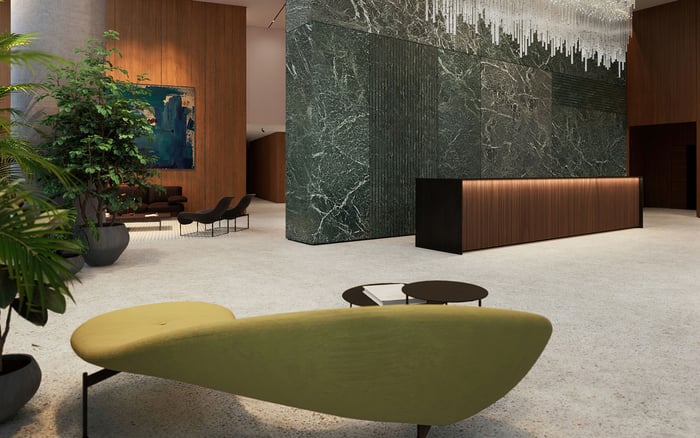
In ultra-premium residential life, the lobby isn’t decoration. It’s a daily ritual repeated hundreds of times each year-and a psychological threshold between the city and your private world.
For Casa Bella’s design-forward identity, arrival is about atmosphere: a softening of the urban edge. Buyers drawn to Downtown often want their building to operate as a sanctuary from the city’s scale. An Italian-branded narrative can make that sanctuary feel personal, not generic.
For Mercedes-Benz Places, arrival is likely to be more declarative. Brickell buyers often prefer a sense of momentum, and a performance-oriented brand tends to frame arrival as an experience-efficient, elevated, and unmistakably intentional. In that paradigm, the lobby isn’t only welcoming; it’s a statement of standards.
Practical takeaway: if you want your building to feel like a boutique hotel that happens to be private, you’ll gravitate one way. If you want it to feel like a flagship object in the city, you’ll gravitate the other.
Amenities are often marketed as a checklist. Sophisticated buyers assess them as a system.
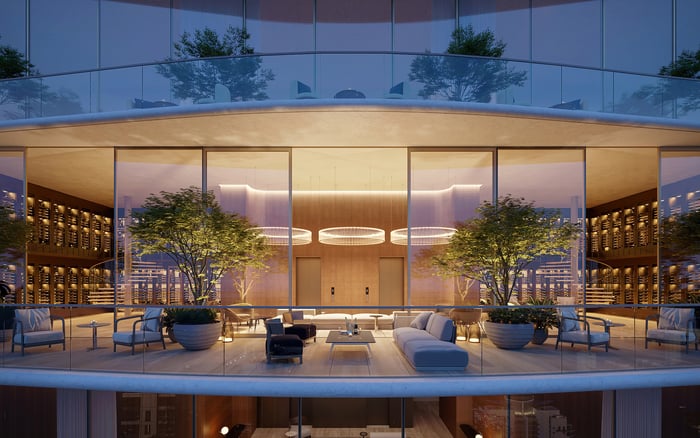
Start with wellness. The question isn’t whether there’s a gym-it’s whether the wellness environment makes you more consistent. A more residential, Italian-coded approach tends to favor comfort and cadence: spaces that encourage slower recovery, longer conversations, and a spa-like sense of time. That aligns well with a Downtown lifestyle that can feel cultural and social.
A precision-led approach often treats wellness as performance. The atmosphere may be more focused, more streamlined, and more “do the work, then return to life.” That maps neatly to Brickell, where a fitness ritual can fit between meetings and dinners without losing its premium feel.
Then consider work. Many luxury buyers don’t need a coworking space, but they do need frictionless productivity: a private place to take a call, host a small meeting, or reset between obligations. Brickell’s identity tends to make this a more central priority. Downtown’s value proposition is different-less about being near offices, more about being near the city’s cultural main stage.
Finally, hosting. Italian paradigms often excel at hospitality cues: the spatial warmth that makes guests linger. Precision paradigms excel at choreography: the kind of control that makes gatherings feel effortless. Decide which version matches how you actually entertain.
Even for owners who travel often, the neighborhood becomes the default when you’re in town. It shapes the small decisions: where you meet a friend, where you walk after dinner, how a Tuesday feels.
Downtown can feel like a canvas for big-city living. If your definition of luxury includes cultural adjacency and skyline immersion, the district’s energy complements Casa Bella’s design identity. You’re buying into a sense of place that feels public-facing and in motion.
Brickell is more private in its practicality. The streets are active, but the motivation is frequently utility: dinner within minutes, fitness on demand, and services close at hand. This is where the Mercedes-Benz Places ethos fits naturally. You’re buying into a neighborhood that behaves like an ecosystem.
And if you find yourself drawn to a slightly quieter Brickell interpretation, 2200 Brickell offers another lens on how the area can express luxury with a more residential cadence.
Branded residences can hold value for the right reasons-but only when the brand translates into execution. Discerning buyers typically treat the brand as a proxy for three things: design integrity, service culture, and long-term maintenance of the experience.
With a design house like B&B Italia as the signal, the promise is an interior language that feels intentional and enduring. The risk, as always, is that “design” becomes superficial. Due diligence should focus on whether residences and common areas are coherent-or merely decorated.
With an automotive-origin brand, the promise is precision and an elevated user experience. The risk is that “experience” becomes theatrical rather than livable. The right question is whether daily operations feel as rigorous as the brand’s mythology.
Resale psychology at the top end is rarely about a single feature. It’s about narrative clarity: a future buyer should understand quickly what the building is and why it matters. Both projects aim for that kind of clarity. The smarter play is choosing the narrative that matches your habits-because the best luxury is the one you actually use.
If you’re deciding between Casa Bella by B&B Italia and Mercedes-Benz Places Miami, resist a feature-by-feature comparison unless a feature is truly decisive for you. Instead, pressure-test your lifestyle against four prompts:
Downtown often softens; Brickell often amplifies.
Italian domesticity can feel warm; precision-led modernism can feel clear.
Downtown rewards cultural and social spontaneity; Brickell rewards structured efficiency.
Some owners prefer a discreet, residential identity. Others prefer a brand-forward signature.
When the answers are honest, the choice usually makes itself.
Is Downtown or Brickell better for a primary residence? Brickell often suits daily routine and convenience; Downtown can suit culture-led city living.
What’s the main difference in design philosophy between these two projects? Casa Bella reads more like Italian residential comfort, while Mercedes-Benz Places signals precision and performance.
Do branded residences automatically have higher resale value? Not automatically; resale strength usually follows execution, service quality, and narrative clarity.
Which neighborhood feels more walkable day to day? Brickell typically feels more compressed and errand-friendly; Downtown can be walkable with a broader, civic feel.
Which one is likely to feel more “quiet luxury”? Buyers seeking a softer, more domestic mood may lean toward Casa Bella’s design-forward discretion.
Which one fits an executive who travels frequently? Either can, but Brickell’s ecosystem can make short stays feel especially efficient.
Is a design-house brand as meaningful as a global product brand? It can be, if the interiors and shared spaces are cohesive and enduring rather than purely symbolic.
How should I evaluate amenities without getting lost in a checklist? Focus on whether the spaces support your actual rituals: wellness consistency, work privacy, and hosting ease.
What should I ask about service and operations in a branded tower? Ask how the resident experience is maintained over time, including staffing standards and upkeep expectations.
What’s the simplest way to decide between Downtown and Brickell? Choose Downtown for cultural adjacency and skyline immersion, Brickell for routine-driven convenience.
For a discreet conversation and a curated building-by-building shortlist, connect with MILLION Luxury.
If branded residences are on your mind — as a home or as an allocation — we would be glad to share what we are seeing, privately.
Begin a quiet conversation