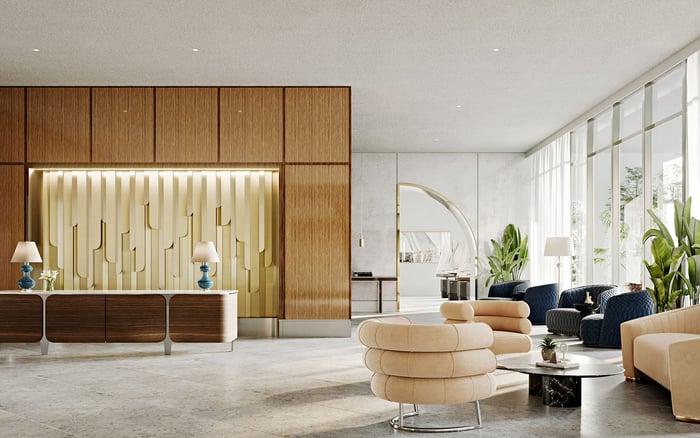
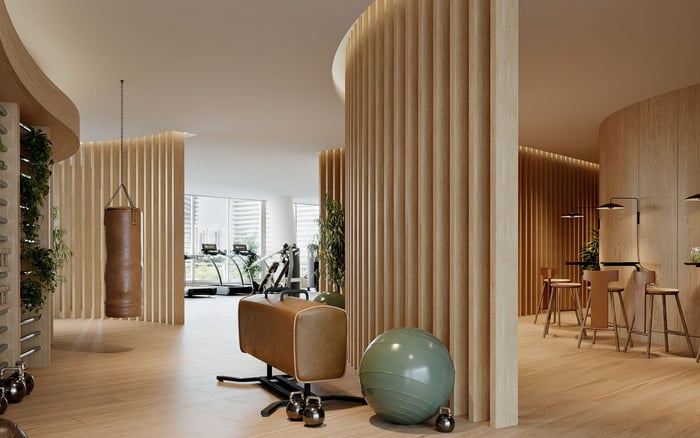
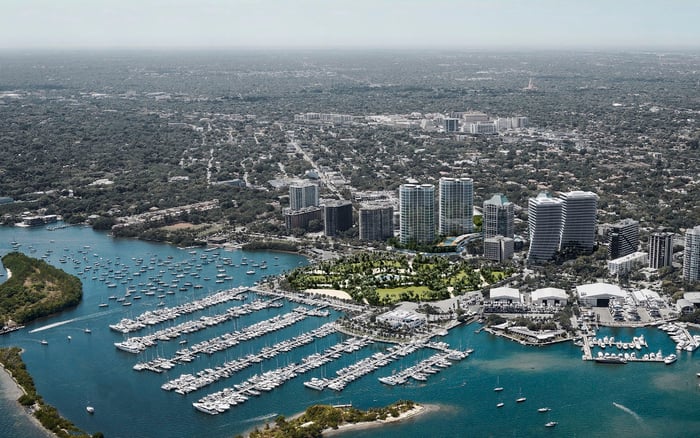
Two of South Florida’s most compelling buyer priorities are converging: measurable building performance and measurable personal wellbeing. This MILLION Luxury editorial frames a discreet comparison between a sustainability-forward tower concept and the wellness-first residential mindset, then translates both into practical decision criteria for Brickell and beyond.
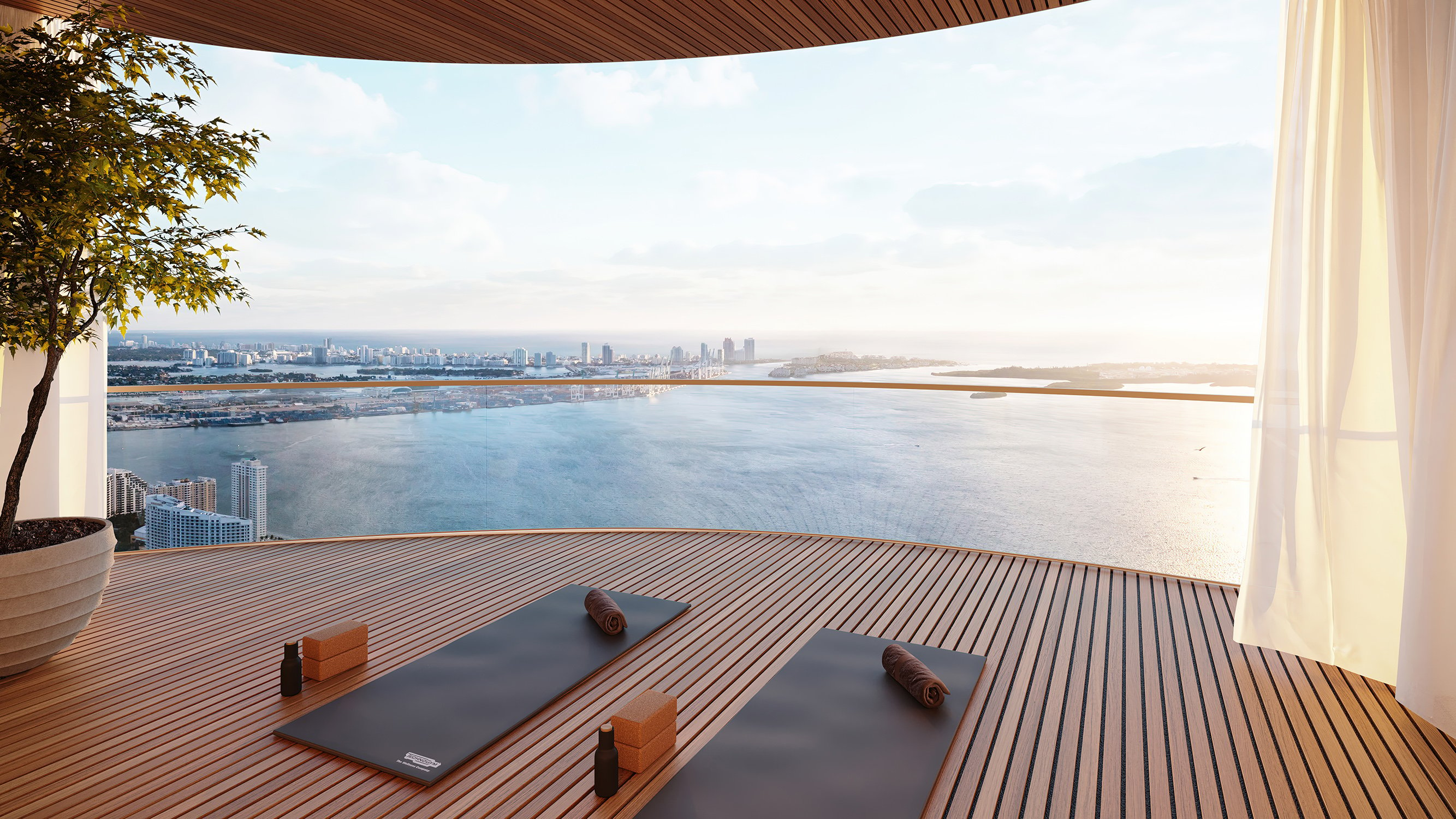
South Florida luxury has moved past square footage and a view. Today’s buyer conversation increasingly centers on what a residence does for you-and what it does to the environment around it. In one camp is a more technical promise: photovoltaic integration, reduced operational intensity, and a building that signals sustainability as a core design move. In the other is a more human promise: restorative routines, cleaner air, quieter sleep, and amenities that function less like a “club” and more like an everyday health practice.
This is the real comparison behind The Residences at 1428 Brickell vs House of Wellness: not a simple amenity checklist, but two philosophies of value creation. One treats the tower as an energy system. The other treats the residence as a health instrument.
For a buyer deciding in Brickell, the key is translating both narratives into tangible outcomes: comfort, resilience, privacy, and long-hold desirability.
A photovoltaic-forward concept is ultimately about performance you can feel-even if you never open a dashboard. The most practical benefits tend to show up as a more stable indoor experience: better-managed heat load, fewer temperature swings, and the sense that the building is engineered, not merely styled.
In Brickell, where sun and humidity are relentless design constraints, sustainability is most compelling when it is inseparable from comfort. When photovoltaics are integrated thoughtfully, they also act as a visible signal of intent: the building is designed to work with South Florida’s climate rather than relying on brute-force cooling. For buyers, that intent can translate into confidence that the envelope, glazing, shading strategies, and mechanical choices were coordinated from the beginning.
That coordination matters because “green” is not a finish. It is an operating system.
For those drawn to The Residences at 1428 Brickell, the appeal is often a future-facing definition of luxury: architecture that reads as modern and deliberate, with sustainability positioned as a primary design value-not a marketing afterthought.
A wellness-first residential mindset borrows less from hospitality and more from preventive health. The question shifts from “What can I do here on weekends?” to “What will I reliably do here on weekdays?”
In practice, wellness-centric living tends to prioritize:
Air quality as a baseline expectation, not an upgrade
Light as an interior material, managed for circadian comfort
Quiet as a luxury, with privacy and sound attenuation treated seriously
Movement spaces that feel approachable enough to use daily
Recovery spaces that are calm, not crowded
A “house of wellness” framing also reshapes how residents interact with the building. Elevators, arrival sequences, and even the feel of corridors become part of the nervous-system experience. The strongest examples reduce friction: you shouldn’t have to cross a loud lobby scene to reach something restorative.
If you want a South Florida reference point for a residential brand that centers wellbeing, The Well Coconut Grove is a useful mental model-not because every project will match it feature-for-feature, but because it signals the market direction. Wellness is moving from “spa amenity” to “primary product.”
Because the Research Pack and Fact Table here do not specify building-by-building technical metrics, the smartest approach is to focus on questions that reveal whether the concept is truly integrated.
For photovoltaic sustainability, ask questions that expose systems thinking:
Is sustainability expressed in the facade and massing, or only in interior finishes?
Does the building narrative connect to comfort outcomes: glare control, heat management, humidity strategy?
Are there resilience considerations implied by the design approach, or is it only about signaling?
For wellness-centric living, ask questions that reveal whether “wellness” is a daily operating reality:
Is quiet engineered, or simply promised?
Are wellness spaces placed for frequent use, or hidden as a brand checkbox?
Do the layouts support calm routines: separated sleeping zones, thoughtful lighting, real storage?
A simple rule: if the concept can be summarized in one photograph, it is likely style. If it requires an explanation of how systems interact, it is more likely substance.
Brickell is not just a neighborhood-it is a pace. Buyers choose it for proximity, density, and the ability to compress life into fewer minutes. That makes both sustainability and wellness unusually relevant.
Sustainability-forward design in Brickell can read as urban polish: a building that manages sun, energy, and comfort gracefully in a high-rise environment. Wellness-forward design can serve as the counterbalance: a home that helps you recover from the city’s velocity.
If you are evaluating Brickell beyond a single address, it is worth comparing adjacent lifestyle propositions. For example, 2200 Brickell can serve as another reference for how Brickell’s residential landscape is diversifying in feel and positioning, even within the same broader urban grid.
And if your wellness lens also includes social cadence, dining access, and an “always on” setting with a quieter personal retreat, ORA by Casa Tua Brickell is another reminder that Brickell now competes as much on lifestyle texture as it does on height and views.
The real market signal is that these two value systems are merging. A building can be sustainability-led and still be deeply human-centered. Likewise, a wellness-first residence can-and should-care about operational efficiency and responsible design.
In the next wave of ultra-premium demand, buyers will increasingly treat sustainability as the infrastructure of comfort and wellness as the interior architecture of living. The strongest residences will deliver both without forcing residents to think about either.
This convergence also changes what “timeless” means. It is no longer only about neutral finishes and good proportions. Timelessness now includes low-friction daily life: a residence that supports sleep, health, and ease while remaining credible in an increasingly performance-aware market.
When two concepts compete, use a framework that respects both lifestyle and resale logic.
Brickell can deliver both, but not equally in every building and not equally in every floor plan. Decide whether your home is primarily a launchpad or a sanctuary.
Wellness amenities only matter if you will use them. Sustainability features only matter if they influence comfort and ownership experience. If a feature requires a personality transplant, it is not a feature-it is a fantasy.
Integrated concepts show consistency: materials, acoustics, lighting, and mechanical intent read as one language. Disconnected concepts feel like a collection of upgrades.
The market’s direction favors health-forward living and performance-forward buildings. Residences that credibly deliver both tend to read as “next” longer than those that only look new.
If photovoltaics are the headline, ensure the building still protects the human experience: quiet, sleep, air, and calm circulation. If wellness is the headline, ensure the building still respects the future: efficient operations, thoughtful climate response, and a design story that will age with credibility.
In South Florida’s ultra-premium tier, the best choice is rarely an either-or. It is a disciplined selection of which narrative you want to lead with, paired with a refusal to compromise on the other.
Is photovoltaic design a meaningful value driver in luxury towers? It can be, especially when it is integrated into the facade and comfort strategy rather than used as branding.
Does a wellness-first building automatically mean higher quality? Not automatically; the key is whether wellness is engineered into daily life or treated as a decorative amenity.
What matters more day-to-day: sustainability or wellness? Wellness is often felt immediately in sleep, quiet, and air; sustainability often shows up in comfort consistency.
How can I verify whether “wellness” is more than a spa room? Focus on layout convenience, acoustic privacy, and how frequently you would realistically use the spaces.
Are Brickell buyers actually prioritizing health now? Many are, particularly those balancing demanding schedules who want a residence that restores, not just impresses.
Do sustainability features help resale in South Florida? They can support long-hold desirability when they are visible, credible, and tied to comfort and resilience.
What is the simplest way to compare two new developments? Compare the lived routine: arrival, elevator experience, noise, light, and whether the home feels calm at night.
Should I prioritize a building’s concept or the specific residence layout? Start with the layout; even the best concept cannot overcome a plan that does not suit your daily life.
Is it better to buy in a lifestyle-led building in Brickell? It depends on whether you value social energy; some buyers prefer a quieter, more restorative residential tone.
What’s the most future-proof luxury feature right now? A credible combination of performance and wellbeing: comfort systems and design choices that support daily health.
To compare the best-fit options with clarity, connect with MILLION Luxury.
If branded residences are on your mind — as a home or as an allocation — we would be glad to share what we are seeing, privately.
Begin a quiet conversation