A discreet buyer’s comparison of two branded residential propositions, focused less on name recognition and more on the daily experience created by arrival sequence, lobby scale, privacy, and valet flow.
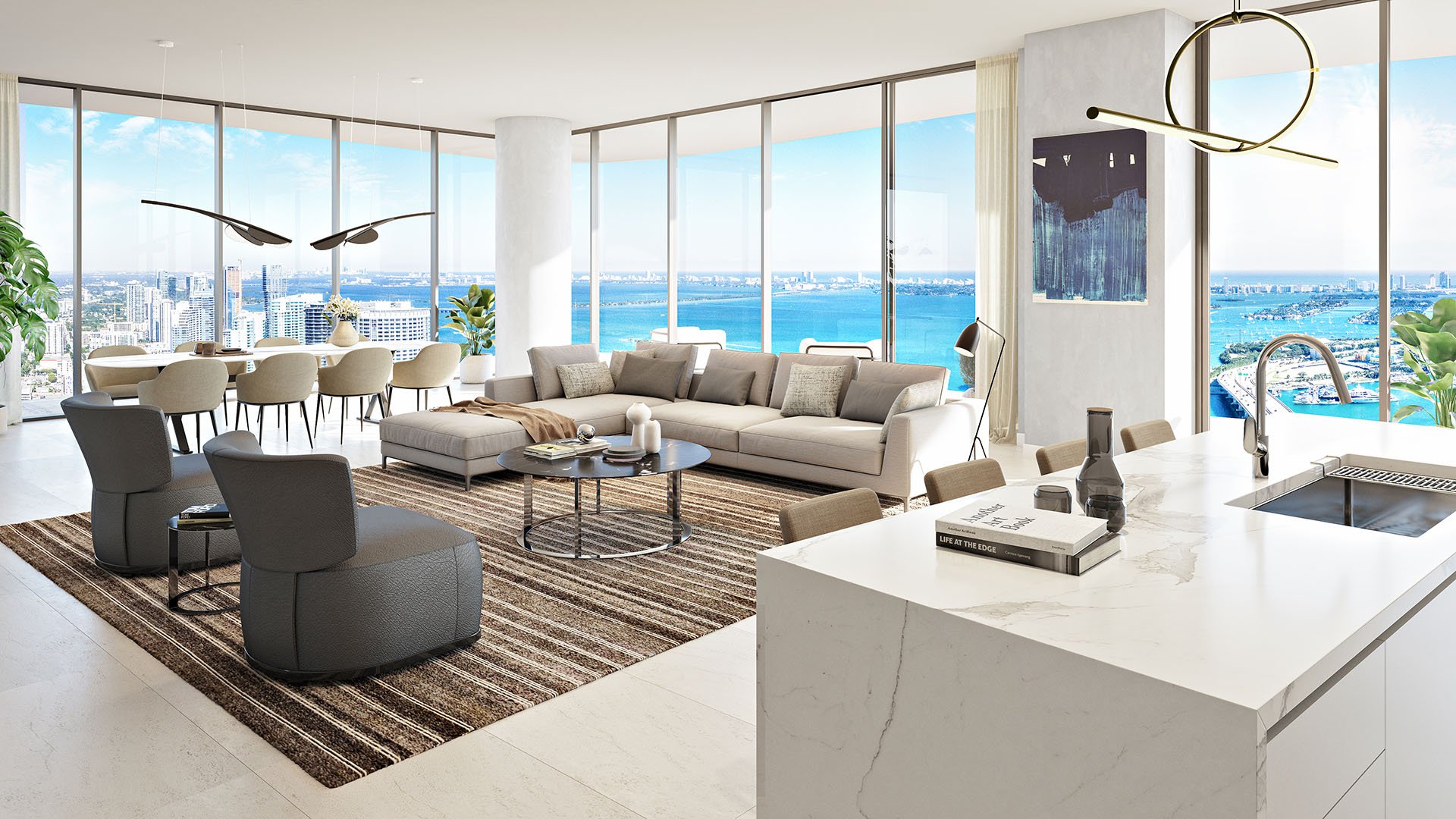
In South Florida’s most rarefied residential conversation, brand prestige is no longer defined by name recognition alone. The more serious question is how that prestige performs in daily life. Casa Bella by B&B Italia Downtown Miami and 619 Residences by Foster + Partners + Nobu Hospitality occupy a similar psychological tier for buyers who expect architecture, design, and hospitality to feel considered rather than merely applied. The comparison becomes most useful when it moves past logos and into operational experience.
For a private buyer, the arrival sequence is often the first honest test. Lobby volume, porte-cochère privacy, and valet choreography reveal whether a residence has been planned as a ceremonial address, a hotel-influenced social environment, a discreet urban retreat, or some combination of the three. These are not decorative details. They shape how residents return from dinner, how guests are received, how drivers stack at peak hours, and whether the building’s front door remains composed under pressure.
Casa Bella by B&B Italia Downtown Miami can be evaluated as a branded residential reference. The comparison with 619 Residences by Foster + Partners + Nobu Hospitality is best understood through buyer priorities rather than unsupported specifics. Both names suggest high ambition. The distinction lies in how each buyer interrogates the ground-floor experience before assuming that prestige automatically translates into privacy, efficiency, and calm.
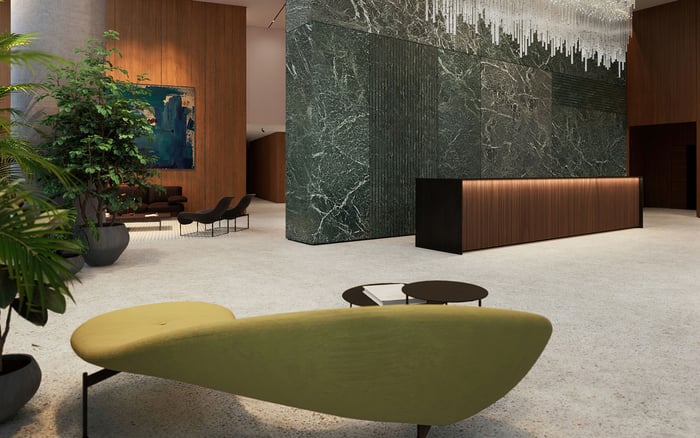
A grand lobby can be seductive, especially in Downtown Miami, where vertical living competes with cultural, business, and waterfront energy. Volume gives a building a sense of occasion. It can create long sightlines, clearer separation between waiting areas and circulation paths, and the impression that the residence has room to breathe. For design-led buyers, volume is also a signal of confidence. It tells guests that the threshold has been given architectural weight.
But more volume is not automatically better. An oversized lobby without careful programming can feel public, especially in a branded building where hospitality cues may attract social movement. The discerning buyer should ask whether the lobby allows a quiet resident path from curb to elevator, whether seating is positioned for privacy rather than display, and whether the concierge desk supervises the room without making every arrival feel observed.
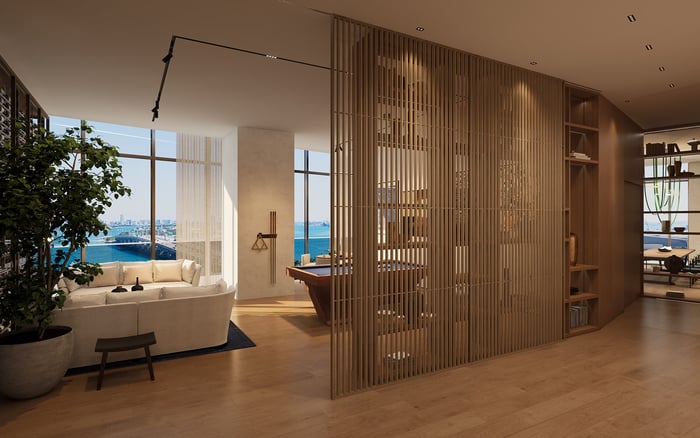
Casa Bella by B&B Italia Downtown Miami sits naturally within a design-branded residential conversation. B&B Italia may lead buyers to focus on interior rigor, material discipline, and a residential rather than theatrical sensibility. That expectation should be tested against the building’s actual arrival experience. Does the lobby feel like a living room at building scale, or like a stage? Does it invite lingering without turning residents into scenery?
For 619 Residences by Foster + Partners + Nobu Hospitality, the names in the title create a different set of expectations. Foster + Partners may prompt questions about architectural clarity, while Nobu Hospitality may prompt questions about service and lifestyle atmosphere. A buyer should not treat those associations as answers. They should become questions: how much of the lobby is architectural volume, how much is hospitality theater, and how well does the space preserve a residential sense of retreat?
In Miami’s prime condominium market, the porte-cochère is often where privacy succeeds or fails. The ideal arrival court is neither hidden in a way that feels secondary nor exposed in a way that turns every resident movement into a visible event. It should allow vehicles to enter, pause, unload, and depart without creating a sense of congestion or performance.
This is especially important for buyers who split time among multiple homes, entertain frequently, or travel with staff, family, luggage, pets, and security considerations. A polished lobby can lose its effect if the curb experience is chaotic. Conversely, a restrained porte-cochère can make an urban tower feel unusually private, even in an active neighborhood.
The useful comparison between Casa Bella by B&B Italia Downtown Miami and 619 Residences by Foster + Partners + Nobu Hospitality is not which has the more glamorous arrival, but which promises the more controlled one. Buyers should look for weather protection, directness to reception, guest separation, sightline management, and whether the design anticipates simultaneous arrivals rather than idealized quiet moments.
For clients tracking New-construction and Pre-construction opportunities, this is one of the most important early-review categories. Renderings can communicate materials and mood, but privacy is understood through sequence. How does the car approach? Where does the valet stand? Is the entrance legible to invited guests but discreet to everyone else? These questions often matter more than dramatic ceiling height.
Valet is not merely a service amenity. In a luxury condominium, it is part of the architecture of time. When managed well, it makes the building feel effortless. When poorly resolved, it can become the most frequent irritation in an otherwise beautiful residence.
The best valet choreography separates resident urgency from guest uncertainty. Residents should not have to negotiate with visiting drivers, delivery activity, or special-event traffic. The system should anticipate morning departures, dinner-hour returns, weekend surges, and the specific demands of South Florida living, from sports cars and SUVs to household staff and airport transfers.
In this sense, Casa Bella by B&B Italia Downtown Miami and 619 Residences by Foster + Partners + Nobu Hospitality should be compared less as brands and more as operating promises. The buyer’s question is simple: does the arrival system support the prestige being sold upstairs? If the answer is yes, the building’s elegance will be felt daily. If not, the brand may impress guests while frustrating residents.
A Top Project in Brickell, Downtown, or any other high-density luxury district is rarely defined by one amenity. It is defined by whether the building manages complexity gracefully. The elevator wait, the valet call-down, the covered arrival, the handoff from driver to doorman, and the first visual impression of the lobby all belong to one continuous script.
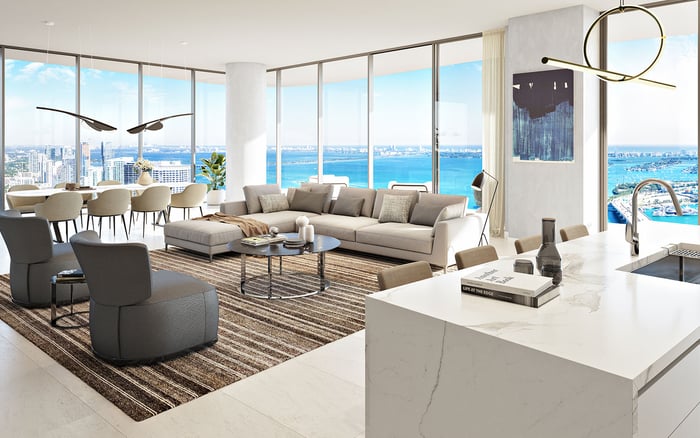
Casa Bella by B&B Italia Downtown Miami invites evaluation through the lens of design-branded living. That means the buyer may reasonably focus on composition, materials, furniture language, and the continuity between private residence and shared spaces. The risk in any design-branded project is assuming that aesthetic refinement automatically solves operational flow. It may, but only if the arrival, lobby, and valet have been planned with equal discipline.
619 Residences by Foster + Partners + Nobu Hospitality invites a slightly different reading. The pairing of architecture and hospitality can be powerful, but it also raises questions about balance. A private residence should borrow the best lessons of hospitality without feeling transient. Nobu-related expectations may suggest service, atmosphere, and lifestyle, while the Foster + Partners name may suggest architectural clarity. The buyer should ask how those ideas meet at the front door.
For the ultra-premium South Florida audience, the most mature approach is to resist ranking prestige by brand alone. A residence with a quieter lobby may outperform a more dramatic one for a privacy-driven owner. A more social arrival may suit a buyer who entertains often and wants the building to feel active. A tightly choreographed valet court may be worth more in daily satisfaction than a larger amenity that is used only occasionally.
Downtown Miami rewards buildings that understand intensity. The neighborhood’s energy is part of the appeal, but residential luxury depends on filtering that energy before it reaches the owner. Casa Bella by B&B Italia Downtown Miami and 619 Residences by Foster + Partners + Nobu Hospitality represent a prestige conversation, but the sharper buyer conversation is about thresholds.
A great branded residence does not simply announce itself. It protects the resident from friction. It allows guests to arrive elegantly, residents to return quietly, and service teams to operate without becoming visible noise. In the end, lobby volume, porte-cochère privacy, and valet choreography are not secondary details. They are the architecture of discretion.
Why compare Casa Bella by B&B Italia Downtown Miami with 619 Residences by Foster + Partners + Nobu Hospitality? Both occupy a prestige-oriented branded residential conversation, which makes the arrival experience a useful point of buyer comparison.
Is brand prestige enough to choose between these residences? No. Prestige should be tested against daily function, especially lobby circulation, privacy, service flow, and arrival comfort.
What should buyers look for in lobby volume? Buyers should study whether volume improves calm, sightlines, and circulation, or simply creates a dramatic first impression.
Why does porte-cochère privacy matter in Downtown Miami? It can determine whether a resident feels protected from street activity, guest congestion, and visible curbside movement.
How should valet choreography be evaluated? Look at how vehicles enter, stack, unload, and depart during peak moments, not only during a quiet presentation.
Does Casa Bella by B&B Italia Downtown Miami belong in a design-led buyer search? Yes. It is naturally positioned for buyers who care about branded design language and the way shared spaces feel.
What should be asked about 619 Residences by Foster + Partners + Nobu Hospitality? Buyers should ask how the architectural and hospitality identities translate into private residential arrival and service.
Are New-construction and Pre-construction buyers at an advantage? They can ask detailed operational questions early, before focusing only on finishes, views, or amenity imagery.
Can a quieter building be more luxurious than a more dramatic one? Yes. For many owners, discretion, efficient valet movement, and a calm private path are the highest luxuries.
What is the best way to shortlist comparable options for touring? Start with location fit, delivery status, and daily lifestyle priorities, then compare stacks and elevations to validate views and privacy.
For a discreet conversation and a curated building-by-building shortlist, connect with MILLION.
If branded residences are on your mind — as a home or as an allocation — we would be glad to share what we are seeing, privately.
Begin a quiet conversation