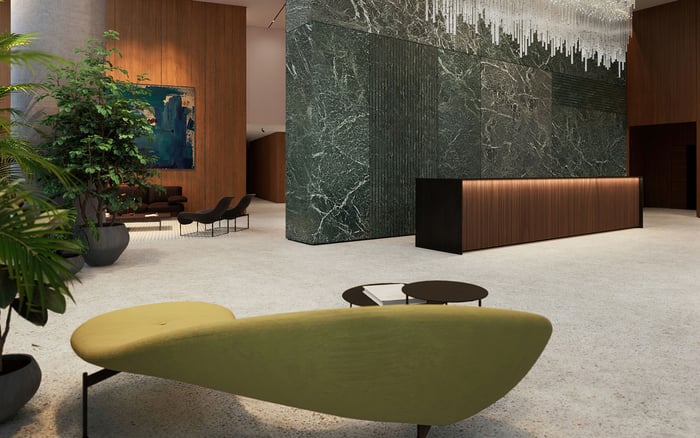
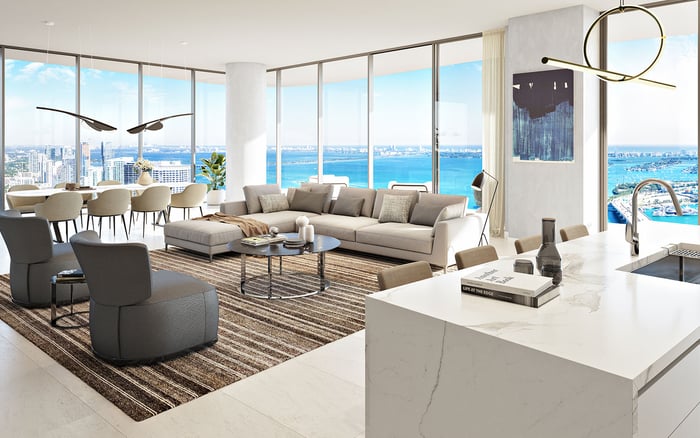
A buyer-focused look at how Casa Bella by B&B Italia Downtown Miami, Colette Residences Brickell, and Nora House West Palm Beach frame a quieter luxury shift toward service-led ownership in South Florida.
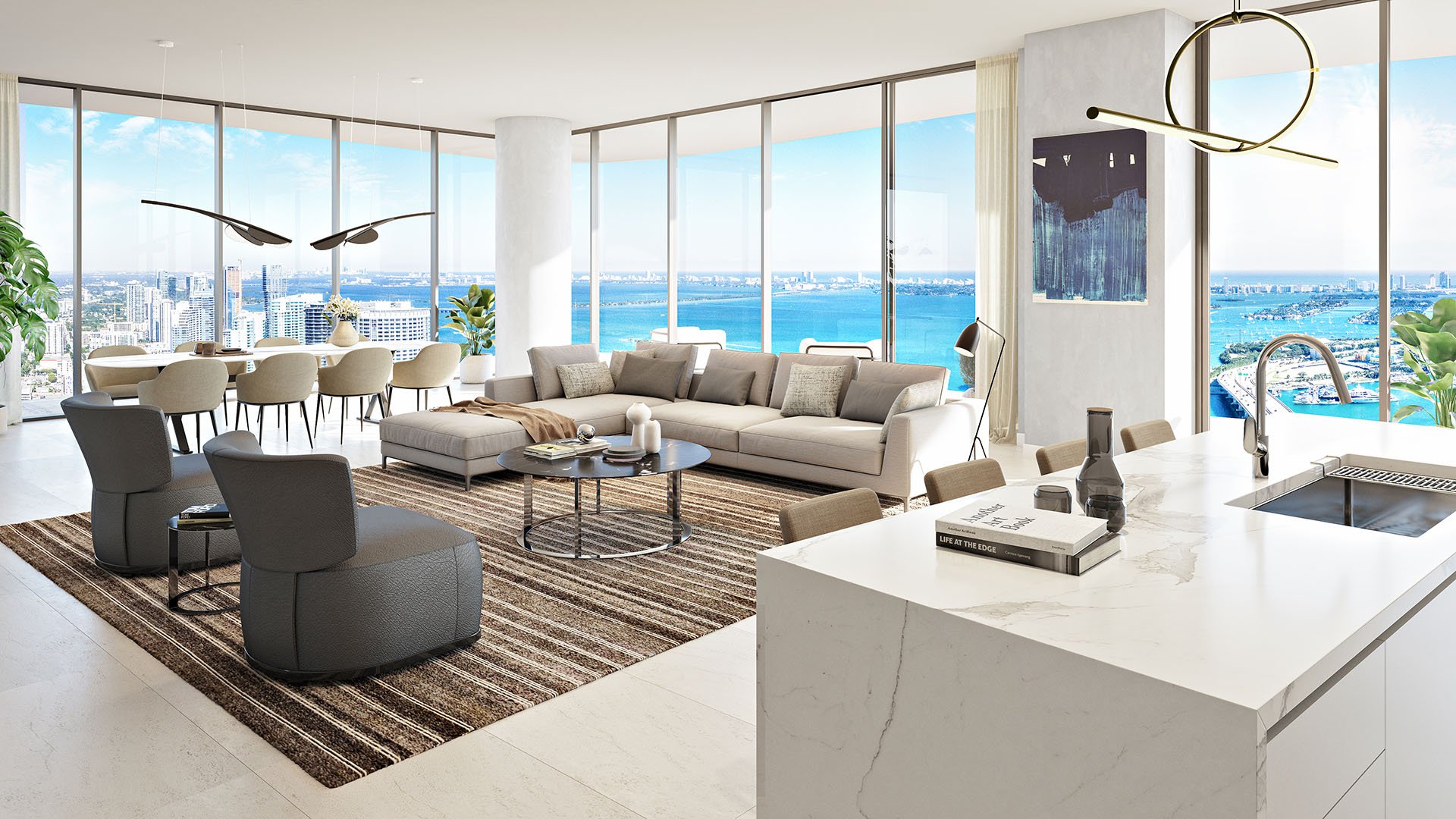
South Florida’s ultra-premium residential market has entered a more sophisticated phase. For years, buyers focused on the visible signals of luxury: water views, architectural pedigree, private elevators, ceiling heights, and the social currency of an address. Those still matter. Yet the ownership conversation is shifting toward something quieter and more operational: how effortlessly a residence supports daily life.
That is where service-led ownership becomes the defining phrase. It describes buildings conceived not simply as places to live, but as residential platforms where arrival, privacy, hospitality, convenience, wellness, maintenance, and lifestyle management are integral to the ownership experience. It is less about spectacle and more about removing friction.
The idea comes into focus through three projects in three distinct urban settings: Casa Bella by B&B Italia Downtown Miami, Colette Residences Brickell, and Nora House West Palm Beach. Each sits within a different rhythm of South Florida life. Together, they suggest that the next generation of buyers is not only purchasing square footage. They are purchasing a standard of ease.
The modern South Florida buyer is often mobile, time-sensitive, and accustomed to high-touch environments. Many split time between markets, travel frequently, or use their residence as both retreat and command center. In that context, a condominium is no longer judged only by its interiors. It is judged by how well the building anticipates needs before they become tasks.
Service-led ownership can mean different things depending on the building and the buyer. At its most practical, it is the confidence that a home will function beautifully when the owner is present and remain cared for when the owner is away. At its most emotional, it is the feeling of returning to a place that recognizes the resident’s pace of life.
This is particularly relevant in new-construction and pre-construction decisions, where buyers are evaluating not only finishes and floor plans, but also the long-term culture of the building. The questions become more nuanced. Who is the residence for? How private does it feel? How intuitive is the arrival sequence? Does the building support entertaining, quiet work, wellness, family use, or seasonal living without requiring the owner to orchestrate every detail?
Downtown Miami has become one of the most compelling laboratories for vertical luxury. It is dense, cultural, connected, and increasingly global in its buyer profile. In this setting, service-led ownership must balance metropolitan energy with a sense of retreat.
Casa Bella by B&B Italia Downtown Miami is important because its name places design at the front of the conversation. A design-led residential identity can function as a form of service when it creates coherence: the feeling that public spaces, private interiors, and daily rituals speak the same language. In a Downtown setting, that coherence matters. Buyers are not merely seeking a residence near the action. They want a private counterpoint to it.
For buyers considering Downtown, the service question is often about transition. How gracefully does the building move an owner from city to sanctuary? How does it shape first impressions for guests? How much of the daily experience feels curated rather than improvised? In a market where luxury towers compete for attention, the enduring value may belong to those that feel composed, not merely impressive.
This is where Downtown as a tag and a lifestyle category becomes more than geography. It signals a buyer who wants access without surrendering calm, and urbanity without losing the rituals of private ownership.
Brickell has a distinct ownership psychology. It is fast, international, finance-oriented, and intensely vertical. The Brickell buyer often wants immediacy: restaurants, offices, private clubs, transportation corridors, and social life within a compact radius. In this environment, service-led ownership is less decorative and more essential.
Colette Residences Brickell enters that conversation as a residential name tied to one of Miami’s most active luxury districts. The promise of Brickell living is not simply proximity. It is the compression of life into a highly efficient urban format. The best buildings in this category do not just provide amenities. They choreograph time.
For a Brickell owner, service can mean a smoother morning, a more private arrival, a better-managed evening with guests, or the ability to leave town without wondering whether the residence is being properly looked after. The value proposition is practical, but the emotional result is freedom.
Brickell also reveals a subtle shift in buyer expectations. A premium residence is no longer defined only by what exists within the unit. It is defined by the entire sequence of ownership, from the lobby to the elevator, from social spaces to quiet corners, from daily support to the feeling that the building understands discretion. In the best cases, service is not loud. It is simply present.
West Palm Beach has drawn increased attention from buyers who want sophistication with a different cadence than Miami. The appeal is not necessarily a retreat from urban life, but a recalibration of it. The city offers cultural proximity, Palm Beach adjacency, dining, waterfront access, and a more measured atmosphere for those seeking elegance without constant intensity.
Nora House West Palm Beach speaks to that shift. Its importance in this service-led conversation is not about competing with Miami tower culture on the same terms. It is about demonstrating how ownership can feel personal, neighborhood-oriented, and lifestyle-driven in a market where buyers increasingly value both polish and ease.
West Palm Beach has become a useful shorthand for this refined alternative. Buyers looking here may still want excellent design, strong service, and lock-and-leave simplicity, but they often respond to a more intimate sense of place. The service language is therefore softer. It is less about making a statement and more about making daily life feel beautifully handled.
That distinction matters. South Florida’s luxury map is no longer a single hierarchy moving outward from Miami Beach or Brickell. It is a network of lifestyle choices, each with its own definition of service, privacy, and prestige.
Amenity lists can be seductive, but service-led ownership requires a deeper reading. Buyers should look at how the building is likely to operate, not just what it says it contains. A lounge, pool, wellness space, or arrival area only becomes meaningful when supported by thoughtful circulation, privacy, staffing philosophy, and a clear residential culture.
The most important question is whether the building reduces complexity. Does it make entertaining easier? Does it support seasonal ownership? Does it allow a resident to live privately in a highly visible market? Does it feel intuitive for family, guests, and household staff? These questions often reveal more than a rendering or finish package.
Casa Bella by B&B Italia Downtown Miami, Colette Residences Brickell, and Nora House West Palm Beach point to three expressions of the same premium. In Downtown, service may be tied to design coherence and urban retreat. In Brickell, it may be tied to efficiency and discretion. In West Palm Beach, it may be tied to calm, refinement, and a more personal residential rhythm.
For buyers, the opportunity is to compare not only projects, but also lifestyles. The right residence should feel less like a checklist and more like an operating system for the life the owner actually leads.
South Florida luxury has always rewarded beauty, rarity, and location. The emerging premium is operational intelligence. Buildings that understand this will likely resonate with buyers who have little patience for friction and a high sensitivity to quality.
That does not mean every buyer wants the same service model. Some want a highly social residential environment. Others want near-invisibility. Some want city intensity, while others want a quieter residential base with selective access to culture and dining. The common denominator is control. Service-led ownership gives buyers more control over time, privacy, and experience.
In that sense, these three projects reveal a broader market truth. The luxury residence is becoming less like a static asset and more like a managed lifestyle environment. The best buildings will not overwhelm owners with promises. They will make ownership feel natural, protected, and gracefully efficient.
What is service-led ownership in South Florida luxury real estate? It is an ownership model where design, staffing, privacy, and daily convenience are treated as central parts of the residential experience.
Why does this matter to high-end buyers? Many luxury buyers value time, discretion, and ease as much as finishes or views, especially when they travel often or own multiple homes.
How does Casa Bella by B&B Italia Downtown Miami fit the theme? It highlights how design identity can shape the daily ownership experience in a dense Downtown Miami setting.
How does Colette Residences Brickell fit the theme? It reflects the Brickell preference for efficient, polished urban living where service supports a fast-moving lifestyle.
How does Nora House West Palm Beach fit the theme? It points to a quieter form of luxury in West Palm Beach, where service can feel more personal and neighborhood-oriented.
Is service-led ownership the same as having many amenities? No. Amenities are physical features, while service-led ownership is about how seamlessly the building supports daily life.
Should buyers prioritize service over location? The strongest choice usually aligns both, pairing the right neighborhood with a building culture that matches the owner’s lifestyle.
Does this trend apply only to primary residences? No. It is especially relevant for second-home buyers who want confidence that the residence functions well when they are away.
What should buyers ask before purchasing? They should ask how the building handles arrival, privacy, guest flow, maintenance, wellness, and day-to-day resident support.
Is service-led ownership likely to remain important? Yes. As South Florida attracts more time-sensitive global buyers, ease and discretion are becoming core measures of luxury.
If you'd like a private walkthrough and a curated shortlist, connect with MILLION.
If branded residences are on your mind — as a home or as an allocation — we would be glad to share what we are seeing, privately.
Begin a quiet conversation