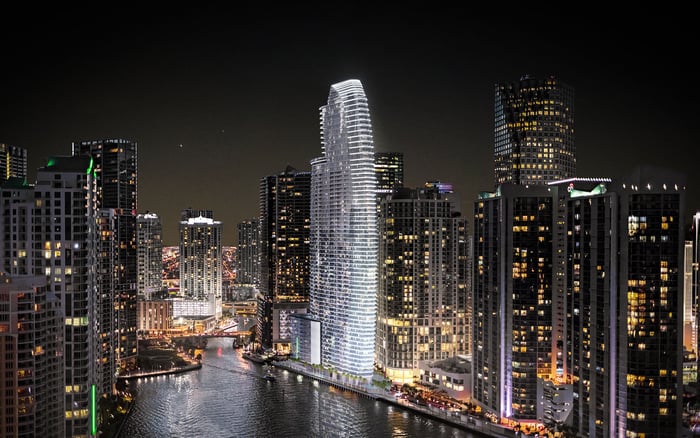
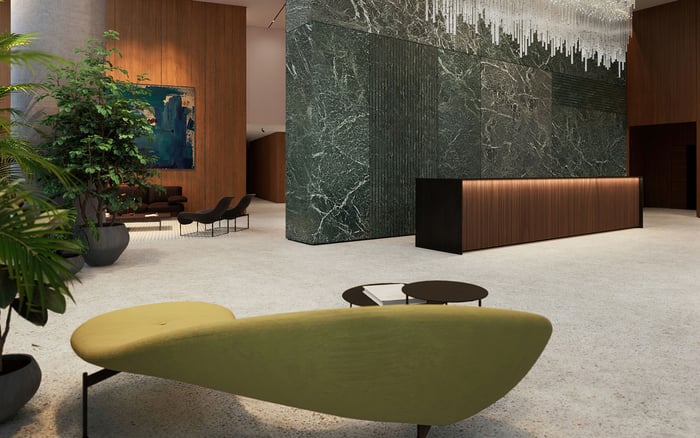
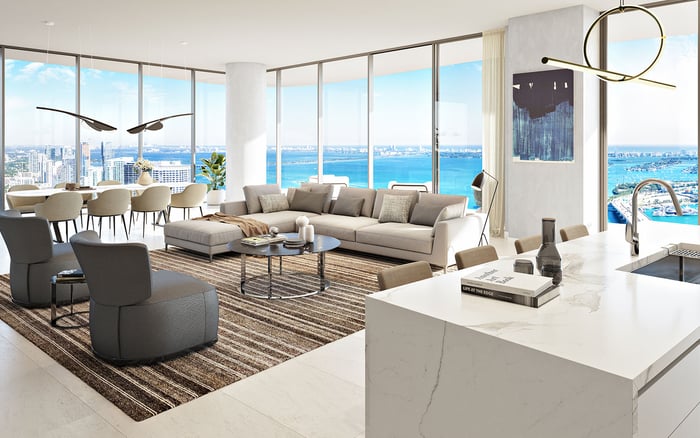
Casa Bella by B&B Italia in Downtown Miami makes a compelling case for buyers who want design-led, club-adjacent living without making a separate private club the center of daily life.
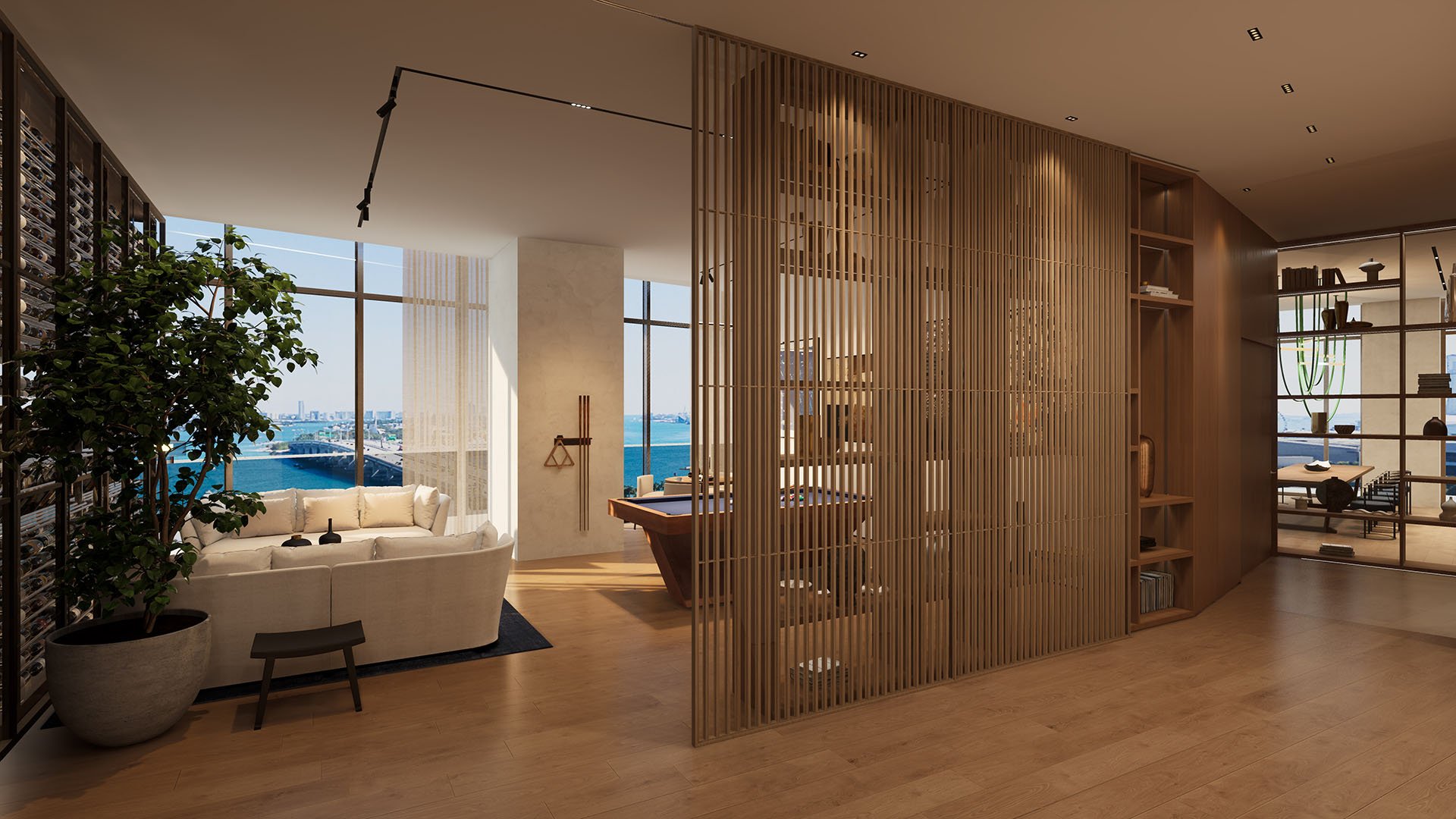
For a certain luxury buyer in Miami, the old binary now feels too narrow. On one side is the traditional private club, with its rituals, dues, social hierarchy, and calendar of obligations. On the other is the conventional condominium, often elegant but not always capable of generating a meaningful lifestyle within the building itself. The more compelling middle ground is club-adjacent living: a residential environment that borrows the ease, polish, and social energy of a club without asking residents to organize daily life around a separate membership institution.
That is where Casa Bella by B&B Italia Downtown Miami earns attention. Its case is not that it replaces a private club. The stronger argument is more precise: it reduces the need to depend on one for everyday luxury value. For buyers who travel often, split time between cities, or prefer social optionality over formal obligation, that distinction matters.
Casa Bella by B&B Italia Downtown Miami also sits within a broader Downtown conversation. The city center has become a serious arena for branded residences, design-led towers, hospitality-influenced services, and amenity programs intended to make the building feel like a complete lifestyle setting rather than a place to sleep between engagements.
The most useful way to evaluate Casa Bella is to separate club-adjacent from club-inclusive. Club-inclusive implies a formal membership relationship, often with defined rules, recurring dues, and a social structure outside the home. Club-adjacent is more flexible. It describes a residence that provides curated environments, service cues, and social infrastructure that can feel club-like, while leaving the resident free to participate lightly, frequently, or not at all.
That flexibility is the center of the buyer thesis. A resident may want beautifully composed interiors, a polished arrival sequence, places to gather, and the sense that daily life has been edited with taste. That same resident may not want to plan evenings around another institution, manage a second layer of lifestyle logistics, or feel that value appears only when a club membership is actively used.
This is especially relevant for globally mobile buyers. If Miami is one of several homes, the most valuable luxury may not be exclusivity in the old sense. It may be immediate usability: arrive, settle in, host, dine nearby, work, move through the city, and leave without feeling that an unused membership has become another obligation.
Casa Bella’s branding centers on B&B Italia, giving the project a design-led identity rather than a purely location-led pitch. In Miami’s branded-luxury market, that matters. Buyers are not only comparing square footage, views, or neighborhood access. They are comparing the emotional tone of a building and the credibility of the design language that shapes it.
A design-led residence can create continuity between private interiors and shared spaces. That continuity is central to club-adjacent living because the building must feel curated at multiple levels. If the experience breaks down between the lobby, amenity areas, corridors, residences, and services, the club-adjacent promise becomes decorative rather than structural.
For Casa Bella, the B&B Italia association gives the tower a defined aesthetic reference point. It signals that the lifestyle proposition is rooted in design pedigree, not only convenience. For buyers who view furniture, proportion, materiality, and atmosphere as part of value, that is a serious reason to keep the project on the shortlist.
Downtown is not incidental to the Casa Bella argument. The location is part of the lifestyle mechanism. A club-adjacent building works best when the residential experience is supported by surrounding dining, culture, business, and social infrastructure. Downtown gives residents the benefit of an urban setting where the building does not need to do everything because the neighborhood helps complete the lifestyle.
That is distinct from more secluded luxury. A buyer choosing Downtown often wants proximity, energy, and optionality. The building can provide a refined home base, while the surrounding city supplies restaurants, meetings, performances, waterfront movement, and spontaneous social contact. The result is a more elastic version of luxury, one that suits residents who do not want every meaningful interaction to pass through a club gate.
Casa Bella also belongs in the same mental map as other Downtown and nearby branded or design-conscious towers. A buyer may compare it with Waldorf Astoria Residences Downtown Miami for a hospitality-inflected Downtown perspective, or with Aston Martin Residences Downtown Miami when weighing brand identity and urban presence. The point is not that these buildings are interchangeable. It is that Downtown now gives sophisticated buyers multiple ways to define high-service city living.
Brickell is the natural comparison set because it has long trained buyers to expect vertical luxury with strong service, social, and hospitality cues. The Brickell resident often wants convenience, business access, restaurants, and a building that can support a demanding schedule. Casa Bella’s Downtown position speaks to a similar buyer psychology, but with its own design-led emphasis.
Projects such as Baccarat Residences Brickell and Cipriani Residences Brickell help frame the broader market context. Miami buyers increasingly understand branded residences as lifestyle platforms, not just addresses. The brand should shape how the building feels, how service is imagined, and how residents move between private life and shared spaces.
Casa Bella’s distinction is that its pitch leans heavily into design pedigree and curated residential life. For the buyer who admires a club atmosphere but resists club dependency, that balance can feel especially current.
The shortlist case for Casa Bella should be evaluated across development fundamentals, architecture, interior design, amenities, services, and Downtown context. Buyers should ask whether the building’s lifestyle infrastructure matches how they actually live, not how they imagine they might live during a sales presentation.
Start with daily rhythm. Will the residence support weekday privacy, weekend hosting, remote work, and effortless arrivals after travel? Then consider the social layer. Does the building create opportunities for connection without pressuring residents into constant participation? Finally, examine the neighborhood. Downtown only adds value if the buyer genuinely wants urban access and the energy that comes with it.
This is where Casa Bella reads as both a New-construction consideration and a Top Project candidate for the right profile. It is not merely about owning in Downtown. It is about selecting a residence where design, service, and social energy combine into a flexible lifestyle asset. For an Investment-minded buyer, that clarity of positioning can also matter because future purchasers are likely to continue valuing buildings with a legible lifestyle thesis.
Casa Bella is best suited to buyers who want the feeling of a private-club environment without the rigidity of a club-centered life. They may already have access to clubs elsewhere, or they may simply prefer to keep that decision separate from the home purchase. In either case, the residence must carry more of the lifestyle burden.
The ideal buyer appreciates design as a form of daily comfort. They want social energy, but not social choreography. They want access, but not dependence. They want a Miami base that can feel complete on arrival, yet remain connected to the city around it.
That is why Casa Bella belongs on the shortlist. It offers a way to live near the club ecosystem without being defined by it, and in Miami’s evolving luxury market, that may be one of the most relevant forms of discretion.
Is Casa Bella by B&B Italia a private club residence? It is better understood as club-adjacent rather than club-inclusive. The appeal is curated residential lifestyle value without reliance on a separate club membership.
Why does the B&B Italia branding matter? It gives Casa Bella a design-led identity, helping distinguish it from projects that rely mainly on location or conventional amenity language.
Who should consider Casa Bella? Buyers who want social energy, design pedigree, and high-service living without making a traditional private club central to daily life should consider it.
Why is Downtown Miami important to the thesis? Downtown adds dining, culture, business, and social infrastructure that supports the building’s club-adjacent value proposition.
Does Casa Bella replace the need for a private club? Not necessarily. Its stronger role is reducing dependence on a club for everyday luxury, convenience, and social texture.
How should buyers compare Casa Bella with Brickell towers? Compare design identity, service expectations, amenity rhythm, and how each location supports daily movement across Miami.
Is this mainly a lifestyle purchase? Lifestyle is central, but buyers should still evaluate fundamentals such as architecture, interiors, services, and neighborhood context.
Why might globally mobile buyers respond to this concept? They often value residences that work immediately on arrival, without the added commitments of a membership-heavy social ecosystem.
What does club-adjacent living mean in practical terms? It means the building can provide social polish, curated spaces, and service cues while allowing residents to participate on their own terms.
What is the best way to shortlist comparable options for touring? Start with location fit, delivery status, and daily lifestyle priorities, then compare stacks and elevations to validate views and privacy.
To compare the best-fit options with clarity, connect with MILLION.
If branded residences are on your mind — as a home or as an allocation — we would be glad to share what we are seeing, privately.
Begin a quiet conversation