A discreet guide for Buenos Aires collectors evaluating Miami Beach and South Florida homes through the lens of art storage, display, privacy, access, and long-term stewardship.
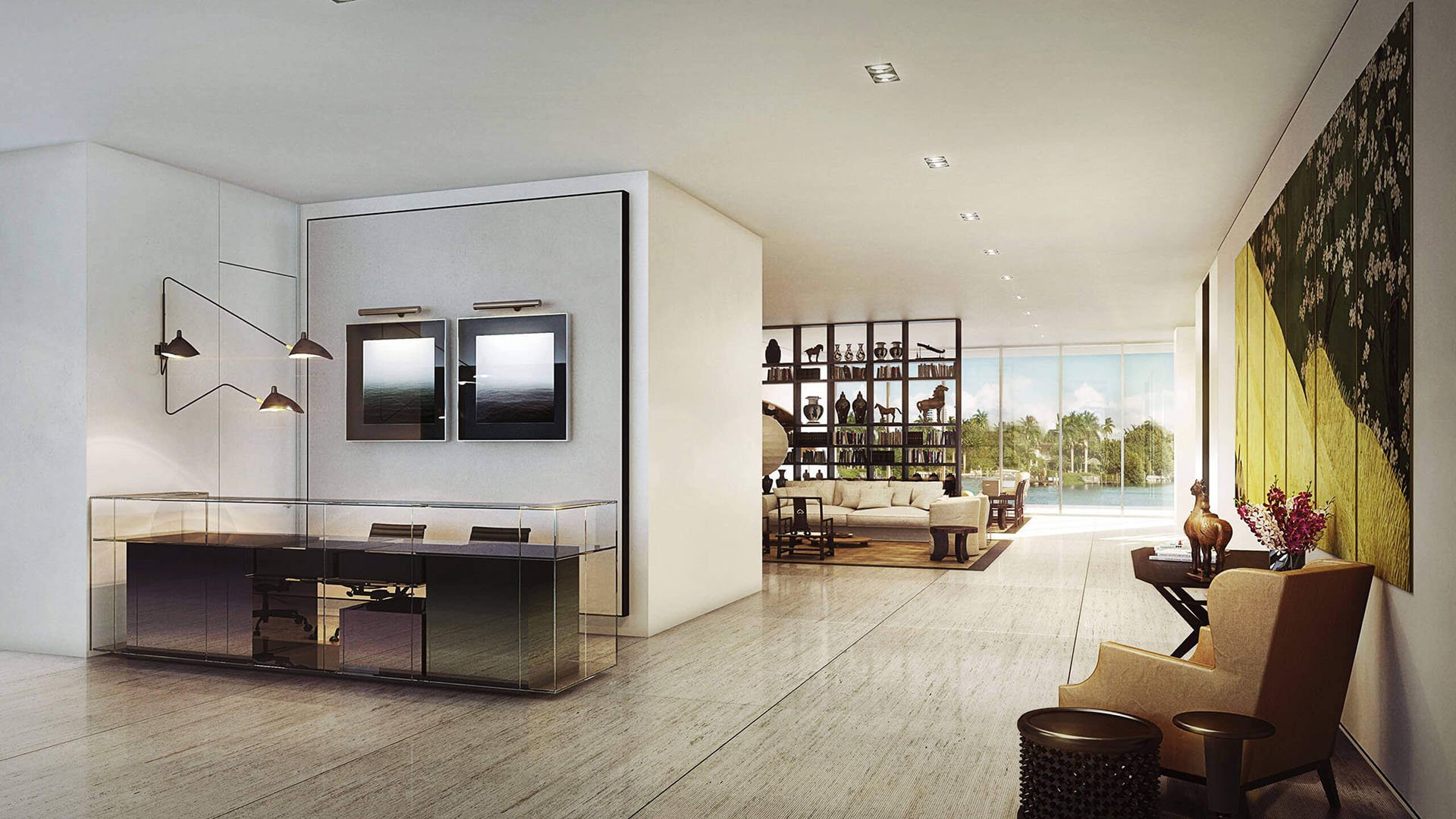
For a Buenos Aires collector choosing a South Florida residence, the first question is rarely whether the view is beautiful. It is whether the home can protect what cannot be casually replaced. Paintings, works on paper, photography, sculpture, archival objects, and design pieces each bring their own sensitivities. A residence that feels flawless during a cocktail preview may be far less convincing once the conversation turns to storage, delivery access, service circulation, and the long, quiet life of a collection.
Miami Beach offers a seductive proposition: proximity to culture, water, restaurants, private clubs, and a cosmopolitan rhythm familiar to international owners. Yet for serious art, the romance of the setting must be balanced by discipline. A collector-grade home should be evaluated as both a residence and a private custodial environment. The most elegant acquisition is the one that allows display and preservation to coexist without compromise.
This is why the search should begin before the first showing. A buyer should arrive with an art inventory framework, even if abbreviated, and a clear sense of which works will be displayed, which will rotate, and which should remain in professional storage. The home is only one part of the system. The building, staff protocols, insurance requirements, elevator dimensions, garage access, and emergency planning matter just as much.
A waterfront apartment and a garden-facing villa solve different problems. So do Miami Beach, Surfside, Brickell, Fisher Island, Coconut Grove, and Palm Beach. Before comparing neighborhoods, divide the collection into three categories: daily display, seasonal rotation, and deep storage. The first category belongs in the residence. The second needs nearby logistics. The third may be better served by a professional facility than by a closet dressed as a storeroom.
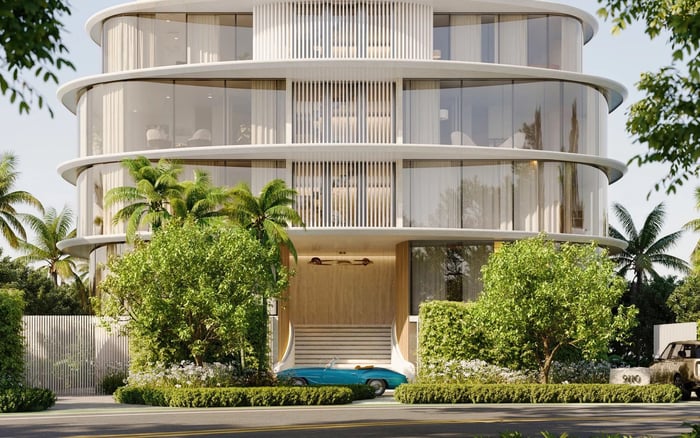
For collectors who want Miami Beach energy with a private residential tone, The Perigon Miami Beach belongs in the conversation because it places the buyer in a coastal setting where display, lifestyle, and discretion can be considered together. Nearby, Shore Club Private Collections Miami Beach speaks to owners who want a name with design presence and a strong sense of arrival. The point is not that any single building is automatically art-ready. The point is that the best buildings prompt the right questions early.
Those questions should be practical. Can large works enter without improvisation? Is there a secure path from vehicle to residence? Are service elevators and corridors appropriate for crated pieces? Can lighting be controlled in primary display areas? Are there walls suitable for heavier works, or will the interior plan require reinforcement? These are not decorative details. They are acquisition criteria.
In a private residence, art storage should not be treated as an afterthought. A powder room can be jewel-like, but the collection needs a backstage. That backstage may be a dedicated room, a conditioned storage zone, a secured service area, or a hybrid plan coordinated with an external fine-art warehouse. What matters is intentionality.
The core issues are environmental stability, security, low light exposure, clean circulation, and controlled access. A buyer should ask a conservator, art handler, and insurance advisor to review the proposed plan before closing or before major interior work begins. If the home is pre-construction, the conversation should happen while changes may still be feasible. If the home is resale, the question becomes whether the existing infrastructure can be adapted without disturbing the architecture.
In South Florida, the most refined interiors often celebrate glass, water, and sun. For art, that beauty needs calibration. Display walls may require shades, filtering strategies, or alternative hanging locations. Works on paper and photography deserve particular care. Sculptural pieces may need plinths, anchoring, or floor-load review. A collector who treats these decisions as part of design and architecture will end up with a more coherent home than one who solves them after installation day.
Miami Beach is the natural emotional center for many international buyers, especially those who want the cultural cadence of the city close at hand. Still, a Buenos Aires collector should compare it with other South Florida settings through the lens of storage and access. Brickell may appeal to owners who want a vertical, urban base with quick movement across the city. Surfside can feel quieter and more residential. Waterfront addresses in Fort Lauderdale, Boca Raton, or Palm Beach may suit collectors who want more space, privacy, or a different pace.
In Brickell, The Residences at 1428 Brickell can be evaluated by buyers who want an urban address and a building context that supports a polished private lifestyle. In Surfside, The Surf Club Four Seasons Surfside offers a different reading of coastal prestige, one defined by resort heritage and a quieter northern-beach atmosphere. Neither choice is inherently superior. The right answer depends on the collection’s movement, the owner’s schedule, and the level of privacy required for deliveries and installations.
This is where a disciplined buyer’s guide becomes especially useful as a way of thinking. Art Basel week may bring the collection into public conversation, but ownership is a year-round discipline. The best address is the one that feels effortless in February, secure in August, and calm when a crate arrives at the loading area.
Before committing, ask for a private building walk-through focused only on art logistics. Not the pool, not the spa, not the lobby scent. Start at the point where a truck would arrive. Continue through security, loading, service elevator, corridors, and the residence entry. If the route feels awkward when empty, it will feel worse when a valuable work is crated and scheduled.
Then review governance. Some condominium associations have rules affecting contractor access, delivery hours, elevator reservations, insurance certificates, and protective coverings. These may be perfectly reasonable, but a collector needs to know them in advance. A rule that seems minor during a typical move-in can become material during a complex installation.
Finally, think about privacy. A collection can attract attention even when the owner does not. The home should allow staff, advisors, framers, installers, and handlers to operate discreetly. A residence with strong service logic can preserve the owner’s social life upstairs while the collection is managed quietly behind the scenes.
The most successful South Florida art residences do not look like warehouses. They feel graceful, personal, and lived in. The storage strategy is simply embedded with the same care as the kitchen, wardrobe, cellar, and terrace. For a Buenos Aires buyer, this balance can be liberating. The home can hold memory, culture, and ambition without asking the collection to suffer for the view.
A collector should resist buying solely for drama. Double-height rooms, cinematic glazing, and oceanfront exposure may be thrilling, but they must be reconciled with conservation, installation, and insurance realities. Conversely, a quieter plan with better back-of-house logic may become the more sophisticated choice. In luxury real estate, the rarest amenity is often not the visible one. It is control.
South Florida rewards the buyer who plans. Choose the address for the life you want, but choose the building for the collection you already have and the works you intend to acquire next.
Should art storage influence the neighborhood I choose? Yes. Neighborhood choice affects delivery routes, privacy, proximity to advisors, and whether the residence supports the way your collection moves.
Is Miami Beach suitable for serious collectors? It can be, provided the building and residence are evaluated for access, display conditions, storage planning, and privacy before purchase.
Should I keep all of my collection inside the residence? Not always. Many collectors separate display pieces from rotation or deep-storage works, depending on conservation needs and space.
What should I check during a building tour? Walk the route from vehicle arrival to the residence, including security, loading areas, elevators, corridors, and entry clearances.
Who should review the home before I buy? Consider involving a conservator, fine-art handler, insurance advisor, and interior designer familiar with collection-sensitive residences.
Are glass walls a problem for art? They can be if light exposure is not managed. Window treatments, placement, and lighting plans should be discussed early.
Is a dedicated art room necessary? Not in every case, but a secure, conditioned, and intentional storage strategy is essential for valuable works.
Do condo rules matter for collectors? Yes. Delivery hours, elevator reservations, contractor access, and insurance requirements can affect installations and rotations.
Should pre-construction buyers plan art storage early? Yes. Early planning may allow better wall preparation, lighting decisions, storage design, and service coordination.
What is the main mistake collectors make? They fall in love with the view before testing the home as a complete custodial environment for the collection.
When you're ready to tour or underwrite the options, connect with MILLION.
If branded residences are on your mind — as a home or as an allocation — we would be glad to share what we are seeing, privately.
Begin a quiet conversation