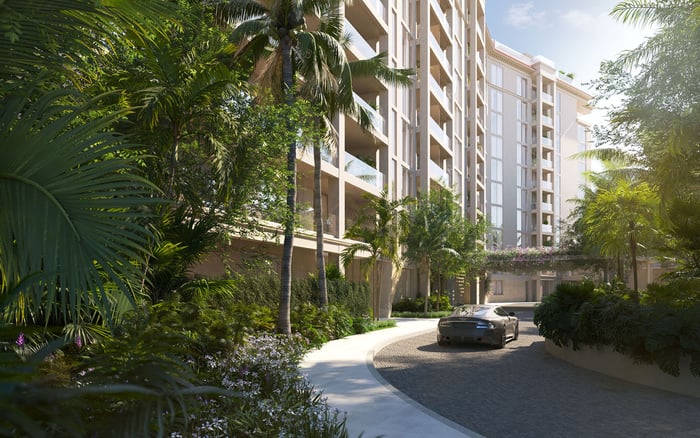
A discreet guide to assessing lock-and-leave ownership on Fisher Island, with attention to service, governance, access, maintenance, and long-term confidence.

A lock-and-leave residence is not simply a beautiful home that can be closed for the season. It is an operating system. The right purchase should allow an owner to arrive without friction, leave without anxiety, and rely on discreet management, maintenance, and security while the residence is unoccupied.
On Fisher Island, that standard matters because buyers are often evaluating privacy, ease, and control as closely as architecture or outlook. The strongest purchase is rarely the one with the longest amenity description. It is the one where daily ownership feels protected, repeatable, and professionally managed.
Fisher Island is best evaluated through the combined lens of second-home discipline, gated-community protocols, private lifestyle priorities, and waterfront exposure. Those filters help separate a glamorous purchase from a resilient one.
Before touring, define how the property will live. Will it be a winter base, a holiday residence, a family gathering point, or a quiet retreat used in short intervals? A buyer who expects spontaneous weekend arrivals needs a different operating model than an owner who occupies for several continuous months.
Ask how the home will be prepared before each arrival. Who opens the residence, tests systems, stocks essentials, and confirms that terraces, climate controls, appliances, and technology are ready? A true lock-and-leave property should reduce the number of decisions an owner must make from afar.
The same applies to departures. Determine whether there is a standard close-down protocol for storms, extended absences, housekeeping, mechanical checks, mail handling, and vendor access. If the process depends on improvisation, it is not yet a lock-and-leave solution.
Finishes can be replaced. Service culture is harder to change. Buyers should study how the building or community handles communication, repairs, access requests, and after-hours concerns. A polished lobby matters, but the deeper question is whether staff can execute calmly when the owner is not present.
When considering Fisher Island residences such as Palazzo del Sol or Palazzo della Luna, the conversation should move quickly from visual appeal to operational detail. Who coordinates routine maintenance? How are work orders documented? What happens if an issue is discovered while the owner is away?
The best lock-and-leave settings make the invisible visible during due diligence. Procedures can be explained clearly, documents should be provided without drama, and the interaction among private staff, building staff, and approved vendors should be easy to understand.
Association documents are where convenience either becomes durable or begins to narrow. Review rules on renovations, deliveries, private staff, pets, guests, leasing, storage, vehicle access, insurance responsibilities, and exterior modifications. A residence may feel effortless during a showing, yet prove restrictive if the rules conflict with how the owner travels and entertains.
Pay particular attention to maintenance obligations. Buyers should understand what the association handles, what remains the owner's responsibility, and how emergency access is managed. In a lock-and-leave purchase, ambiguity can become expensive because the owner may not be present to notice small issues early.
Financial stewardship matters as well. Review budgets, reserves, assessments, insurance structure, and long-term capital planning with qualified advisors. The goal is not merely to avoid surprise costs. It is to understand whether the property is being maintained at a level consistent with the owner's expectations over time.
Privacy is central to the Fisher Island decision, but privacy must be practical. Buyers should understand how guests, contractors, household employees, and service providers are cleared, documented, and supervised. A lock-and-leave owner should not need to solve access logistics every time a repair, delivery, or housekeeping visit is required.
For larger residences and estate-style ownership, the process can become more complex. A buyer looking at The Links Estates at Fisher Island should think carefully about staffing plans, exterior maintenance, systems oversight, and the chain of command between private personnel and community protocols.
The question is not whether access is controlled. The question is whether it is controlled in a way that supports the owner's lifestyle without creating delays, confusion, or unnecessary exposure.
A sophisticated buyer should bring the future operating team into the decision early. Property managers, insurance advisors, legal counsel, household staff, and trusted contractors may see risks that a buyer misses during a design-led tour.
For example, a buyer evaluating The Residences at Six Fisher Island may want to ask how a typical absence is managed, how building communications are delivered, and how quickly service issues are escalated. Those questions are not glamorous, but they define the ownership experience.
Technology should also be reviewed carefully. Remote climate control, leak detection, security systems, lighting, shades, and audio systems are useful only when they are reliable, supported, and understood by the people responsible for the home. A complicated system with no clear maintenance plan can become the opposite of convenience.
Lock-and-leave value is not only about personal ease. It can also shape future liquidity. The next buyer will likely ask the same questions about governance, staffing, access, and maintenance history. A well-documented residence, supported by consistent care, can present more confidently when it returns to market.
Keep records of service, upgrades, inspections, repairs, and preventive maintenance. Treat the property like a collection-quality asset, not a casual vacation home. On Fisher Island, discretion and condition should work together. The most compelling ownership story is one in which the residence has been enjoyed, protected, and managed with quiet precision.
What does lock-and-leave ownership mean on Fisher Island? It means the residence can be left unoccupied with confidence because maintenance, access, security, and preparation procedures are clearly managed.
Should I prioritize amenities or management quality? Management quality should come first. Amenities enhance lifestyle, but operational reliability protects the owner when the residence is empty.
What documents should I review before purchasing? Review association rules, budgets, insurance responsibilities, reserve information, maintenance obligations, and any policies affecting guests, staff, and vendors.
Is a larger residence harder to manage as a lock-and-leave property? It can be, depending on systems, exterior care, staffing, and vendor coordination. Larger homes need a more formal operating plan.
How should I evaluate service staff during due diligence? Ask how issues are reported, tracked, and resolved when owners are away. Clear procedures are more important than vague assurances.
Can technology replace a property manager? No. Technology can help monitor the home, but a trusted person or team should be responsible for interpreting alerts and acting quickly.
Why does access control matter so much? Access control determines how easily approved people can service the residence while maintaining privacy, security, and accountability.
What should I ask about storm preparation? Ask who is responsible for preparation, inspection, and reopening procedures, and whether those responsibilities are documented in writing.
How does lock-and-leave ownership affect resale? A well-maintained residence with organized records can reassure future buyers that the property has been cared for consistently.
When should I assemble my advisory team? Assemble it before contract review. Legal, insurance, property management, and technical advisors can identify issues before they become obligations.
For a tailored shortlist and next-step guidance, connect with MILLION.
If branded residences are on your mind — as a home or as an allocation — we would be glad to share what we are seeing, privately.
Begin a quiet conversation