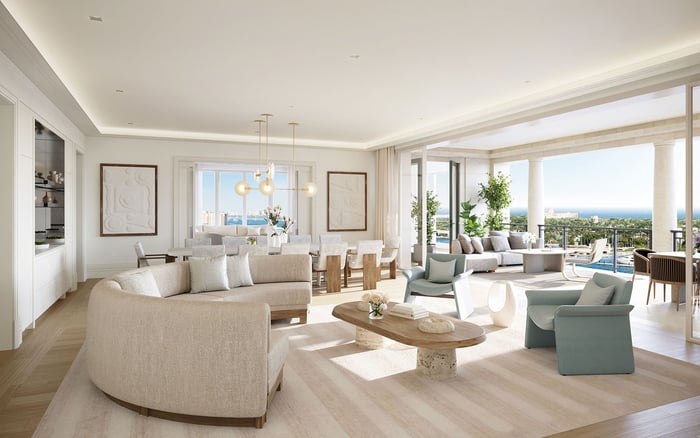
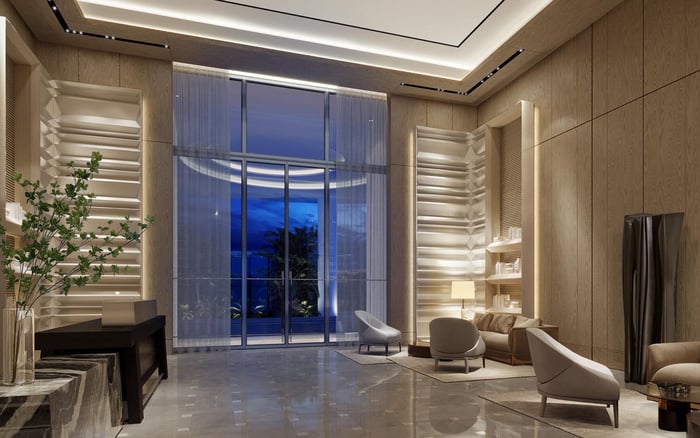
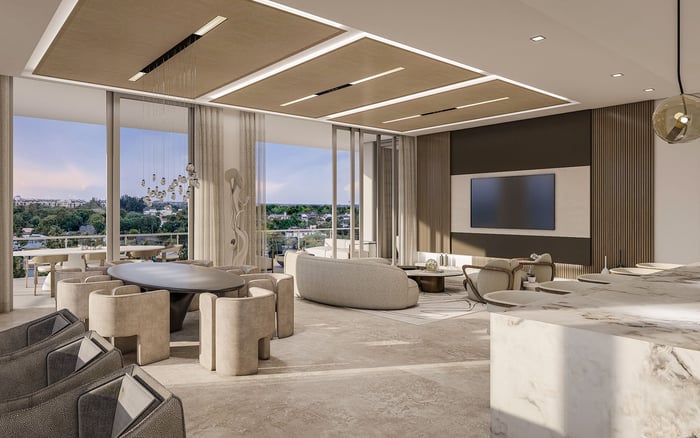
A discreet buyer’s guide to understanding how branded residences in Palm Beach convert service, governance, privacy, and operational quality into long-term residential value.
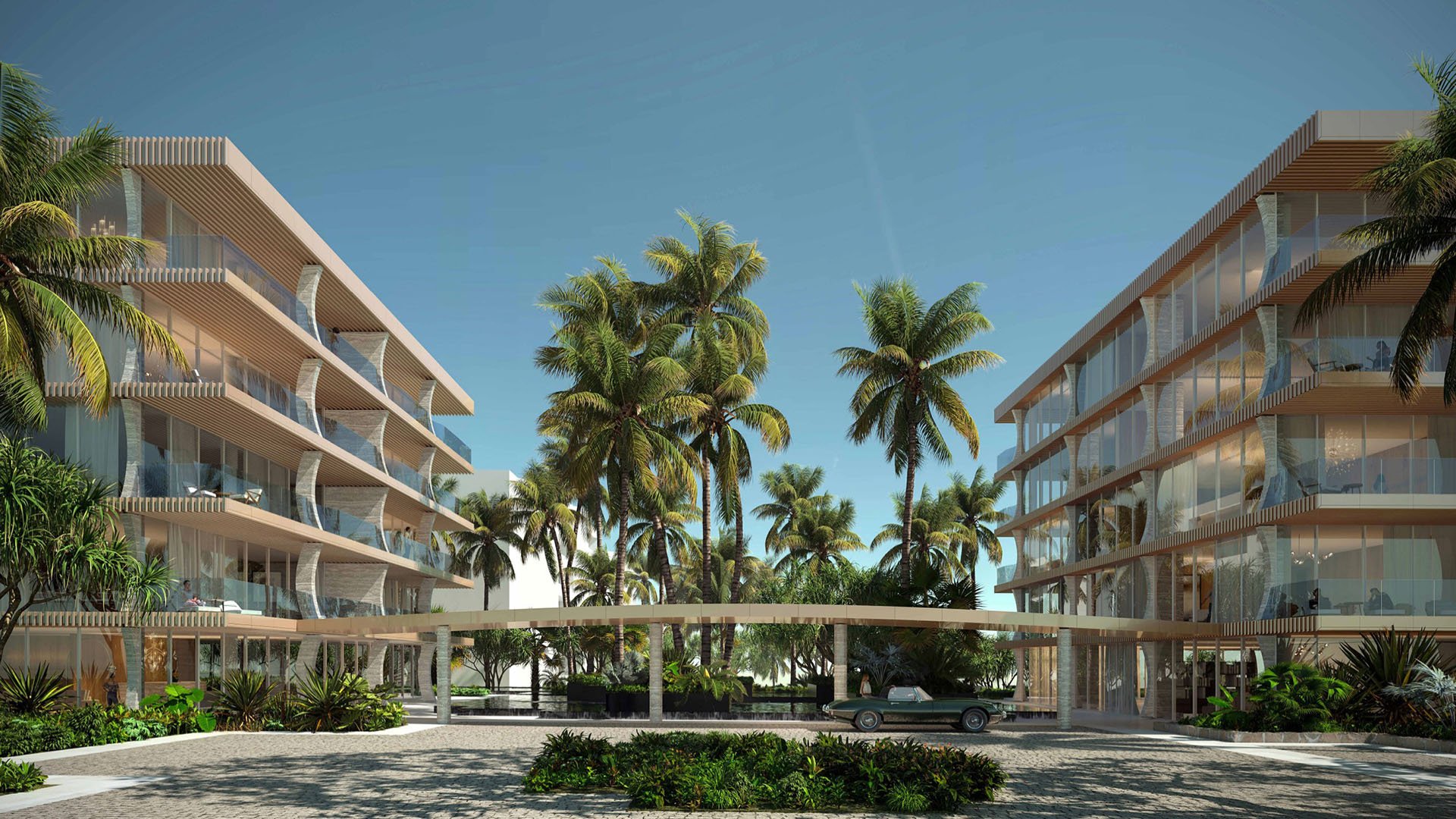
A branded residence is not simply a condominium with a familiar name attached. At the upper end of the Palm Beach market, the real premium is tied to service architecture: the daily systems, staff culture, amenity programming, building standards, and sense of effortless continuity that make a private home feel exceptionally well supported.
That distinction matters. A logo may create immediate recognition, but long-term value depends on whether the experience behind the name remains consistent. The strongest branded residences translate hospitality into residential life without making the building feel transient or overprogrammed. The atmosphere should be polished, not performative. Service should be present, never intrusive.
For Palm Beach buyers, this is especially important because lifestyle value is often measured in privacy, access, and time saved. The service premium is justified when it removes friction from ownership: arrivals, maintenance coordination, reservations, wellness routines, guest handling, and the small details that make a second home or primary residence easier to enjoy.
In a luxury setting, the service premium is rarely about a single amenity. It is about confidence that the building will operate at a level aligned with resident expectations. A branded residence should feel composed at every threshold, from valet and reception to elevators, spa spaces, pool decks, and private corridors.
That is why discerning buyers study the operating model as closely as the floor plan. They want to know whether the residence will be managed with hotel-level attention while preserving the discretion of a private building. They also need clarity on the relationship between brand standards and association governance, because service quality must be funded, staffed, supervised, and sustained.
The Palm Beach buyer often approaches this category with a long view. Even when lifestyle is the first motivation, the investment logic remains present. The question is not merely whether a branded residence feels impressive at launch. The question is whether it can remain desirable after the novelty of the name has faded.
Palm Beach and its neighboring luxury corridors offer different versions of the branded-residence proposition. On the island, the appeal is often quiet prestige and a residential rhythm that prizes privacy. In West Palm Beach, buyers may weigh the convenience of a more urban setting, easier daily movement, and access to cultural and dining experiences. In Palm Beach Gardens, the conversation can shift toward space, wellness, and a more resort-like cadence.
Within this broader landscape, Palm Beach Residences offers a useful reference point for buyers considering how a Palm Beach address can support a more private expression of branded living. The name itself is less important than the buyer’s larger question: does the residence reinforce the way one actually wants to live?
A buyer comparing urban convenience may look toward Mr. C Residences West Palm Beach as part of a different service conversation, one shaped by hospitality cues and proximity to a more active downtown lifestyle. Farther north, The Ritz-Carlton Residences® Palm Beach Gardens illustrates how a globally recognized hospitality name can frame expectations around continuity, arrival experience, and resident services.
Service has a cost. The question for a sophisticated buyer is whether that cost is transparent, durable, and proportionate to the quality delivered. A branded residence may carry higher operating expectations than a traditional condominium, and those expectations can influence monthly obligations, staffing levels, reserve planning, maintenance standards, and future capital decisions.
The right due diligence is practical. Buyers should review what is included, what is billed separately, and what can change over time. They should understand whether hospitality services are embedded in the building’s operating structure or offered à la carte. They should also examine how brand standards are enforced and how resident governance interacts with those standards.
This is where long-term ownership discipline becomes essential. A building that underfunds service may disappoint residents. A building that overbuilds programming without clear demand may burden owners. The strongest model sits between those extremes: sufficient service to justify the premium, paired with governance that protects residents from unnecessary complexity.
Branded residences can command attention during a sales cycle, but durable value is created after residents move in. The real test is whether the service experience remains consistent through seasons, leadership changes, staffing pressures, and the natural aging of a building.
For buyers considering The Ritz-Carlton Residences® West Palm Beach, the brand conversation should be paired with a broader analysis of location, design, governance, privacy, and resident mix. The most resilient residences are those where brand, architecture, and operations feel integrated rather than layered on top of one another.
Resale value is also shaped by clarity. Future buyers need to understand what the residence offers and why the fees make sense. If the service proposition is legible, disciplined, and consistently delivered, the brand can help organize buyer confidence. If it is vague, uneven, or overly dependent on marketing language, the premium becomes harder to defend.
The best approach is to separate emotion from structure. First, decide whether the brand genuinely matches the lifestyle you want. A hospitality-forward residence can be wonderful for an owner who values service touchpoints, but unnecessary for someone who prefers a quieter, low-intervention environment.
Second, study the economics. The right question is not simply, “Are the fees high?” The better question is, “Do the fees support a standard of living I value and a building I would be proud to own years from now?”
Third, evaluate restraint. The most elegant branded residences do not need to announce themselves constantly. They create confidence through small acts of residential intelligence: staff who know how to read a room, amenities that feel natural rather than staged, and governance that treats service as a long-term asset.
What is a branded residence? It is a private residence associated with a hospitality, design, or lifestyle brand, usually with defined service and amenity standards.
Why do branded residences often carry a premium? Buyers may pay more for service consistency, brand recognition, managed amenities, and a more predictable ownership experience.
Is the brand name alone enough to protect value? No. Long-term value depends on location, design, governance, operating quality, and how well the service model is maintained.
Should buyers focus on fees before purchasing? Yes. Fees reveal how the building intends to fund service, staffing, maintenance, reserves, and resident expectations.
Are branded residences best for primary homes or second homes? They can suit either, especially when the buyer values convenience, privacy, and reliable support while in residence or away.
What should Palm Beach buyers ask first? Ask whether the service culture matches your lifestyle, and whether the operating structure can sustain that promise over time.
Can a branded residence feel too much like a hotel? It can if programming overwhelms privacy. The best buildings preserve residential calm while offering hospitality-level support.
How should buyers compare Palm Beach and West Palm Beach? Compare daily rhythm, privacy, walkability, service expectations, and the kind of setting that best supports your ownership goals.
What makes service valuable over the long term? Consistency matters most: trained staff, clear standards, responsive management, and amenities that remain relevant to residents.
What is the best way to shortlist comparable options for touring? Start with location fit, delivery status, and daily lifestyle priorities, then compare stacks and elevations to validate views and privacy.
For a discreet conversation and a curated building-by-building shortlist, connect with MILLION.
If branded residences are on your mind — as a home or as an allocation — we would be glad to share what we are seeing, privately.
Begin a quiet conversation