An editorial guide to how Downtown Miami luxury residences reconcile expansive amenities with the quiet expectations of privacy, controlled access, and discreet daily living.
In Downtown Miami, the most compelling residential buildings are no longer judged by amenities alone. Pools, fitness suites, lounges, wellness rooms, dining spaces, and terraces still matter, but the ultra-premium buyer is asking a more refined question: can the building deliver abundance without exposure?
That tension defines the modern Downtown residence. Buyers want the vitality of a vertical city, yet they also expect the calm of a private address. They may want hospitality-level service without a hotel-like parade of strangers. They may value social amenities, but only when those spaces feel curated, protected, and easy to avoid when discretion matters.
This is why buildings such as Aston Martin Residences Downtown Miami, One Thousand Museum Downtown Miami, and Waldorf Astoria Residences Downtown Miami occupy an important place in the conversation. They reflect a market in which architecture, arrival, service, and resident circulation are evaluated as closely as finishes or skyline views.
The most successful amenity programs are not simply extensive. They are edited. A buyer who lives between Miami, New York, Europe, and the Caribbean is rarely impressed by volume for its own sake. The sharper question is whether the spaces support a disciplined lifestyle: early training, quiet work, private meetings, family time, recovery, entertaining, and a seamless return home.
In Downtown, amenities need to perform without overwhelming the residence. Buyers often favor buildings where social spaces are buffered from the residential core, wellness areas feel calm rather than crowded, and shared rooms are designed with enough intimacy to avoid the mood of a public club. The result is a more residential interpretation of hospitality.
This matters in Brickell as well, where the district’s density and energy can be powerful advantages when the building provides a meaningful sense of retreat. A residence such as The Residences at 1428 Brickell is relevant to this buyer because it sits within a broader Brickell conversation about privacy, vertical living, and controlled daily movement.
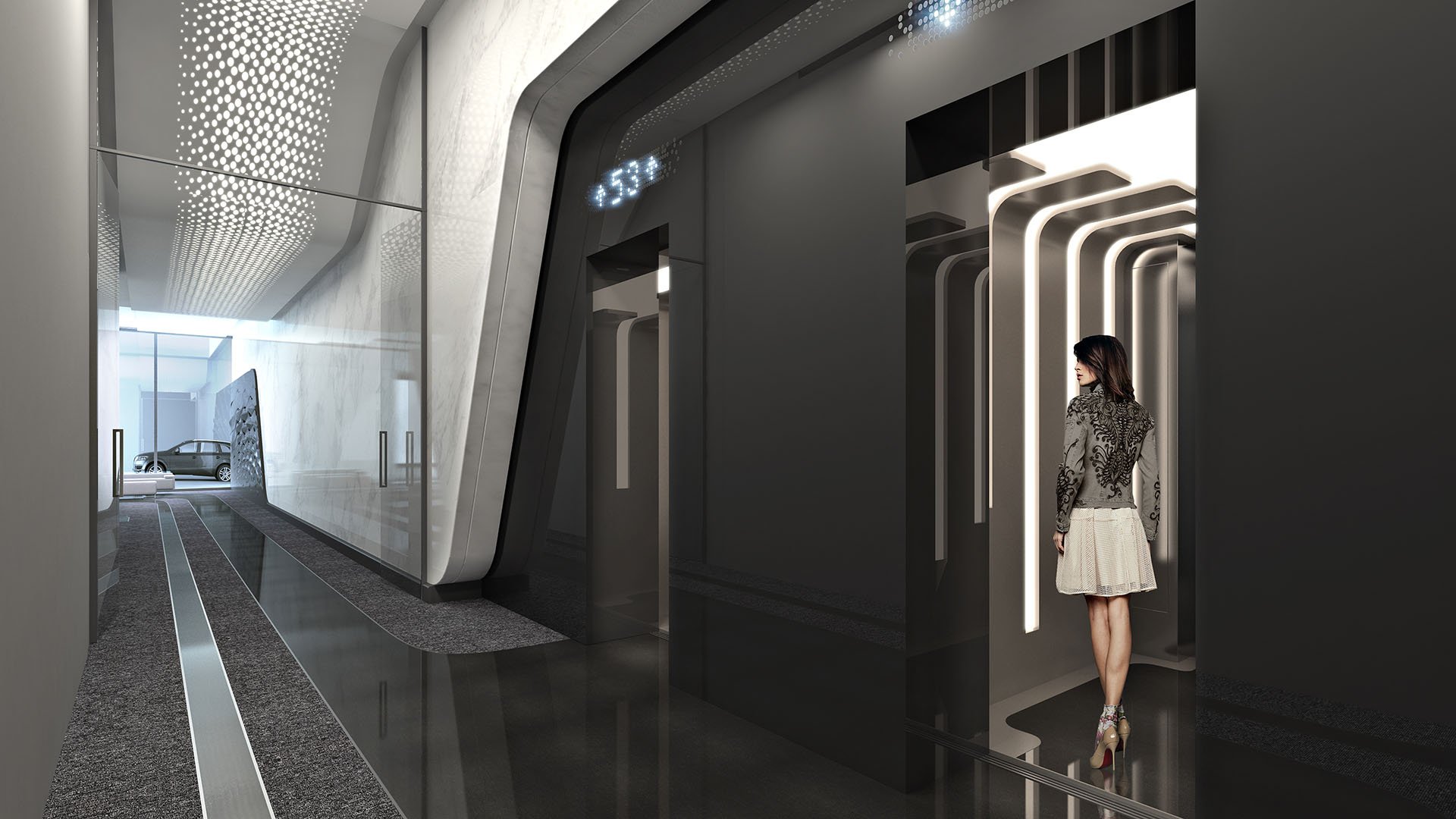
For discerning buyers, privacy begins before the front door. The porte cochere, lobby sequence, valet experience, elevator access, package handling, and guest path all shape how secure a building feels. A beautiful lobby can still fail if movement through it feels exposed or uncontrolled.
The strongest residential experiences separate visitors, residents, staff, deliveries, and service functions as much as possible within the building’s design. Even when the architecture is dramatic, the choreography should feel quiet. A resident should not have to negotiate the building each time they arrive. They should feel recognized, guided, and protected without the process becoming theatrical.
This is especially important in Downtown, where residents often move between business meetings, dining, cultural events, waterfront activity, and private commitments in the same day. The best buildings absorb that complexity and restore calm at the threshold.
Security in luxury residential real estate is most effective when it is visible enough to reassure and subtle enough to preserve atmosphere. Overly conspicuous security can feel institutional. Insufficient security can weaken the building’s credibility. The balance is found in layers: controlled access, attentive staffing, thoughtful circulation, monitored common areas, secure parking protocols, and clear guest management.
Buyers should look beyond whether a building has security and ask how the system functions in daily life. Who can access the residential elevators? How are guests announced? How are service providers handled? Does the building distinguish between amenity users, residents, staff, and visitors? Does the experience remain calm during peak hours?
Privacy is not only about keeping people out. It is about reducing friction, limiting unnecessary encounters, and protecting the resident’s time. For many ultra-premium buyers, that is the real luxury.
Architecture can either reinforce privacy or undermine it. In a high-rise, the plan matters as much as the façade. Elevator banks, corridor lengths, amenity placement, parking connections, and back-of-house routes all influence how private a residence feels.
The ideal arrangement allows public-facing energy to remain separate from private residential life. Amenity floors should be easy to access without turning the building into a social gauntlet. Service routes should be efficient without intruding on owner spaces. Outdoor amenities should capture light and views without making residents feel overly visible.
This is one reason Downtown buyers often compare buildings across adjacent neighborhoods. Edgewater, for example, offers another lens on the relationship between vertical living, water views, and residential calm. A project like The Cove Residences Edgewater may enter the conversation for buyers weighing Downtown access against a slightly different residential rhythm.
A polished sales presentation can make every amenity sound private and every lobby sound secure. The better approach is to study the building like a daily user. Consider arrival at different times of day. Imagine a guest arriving for dinner, a trainer visiting in the morning, a delivery coming in during a busy hour, and a family member returning late at night.
Ask whether the building’s amenity program aligns with your actual life. A grand entertainment room has limited value if you rarely host. A wellness suite matters more if it allows consistency without leaving the building. A lounge is useful only if it feels comfortable enough to use without planning around crowding or exposure.
Also consider the staffing culture. In the best buildings, service is anticipatory without being intrusive. Security is firm without being cold. The team understands that residents are buying both access and privacy, and that the two must coexist every day.
In the ultra-premium segment, amenities can attract attention, but privacy and security sustain confidence. A building with a spectacular amenity deck but weak circulation may feel impressive at first and frustrating later. A quieter building with disciplined access, graceful service, and well-scaled common spaces can become more desirable over time because it supports the way high-net-worth residents actually live.
Downtown Miami’s continued appeal depends on this balance. The neighborhood offers proximity, energy, skyline drama, and a cosmopolitan pace. Yet the best residences translate that intensity into a composed private environment. They give residents the city without requiring them to be on display in it.
For buyers, the most important measure is not the length of the amenity list. It is whether the building protects ease, discretion, and control. In luxury residential life, the right to choose when to engage and when to retreat is the amenity that makes every other amenity more valuable.
What does privacy mean in a Downtown Miami condominium? It usually means controlled access, thoughtful circulation, discreet staffing, and amenity spaces that do not feel overly public.
Are more amenities always better for luxury buyers? Not necessarily. The strongest amenity programs are useful, well-scaled, and separated from the most private residential areas.
How should a buyer evaluate building security? Look at arrival, elevator access, guest procedures, parking flow, staffing presence, and how service providers move through the property.
Why is the lobby so important? The lobby sets the tone for privacy and security because it is where residents, guests, staff, and deliveries first intersect.
Can a social building still feel private? Yes, if social amenities are carefully managed and residents can move between home, services, and shared spaces without constant exposure.
Is Brickell different from Downtown for privacy concerns? Brickell has its own pace and density, so buyers should pay close attention to arrival sequences, elevator control, and amenity separation.
What should families prioritize? Families often benefit from clear guest protocols, secure parking, reliable staff communication, and amenity areas that feel comfortable at varied hours.
Do high-floor residences automatically offer more privacy? Height can help with separation, but true privacy depends on the full building plan, access control, and daily operating standards.
How do amenities affect resale appeal? Amenities can support appeal when they are practical, elegant, and well-maintained, but poor privacy can diminish the overall experience.
What is the best way to shortlist comparable options for touring? Start with location fit, delivery status, and daily lifestyle priorities, then compare stacks and elevations to validate views and privacy.
For a confidential assessment and a building-by-building shortlist, connect with MILLION.
If branded residences are on your mind — as a home or as an allocation — we would be glad to share what we are seeing, privately.
Begin a quiet conversation