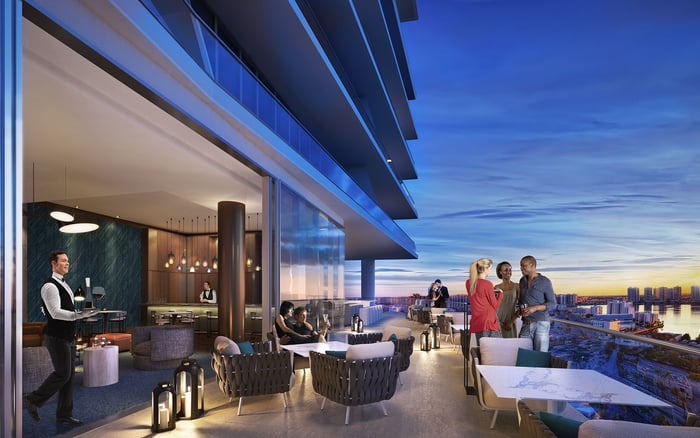
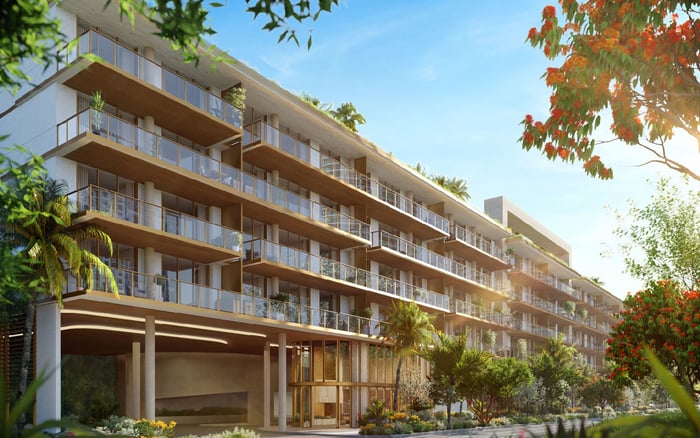
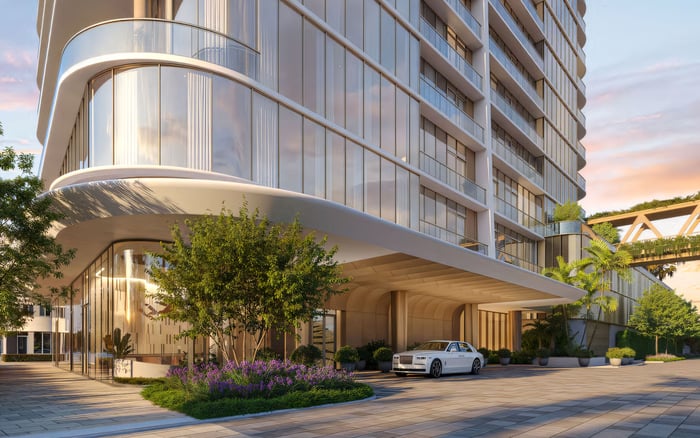
Across South Florida, luxury buyers are asking for more than a desk in a corner. They want a dedicated, quiet, beautifully finished work suite that feels like a private office while remaining fully residential in tone. In Brickell and Miami-beach especially, this shift is reshaping how developers plan amenity mixes and how owners renovate for daily life, privacy, and long-term value. This guide breaks down what a boutique office is, how to evaluate one, and which building rules and lifestyle details matter most before you buy or retrofit.
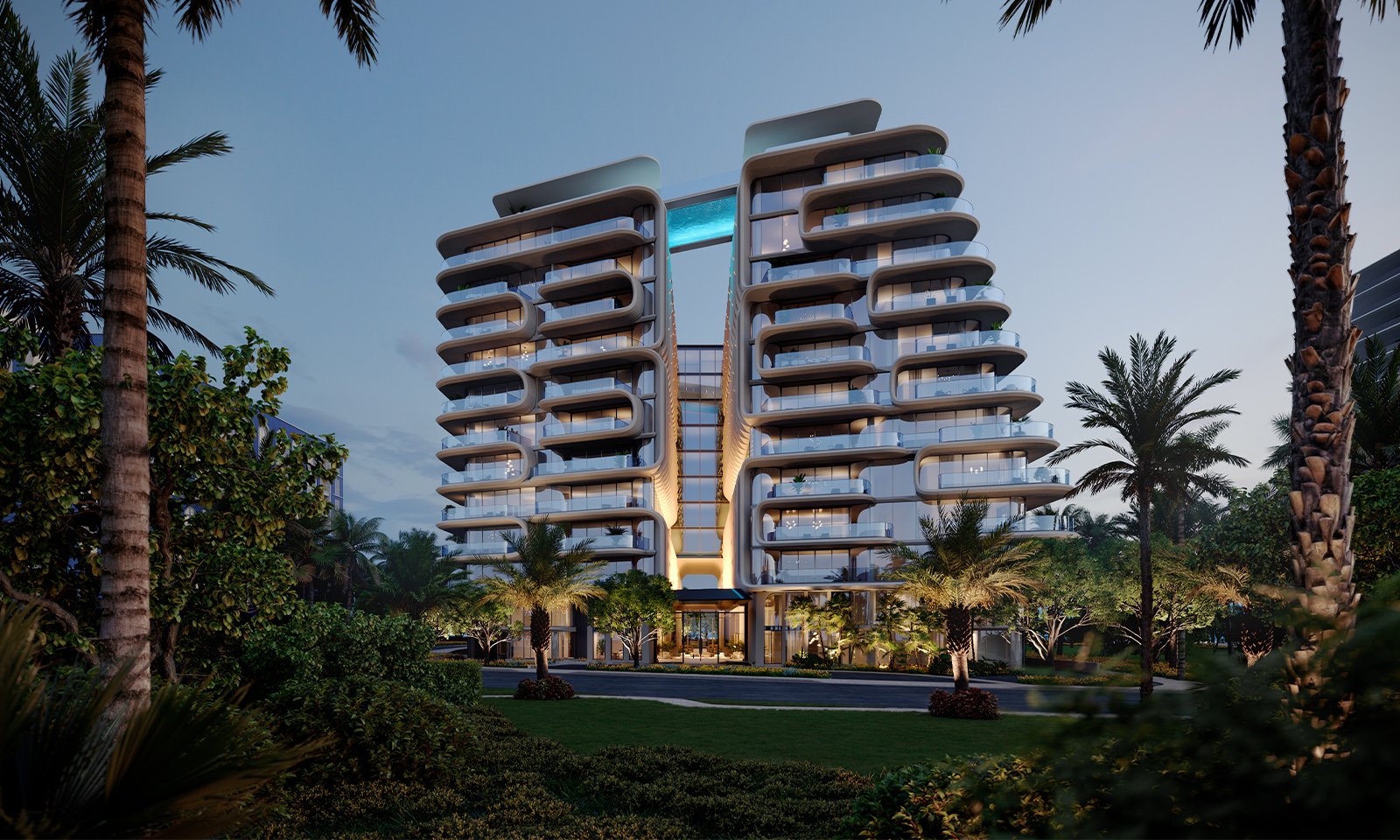
In South Florida’s ultra-premium condo market, the work-from-home conversation has evolved past the basics. Early on, a “home office” could be a staged corner and a laptop. Today, many high-net-worth buyers and second-home owners are looking for a room that behaves like a private boutique office: quiet, secure, camera-ready, and meaningfully separated from the home’s social flow.
This is not a shift toward generic commercial space. It is a refinement of residential living for people whose work demands focus, discretion, and effortless presentation. As a result, the work-from-home suite is influencing floor plan preferences, renovation budgets, and the way agents frame a residence during showings.
South Florida is particularly aligned with this expectation. Many owners move between cities, host guests during extended stays, and rely on building service levels that support a high-touch lifestyle. A dedicated office suite fits naturally into that rhythm, delivering real utility without making the home feel corporate.
A boutique office inside a luxury condo is defined as much by what it avoids as by what it includes. It avoids the improvised feel of a repurposed den. It avoids open-plan spillover where calls and conversation drift into the living room. It avoids finishes that read like a standard co-working build-out.
Instead, it is designed to deliver three outcomes.
The best suites feel closer to a private library or salon than a spare bedroom with a desk. The signal to a buyer is understated but clear: this home supports leisure and high-functioning day-to-day work with equal sophistication.
The underlying drivers are familiar, but the luxury angle is more precise.
First, privacy expectations have risen. Confidential calls, sensitive documents, and the simple ability to be unavailable for a focused hour are now treated as part of residential comfort, not an extra.
Second, the home has become a host environment. Owners may not want guests to see the mechanics of work. A door that closes, a small buffer in circulation, and built-in storage that keeps the room visually quiet all contribute to discretion.
Third, time is the ultimate luxury. Buyers are less willing to tolerate friction like cable clutter, a printer perched on a console table, or lighting that makes video meetings feel like a struggle. The office suite becomes a way to remove daily annoyances and protect attention.
Finally, in a market where residences already compete on views, kitchens, and spa-inspired baths, a truly functional work suite can be a differentiator. It may not be the single feature that sells the home, but it can be the feature that prevents a buyer from walking away.
Brickell has long blended residential living with corporate energy, and that proximity shapes buyer expectations. Many purchasers want to work with the pace and convenience of a city address while still living with the privacy and calm of a high-end residence.
In practical terms, Brickell buyers often respond to:
A boutique suite in this context is about control. When the room is well-placed and well-finished, an owner can take a call, handle documents, or appear on camera without the rest of the residence becoming part of the workday.
For a sense of the broader luxury development context in Brickell, explore 2200 Brickell.
If Brickell demand is shaped by proximity to a business core, Miami-beach demand is often shaped by the desire to protect calm. In a resort-forward lifestyle, the work suite becomes a controlled environment that allows the home to remain a retreat.
Here, the office suite is frequently expected to feel like a private club room: warm materials, lighting that can be softened, and an intimate scale. It should be easy to move from the office to the terrace or living area without the residence suddenly feeling like a workplace.
Miami-beach owners also tend to be especially attentive to noise and privacy. The ideal suite anticipates that reality through strong doors, smart room placement, and sound management that preserves comfort without making the space feel like a studio.
A luxury office suite is a small exercise in performance design. The strongest rooms are planned backward from actual daily habits.
Start with posture and routine: Will the owner spend long hours writing? Will calls be frequent? Is the work primarily on camera? Are physical documents central? Each use case changes proportions, storage needs, and the way the room should feel.
Then focus on five design pillars.
None of this requires turning the room “corporate.” The objective is capability, delivered in a language that matches the residence.
Buyers often ask about connectivity and power, but in a luxury condo the expectation is that technology disappears. The visible experience should be clean: minimal cords, discreet charging, and equipment integrated into millwork rather than displayed.
Because building infrastructure varies, treat connectivity as due diligence, not an assumption. Confirm with management what is permitted, what can be added, and how upgrades are handled. The smoother the system, the more the suite behaves like a natural extension of a high-end home.
If you are renovating, plan for:
The goal is instant readiness without the room reading like a utility closet.
Luxury work suites succeed when furniture is selected for long sessions but finished for the home.
A chair needs real support, but it should not look like it came straight from a generic commercial catalog. A desk should feel substantial without dominating the room. A lounge chair or small sofa can shift the suite from solitary focus to private conversation, which is often valuable for owners who meet with advisors or guests.
A reliable approach is to design for two clear “modes.”
When the room can change modes without moving furniture, it reads as more intentional, and therefore more luxurious.
In condo living, building rules matter as much as design. Even if the plan is a purely private office, it is wise to understand how the building views work activity within residences.
Key topics to clarify with management or the association include:
Most buildings are comfortable with owners working from home as part of normal residential life. Friction tends to appear when activity starts to resemble a public-facing office. The most durable strategy is to build a suite that supports serious work while staying clearly, quietly residential.
Privacy in a work-from-home suite operates on two levels.
First is privacy inside the residence. The door closes, the room is not placed on the main entertaining path, and confidential conversations are not audible from common areas. This is both a design issue and an operational issue, because placement determines how often the suite is interrupted.
Second is building-level privacy: how elevators, lobbies, and delivery protocols intersect with daily rhythm. Some owners want calls protected from service traffic. Others need to handle important documents discreetly. In luxury buildings, these details can determine whether the suite feels truly usable.
Because policies vary, buyers should ask specific questions early and align expectations before committing. A beautiful office loses value quickly if the surrounding operations constantly intrude.
Many high-end buildings now offer shared work areas. For some owners, that amenity is a meaningful advantage. For others, it is not a substitute for a private suite.
A shared lounge can be ideal for casual tasks, a change of scenery, or residents who prefer to keep work outside the residence. It can also support short bursts of productivity without dedicating a room at home.
A private suite excels when:
If a buyer expects to rely on shared spaces, it is worth evaluating how they feel at peak times and whether they are comfortable for private conversations. The closer the work resembles a boardroom, the more a private suite tends to justify the space.
When buyers tour a luxury condo, the office suite should not compete with the home’s primary living areas. It should support them.
Look for:
If the only available “office” is a pass-through space, it may still be usable, but it rarely reads as boutique. In those cases, the conversation becomes about strategy: adding a door where possible, improving sound control, and designing storage that makes the room feel composed rather than temporary.
A luxury work-from-home suite often improves through precision, not dramatic construction. The most effective upgrades elevate daily performance while keeping the home’s architecture intact.
Consider investments that tend to register immediately to a buyer.
When these moves are executed well, the room feels intentional. That sense of intention is the real difference between “a room with a desk” and a suite that supports lifestyle and holds value.
Because the Fact Table provides no project-specific resale data, value impact is best treated qualitatively. The practical lesson is clear: the most marketable office suites are the ones that can be reinterpreted.
Avoid designs that only work for one profession. A permanently installed, highly specific workstation can limit the next owner’s imagination. A flexible suite, by contrast, can be presented as a study, library, or reading room with work capability implied rather than emphasized.
From a marketing perspective, this matters. A well-designed suite photographs beautifully when styled with restraint, and that aligns with how luxury buyers prefer to be courted: discreetly, without the feeling of being sold a single-use feature.
A sophisticated buyer evaluates a boutique office suite as both a design feature and an operational feature. During a showing, test the room the way a working professional would.
Then move beyond the unit.
None of these questions need adversarial energy. They simply protect the buyer from discovering limitations after closing, when the cost of friction is higher.
In South Florida, luxury condo living is defined by a blend of ease and intention. The office suite should support that blend, not disrupt it.
In Brickell, that may mean a room that allows an owner to switch into high-performance mode without draining warmth from the residence. In Miami-beach, it may mean a refuge that preserves the feeling of escape while still supporting serious work.
In both settings, the most successful suites are quiet, curated, and easy to maintain. Owners should be able to close the door, take the call, complete the work, and return to the home’s social spaces without friction.
That is the deeper reason boutique offices are rising in this market. It is not about work replacing leisure. It is about protecting leisure by making work seamless, contained, and elegant.
Use this concise checklist to compare residences. It keeps attention on what will matter after the excitement of a view, a lobby, or a showroom kitchen fades.
A suite that performs across these categories tends to feel effortless. And “effortless” is ultimately what a luxury buyer is purchasing.
What makes a work-from-home suite “boutique” in a luxury condo?
A boutique suite is defined by residential-level design paired with professional-level function. It should feel intentional, acoustically controlled, visually calm on camera, and separated from the home’s entertaining rhythm through doors, thresholds, and smart circulation.
Should I prioritize a private office suite over shared work amenities?
Shared lounges can be excellent for casual tasks and variety, but they do not replace a private suite when confidentiality, frequent calls, early or late hours, or guest separation are priorities. The right choice depends on how often you work, how private your work is, and whether you want work to stay inside the residence.
What building rules should I review if I plan to work from my residence?
Focus on renovation approvals and contractor access, noise standards, delivery procedures, and guest access policies if you expect occasional meetings. Many buildings accept normal work-from-home use, but issues can arise if activity starts to resemble a public-facing office.
How can I design an office that supports resale without feeling too personal?
Aim for flexibility. Avoid overly specific built-ins that lock the room into a single use. A suite that can read as a library, study, or lounge while quietly supporting serious work is easier for future buyers to adopt, and it photographs with the discretion luxury marketing favors.
For tailored guidance on South Florida luxury residences and discreet work-from-home living, connect with MILLION Luxury.
If branded residences are on your mind — as a home or as an allocation — we would be glad to share what we are seeing, privately.
Begin a quiet conversation