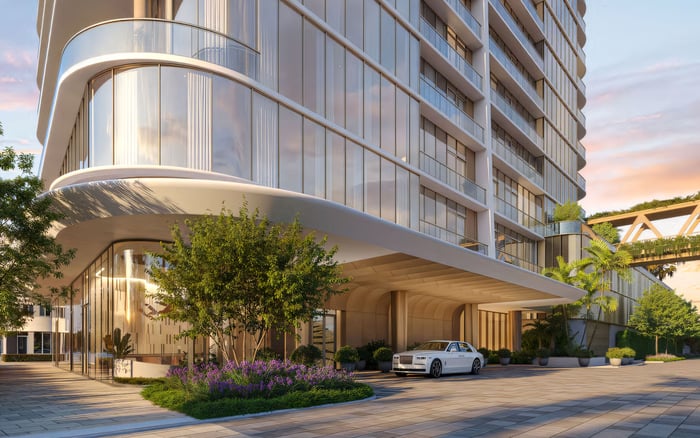
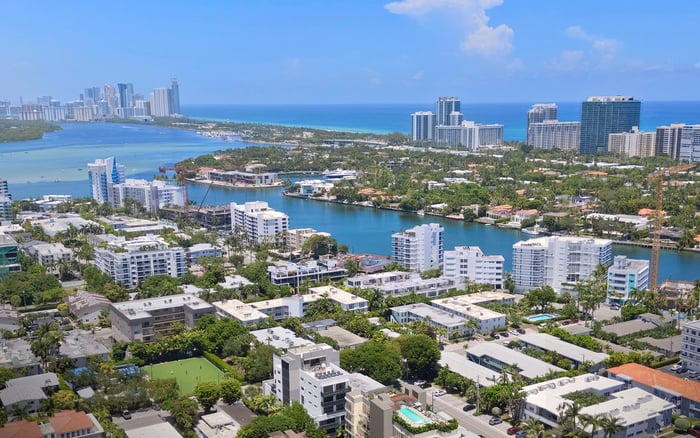
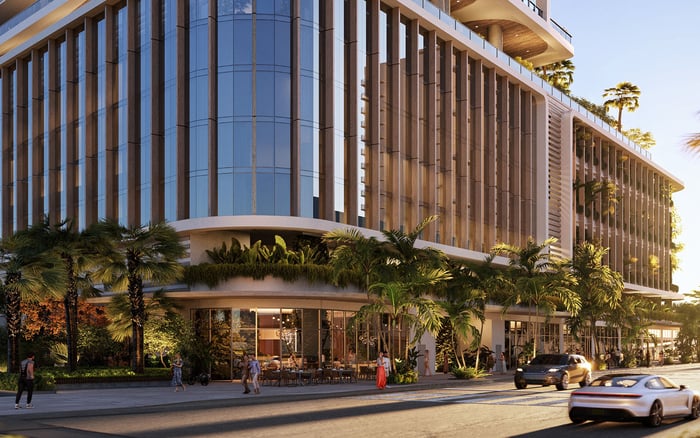
Miami’s next wave of luxury is rediscovering an old language: the crisp geometry, luminous surfaces, and cinematic entrances associated with Art Deco. Today’s revival is less about replica details and more about translating heritage into elevated, livable design, with modern planning, privacy, and a stronger sense of arrival. For South Florida buyers, the appeal is emotional and strategic: a home that photographs like a classic, hosts like a resort, and still feels of-the-moment. Here is how to read the trend with a collector’s eye.
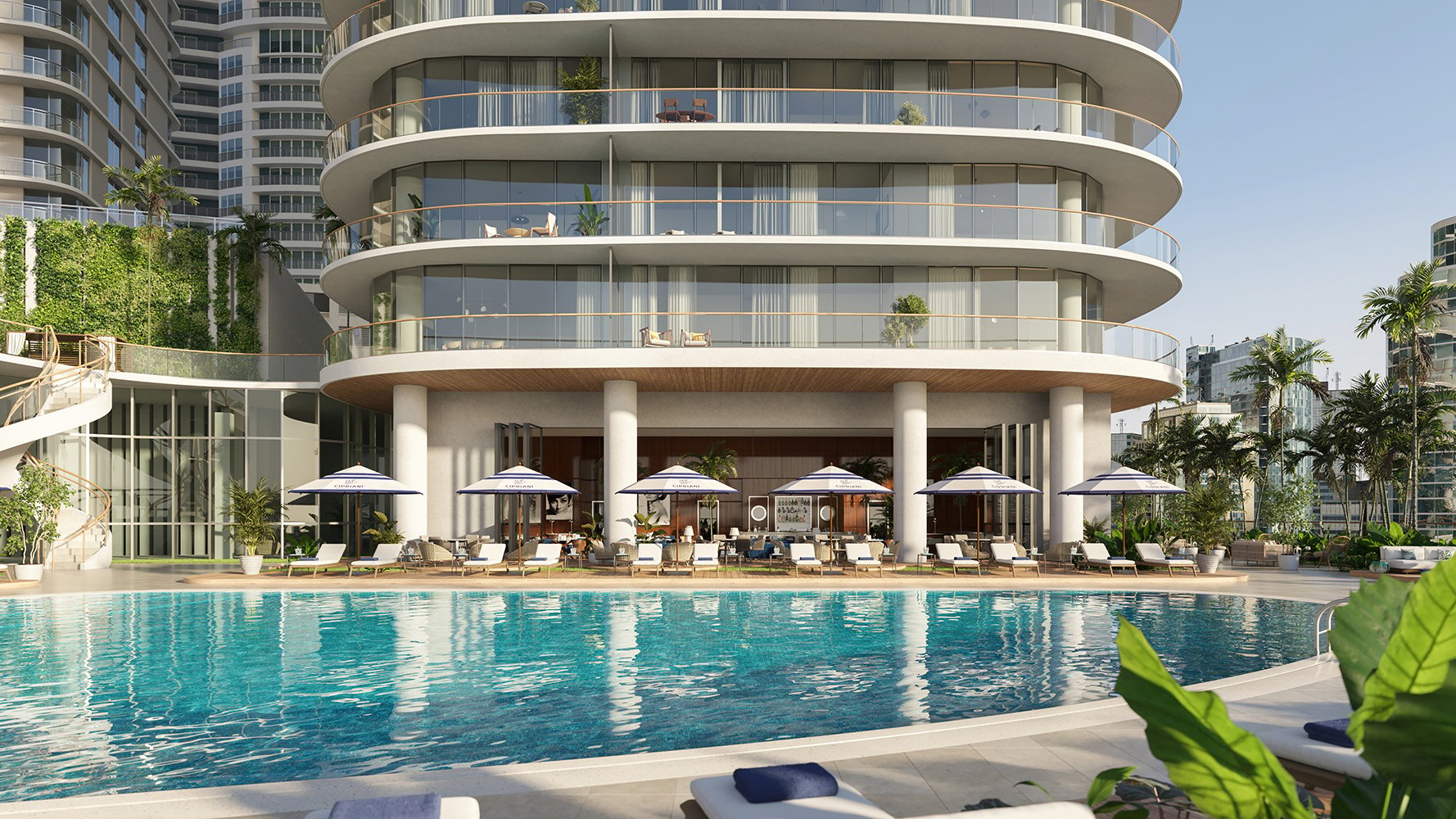
Art Deco has always belonged in South Florida. Its optimism, crisp geometry, and sense of stagecraft are naturally amplified by bright skies, ocean light, and a city that understands the power of arrival. What feels newly relevant is how today’s luxury development is revisiting that glamour with restraint, translating it into livable, modern residences rather than turning it into a period costume.
In the current market, the strongest projects are not aiming to recreate a 1930s postcard. They are borrowing the discipline of Deco, its proportion, symmetry, and confidence, and pairing it with what today’s buyer expects: efficient planning, privacy, technology that stays discreet, and finishes chosen for longevity instead of short-lived novelty. For clients who love Miami’s visual heritage but will not compromise on contemporary comfort, this revival offers a rare middle ground.
It is also a story about taste. As the city continues to mature, many buyers are seeking a more curated expression of luxury, one that feels considered and specific rather than simply oversized. In Miami-beach, that often means architecture with a recognizable identity and a sense of romance. In Brickell, it can read as a welcome counterpoint to glass minimalism, bringing warmth and sculptural softness while still feeling sleek.
In high-end residential design, “Art Deco inspired” usually signals a set of choices, not a strict historical replica. When a project uses the term well, it is describing a design language that shows up across the facade, the arrival sequence, and the interiors.
First, look for geometry with purpose. Expect strong vertical lines, stepped or layered silhouettes, repeated arches, and symmetry that gives the building rhythm. At its best, the profile feels composed in daylight and unmistakable at dusk, when shadows and lighting emphasize form.
Second, notice the relationship to light. Deco has always loved sheen, but a modern interpretation tends to use luster as an accent rather than a theme. Polished stone, lacquered millwork, brushed metals, and high-gloss tile can echo the era’s luminous surfaces without becoming literal. In a coastal climate, the most convincing versions balance sparkle with durability and a maintenance plan that keeps materials looking crisp.
Third is the idea of the threshold. Deco is about procession: approach, door, lobby, corridor, reveal. In a luxury development, that often shows up as a deliberate sequence of transitions. You arrive, you move through a controlled environment, and you enter a residence that feels like a destination. For buyers who entertain, that choreography can matter as much as square footage.
Finally, Deco carries confidence in detail. It does not avoid ornament, but it favors ornament that is structured and disciplined. Fluting, reeding, stylized motifs, and graphic patterning can all work when used selectively. Done well, these touches create a signature that is hard for copycat buildings to imitate.
This revival is not only about aesthetics. It reflects how affluent buyers are reframing value in South Florida.
Many are arriving with global references and high standards. They have toured properties where craftsmanship is the headline, and they want the same assurance here: doors that close with weight, stone that feels substantial, and common spaces that hold up both in person and on camera. Deco, when interpreted with discipline, gives designers a framework to deliver that sense of permanence.
Others are long-time locals who want a home that feels connected to Miami’s identity. They may appreciate contemporary design, but they also value a sense of place. An Art Deco influenced building can feel native to Miami-beach in a way that a generic international look sometimes does not, even when the building is entirely new.
There is also a practical layer. Distinct architecture can help a property hold attention over time. A recognizable silhouette, a memorable lobby, and a coherent interior language are easy for brokers and buyers to describe, remember, and position. In a competitive new-construction landscape, identity can function like an amenity: it differentiates, it clarifies, and it strengthens the narrative.
In the best new builds, Deco inspiration is edited. It reads as a point of view, not a theme. These are the cues that tend to feel most luxurious because they are integrated into the architecture and the daily experience.
Curved corners and softened geometry are a signature move. Even subtle curves in a facade, a hallway, a millwork wall, or a ceiling transition can introduce glamour without demanding attention. Curves also photograph well, which matters in a market where visual impact influences perception.
Graphic flooring patterns are another tell. A restrained two-tone stone layout, a terrazzo-inspired motif, or a repeated geometric tile can set a sophisticated tone without overpowering the room. The best installations feel grounded in proportion, with pattern scaled to the space.
Metal accents, used with discipline, can signal Deco immediately. Champagne tones, brass, and darkened bronze add warmth to neutral palettes. The most refined executions keep metal finishes consistent across hardware, lighting, and trim so the home reads as composed rather than collected.
Lobby and arrival theatrics may be the clearest indicator. A building can be contemporary in every technical sense and still feel Deco in spirit if the entry sequence is dramatic and controlled: ceiling height, lighting layers, sound management, and materials chosen to glow rather than glare.
Even the landscape can participate. Symmetrical plantings, linear water elements, and sculptural palms can create the resort-grade approach that makes a residence feel like an address, not simply a unit.
Deco influence can be expressed in both intimate buildings and major vertical developments, but the lifestyle implications differ.
A boutique approach tends to emphasize privacy and a more residential cadence. Fewer neighbors can mean quieter common areas, fewer shared touch points, and a stronger sense of discretion. If you are drawn to Deco for its romance and human scale, boutique living often aligns naturally with that sensibility.
A larger tower can amplify the glamour. A grand lobby, multiple entertaining venues, and a layered amenity program can make the building feel like a private club. For buyers who want the full cinematic experience, the tower format gives designers more space to create a sequence of moments, from arrival through to social areas and outdoor zones.
The right choice is less about status and more about how you use your home. If you prioritize arriving quietly, moving efficiently, and living with minimal friction, a smaller building may suit you. If you want your residence to function as a social platform, or you value variety and programming, a larger building may better deliver the service and scale you prefer.
When a project is described as “Art Deco inspired,” take it as a prompt to ask sharper questions. The goal is to determine whether the design is structural and enduring, or primarily decorative.
Start with proportion. Do doors, corridors, and public spaces feel generous and composed, or are they relying on surface finishes to manufacture impact? Deco is as much about proportion and rhythm as it is about ornament.
Then evaluate material honesty. High-gloss finishes can be beautiful, but only when the execution is clean and the material choice is appropriate for high-traffic areas. Ask how the building intends to keep common spaces looking polished over time. Confirm maintenance expectations directly with the team so there are no surprises after move-in.
Pay attention to acoustic comfort. Glamour is easy to create visually, harder to deliver sonically. In a true luxury environment, the most persuasive projects feel calm even when the building is active.
Treat lighting as a core design feature, not a finishing touch. Deco inspired environments often rely on layered lighting, accent illumination, and warm tones to sculpt surfaces. Ask to see evening renderings or lighting plans if available, and confirm how lighting is controlled in residence.
Finally, look for continuity from public areas into the private home. A lobby can be stunning, but daily value lives in the residence: kitchens that feel tailored and easy to use, baths that support a spa-like ritual, and storage that keeps the space visually calm. The best projects carry the same design discipline into the places you live with every day.
Deco influence is seductive, and it is easy to over-commit. The most sophisticated homes suggest glamour with a few precise decisions rather than a full set.
Choose one hero moment. It might be a curved sofa, a sculptural chandelier, or a bold artwork. Let that element lead and keep everything else quieter. The goal is to reference glamour, not to perform it.
Mix shine with softness. Pair reflective surfaces with textured fabrics, matte stone, or natural wood so the home feels comfortable and balanced. In coastal light, too much sheen can read harsh, while a controlled mix looks effortless.
Keep pattern disciplined. Deco loves geometry, but many luxury buyers prefer restraint. If you introduce a graphic pattern, repeat it subtly somewhere else, perhaps in a small textile or a minor surface, so it reads intentional rather than random.
Prioritize craftsmanship. Deco is unforgiving of cheap detail. A single well-made piece with weight and finish integrity will align with the aesthetic more than multiple trendy items that lack substance.
In Miami-beach, Deco influence reads like a native language. Buyers often respond to architecture that acknowledges the area’s visual identity while still delivering a contemporary standard of living. For those drawn to the Sofi lifestyle in particular, the appeal is frequently about balance: close to energy, with a home that feels composed and private once you close the door.
In Brickell, the conversation can be more nuanced. The district is strongly associated with sleek modernism, so Deco inspiration can serve as a point of distinction. It can soften an otherwise minimalist environment, adding warmth, curvature, and a sense of craft that separates a residence from the broader field.
The deciding factor is not the neighborhood stereotype, but the fit. Ask yourself whether you want your home to blend into its surroundings or stand apart through a clear design identity. Both can be correct, but they lead to different buying choices.
If you want a starting point for browsing how developers communicate curated luxury in Miami-beach, explore Shore Club Private Collections Miami Beach. Use any visuals and descriptions as an introduction to a design vocabulary, then confirm all specifications, finishes, and availability directly with the project team.
Luxury real estate is not only purchased, it is remembered. Residences that create an emotional imprint tend to travel through the market with more narrative power. That does not guarantee outcomes, and every building performs differently, but it highlights why architectural identity matters.
A refined Deco revival can support that identity when it is executed as a whole experience. If the facade, lobby, corridors, and residences share a coherent language, the building reads as designed rather than assembled. That consistency is often what separates a premium property from one that is simply expensive.
For buyers who anticipate resale, consider how the aesthetic may age. The most timeless interpretations apply Deco principles, proportion, symmetry, craft, and a sense of arrival, without leaning on trendy color stories or overly literal motifs. When the concept is rooted in structure and material quality, the design can remain compelling even as tastes shift.
When you visit a sales gallery or model residence, move through it as if you are curating a long-term asset. Your job is to identify what is structural, what is marketing, and what will still feel right after the newness fades.
Ask what the building wants to be known for. If the answer is vague, the design may be generic. If the answer is specific, a certain mood, a distinctive arrival, a disciplined palette, that clarity usually signals stronger intent.
Watch how spaces transition. Deco inspired luxury is fundamentally about sequence. If the journey from street to lobby to corridor to residence feels thoughtful and controlled, the project is likely prioritizing experience, not just surfaces.
Notice where the developer chose to spend money. Look for details that are expensive to execute and difficult to fake: clean edges, aligned reveals, consistent grout lines, the weight of doors, and the quality of materials at touch points. These are the places where luxury either holds or collapses.
Keep your lifestyle at the center of the evaluation. Glamour matters only if it supports the way you live, entertain, and reset. The ideal residence feels elevated at midnight and uncomplicated at breakfast.
What design details signal a true Deco influence versus a themed approach? A true influence shows up in proportion, geometry, and the arrival sequence, not only in decorative motifs. Look for disciplined symmetry, intentional curves, coherent metal finishes, and a lobby or corridor experience that feels designed as a whole.
How can I evaluate New-construction finish quality during a tour? Focus on touch points and alignment. Check how doors close, how edges meet, whether surfaces feel substantial, and whether patterns and reveals are consistent. Ask how high-gloss or delicate finishes will be maintained in common areas over time.
Is a Boutique building a better fit for privacy than a larger tower? Often, yes, because fewer residences can mean fewer daily interactions and quieter shared spaces. That said, privacy is also shaped by layout, elevator configuration, and how arrival is managed, so compare the experience, not just the building size.
What should I confirm in writing before committing to a purchase? Confirm what is included in your residence, the stated finishes and any alternates, maintenance expectations for materials, and how lighting and technology are specified. Also ensure you understand what is depicted in renderings versus what is contractually delivered.
For guidance tailored to your goals in Miami-beach, Sofi, or Brickell, connect with MILLION Luxury.
If branded residences are on your mind — as a home or as an allocation — we would be glad to share what we are seeing, privately.
Begin a quiet conversation