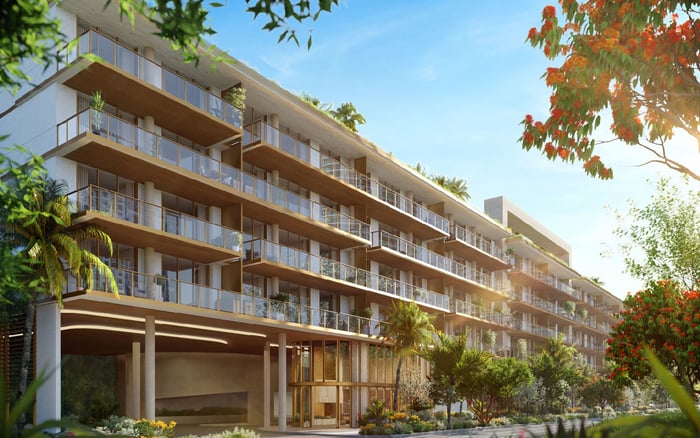
In Edgewater, the penthouse conversation is no longer only about ceiling height, terrace depth, or whether the bay view angles past the islands. At the top of the market, the quiet differentiator is infrastructure: the wiring, networking, power conditioning, and control logic that let a residence behave like a private club suite. Automated smart home capability matters most in a penthouse because scale amplifies everything, including glass area, mechanical zones, audio demands, and security expectations. This MILLION Luxury guide is written for buyers who want their home to be truly automated, not merely app-connected. The goal is to clarify what “smart” should mean in a high-floor Edgewater home, what to ask for during due diligence, and which penthouse profiles are most compatible with a seamless, low-friction lifestyle.
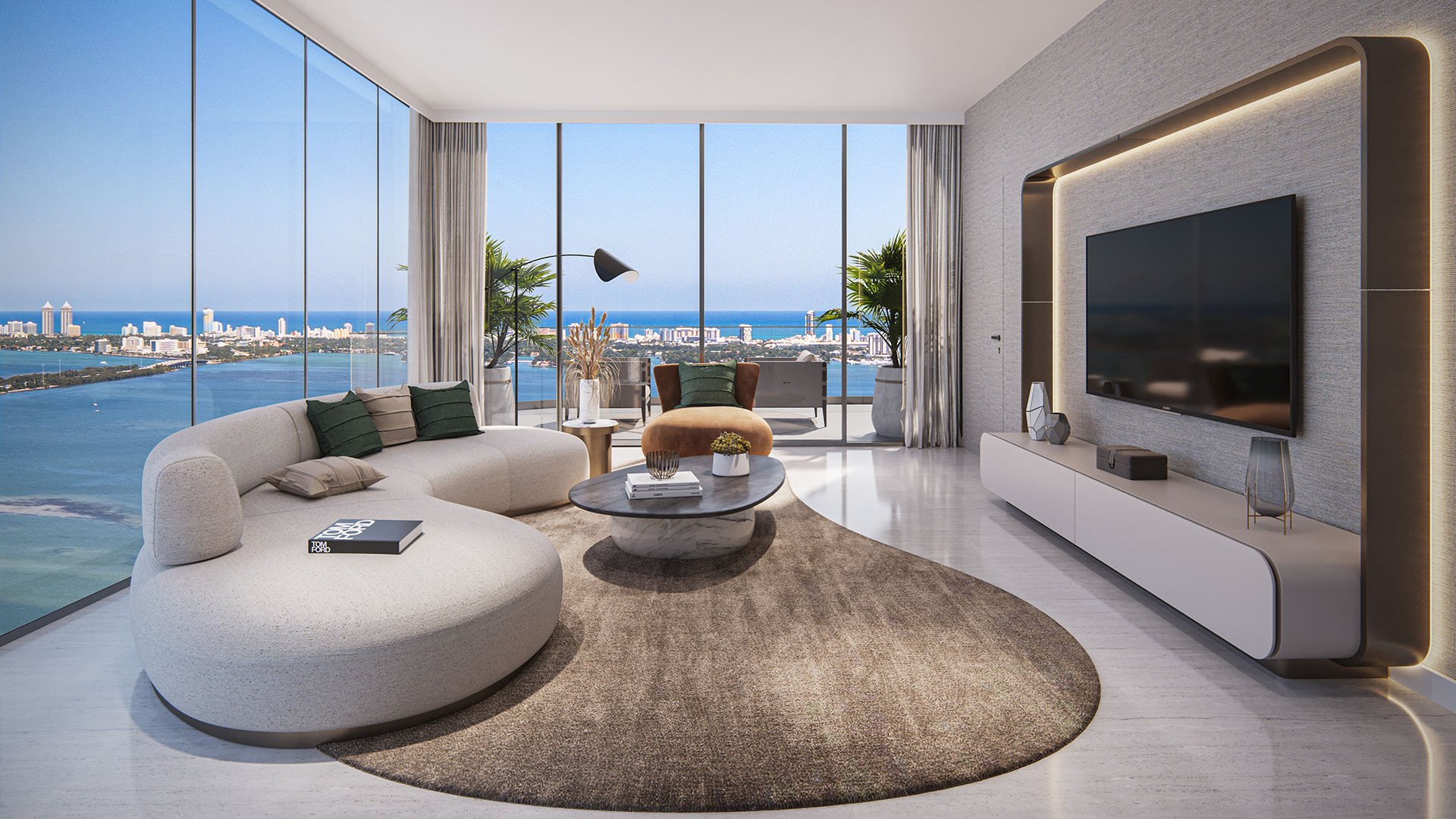
Edgewater’s appeal is architectural clarity: bayfront sightlines, newer towers, and a location positioned between the energy of Downtown and the cultural gravity of the Design District and Wynwood. For penthouse buyers, that often means cleaner view corridors and a higher likelihood of contemporary mechanical and electrical systems.
What’s changed is the baseline expectation. “Smart home” once meant a few app-enabled lights and a video doorbell. In a true penthouse, smart home infrastructure looks more like what you’d expect on a yacht or in a boutique hotel suite: a deliberately designed backbone that makes lighting scenes feel instantaneous, shades move quietly, climate zones behave predictably, and security runs in layers-without turning the residence into a tech showroom.
In Edgewater, this approach pairs naturally with the area’s newer inventory, including projects such as Aria Reserve Miami, where buyers are already thinking in systems and specifications-not just finishes.
Automation in a luxury penthouse is less about novelty and more about outcomes: comfort, privacy, and operational elegance.
At minimum, a penthouse positioned for high-performance automation should support:
A robust network foundation (enterprise-grade Wi‑Fi design, hardwired backhaul, and managed switching)
A dedicated low-voltage strategy (structured wiring, conduit where possible, and space for control hardware)
Clean power planning (surge protection, power conditioning, and logical circuits for critical loads)
Integrated control (a single interface that can orchestrate lighting, shades, HVAC, audio, and security)
Serviceability (remote diagnostics, a local rack that is accessible, and clear documentation)
Practically, the question isn’t “Does the unit come smart?” It’s “Can the unit be automated without visible compromises?” The best penthouses are the ones where the technology disappears, leaving only the experience.
Below are ten penthouse profiles that consistently match the infrastructure requirements sophisticated buyers expect in Edgewater. Each entry is framed as a buyer-useful identifier, emphasizing compatibility with automation, privacy, and day-to-day control.
1. Whole-home scenes penthouse - single-touch arrival and departure
The hallmark is a residence where lighting scenes, shades, and temperature can be orchestrated as “Arrive,” “Entertain,” and “Goodnight.” Look for a clean wall-plate approach and a layout that supports discreet occupancy sensing in key corridors.
In day-to-day use, these homes feel staffed even when they’re not: the residence anticipates movement patterns, and transitions read as smooth rather than theatrical.
2. Multi-zone glassline penthouse - automated solar and glare management
Edgewater penthouses often feature expansive glazing and long sightlines. The strongest smart-home candidates treat sun control as a system, not an afterthought. Prioritize motorized shade pockets, quiet drives, and programming that adjusts by façade instead of moving the entire home at once.
The payoff is visual serenity: the view stays center stage while glare and heat load are managed quietly in the background.
3. Entertainer’s penthouse - distributed audio with discreet hardware
A penthouse built for hosting should support audio zoning that follows real use patterns: main living, dining, terrace, and a late-night lounge zone that doesn’t wake the entire residence. The best setups keep speakers architectural and amplification centralized.
If you value a gallery-like interior, insist on infrastructure that protects clean ceiling lines and avoids surface-mounted compromises.
4. Privacy-forward penthouse - layered access, cameras, and secure network design
True luxury includes privacy by design. Look for homes that can support a segmented network, discreet camera placement, and access controls that aren’t dependent on a single consumer app. A penthouse should be able to run “guest mode” for staff and visitors without exposing personal devices.
In Edgewater, this matters for buyers who split time between residences and want confidence in remote oversight.
5. High-efficiency comfort penthouse - intelligent HVAC and humidity discipline
Comfort in South Florida is more than temperature. A smart-ready penthouse supports multiple climate zones, stable humidity control, and the ability to manage schedules without fighting the building’s base systems. Ask how the residence can handle different setpoints for sleeping areas versus entertaining spaces.
The right infrastructure keeps the home feeling crisp, helps protect art and furnishings, and reduces the sensation of “hot spots” near glass.
6. Terrace-first penthouse - outdoor automation that feels like an extension of indoors
In Edgewater, terraces can be as valuable as interior square footage. The best candidates allow outdoor lighting scenes, audio, and shade or awning control to live in the same interface as the interior. Weather-aware programming is a plus, but even simple, reliable control elevates daily use.
If your terrace functions like a dining room for half the year, it should operate like one.
7. Chef’s-kitchen penthouse - task lighting and appliance integration without clutter
Luxury kitchens are increasingly designed for entertaining rather than display. A smart-home-ready kitchen should support layered lighting (task, ambient, accent) and intuitive scenes that don’t require walking the room to toggle fixtures.
The goal isn’t to over-automate cooking. It’s to make the kitchen feel effortless when the residence is in motion.
8. Collector’s penthouse - art lighting and environmental monitoring
For buyers with collections, the best penthouse infrastructure supports tunable lighting or precise dimming curves, plus environmental monitoring that can be checked remotely. The objective is consistency: stable conditions and lighting that flatters works without damaging them.
This is where infrastructure becomes preservation.
9. Travel-ready penthouse - remote management with manual override
If you travel, automation should reduce risk. A travel-ready penthouse supports remote lock status, leak detection, climate hold modes, and a “house sit” routine that doesn’t feel random. Equally important: a manual override that stays intuitive for guests or staff.
The best systems are resilient, not brittle.
10. Retrofit-friendly penthouse - the one with the right bones for a full buildout
Not every penthouse is delivered with a complete automation package. Some are simply ideal candidates: space for a structured media rack, plausible wiring routes, and a layout that allows clean keypad placement. If you’re buying with customization in mind, the “bones” matter more than the current gadget list.
A well-planned retrofit can feel indistinguishable from a factory-integrated smart home when the infrastructure is treated with respect.
Because the Fact Table provided here does not specify building-by-building smart-home inclusions, the practical path is to verify infrastructure in your target residence. Before you commit emotionally to a view, get clear on the items that determine whether the home can be automated to a penthouse standard:
Network readiness: Where will access points go, and is there hardwired backhaul to support them?
Rack location: Is there a dedicated, ventilated space for centralized equipment?
Electrical planning: Are critical circuits identified, and is there a strategy for surge protection?
Shade feasibility: Are there shade pockets or locations that allow quiet motorization without visual compromise?
Control surfaces: Where can keypads live so they feel architectural, not retrofitted?
If you want a residence that behaves like a private resort suite, this checklist matters as much as ceiling height.
Edgewater is often chosen for its modern tower stock and bayfront lifestyle, but buyers should still calibrate expectations against nearby neighborhoods.
Brickell tends to emphasize hospitality-driven living, where a branded service culture often pairs well with automation and concierge-style coordination. If your lifestyle is more hotel-centric than residential, projects such as 2200 Brickell can help benchmark what “managed convenience” looks like.
For buyers who want the feeling of a design house, some branded concepts lean into theatrical interiors and curated experiences. Looking at a project like 888 Brickell by Dolce & Gabbana can sharpen your preference between a statement residence and a more discreet, infrastructure-first home.
And if your priority is a calmer, wellness-tilted lifestyle with privacy cues, it’s useful to compare Edgewater’s bayfront energy with Coconut Grove’s residential cadence. A project such as The Well Coconut Grove can act as a reference point for how wellness programming and home systems can align.
Edgewater’s advantage is that you can pursue modernity and views without committing to a purely commercial rhythm.
Luxury buyers have moved beyond “smart features” to “smart architecture.” The distinction is subtle, but it’s decisive:
Invisible: the best systems don’t announce themselves.
Instant: latency feels cheap; responsiveness feels premium.
Private: segmented networks, local control capability, and measured cloud reliance.
Maintainable: equipment can be serviced without opening walls or disrupting design.
In a penthouse, the system should amplify calm. The most successful automations are the ones you barely notice-except that everything works.
What qualifies as “automated smart home infrastructure” in a penthouse? It means a designed backbone for networking, wiring, power, and centralized control-not just app-enabled gadgets.
Is it better to buy a penthouse that is already “smart,” or plan a retrofit? Either can be excellent, but the unit must have the right wiring paths, rack space, and electrical planning.
Which systems should be unified under one control interface? Prioritize lighting, shades, HVAC, security, and distributed audio for the most noticeable daily impact.
How do I avoid a tech setup that feels dated quickly? Focus on infrastructure and interoperability, so components can be upgraded without rebuilding the system.
What should I ask about Wi‑Fi coverage in a large penthouse? Ask where access points can be placed and whether they can be hardwired for consistent, high-speed service.
Can smart shades materially improve comfort in Edgewater? Yes-consistent glare and heat management reduces HVAC strain and keeps interiors visually serene.
What is the biggest hidden cost in penthouse automation? Retrofitting wiring routes and correcting design compromises after the fact is typically more expensive than hardware.
How should security be handled in a privacy-forward smart home? Use layered access controls, discreet camera placement, and a secure, segmented network with clear user roles.
Do automated systems help if I travel often? They can, especially with remote monitoring for locks, leaks, and climate hold modes-plus a reliable manual override.
What is one sign a penthouse is “automation-ready”? A dedicated, ventilated space for centralized equipment and a logical plan for wiring and control surfaces.
For a discreet conversation and a curated building-by-building shortlist, connect with MILLION Luxury.
If branded residences are on your mind — as a home or as an allocation — we would be glad to share what we are seeing, privately.
Begin a quiet conversation