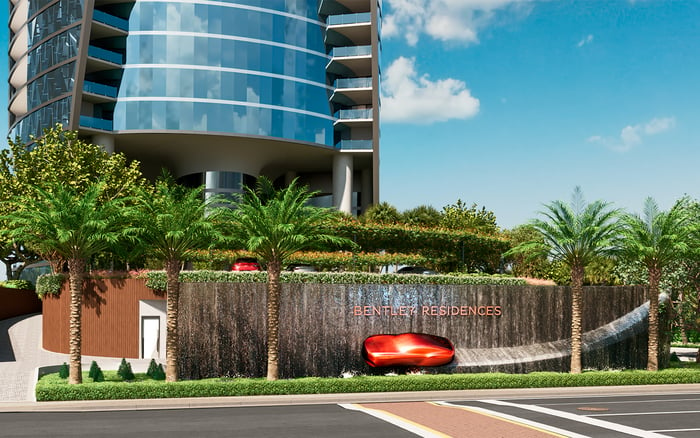
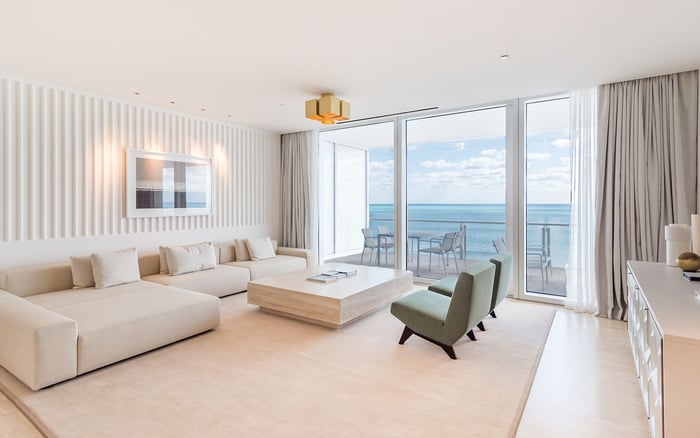
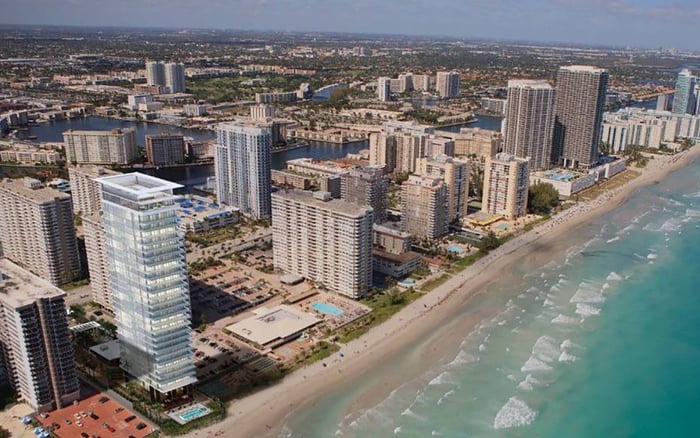
A buyer-focused guide to South Florida oceanfront residences in quieter beach-town settings, from Surfside and Hillsboro Beach to Pompano Beach and Hallandale.
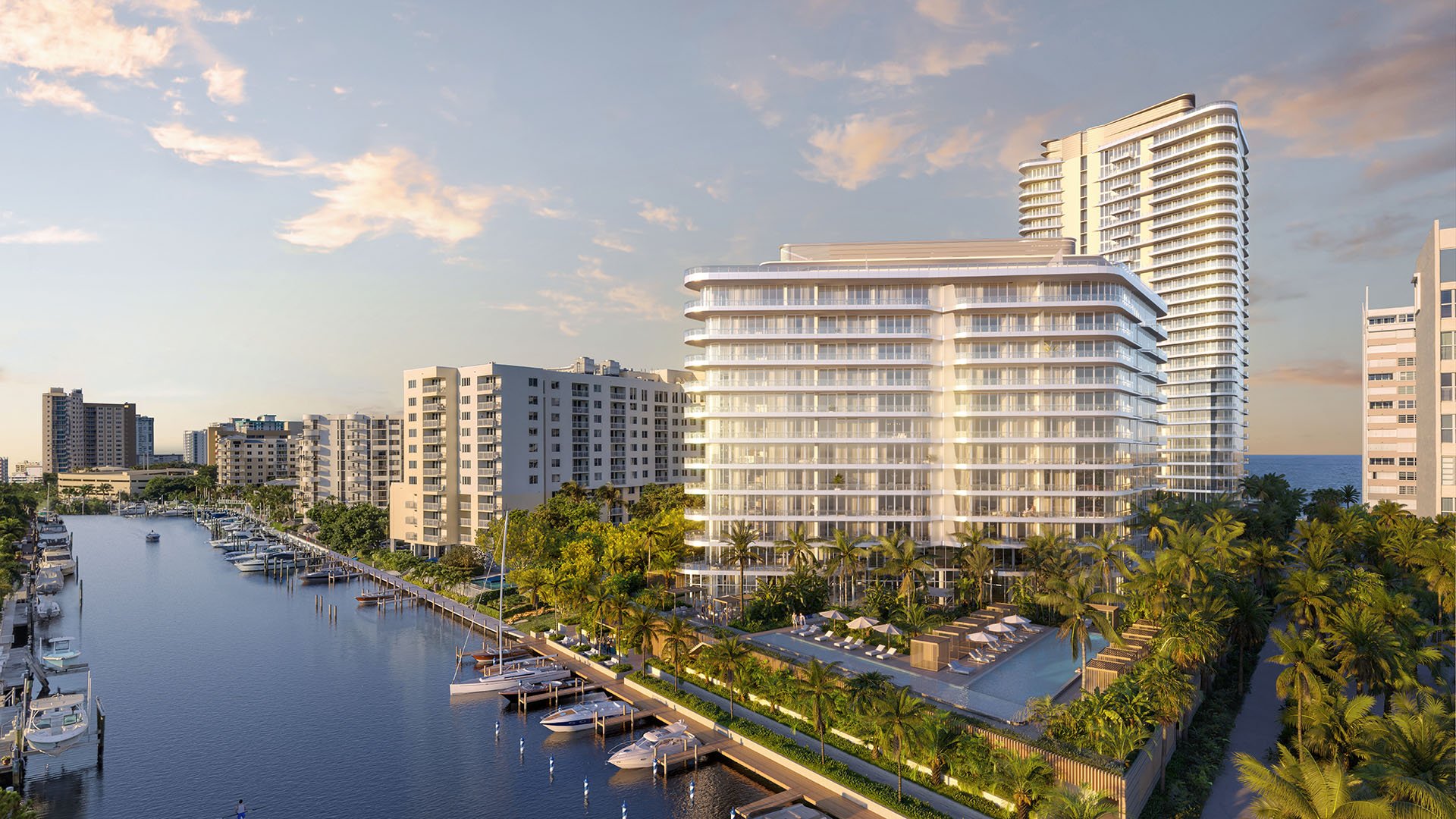
Oceanfront ownership in South Florida is often framed in terms of height, spectacle, and visibility. Yet a different buyer is defining a quieter lane of demand: one who wants the beach without the constant performance of the busiest coastal districts. For this buyer, the ideal residence is not necessarily the most conspicuous tower on the sand. It is the one with a measured arrival, a calm lobby, a beach that feels usable, and a town fabric that supports privacy without isolation.
The appeal is straightforward. A quieter beach town can deliver the essential pleasures of coastal South Florida - morning walks, Atlantic light, salt air, and horizon views - while reducing the friction that can accompany larger resort corridors. The question is not simply where the water is. It is where the lifestyle holds its composure.
For MILLION clients, the search usually begins with a distinction: beachfront glamour versus beachfront livability. The strongest quieter-town residences tend to balance architecture, service, discretion, and access to dining, airports, schools, marinas, and cultural centers without placing those conveniences directly at the front door.
1. Surfside for discreet Miami Beach adjacency
Surfside is compelling for buyers who want to remain close to Miami Beach while choosing a more residential coastal rhythm. Its appeal lies in restraint: a compact town scale, direct beach orientation, and a lifestyle that feels quieter than the larger entertainment districts to the south.
This is where buyers often look for residences that feel curated rather than crowded. A building such as The Delmore Surfside places the conversation within one of South Florida’s most sought-after quiet-beach contexts, where the address itself signals a preference for discretion.
2. Hillsboro Beach for a more private coastal mood
Hillsboro Beach speaks to buyers who want the oceanfront experience to feel secluded and residential. The town’s identity is less about nightlife and more about a narrow, serene coastal setting where the water and the residence carry the day.
For those comparing this segment, Rosewood Residences Hillsboro Beach is a natural point of reference because it frames Hillsboro Beach as a luxury conversation rather than a purely local one. The draw is calm without sacrificing South Florida connectivity.
3. Pompano Beach for a quieter city-beach balance
Pompano Beach has become increasingly relevant to buyers who want oceanfront living with a less congested feel than the most recognized Miami-Dade beachfronts. It offers a practical midpoint: beach-town sensibility, Broward County access, and a coastal setting that can feel more relaxed day to day.
Residences such as Armani Casa Residences Pompano Beach and The Ritz-Carlton Residences® Pompano Beach allow buyers to evaluate Pompano Beach through a luxury lens while keeping the quieter-town thesis intact.
4. Hallandale for oceanfront ease near major urban centers
Hallandale appeals to buyers who want a quieter coastal address without feeling removed from nearby South Florida centers. It is especially relevant for residents who divide their week between the beach and broader regional commitments.
For this profile, 2000 Ocean Hallandale Beach belongs in the discussion because it connects refined beachfront living with a location that is accessible yet less overtly showy than some nearby oceanfront markets.
5. Bal Harbour and nearby enclaves for composed luxury
For buyers who want quiet but not anonymity, the Bal Harbour and Surfside corridor remains a serious consideration. The lifestyle is polished, but the tone is more composed than many larger beachfront districts. The right residence here is about control: controlled arrival, controlled density, controlled service, and controlled exposure.
The buyer should be precise. Some addresses in this corridor feel deeply residential, while others carry a more social resort energy. The distinction matters because quiet is not only a function of location. It is produced by building culture, residence count, lobby flow, valet choreography, and the way common areas are actually used.
The best quiet-beach residences share several qualities. First is arrival. A discreet porte cochere, intuitive valet sequence, and calm lobby set the tone before the elevator ride. Second is vertical privacy. Buyers often prefer plans that reduce corridor traffic, avoid over-programmed amenity floors, and create a sense of separation between home and hotel-style activity.
Third is beach usability. A beautiful view is not the same as an easy beach life. The daily experience depends on how residents move from home to sand, whether the beach feels calm in the morning, and how the surrounding town handles parking, pedestrian flow, and seasonal peaks.
Fourth is service that knows when to disappear. Ultra-luxury buyers increasingly value staff presence that is polished but not theatrical. In quieter beach towns, the best service culture is anticipatory, personal, and unobtrusive.
Finally, there is architectural longevity. In a quieter market, a residence should not rely on flash alone. Materials, proportions, ceiling heights, outdoor space, and the relationship between interior rooms and ocean views matter because buyers in these locations are often seeking a long-term coastal base rather than a purely transactional trophy.
Quiet is an advantage. Isolation can become a liability. The line between the two depends on the buyer’s personal map of South Florida. A Palm Beach-oriented buyer may read Broward differently than a Miami-based buyer. A frequent traveler may place airport access near the top of the list. A family may care more about schools, clubs, medical access, and the ability to host without logistical friction.
The best approach is to test the location at different times. Morning beach walks reveal one version of a town. Friday evening arrivals reveal another. Holiday weekends, restaurant hours, and bridge or roadway patterns can change the lived experience of an address. For high-end buyers, these subtle observations are not secondary. They are central to protecting the value of the purchase.
The quieter beach-town buyer is not stepping down from luxury. In many cases, this buyer is becoming more selective. Instead of choosing the most visible address, they are choosing the address that best supports how they actually want to live.
Surfside may suit those who want Miami proximity with a softer edge. Hillsboro Beach may suit those who want privacy and calm. Pompano Beach may suit those seeking an evolving oceanfront setting with access across Broward. Hallandale may suit buyers who want beachfront living near multiple urban centers. Each option can be compelling, but only if the building culture, service model, and daily logistics match the buyer’s expectations.
In the end, the best South Florida oceanfront residence for a quieter beach-town buyer is the one that feels effortless on an ordinary Tuesday, not only impressive during a showing.
What defines a quieter South Florida beach town for luxury buyers? It is a coastal setting with a more residential rhythm, easier daily flow, and less entertainment-driven congestion than the region’s busiest beachfront districts.
Is Surfside a good fit for buyers who still want Miami access? Yes. Surfside can offer a quieter beach-town feel while keeping buyers close to Miami Beach, Bal Harbour, and the broader Miami market.
Why do some buyers consider Hillsboro Beach? Hillsboro Beach appeals to buyers seeking a calmer, more private oceanfront atmosphere with a distinctly residential coastal mood.
How should buyers evaluate Pompano Beach? Buyers should look at building quality, beach access, service culture, and how the location fits their Broward and Miami routines.
Does Hallandale work for second-home buyers? Hallandale can be practical for second-home owners who want the beach plus access to nearby urban centers, airports, and shopping corridors.
Are quieter beach towns less luxurious than better-known markets? Not necessarily. Many buyers view quieter settings as more refined because privacy, restraint, and livability are central to the experience.
What building features matter most for quiet oceanfront living? Private arrival, low-friction valet, calm common areas, thoughtful elevator access, and usable outdoor space often matter as much as the view.
Should buyers prioritize a new project or an established residence? The decision depends on design priorities, timing, service expectations, and the buyer’s tolerance for construction or early building operations.
How important is resale when choosing a quieter beach town? Resale remains important. Buyers should favor locations and buildings with enduring appeal, disciplined design, and a clear luxury audience.
What is the first step in narrowing the search? Define the desired daily rhythm first, then compare towns and buildings against that lifestyle rather than beginning only with price or views.
When you're ready to tour or underwrite the options, connect with MILLION.
If branded residences are on your mind — as a home or as an allocation — we would be glad to share what we are seeing, privately.
Begin a quiet conversation