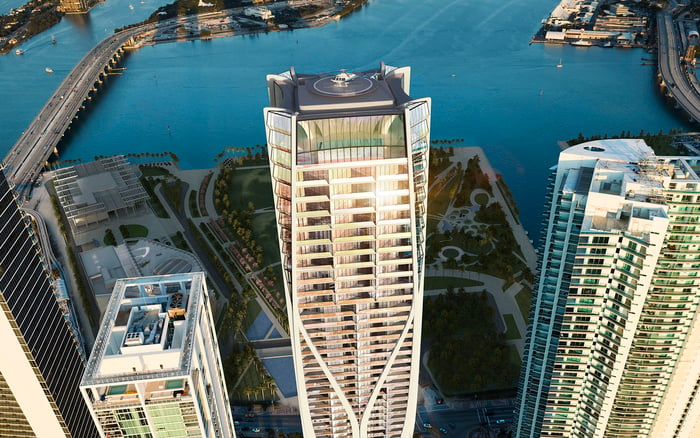
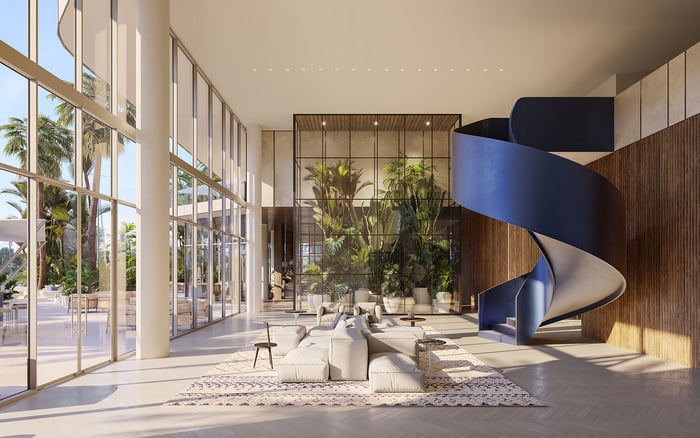
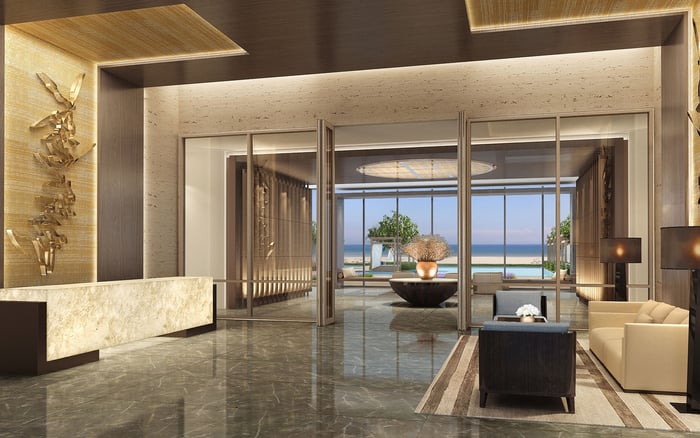
South Florida’s most coveted addresses often share one defining feature: water. Yet “waterfront” is not a single lifestyle. Beachfront living prioritizes an open horizon, salt-air drama, and the ritual of stepping from lobby to sand. Bayfront living favors calmer waterways, yacht-ready convenience, and a more insulated sense of arrival. This guide compares both through the lens of daily rhythm, privacy, views, wind, boating, and long-term livability, so you can match the right shoreline to the way you actually want to live.
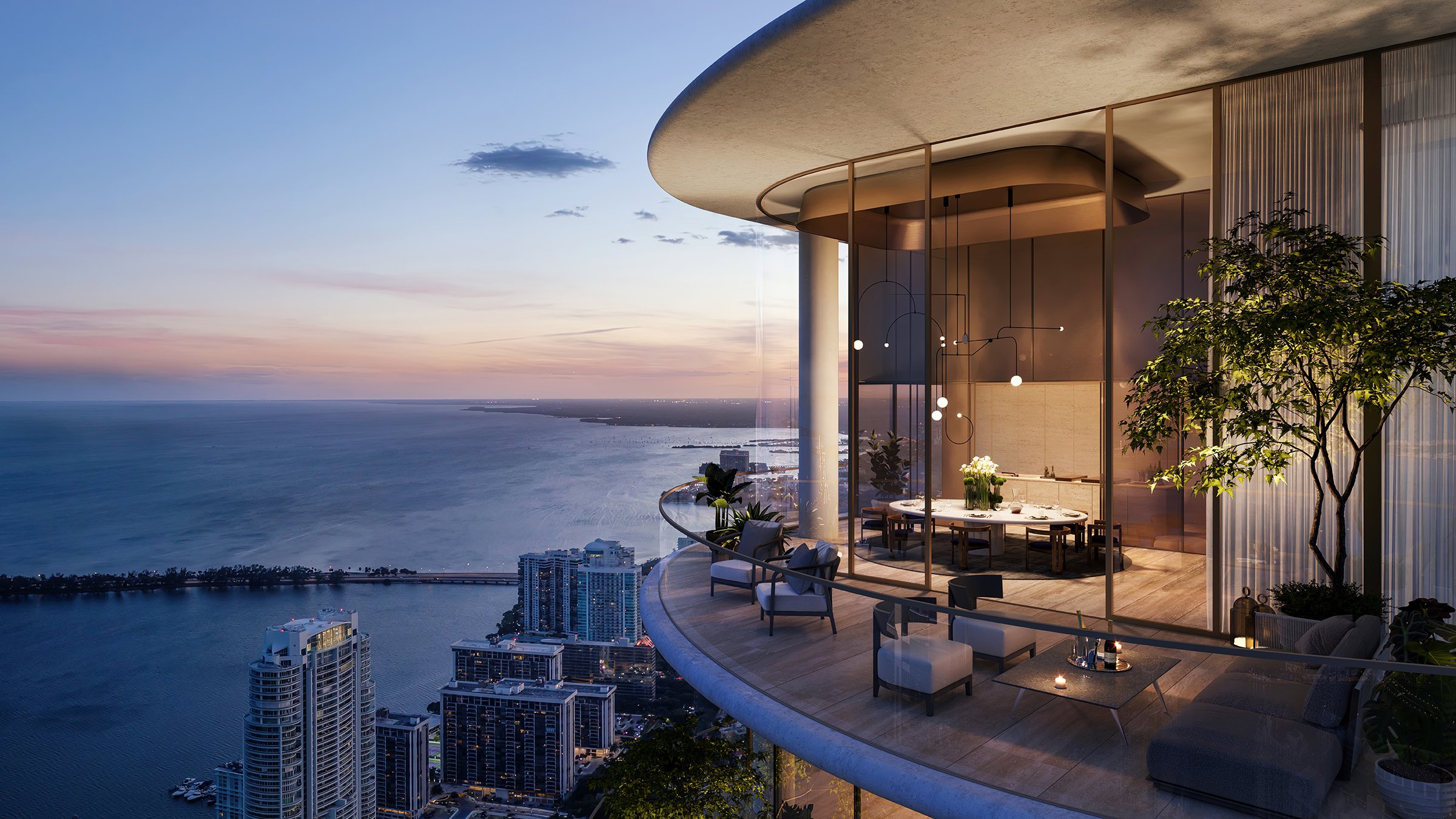
In South Florida, “waterfront” can mean waking to a clean Atlantic horizon or looking across an intricate network of bays, inlets, and protected waterways. Both settings signal prestige. Both can deliver remarkable scenery. Both can anchor a home meant to hold its value emotionally and practically over time. The difference is not theoretical. It shows up in your Tuesday morning routine, not just in a holiday-weekend photo.
Beachfront living is defined by proximity to the ocean’s scale and mood. The shoreline reads as cinematic because the view simplifies into sky, water, and light. Bayfront living is defined by intimacy and access. The water feels closer and often calmer, and it tends to connect more directly to boating culture and neighborhood movement.
For buyers weighing Miami Beach, Brickell, and Coconut Grove, the best choice is rarely about status. It is about alignment: your preferred pace, your tolerance for exposure, your expectations for privacy, and what you want the water to do for you daily.
If you are deciding between oceanfront and bayfront, start with three questions. They cut through marketing language and get you to the lived experience.
First, do you want spectacle or serenity? Beachfront typically offers the clearest horizon line, dramatic weather shifts, and the sensory energy that comes with a public shoreline. Bayfront often feels more sheltered and residential, with gentler water movement and a quieter baseline.
Second, is boating central or occasional? Bayfront and marina-adjacent living can be compelling when you want the water to be active, not only visual. Beachfront can still support a boating lifestyle, but it is less likely to feel like the first convenience the moment you step outside.
Third, how do you define privacy? On the beach, the view can be unmatched while the immediate context remains public by nature. On the bay, you may have fewer passersby and a more controlled sense of arrival, even if the view reads as layered rather than infinite.
Beachfront ownership in South Florida is horizon-first. Buyers are often drawn to a sense of openness that is hard to replicate elsewhere. The ocean can appear minimal and modern from a distance, then richly textured up close. Light tends to be direct and expansive, and the day’s rhythm follows sun angle, cloud movement, and the changing color of the water.
The appeal is immediate. A beachfront home can feel like a permanent resort chapter even when your calendar is business-first. Many buyers want to hear the ocean, not just see it. That desire is rational: sound and scale change how a home feels, even when you are indoors.
Still, the romance comes with variables. Wind and salt air can influence how often you use a terrace, what furniture you choose, and how “easy” outdoor living feels week to week. If outdoor living is central to your lifestyle, be candid about how much you want nature to set the terms.
In Miami Beach, beachfront can also be the most socially activated version of home. Some owners love being close to culture, dining, and walkable energy. Others prefer a quieter, more discreet stretch of shoreline. Either way, beachfront is rarely neutral. It is a statement you experience daily.
Bayfront living is often described as calmer, but the deeper distinction is that it is more operational. The water becomes part of how you move through your life, not only what you look at. When you are near a marina environment, boating culture can shape your social calendar and your weekends.
Bayfront views are typically layered. Instead of a single horizon, you may see islands, causeways, downtown silhouettes, and the choreography of boats. That visual complexity can feel intimate and cinematic in a different way. The ocean reads as “infinite.” The bay can read as “curated.”
For many buyers, bayfront offers a counterbalance to a high-output schedule. In Brickell, bayfront living can feel separated from street-level noise while staying close to business and dining. In Coconut Grove, bayfront aligns with a more residential, neighborhood-forward pace, where water access supports a lifestyle that feels active and quietly elevated.
Most waterfront decisions begin with the view, and that is sensible. The best approach is to define what kind of view you want, not just how impressive it is on first look.
Beachfront typically delivers a clean horizon with fewer visual interruptions. The light can be intense and direct, and the palette often reads as bright and minimal. This can be ideal if you prefer contemporary interiors where the ocean becomes the primary artwork.
Bayfront typically offers a broader visual story. You may see more movement, more skyline variation, and more depth as your eye travels across the waterway. At night, bayfront can feel especially atmospheric because city lights reflect and ripple across the surface.
Neither is inherently better. The decision is psychological. If you want to exhale into distance, the ocean persuades. If you want a living panorama that changes with boats, lights, and city rhythm, the bay can feel more engaging.
Luxury marketing celebrates outdoor living, and South Florida can deliver it. Comfort, however, is not guaranteed by square footage alone. The shoreline you choose changes the daily experience of terraces, balconies, and open-air rooms.
On oceanfront sites, wind exposure can be a defining factor. Some days will feel exhilarating; others may make outdoor dining less appealing. Sound can also be more constant. You may experience it as soothing and restorative, or you may prefer a quieter baseline.
On bayfront sites, the water is often more sheltered, which can make outdoor entertaining feel more consistent. The soundscape can be quieter, though it may include boat activity depending on the waterway and time of day.
If outdoor space is central to your purchase, treat wind and sound as part of due diligence. Visit at different times when possible. Sit outside, not just inside. Notice whether your body relaxes or braces. That response is often more useful than any listing description.
A direct way to compare these lifestyles is to decide what “access” means to you.
Beachfront access is simple and immediate. If your priority is stepping out and being on sand, oceanfront delivers instant gratification. It supports daily rituals like morning walks, spontaneous swims, and sunset resets without planning.
Bayfront access is more strategic. It shines when you want your home to support boating, paddle sports, or a calmer waterside setting for dining and lounging. A marina-oriented ecosystem can influence your friendships and your weekend agenda because it naturally encourages activity.
If you want both, the practical question becomes which access must be effortless and which can be occasional. If boating happens a few times a year, you may not want to build your entire purchase around it. If boating is your primary way to relax, bayfront becomes harder to replace.
Privacy is not only about visibility. It is also about how you arrive, how you transition from public to private, and whether home feels buffered from the outside world.
Beachfront environments attract foot traffic because the beach is a shared asset. That does not mean a beachfront residence cannot feel private. It means the surrounding context is typically more public by design. Many buyers enjoy this because it feels alive and connected.
Bayfront environments can feel more controlled because fewer people casually pass along the water’s edge. Arrival may feel more residential, with the water present but not necessarily public-facing.
In Brickell and Miami Beach, where vertical living is a major part of the market, the arrival sequence matters. Consider whether you want the energy of a lobby that functions like a social scene, or the discretion of an entrance that feels closer to a private club. Both exist across waterfront settings, but they often present differently depending on whether the shoreline is public beach or private bay edge.
Even at the ultra-luxury level, lifestyle is shaped by friction. How easily you move to dining, airport routes, business districts, and schools can determine whether a residence feels like an indulgence or a daily negotiation.
Beachfront living can be deeply satisfying, but it can also place you near areas that draw visitors and seasonal activity. If you value spontaneity, consider whether you are comfortable with a setting that can feel more observed and more dynamic at certain times.
Bayfront living, especially when paired with central neighborhoods, can deliver a more predictable rhythm. In Coconut Grove and Brickell, bayfront can feel tucked away without feeling remote. For the buyer who wants to protect time, bayfront can function like a luxury shortcut.
Test the drive you will do most often, at the times you actually live. Water views are powerful, but your everyday route is what you will remember when the novelty fades.
Waterfront design is always a dialogue between exposure and comfort, and the shoreline influences both.
Beachfront residences often lean into expansive glazing, light finishes, and open-plan living that frames the horizon. The ocean can visually wash a space, making even minimal interiors feel rich. At the same time, salt air can influence material choices, particularly outdoors, where durability and maintenance become part of the design conversation.
Bayfront residences often emphasize framing and layering. When the view includes skyline, waterway, and passing boats, composition matters. Interiors can feel more urban and tailored, especially when the bayfront is paired with a city backdrop.
If you are furnishing from scratch, define the emotional goal. Do you want a sanctuary organized around one dominant view? Or do you want a sophisticated observatory over the city’s water life, with moments of movement and light throughout the day?
In South Florida, entertaining often revolves around indoor-outdoor flow, but the mood changes by shoreline.
Beachfront entertaining can feel iconic. Guests understand the setting immediately, and the ocean becomes the conversation even before the first drink is poured. It is well suited to celebrations meant to feel like a destination.
Bayfront entertaining can feel more curated and intimate. The water is present, but the experience can be more about the guest list and the tone you set. If you are close to a marina culture, hosting can also mean planning around boat days, water arrivals, and a more nautical rhythm.
If you frequently host extended family or overnight guests, consider what they will do when you are working. Beachfront offers effortless activities with minimal planning. Bayfront offers calm beauty and potentially more privacy, but guests may rely more on structured outings.
Many luxury buyers in South Florida split time between multiple homes. The second-home test is practical: can you leave without worry, and can you return and feel restored quickly?
Beachfront homes can deliver instant restoration because the ocean changes how time feels. At the same time, some owners prefer to be present to enjoy outdoor spaces fully, especially when weather and wind shape how a property lives.
Bayfront homes can feel easier to lock and leave, particularly when the setting is more sheltered and residential. The water remains a daily pleasure, but the environment can feel less dependent on perfect conditions.
Think about how you travel. If you arrive for longer stays and want a dramatic reset, beachfront can be a powerful antidote to routine. If you arrive frequently for shorter visits and want consistent ease, bayfront may be the smoother fit.
Even when you are comparing shorelines rather than specific buildings, it helps to anchor your taste with a recognizable reference point. For a discreet look at a high-profile coastal option, explore The Surf Club Four Seasons Surfside and use it as a baseline for how you want your relationship to water to feel, whether your final choice is oceanfront or bayfront.
The goal is not to replicate any one property. It is to clarify your own preferences: the balance of privacy and activation, the type of view you consider timeless, and the way you want arrival, amenities, and outdoor space to perform in real life.
When the market gets loud, a simple framework protects your time and your clarity.
Start with your non-negotiable access. If the beach is the point, choose beachfront and refine from there. If boating and calmer water are the point, prioritize bayfront and evaluate marina proximity and the character of the waterway.
Next, define your ideal soundscape and wind tolerance. Some people crave the ocean’s constant presence, including its sound and exposure. Others discover they prefer the bay’s quieter texture and more consistent outdoor comfort.
Then, be honest about your desired level of social energy. Miami Beach can be thrilling and outward-facing. Brickell can be efficient and cosmopolitan. Coconut Grove can feel residential and understated. Waterfront living amplifies the personality of the neighborhood you choose.
Finally, treat view as a long-term asset, not just a first impression. Ask what you will want to look at when life is busy, when you are home alone, and when you are hosting. The right shoreline is the one that supports your real rhythm.
How should I compare oceanfront and bayfront terraces for everyday comfort? Evaluate terraces the way you will actually use them. Visit when wind is likely to be present and when it is calm. Spend time seated outside to gauge noise and exposure. The best terrace is not the largest; it is the one you will use consistently.
If I want a marina lifestyle, what questions should I ask about access and rules? Start by clarifying whether the home makes boating effortless or merely possible. Ask how you would get from your front door to the water, what the day-to-day experience feels like, and whether the community’s expectations align with your routine. Bayfront living is most rewarding when access supports spontaneity.
In Miami Beach, what should I prioritize to balance privacy with proximity? Focus on how the building manages the transition from public to private. Pay attention to arrival, lobby energy, and how outdoor spaces are positioned relative to public paths. You can have a dramatic beachfront setting and still prioritize discretion if the property’s layout supports it.
How do I decide between Brickell convenience and Coconut Grove neighborhood feel when both offer waterfront options? Use your weekly schedule as the deciding filter. If you value efficiency, centrality, and a more metropolitan cadence, Brickell’s bayfront rhythm may match you. If you want a more residential pattern with a quieter sense of arrival, Coconut Grove may feel more natural. In both cases, confirm that the waterfront experience complements the neighborhood’s pace.
For confidential, buyer-aligned guidance on South Florida waterfront living, connect with MILLION Luxury.
If branded residences are on your mind — as a home or as an allocation — we would be glad to share what we are seeing, privately.
Begin a quiet conversation