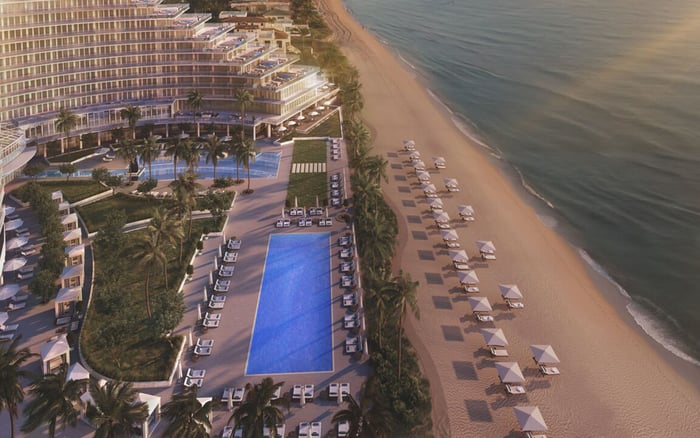
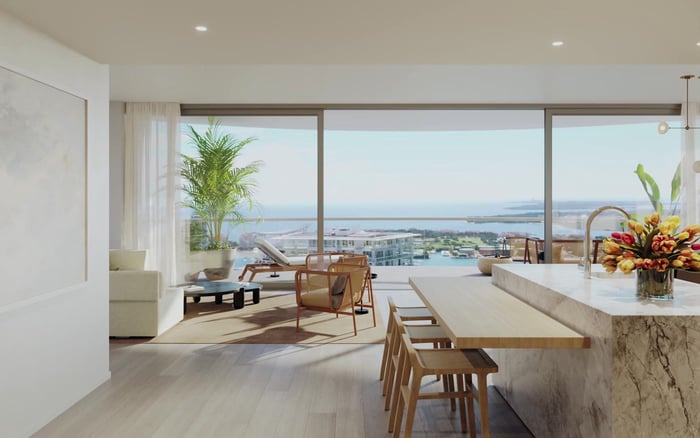
In South Florida, the modern Penthouse is less a “unit at the top” and more a private, service-driven residence designed to live like an estate in the sky. Today’s ultra-premium buyers prioritize controlled privacy, intuitive arrival sequences, expansive outdoor living, and quiet performance across structure, systems, and sound. The result is a new definition of top-floor value: one that blends architecture, hospitality-level operations, and long-term usability across Miami-beach, Brickell, and beyond, while remaining highly dependent on building governance and execution.
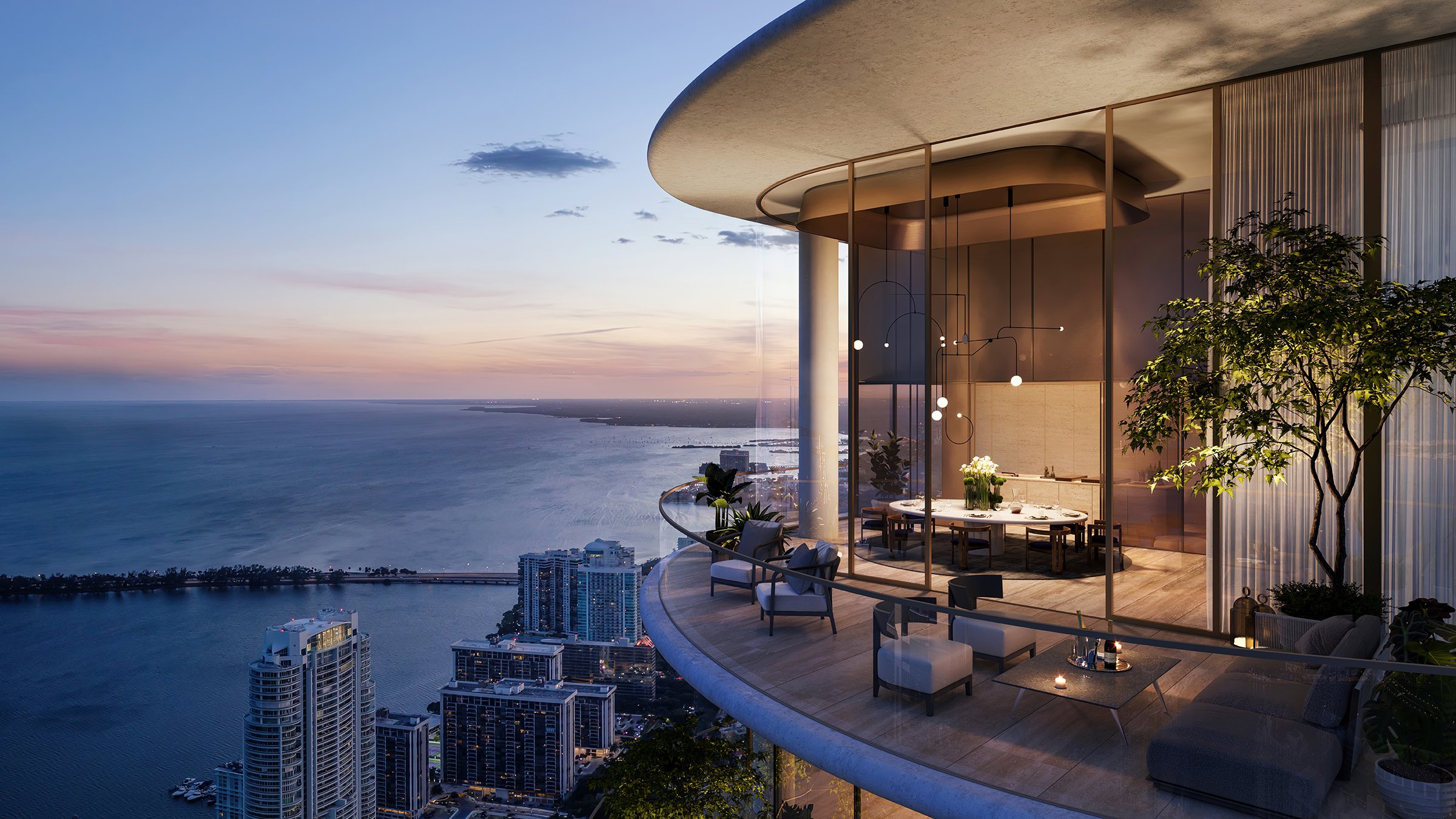
The penthouse has always signaled privilege. In South Florida, that signal has sharpened into something more specific and far more demanding. For today’s ultra-premium buyer, “top floor” is not the finish line. It is the baseline. The residence must live like an estate while delivering the convenience, discretion, and consistency of a well-run building.
Across Miami Beach, Brickell, and the broader South Florida waterfront, the language around high floors has moved away from pure spectacle. The conversation now centers on privacy, controlled access, a coherent arrival sequence, and the quiet competence of systems that simply work. In practice, the best penthouse is evaluated less as a collection of rooms and more as a complete living environment. It has to choreograph how you enter, how you host, how you reset, and how you remain unseen when you choose.
Because buildings vary so widely in design, governance, and operations, the strongest purchases often come from buyers who focus on repeatable fundamentals rather than marketing adjectives. The evolution is not just aesthetic. It is architectural, operational, and psychological. The modern penthouse is judged by how well it supports a high-intensity lifestyle without broadcasting it.
A generation ago, penthouse value was often reduced to a view and the feeling of being above everything. Views still matter, but in today’s market they function as a baseline expectation, not a singular differentiator. Luxury buyers increasingly ask a different question: does this home support the life I actually live, every day, at altitude?
This is where the concept of the vertical estate becomes useful. A vertical estate is not simply large. It is structured. It is intentionally zoned with distinct areas for arriving, working, training, entertaining, and restoring. It reduces friction in daily routines and minimizes exposure to shared corridors, common spaces, and unpredictable interactions.
When a penthouse is truly successful, it feels inevitable. Movement makes sense. Noise is managed. Storage is resolved rather than improvised. Outdoor space is usable, not symbolic. The home reads as calm and capable instead of performative.
This shift also changes how buyers read “size.” Square footage alone no longer guarantees luxury. A sprawling but poorly organized plan can feel exhausting, while a disciplined layout can make an equally grand residence feel effortless. The highest tier is less about what you can show and more about what you can live with, comfortably, for years.
Ultra-luxury has always been rooted in scarcity, but modern penthouse scarcity increasingly comes down to control. Control over who reaches your door. Control over sound and sightlines. Control over how service, deliveries, and vendors are handled. Control over the transition from public city life to private home life.
In practical terms, buyers are drawn to top floors because they can reduce adjacencies and shared touchpoints. Depending on the building, privacy can be achieved through layout, elevator programming, entry design, or simply by limiting how many residences share a landing. The best solutions are layered. They do not rely on a single feature. They create privacy through redundancy and thoughtful planning.
Ease matters just as much as control. The penthouse is expected to provide convenience without compromising discretion. When those elements are balanced, the residence projects quiet confidence rather than spectacle.
This is also where buyers benefit from separating “privacy as a feeling” from “privacy as a system.” A home can feel private in a daytime showing and still be exposed in daily use. True top-floor value shows up in the repetitive moments: how guests arrive, how staff moves through the building, how packages appear, and how smoothly the household runs when the owner is in and out.
In elite residences, the experience begins before the living room. The arrival sequence has become a defining feature of the contemporary penthouse, particularly in South Florida, where many buyers keep travel-heavy schedules, return late, and host on short notice.
A refined arrival sequence tends to accomplish three things.
First, it separates public from private. The moment you enter, you should not feel exposed to hallways, neighboring doors, or service circulation. The arrival should feel intentional, not accidental.
Second, it provides a moment to decompress. A gallery-style entry, a transition corridor, or a properly sized vestibule can buffer sound and sightlines while giving the home a sense of pace. The best entry spaces are quiet, proportionate, and functional.
Third, it anticipates daily life. Discreet drop zones for packages, shoes, beach gear, and household essentials reduce clutter and protect the calm of the main spaces. When the arrival is designed well, the penthouse feels composed even on the busiest days.
Buyers should also listen closely to how building teams discuss access and protocols. The tone matters. It often reveals whether privacy is treated as an operational discipline or as a sales line.
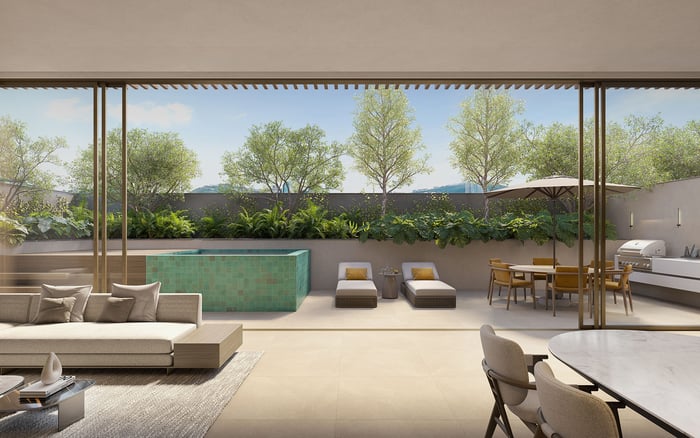
South Florida’s climate makes indoor-outdoor living a core expectation, and a penthouse should amplify that advantage. What has changed is the standard for how outdoor space is used. It is no longer enough to have a single terrace that photographs well. Buyers increasingly expect outdoor areas to function as true outdoor rooms that support breakfast, training, entertaining, and evening downtime.
In the strongest executions, outdoor living is planned with the same discipline as interior architecture. Seating and dining zones feel deliberate. Circulation is comfortable. Lighting supports night use without harsh glare. Materials are selected for long-term wear and for how they feel underfoot, not just how they look in a rendering.
Because outdoor areas face wind, salt, and intense sun, resilience is evaluated alongside beauty. Buyers often pay attention to the practical aspects that keep outdoor living elegant in real life: how surfaces weather, how furniture placement works with breezes, and how easy it is to maintain the space without turning ownership into a project.
A useful test is simple: does the terrace feel like a natural extension of the home, or does it feel like an accessory? In a true vertical estate, outdoor rooms are not optional. They are part of the daily floor plan.
One of the most important shifts in penthouse expectations is the migration of “amenities” from shared building spaces into the private residence. What used to be a common-area advantage is now often treated as a personal requirement: dedicated wellness space, a quiet office suite, or an entertaining layout that does not push guests through private areas.
This does not make building amenities irrelevant. It changes the priority. The ultra-luxury buyer wants the option to remain private without losing quality of life. A workout corner with proper separation, a massage-ready flex space, or a media room that supports true downtime can matter more than a grand lobby.
Buyers also tend to value customization capacity. The penthouse should be able to adapt over time, not just present well at one moment. Spaces that can be reprogrammed without disrupting circulation become highly prized. A flexible plan is often more luxurious than a rigid one, because it can track the owner’s evolving lifestyle.
The broader implication is that the “estate” mindset is moving upward. The penthouse is expected to contain its own day-to-day infrastructure. Done correctly, the residence functions with minimal reliance on shared spaces and minimal exposure to the building’s rhythms.
When a penthouse is truly exceptional, its most luxurious features are often the ones you cannot see. Buyers commonly prioritize acoustic calm, stable temperatures, and a sense that mechanical systems will not intrude on daily life.
This is where high floors become more complex than they appear. Wind conditions, equipment placement, and building operations can shape comfort. Mechanical and electrical planning, sound mitigation, and thoughtful placement of service elements can separate a serene home from a visually striking but stressful one.
Because these elements are difficult to evaluate in a brief showing, sophisticated buyers and their advisors ask specific questions, request documentation where available, and observe the building at different times of day. The objective is not perfection. It is predictability. A home that behaves consistently is a home that can be trusted.
Buyers also benefit from paying attention to subtle signals: how quiet the interior feels with doors closed, how the home responds to typical South Florida heat and humidity, and whether service areas appear planned or improvised. Invisible performance is not a trend. It is the foundation of long-term livability.
South Florida’s luxury audience increasingly expects a residence to run with hospitality discipline. That does not require a hotel label, but it often borrows the sensibilities of excellent service environments: consistency, discretion, and anticipatory support.
When a brand is involved, the value is less about a logo and more about standards. Buyers may look for a building culture that prioritizes privacy and a calm experience for residents and guests. They may also pay close attention to how the property handles vendor access, move-ins, and everyday requests. Those practical details define the lived experience.
For a neutral reference point in the branded-style conversation, explore St. Regis® Residences Brickell. Specific offerings and policies vary by building, so confirm details directly.
In any scenario, buyers should separate promise from execution. Even in buildings with strong positioning, day-to-day operations determine whether the experience feels seamless or complicated.
Penthouse design in South Florida is often associated with bold visuals, but the most lasting form of luxury tends to be stewardship. Stewardship means selecting design choices that age well, hold value, and support daily life with minimal friction.
At the top of the market, buyers often lean toward materials and detailing that feel composed rather than trendy. They look for layouts that can handle both intimate living and larger-scale hosting without constant resets. A plan that keeps private areas genuinely private, while still supporting entertaining, reads as mature luxury.
A useful lens is to ask whether the penthouse is designed to be photographed or designed to be lived in. The highest tier can do both, but it rarely prioritizes the camera over comfort.
Stewardship also extends beyond finishes to the way the home is organized. Storage that is truly solved, service circulation that is discreet, and transitions between zones that feel natural all contribute to longevity. The goal is not to impress once. The goal is to remain excellent over time.
Within South Florida, different districts carry different emotional narratives for the penthouse buyer. Brickell often reads as cosmopolitan and connected, with a lifestyle shaped by business cadence and city energy. Miami Beach often reads as resort-oriented and social, with an emphasis on ocean air, guest arrivals, and a more overtly leisure-driven rhythm.
Neither narrative is inherently better. They simply pull on different definitions of ease. Some buyers want the feeling of being centered in the city, with proximity and momentum. Others want the sensation of being removed from it, with a more relaxed pace and a clearer boundary between public and private.
What matters is alignment between the building’s culture and the buyer’s daily habits. A mismatch can feel like constant compromise, even when the residence itself is beautiful. The most satisfying purchase is often the one where the location, the building, and the household rhythm reinforce each other.
At the top of the market, governance can be as important as architecture. A penthouse is not only a residence. It is a position within a shared ecosystem shaped by rules, budgets, management choices, and the consistency of enforcement.
Buyers often focus on how decisions are made, how policies are applied, and whether standards are protected over time. This is especially important for owners who value discretion, predictable operations, and long-term condition. In a premium building, the lived experience is the product, and governance is the mechanism that protects it.
A penthouse can be visually perfect and still underperform as a lifestyle asset if governance is chaotic. Conversely, strong governance can elevate even a restrained residence because it safeguards the daily experience: noise expectations, move-in protocols, vendor access, and the general level of order.
For buyers evaluating true top-floor value, governance is not a footnote. It is a core feature, because it affects everything that happens after closing.
The most effective penthouse evaluations are structured. Rather than reacting only to finishes, buyers can apply a repeatable checklist aligned with how ultra-luxury is actually lived.
Start with arrival and privacy. Consider how many touchpoints exist between the street and the front door, and how that feels for your lifestyle. Look at the sequence, not just the endpoint. Ask what happens when you arrive late, when guests arrive early, or when service is needed.
Next, assess zoning. Look for a clear separation between public entertaining areas and private recovery areas. The goal is to host without disruption and to unwind without traffic. A well-zoned plan also supports multiple activities at once, which is often how a penthouse is used.
Then evaluate the outdoor component as true living space. Ask whether it supports multiple uses and whether it feels comfortable in real conditions. The terrace should work as a room, not a postcard.
Finally, assess operations. Ask how the building handles maintenance, access, and day-to-day service. Notice whether the team speaks with clarity about protocols and whether the building’s culture feels aligned with your expectations.
The point is not to turn a purchase into an audit. The point is to protect the calm that the penthouse promises.
In South Florida, the best penthouses are increasingly defined by intention. They are designed and operated to reduce compromise, not to accumulate features. Buyers want a residence that feels tailored to how they live, with privacy as a foundation and comfort as daily proof.
As expectations rise, the market will likely continue rewarding top-floor homes that behave like complete estates. That means disciplined layouts, meaningful outdoor living, strong operational culture, and the ability to maintain a discreet, polished experience year after year.
For the buyer who values both beauty and stewardship, the question is no longer “Is it the highest floor?” It is “Does it live like the best version of home?”
What makes a Penthouse feel truly private in a high-rise? Privacy usually comes from a combination of controlled access, limited shared landings, thoughtful entry design, and building culture. Ask how arrivals, guests, and service requests are handled in practice, not just in theory.
How should I evaluate outdoor space on high floors? Treat it like an extension of the floor plan, not a bonus. Consider comfort in real conditions, furniture placement, lighting for evenings, and how easily the outdoor areas can be maintained over time.
Do branded residences automatically mean better service? Not automatically. A brand can signal standards, but execution depends on management and day-to-day operations. Confirm what services are actually provided, how they are staffed, and how policies support discretion.
Is Brickell or Miami Beach better for a top-floor lifestyle? It depends on your rhythm. Brickell can feel more city-centered, while Miami Beach can feel more leisure-oriented. The best choice is the one that matches how you arrive, host, and unwind.
Explore the next chapter of South Florida penthouse living with MILLION Luxury.
If branded residences are on your mind — as a home or as an allocation — we would be glad to share what we are seeing, privately.
Begin a quiet conversation