A founder’s South Florida address is no longer just a private preference. It shapes executive rhythm, recruiting tone, client access, and the way leadership teams interpret the move.
For founders moving a leadership team to South Florida, the real-estate decision is rarely a simple preference for sand or skyline. It becomes a statement about how the company will operate, how executives will recover, how spouses and families will adapt, and how clients will experience the firm’s new center of gravity.
Beach access carries immediate emotional appeal. It signals restoration, privacy, and a lifestyle that can make a demanding move feel like an upgrade rather than a concession. City living offers a different form of value: density, immediacy, dining, meeting culture, and the sense that the business day can extend naturally into relationship-building.
The most sophisticated founders do not ask which is better in the abstract. They ask which address reduces friction for the people whose performance matters most. In South Florida, that answer may be Brickell, Miami Beach, Fort Lauderdale, West Palm Beach, or a quieter waterfront enclave between them. The right choice depends less on postcard beauty than on executive rhythm.
Beach access is not only recreational. For founders accustomed to compressed schedules, it can function as a private operating system for recovery. A morning swim, an evening walk, a weekend with family nearby, and a terrace that feels removed from the calendar can all become part of the leadership team’s retention strategy.
This is especially relevant when executives are relocating from denser urban markets. The move must feel rational professionally, but also restorative personally. If the founder’s core team includes spouses, children, visiting relatives, or frequent houseguests, proximity to the ocean can help the relocation feel permanent rather than provisional.
Beach-access living also shapes hospitality. A residence near the water can make a client dinner, board retreat, or founder gathering feel considered without appearing theatrical. In Miami Beach, properties such as Shore Club Private Collections Miami Beach speak to buyers who want the beach experience to feel polished, residential, and discreet. For founders, that discretion matters. The address should elevate the room, not dominate it.
Still, beach access must be tested against daily demands. If leadership meetings, professional services, private aviation routines, or investor dinners repeatedly pull the team inland or downtown, the beauty of the shoreline can lose some of its utility. Beach living works best when the founder can protect time, when hybrid work is credible, and when the team’s required touchpoints do not turn every weekday into a commute negotiation.
The city lifestyle becomes more persuasive when the founder’s calendar is relationship-heavy. If the day regularly includes meetings, lunches, private dinners, advisors, legal work, finance conversations, and spontaneous introductions, proximity to an urban core can create momentum. The value is not only time saved. It is the ability to say yes without redesigning the day.
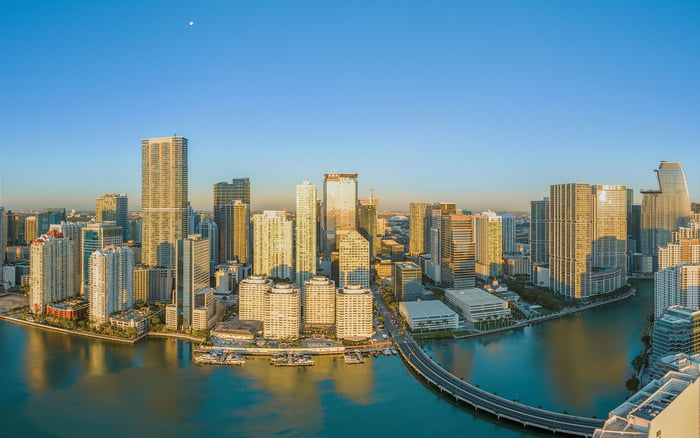
Brickell often enters that conversation because it feels legible to executives who want vertical living, dining options, and a more metropolitan cadence. A residence such as 2200 Brickell can appeal to buyers who see the home as part of a larger professional ecosystem. The point is not simply proximity. It is psychological continuity: a founder can move to South Florida without abandoning the intensity and polish associated with a major business district.
City lifestyle can also support recruitment. Not every executive wants the first impression of a relocation to feel purely resort-like. Some want evidence of ambition, infrastructure, and cultural energy. A city address can make the move feel strategic rather than escapist, especially for younger senior hires or operators who prefer restaurants, fitness, services, and evening plans within a tighter orbit.
The trade-off is privacy. Urban convenience can mean more visual exposure, more movement, and less separation between work and home. For a founder who needs the residence to operate as a sanctuary, that can be a meaningful cost. The strongest city choices are therefore not simply the most central. They are the ones that offer a controlled arrival, strong amenity programming, and a residential atmosphere once the elevator opens.
Many founders ultimately seek a hybrid: enough water to feel unmistakably South Florida, enough city proximity to keep the company’s operating tempo intact. This is where the conversation becomes highly personal. A founder with investor meetings concentrated in Miami may read Brickell differently than a founder whose family life, school preferences, or club relationships point north. A CEO who entertains often may prioritize a formal dining sequence and guest arrival. A product founder may care more about quiet, light, and uninterrupted thinking time.
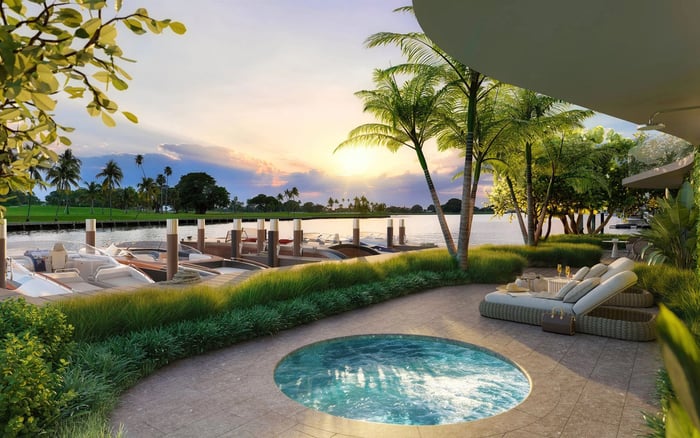
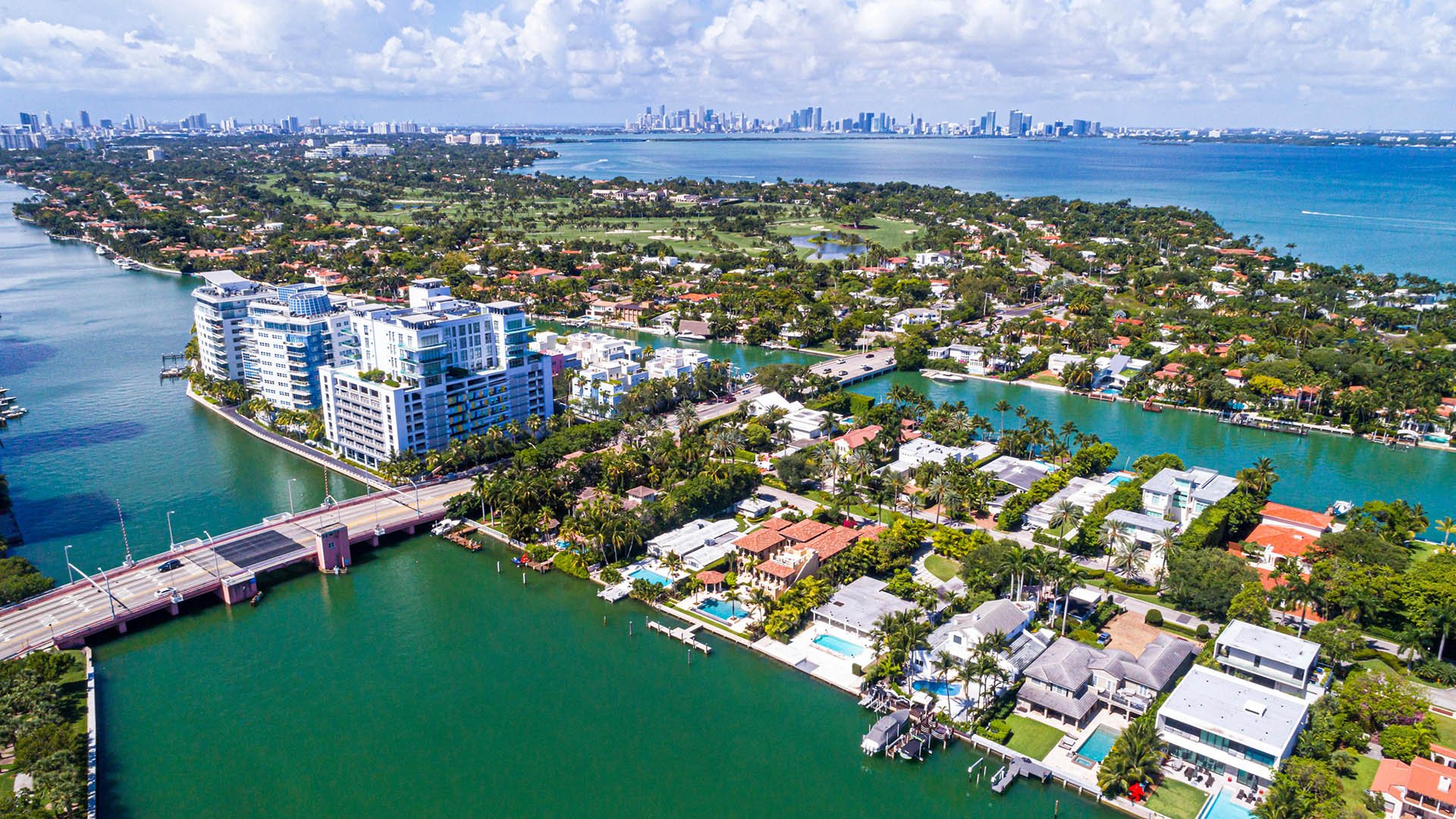
Waterfront living can satisfy both sides of the equation when it is not isolated. Edgewater, North Bay Village, Coconut Grove, Fort Lauderdale, and West Palm Beach can each serve a different version of that middle path, depending on how the leadership team defines convenience. In West Palm Beach, Alba West Palm Beach may resonate with buyers looking for a calmer residential mood while remaining connected to a growing executive lifestyle corridor.
Fort Lauderdale deserves attention for founders who want boating culture, beach proximity, and a less obviously Miami-centric daily rhythm. A project such as Four Seasons Hotel & Private Residences Fort Lauderdale frames the choice around service, coastline, and an address that can support both personal retreat and polished entertaining.
The hybrid strategy asks one central question: where does the founder need to be excellent most often? If excellence requires constant meetings, city lifestyle may win. If excellence requires clarity, privacy, and family stability, beach access may be more valuable. If both are non-negotiable, the search should focus on addresses that compress distance without compromising atmosphere.
Begin with the executive week, not the weekend fantasy. Map the founder’s recurring commitments, the leadership team’s likely meeting patterns, school and family considerations, airport usage, dining preferences, wellness habits, and tolerance for traffic and transitions. The winning address should make the most common day feel elegant, not just make the rare day feel spectacular.
Next, separate founder preference from team adoption. A principal may love the beach, while the COO wants city convenience and the CFO wants a quieter residential environment. If the move is meant to anchor leadership, the address strategy may need more than one solution: a founder’s primary residence, a pied-à-terre near business activity, or a phased approach as the team settles into South Florida.
Then consider the social message. Beach access says privacy, restoration, and a softer form of power. City lifestyle says momentum, availability, and professional density. Waterfront says balance, particularly when the residence is close enough to the city to remain practical. Lifestyle is not decoration here. Lifestyle is operational design.
Finally, resist buying for the first 90 days. The most successful relocation address is the one that still works after novelty fades. The ocean view must survive weekday obligations. The city address must still feel livable on Sunday morning. The prestige of a building must translate into daily ease for the people who are actually moving.
For founders relocating leadership teams in South Florida, beach access and city lifestyle are not rival luxuries. They are tools. One protects energy. The other accelerates connection. The best purchase is the one that matches the company’s next chapter with the founder’s private life, without asking either to perform a role it cannot sustain.
If the firm is relationship-driven, investor-facing, and highly social, a city-forward address may matter more. If the move is designed to improve quality of life, retain executives, and create a long-term family base, beach access may carry greater weight. For many founders, the answer is a disciplined hybrid: water, service, privacy, and a short path back to the rooms where decisions are made.
Should founders prioritize beach access first? Not automatically. Beach access is most valuable when it supports recovery, family stability, and the executive team’s real weekly rhythm.
When does a city lifestyle make more sense? It makes sense when the founder’s calendar depends on meetings, dining, advisors, and frequent relationship-building moments.
Is Brickell better for relocating leadership teams? Brickell can be compelling for teams that want a metropolitan pace and a clearly business-oriented environment close to daily activity.
Is Miami Beach practical for founders? Miami Beach can work well when privacy, hospitality, ocean access, and personal restoration are central to the relocation strategy.
Why consider Fort Lauderdale? Fort Lauderdale may appeal to founders who want coastline, service, boating culture, and a slightly different rhythm from Miami.
Does West Palm Beach suit executive relocation? West Palm Beach can suit buyers seeking a refined residential atmosphere with an increasingly polished executive lifestyle.
Should a founder buy before the team relocates? A founder can buy first, but the decision should account for how key executives and families will actually adapt.
What matters more, views or convenience? Convenience usually determines daily satisfaction, while views enhance the experience when the core location already works.
Can one residence solve both beach and city needs? Sometimes. The strongest options combine water, privacy, service, and reasonable access to the founder’s most frequent commitments.
What is the best way to shortlist comparable options for touring? Start with location fit, delivery status, and daily lifestyle priorities, then compare stacks and elevations to validate views and privacy.
If you'd like a private walkthrough and a curated shortlist, connect with MILLION.
If branded residences are on your mind — as a home or as an allocation — we would be glad to share what we are seeing, privately.
Begin a quiet conversation