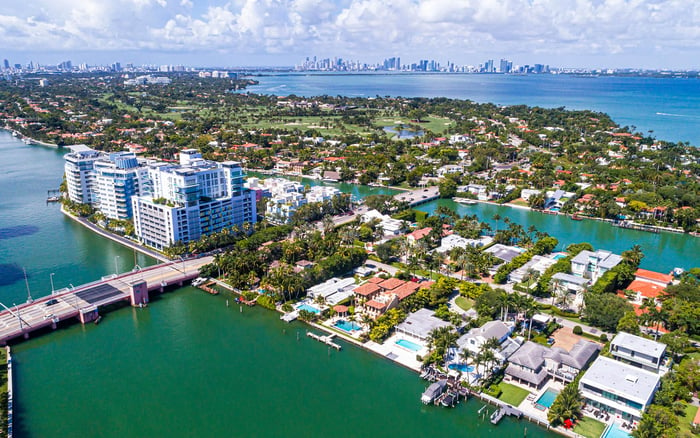
A discreet buyer’s guide to the UK and US tax issues London-based purchasers should model before acquiring a Miami Beach second home, from residence tests and rental treatment to FIRPTA, property taxes and succession planning.

For a London buyer, the tax analysis of a Miami Beach residence begins before the contract, before the inspection period and even before the choice between oceanfront calm and South Beach energy. It begins with residence.
UK tax residence is governed by the Statutory Residence Test, which considers day counts and connection factors. A buyer who remains UK resident is generally within the UK tax net on foreign income, including rental income from a Miami Beach property. That does not mean the same income must simply be taxed twice, since Foreign Tax Credit Relief may be available where the same foreign income is taxed in both jurisdictions. It does mean the acquisition should be modeled as a cross-border holding from the first day.
The US analysis is equally sensitive to time. Frequent stays in Miami can create US tax-residence risk under the substantial presence test, which uses a weighted three-year day-count formula. If a person is treated as a US resident alien, the US generally taxes worldwide income in the same way it taxes a US citizen. If the buyer remains a nonresident alien, the US generally taxes US-source income and income effectively connected with a US trade or business.
The US-UK treaty contains residence tie-breaker rules that can matter when a buyer is at risk of being treated as resident in both countries. For luxury buyers, the practical point is direct: calendar discipline is part of asset management.
The most elegant Miami Beach purchase can produce very different tax outcomes depending on how it is used. A pure private residence, a seasonal family base and a high-yield rental property are not the same tax object.
This Miami Beach decision may sit at the intersection of a second home, an investment model, a short-term-rental strategy and, often, a waterfront lifestyle choice. The distinction matters because UK residents are generally taxable on foreign rental income, while the US may also tax income from US real property. Under the US-UK treaty, income from real property may generally be taxed in the country where the property is located, so US treatment remains central for a Miami asset.
For a nonresident owner renting US real property, an election may generally be available to treat rental income as effectively connected income. In practical terms, that can allow taxation on a net basis rather than on gross rent, which is why operating expenses, management fees, repairs, insurance and financing assumptions should be organized from the outset.
Personal use also has consequences. US vacation-home rules can limit deductions when a property is used both personally and as a rental, particularly if personal use exceeds the greater of 14 days or 10 percent of rental days. A London family spending school holidays, winter weeks and long weekends in Miami should not assume the rental model will absorb all costs.
Florida has no state personal income tax, an important advantage for many buyers comparing global second-home markets. Still, Miami Beach ownership is not tax-free. Federal income-tax issues remain central, and local carrying costs require close attention.
Miami-Dade property taxes are based on assessed value, exemptions and local millage rates. Florida homestead benefits are generally tied to permanent residence, so a London-based owner using the property as a second home should not assume homestead treatment. This can affect the long-term carrying-cost profile, particularly for buyers holding trophy property over many years.
Short-term rental strategy must also be verified before acquisition. Miami Beach has specific rules, and buyers should confirm zoning, licensing and condominium restrictions before underwriting rental income. Miami Beach resort tax can apply to short-term room or accommodation rentals, adding another local layer for owners who rent the property.
That diligence is especially relevant when comparing lifestyle-led buildings. A buyer looking at The Perigon Miami Beach may have a different use profile from one considering The Ritz-Carlton Residences® Miami Beach, even within the same broader market. The question is not only which residence feels right. It is whether the condominium documents, local rules and owner-use plan support the financial model.
Debt structure should be reviewed with the same precision as architecture and view corridor. US mortgage interest on a second home may be deductible only if the taxpayer itemizes and remains within qualified residence debt rules. For international buyers, the deduction question is only one part of a broader financing decision that may also involve currency exposure, reporting obligations and lender requirements.
The eventual exit deserves equal attention. UK capital gains tax can apply when a UK resident sells a second home or overseas property that has increased in value. UK Private Residence Relief is aimed at a person’s main home, so a Miami Beach second home will not automatically qualify.
On the US side, the home-sale exclusion can shelter up to $250,000 of gain for single filers or $500,000 for joint filers only if ownership and use tests are met. A pure second home does not automatically qualify. For foreign sellers, FIRPTA generally requires withholding when a foreign person sells US real property, with the standard withholding rate often 15 percent of the amount realized. That withholding is not necessarily the final tax, but it can affect liquidity at closing.
For buyers considering Shore Club Private Collections Miami Beach or Setai Residences Miami Beach, the exit plan should be part of the purchase memo, not a future afterthought.
Ultra-premium second homes are often family assets as much as real estate assets. The choice to hold personally, through a trust or through an entity should be made before closing, because later restructuring can create tax, transfer, reporting or financing complications.
US-situs real estate owned by a nonresident noncitizen can fall within the US estate and gift tax regime. Separately, UK inheritance tax can apply to worldwide assets depending on domicile status, while UK assets may remain within scope even for people living abroad. The overlap makes succession planning essential for London families acquiring Miami Beach property for long-term enjoyment.
The best pre-closing model usually includes two scenarios: private-use second home and rental/investment property. Each should show day counts, expected personal use, rental assumptions, financing, property taxes, local rental compliance, income-tax exposure, exit taxation and succession considerations. In the luxury segment, the cleanest transaction is not only the one that closes. It is the one that remains coherent five, ten and twenty years later.
Does a London buyer automatically remain taxed only in the UK? No. UK residence is one issue, while US tax treatment can arise through US property ownership, rental income and time spent in the US.
Can a Miami Beach second home create US tax residence? Yes. Frequent stays can trigger substantial presence risk under a weighted three-year day-count formula.
Is Miami Beach rental income taxable in the UK? If the owner is UK resident, foreign rental income is generally within the UK tax net, subject to applicable reliefs and filings.
Can the same rental income be taxed twice? It can be exposed in both jurisdictions, although Foreign Tax Credit Relief may be available in appropriate cases.
Does Florida tax personal income? Florida has no state personal income tax, but federal tax, Miami-Dade property taxes and local rental taxes can still matter.
Do homestead benefits usually apply to a second home? They are generally tied to permanent residence, so a London-based second-home buyer should not assume homestead treatment.
Are short-term rentals automatically allowed in Miami Beach condos? No. Buyers should verify city rules, licensing, zoning and condominium restrictions before relying on rental income.
Does a second home qualify for the US home-sale exclusion? Not automatically. The exclusion depends on ownership and use tests, so a pure second home may not qualify.
What is FIRPTA? FIRPTA is a US withholding regime that generally applies when a foreign person sells US real property.
What is the best way to shortlist comparable options for touring? Start with location fit, delivery status, and daily lifestyle priorities, then compare stacks and elevations to validate views and privacy.
When you're ready to tour or underwrite the options, connect with MILLION.
If branded residences are on your mind — as a home or as an allocation — we would be glad to share what we are seeing, privately.
Begin a quiet conversation