A buyer-oriented look at how The Ritz-Carlton Residences® Palm Beach Gardens and The Ritz-Carlton Residences® Pompano Beach clarify the difference between traditional hotel-attached inventory and standalone, service-led branded residences in South Florida.
Hotel-backed residences have become one of South Florida’s defining luxury real estate themes, but the phrase is often applied too broadly. Some properties are physically connected to hotels. Others are more accurately understood as private residences carrying a hospitality brand, service culture, and lifestyle promise. For discerning buyers, that distinction matters.
The question is not simply whether a building includes a hotel component. It is whether the ownership experience delivers hotel-caliber ease while preserving the privacy and permanence expected from a primary home or second residence. That is where The Ritz-Carlton Residences® Palm Beach Gardens and The Ritz-Carlton Residences® Pompano Beach become useful reference points.
Both belong within the branded-residences conversation because they extend Ritz-Carlton hospitality standards into private ownership. Yet both are best framed as residential-first projects rather than classic condo-hotel inventory organized around transient hotel guests. Their significance is not only the name at the entrance. It is how the brand is being applied to quieter, more ownership-centered settings.
The traditional image of hotel-backed living is easy to understand: a luxury hotel, private residential floors, shared amenities, and a steady rhythm of guests moving through public spaces. That model still has a place, especially in destination markets where owners want the atmosphere of a grand hotel as part of daily life.
South Florida, however, is now showing a more nuanced version. The most sophisticated buyers are not always asking for a hotel downstairs. Many are asking for discretion, service consistency, recognition, and a residential environment that feels calm rather than performative. They want the polish of hospitality without necessarily living inside the operational pulse of a resort.
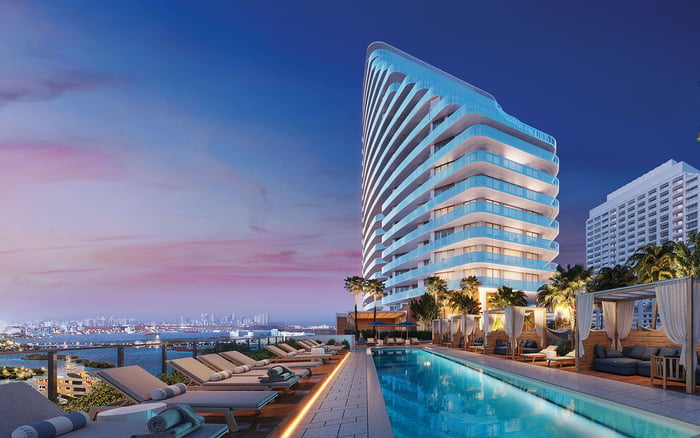
This is why standalone branded residences have become so relevant. They allow a buyer to access the confidence of a global hospitality name while living in a private residential setting. In this context, a project such as Four Seasons Hotel & Private Residences Fort Lauderdale represents one established version of the hotel-connected idea, while the Ritz-Carlton projects in Palm Beach Gardens and Pompano Beach help illustrate the residential-first side of the same broader movement.
The Ritz-Carlton Residences® Palm Beach Gardens is positioned in a South Florida market outside the most saturated Miami luxury-condo corridor. That geography is essential to its identity. Palm Beach Gardens does not read as a substitute for Miami Beach or Brickell. It speaks to a buyer focused on waterfront privacy, boating-oriented living, and a quieter residential rhythm.
In the hotel-backed conversation, Palm Beach Gardens represents the standalone branded-residence model with particular clarity. It is a private-home proposition carrying a Ritz-Carlton service ethos, rather than a project defined primarily by hotel operations. For buyers who value recognition and service but do not want the public cadence of a resort hotel, that distinction is central.
The appeal is also regional. Palm Beach and the northern luxury corridor have their own language: discretion, space, waterfront orientation, and a preference for environments that feel composed rather than crowded. In that setting, the Ritz-Carlton name functions less as spectacle and more as assurance. It signals that service standards and lifestyle expectations have been organized around owners, not short-stay guests.
The Ritz-Carlton Residences® Pompano Beach brings the same larger idea to a different coastal setting. Pompano Beach is a Broward County waterfront market north of Fort Lauderdale, and its relevance lies in how branded residences are expanding beyond Miami and Palm Beach into beachfront and waterfront submarkets with room for a more defined luxury identity.
For years, many high-net-worth buyers defaulted to Miami’s established corridors when discussing branded residential living. Pompano Beach complicates that assumption. It offers a beach-oriented context that is less saturated than Miami’s most familiar luxury addresses, while still participating in South Florida’s broader appetite for service-rich ownership.
Here, the Ritz-Carlton residential positioning emphasizes resort-grade service in a full-time or second-home context. That does not make it a conventional hotel stay translated into condominium form. It places the focus on private ownership, waterfront or beach-oriented living, and the consistency associated with a hospitality brand. Nearby branded and lifestyle projects, including W Pompano Beach Hotel & Residences, show how Pompano Beach is increasingly part of the regional conversation rather than a peripheral footnote.
For buyers comparing this category, the key distinction is not branding alone. It is operating logic. A hotel-attached residence may share a physical campus with a hotel and may participate in a more public hospitality environment. A standalone branded residence, by contrast, may be shaped around the standards, services, and identity of a hospitality company while remaining fundamentally private.
Palm Beach Gardens and The Ritz-Carlton Residences® Pompano Beach belong in the latter discussion. They are relevant because they show that hotel-backed no longer needs to mean hotel-adjacent in the strict physical sense. For many buyers, the more precise phrase is hotel-caliber homes.
That evolution matters for privacy. A residential-first building can be designed around owners’ routines rather than guest turnover. It also matters for identity. The brand becomes a promise of service culture and lifestyle continuity, not merely a marketing label or a connection to a lobby bar.
South Florida’s luxury buyer is increasingly sophisticated about branded real estate. A globally recognized name can help orient expectations, but it does not answer every question. Buyers still need to understand whether a residence is meant for a full-time lifestyle, a seasonal retreat, or a more hospitality-driven ownership pattern.
For Palm Beach Gardens, the buyer lens is privacy and waterfront living with a polished residential service layer. For Pompano Beach, the lens is coastal ownership in an emerging luxury submarket with the recognition of Ritz-Carlton attached to the experience. In both cases, the service platform matters as much as the architecture of hotel connection.
This is also why comparisons across the Ritz-Carlton universe should be made carefully. The Ritz-Carlton Residences® West Palm Beach may speak to a different urban and regional context than Palm Beach Gardens, just as Pompano Beach has a different lifestyle proposition than Miami’s most established luxury corridors. The brand provides continuity, but location still defines how that continuity is lived.
The most important takeaway is that hotel-backed residences are no longer a single category. They now range from hotel-attached properties to standalone branded residences whose principal offering is a private, service-rich ownership experience.
The Ritz-Carlton Residences® Palm Beach Gardens and The Ritz-Carlton Residences® Pompano Beach sit squarely within that evolution. Palm Beach Gardens highlights privacy, waterfront living, and a quieter residential character. Pompano Beach highlights resort-grade service in a beachfront and waterfront market north of Fort Lauderdale. Together, they show how the Ritz-Carlton name is being used in South Florida to serve buyers seeking recognition, consistency, amenities, and discretion in homes they own.
For the ultra-premium buyer, the question is therefore not whether these residences are hotel-backed in the old sense. The better question is whether they deliver the hotel-caliber confidence today’s branded-residence buyer expects, without sacrificing the privacy of home.
Are The Ritz-Carlton Residences® Palm Beach Gardens hotel residences? They are best understood as residential-first Ritz-Carlton branded residences, not classic transient hotel inventory.
How does The Ritz-Carlton Residences® Pompano Beach fit the category? It brings Ritz-Carlton service identity into a private ownership setting in a Broward County waterfront market.
What is the main difference between hotel-attached and standalone branded residences? Hotel-attached residences are tied more directly to hotel operations, while standalone branded residences emphasize private ownership with hospitality-level service.
Why is Palm Beach Gardens significant in this discussion? It shows how hotel-branded living can move into quieter, private waterfront residential environments beyond the Miami condo corridor.
Why is Pompano Beach significant for branded residences? It demonstrates how branded residential projects are expanding into emerging beachfront and waterfront submarkets north of Fort Lauderdale.
Do these projects appeal mainly to second-home buyers? They may appeal to full-time and second-home buyers who want service, recognition, and a private residential setting.
Is a Ritz-Carlton branded residence the same as staying at a Ritz-Carlton hotel? No. The residential model is about ownership, privacy, and service continuity rather than a conventional hotel stay.
Why do high-net-worth buyers value hospitality branding? The brand can signal service consistency, lifestyle expectations, and a recognizable standard of luxury.
Is Pompano Beach becoming more relevant in luxury real estate? Its role is growing within the branded-residence conversation as buyers look beyond Miami’s most saturated corridors.
What should buyers compare before choosing a branded residence? They should compare location, privacy, service model, and whether the building feels residential-first or hotel-driven.
For a confidential assessment and a building-by-building shortlist, connect with MILLION.
If branded residences are on your mind — as a home or as an allocation — we would be glad to share what we are seeing, privately.
Begin a quiet conversation