A buyer-focused comparison of Bay Harbor Towers and St. Regis® Residences Sunny Isles as two distinct South Florida waterfront living choices, shaped by beach access, exposure, and seasonal cadence.
For a certain South Florida buyer, the decision between Bay Harbor Towers and St. Regis® Residences Sunny Isles is not simply about amenity lists or architectural preference. It is a choice between two waterfront typologies: one shaped by the quieter residential cadence of Bay Harbor Islands, the other by the more direct coastal identity of Sunny Isles.
That distinction matters. At this tier of the market, the question is rarely whether a building feels luxurious in isolation. It is whether the daily experience beyond the private elevator lobby supports the way a buyer actually lives in January, April, August, and during the crowded peak weeks when South Florida becomes a global stage.
Bay Harbor Towers belongs in the Bay Harbor Islands conversation, where discretion, neighborhood scale, and a calmer waterfront setting define the appeal. St. Regis® Residences Sunny Isles belongs in the Sunny Isles waterfront luxury conversation, where beach proximity, open coastal presence, and resort-oriented energy sit closer to the center of the proposition.
The shorthand may read Bay Harbor versus Sunny Isles, but the deeper distinction is rhythm. Beach access, oceanfront presence, water-view priorities, and second-home practicality can pull a buyer in different directions, even when both options sit within the broader universe of South Florida waterfront living.
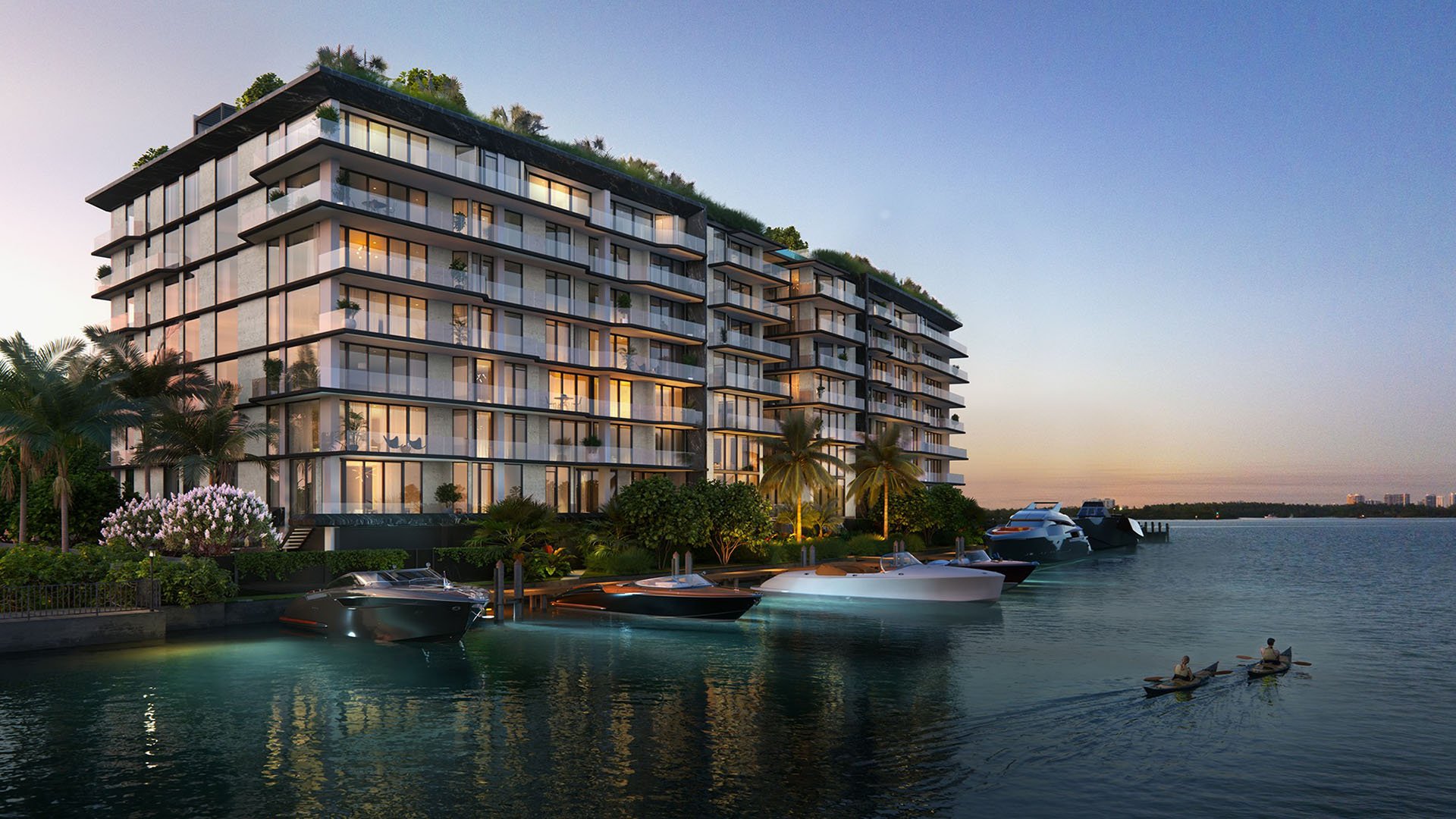
Bay Harbor Towers should be understood first as the Bay Harbor Islands option. Its appeal is not merely that it is waterfront, but that it sits within a setting associated with a more measured residential pace. For buyers who want proximity to the coast without placing the beach promenade at the center of every day, that difference can be decisive.
This is the quieter counterpoint in the comparison. It suits the buyer who values retreat, prefers a more contained neighborhood mood, and sees luxury as the ability to step back from the resort corridor when desired. The experience is less about immediate beachfront theater and more about living within an island context that remains connected to the wider Miami area without feeling exposed to its most visible coastal intensity.
That does not make Bay Harbor Towers understated in a lesser sense. For many high-net-worth owners, understatement is precisely the point. A waterfront residence can be compelling because it provides calm, privacy, and separation, not because it constantly announces its proximity to the sand.
St. Regis® Residences Sunny Isles represents the Sunny Isles side of the equation. It should be read within the context of Sunny Isles waterfront luxury living, where the beach-oriented lifestyle carries a different emotional and practical charge. Buyers drawn to this setting often want the immediacy of a coastal address and the sense of arrival that comes with a more visibly resort-like environment.
Sunny Isles is not interchangeable with Bay Harbor Islands. Its appeal is tied to a more direct relationship with the oceanfront corridor and the established language of high-rise coastal luxury. For buyers who prize beach access as a daily ritual rather than an occasional convenience, that orientation can be powerful.
The trade-off is that the same qualities that create presence can also create a livelier seasonal environment. During peak periods, a buyer should consider how much energy they want around them, how often guests will visit, and whether the desired atmosphere is serene, social, or somewhere in between.
Beach access is often treated as an obvious advantage, but at this level it is more nuanced. The buyer who wants to walk into a beach-centric day with minimal friction may naturally lean toward the Sunny Isles proposition. St. Regis® Residences Sunny Isles fits that picture more directly because it belongs to a waterfront luxury setting where the beach is part of the daily identity.
Bay Harbor Towers asks a different question: how important is immediate beach access compared with a quieter base of operations? Some buyers prefer not to live in the most beach-facing rhythm every day. They may want the coast nearby, but not necessarily the full sensory experience of a beachfront district each time they leave home.
This is where preference becomes highly personal. A family using the residence during school breaks may value ease and energy. A buyer spending long stretches in South Florida may prize discretion and reduced friction in daily routines. Neither answer is inherently superior; each supports a different version of waterfront life.
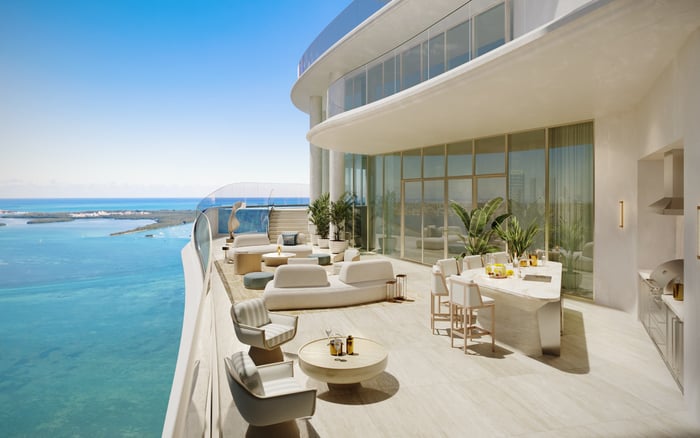
Wind exposure is another quiet variable that sophisticated buyers consider, even when it is difficult to reduce to a simple metric. Open coastal settings can feel exhilarating, with broad air, expansive water presence, and the drama of weather moving across the ocean. That sensation is part of the appeal for many Sunny Isles buyers.
At the same time, exposure shapes how terraces are used, how outdoor living feels across seasons, and whether a residence reads as calm or kinetic at different times of day. Buyers should walk both settings, not only tour interiors. The way the breeze moves through a waterfront neighborhood can influence whether a terrace becomes a true outdoor room or a view-focused perch.
Bay Harbor Islands presents a different sensibility. Its waterfront experience is less about direct oceanfront drama and more about a protected, residential mood. For some owners, that may feel more usable and private. For others, it may lack the open coastal charge they associate with a South Florida second home.
Peak season is when the distinction becomes clearest. South Florida’s most desirable coastal districts all become more animated, but not in the same way. The Sunny Isles environment can feel more visibly connected to the region’s resort and beachfront culture, which many buyers see as a feature rather than a drawback.
That energy matters for entertaining, family visits, and the social aspect of ownership. A residence that feels connected to a vibrant waterfront scene may be exactly what a buyer wants during winter months. The question is whether that same liveliness supports the owner’s weekday routines, privacy expectations, and tolerance for seasonal movement.
Bay Harbor Towers, by contrast, belongs to a framework where the buyer is likely prioritizing a quieter island setting. The attraction is not an absence of activity, but a different relationship to activity. An owner can participate in the wider coastal lifestyle while returning to a more composed residential environment.
Bay Harbor Towers is likely to resonate with the buyer who wants waterfront living filtered through privacy, neighborhood calm, and a more discreet Bay Harbor Islands identity. It is the choice for someone who sees elegance in restraint and does not need the beach to define every hour of ownership.
St. Regis® Residences Sunny Isles is better suited to the buyer who wants the Sunny Isles waterfront experience to be central. If beach access, coastal presence, and a more vivid seasonal atmosphere are priorities, the Sunny Isles option carries the stronger lifestyle signal.
The deciding factor is not which project is more luxurious. It is which version of luxury feels more livable. South Florida rewards buyers who understand that waterfront is not a single category. It can mean open oceanfront theater, protected island calm, or something in between.
The most elegant purchase is often the one that aligns with the buyer’s natural pace. Bay Harbor Towers and St. Regis® Residences Sunny Isles sit in the same broader luxury conversation, but they do not answer the same question. One asks how much quiet one wants around the water. The other asks how closely one wants to live with the beach and its seasonal energy.
A discerning buyer should compare them as settings before comparing them as buildings. Stand in the neighborhood. Consider the arrival sequence. Imagine a holiday week, a quiet weekday morning, and a stormy afternoon. Then ask which address still feels like home.
Is Bay Harbor Towers in Sunny Isles Beach? No. Bay Harbor Towers is the Bay Harbor Islands project in this comparison.
Is St. Regis® Residences Sunny Isles a Bay Harbor Islands property? No. St. Regis® Residences Sunny Isles is the Sunny Isles option in this comparison.
Which option is quieter? Bay Harbor Towers is framed as the quieter Bay Harbor Islands counterpoint for buyers prioritizing a calmer residential setting.
Which option is more beach-oriented? St. Regis® Residences Sunny Isles is the more direct Sunny Isles waterfront luxury choice and aligns more closely with a beach-centered lifestyle.
Is this comparison mainly about amenities? No. The more useful lens is waterfront lifestyle, including beach access, exposure, and peak-season rhythm.
Why does wind exposure matter to buyers? Exposure can affect how outdoor spaces feel, how often terraces are used, and whether the waterfront experience feels calm or dramatic.
Does peak-season crowding affect both settings equally? Not necessarily. The two locations have different coastal typologies, so buyers should evaluate seasonal energy in each setting.
Which is better for a second home? It depends on the desired rhythm. Some second-home buyers want beachfront energy, while others prefer a quieter island base.
Should buyers tour both areas before deciding? Yes. The neighborhood experience is central to the decision and cannot be fully understood through interiors alone.
What is the key decision point? The key decision is whether the buyer values immediate coastal energy or a more discreet waterfront setting.
For a confidential assessment and a building-by-building shortlist, connect with MILLION.
If branded residences are on your mind — as a home or as an allocation — we would be glad to share what we are seeing, privately.
Begin a quiet conversation