A discreet buyer’s guide to choosing between Bay Harbor Islands and Surfside when elite private-school routines, household rhythm, privacy, and resale logic all matter.
For families choosing between Bay Harbor Islands and Surfside, the question is rarely as simple as which address sits closer to a preferred campus. The more important question is how the school day actually unfolds: the wake-up window, the car line, after-school activities, tutoring, dinner, and the parent commute that may follow. Private-school access is not a single convenience. It is a daily choreography.
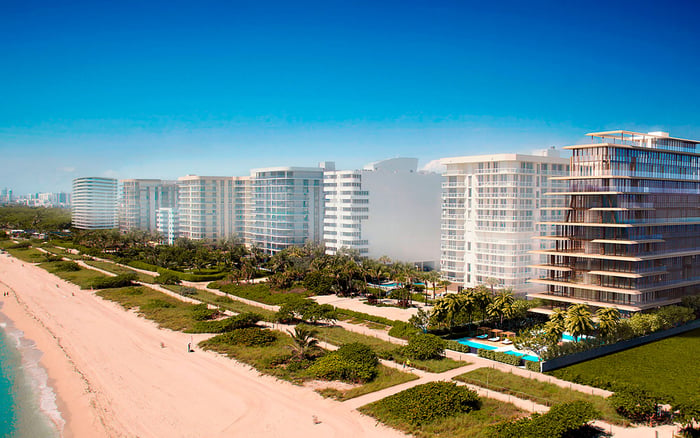
Both areas appeal to buyers seeking a refined residential setting near the northern Miami Beach corridor, yet they create distinct household rhythms. Bay Harbor Islands tends to attract those who value a calmer, more residential waterfront environment. Surfside speaks to families drawn to the emotional immediacy of the beach and the prestige of an oceanfront lifestyle. Neither is automatically superior. The right choice depends on whether your family values quiet approachability, direct coastal living, building type, or a specific school-day pattern.
The most sophisticated buyers do not begin with a brochure. They begin with a week in the life. Who drives in the morning? Is there a nanny, driver, or grandparent involved? Are older children moving between school, sports, and social plans? Does one parent need a rapid route to the office after drop-off? Once those answers are clear, the housing decision becomes far more precise.
Bay Harbor Islands often appeals to families who want privacy without feeling removed from the center of their children’s lives. The atmosphere is less about spectacle and more about measured convenience: a calm return at the end of the day, a sense of neighborhood, and the ability to separate family routine from the intensity of the beach.
For buyers considering newer boutique residences, Alana Bay Harbor Islands represents the type of address that can suit a family seeking a more intimate residential environment rather than a large resort-style tower. That distinction matters when children are part of the equation. Smaller-scale buildings can feel easier to manage day to day, especially when the household moves in waves: morning school run, afternoon pickup, evening guests, and weekend activities.
Bay Harbor Islands can also be appealing for families who want water views and a softer pace without making the beach the central organizing principle of the home. At The Well Bay Harbor Islands, the positioning is more wellness and lifestyle oriented, which may resonate with parents who want the residence itself to support routines beyond school: fitness, recovery, quiet work, and family downtime.
The Bay Harbor decision is ultimately about discipline. If the school commute is acceptable during the actual hours your family will travel, the area can deliver a compelling balance of privacy, access, and residential calm. But buyers should resist evaluating it on a perfect weekend drive. Test the precise morning and afternoon windows before committing.
Surfside is a different proposition. It is still residential in feeling, but the draw is more directly tied to sand, sea, and the emotional value of coastal living. For some families, that is not a luxury add-on. It is the reason to choose South Florida in the first place.
A residence such as Ocean House Surfside fits the buyer who wants the school day to begin and end from a beach-oriented home base. The psychological benefit can be meaningful: children grow up with the ocean as part of ordinary life, while parents preserve the sense that home is a retreat rather than simply a logistical command center.
For buyers considering a more substantial new luxury expression, The Delmore Surfside frames Surfside as a long-term lifestyle decision, not merely a school-access decision. That distinction is important. If the commute works, an oceanfront address can offer a level of permanence and emotional satisfaction that is difficult to replicate inland or across the water.
The tradeoff is that beach living has its own rhythm. Elevators, valet patterns, guest arrivals, beach plans, and seasonal traffic can all influence how a household moves. None of these factors should be viewed as deterrents in isolation. They simply need to be matched honestly against the family’s school calendar and tolerance for complexity.
The strongest school-focused real estate decisions are made before the contract, not after move-in. Families should confirm admissions status, transportation expectations, activity schedules, and the practical realities of pick-up and drop-off. A home that feels ideal at dinner may behave differently at 7:30 in the morning.
Ask whether the school day is predictable or highly variable. Younger children may require more parent involvement and tighter timing. Older students may introduce athletics, performing arts, tutoring, and social commitments that stretch the day across multiple locations. A residence that works beautifully for one stage of childhood may feel less efficient five years later.
Also consider whether the household has one school destination or several. Siblings at different campuses can change the calculus entirely. In that scenario, the winning address may not be the one closest to either school, but the one that minimizes friction across the whole family system.
Boutique buildings can be especially attractive when the goal is ease of movement. Waterfront living can be equally compelling when the residence doubles as a restorative retreat after demanding academic days. The key is to avoid choosing an address for prestige alone. In this category, prestige is most valuable when it makes daily life quieter, not louder.
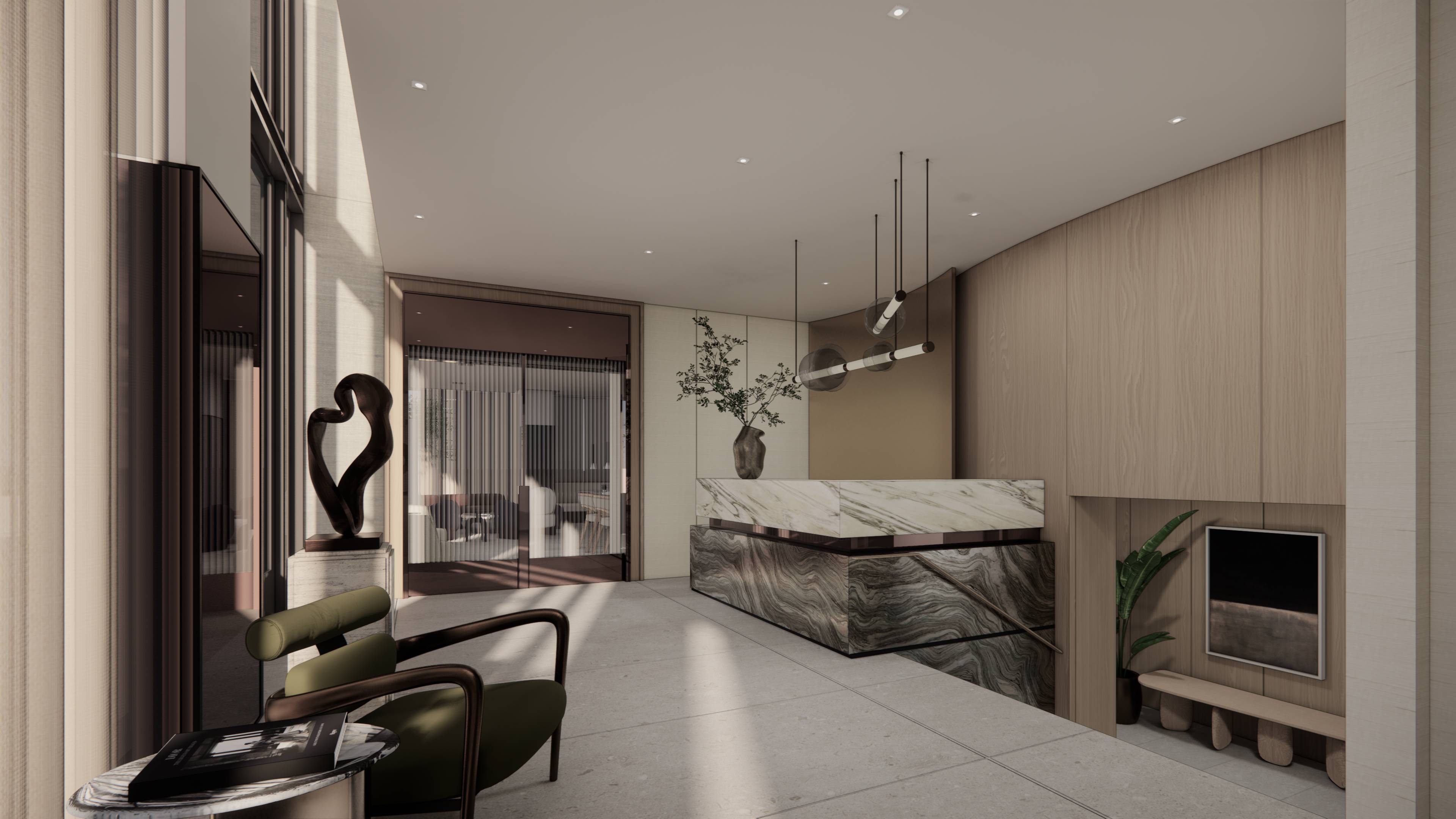
A school-focused family should evaluate the building as carefully as the neighborhood. Parking flow, elevator experience, lobby scale, security, package handling, service access, pet routines, and guest management can shape daily life as much as the distance to campus.
Bay Harbor Islands may appeal to buyers who want a more intimate building experience, especially if they are moving from a single-family home and do not want the operational feel of a very large tower. Surfside may appeal to those who prioritize direct beach identity and are comfortable with the rhythms that accompany a highly desirable coastal setting.
Floor plan matters as well. Families should look for separation between primary and secondary bedrooms, flexible rooms that can function as study or staff space, and enough storage for sports equipment, school materials, luggage, and seasonal wardrobes. A beautiful view will not compensate for a home that cannot absorb the realities of family life.
The best purchase satisfies both the school-year routine and the quiet ambitions of the parents. If the residence is only convenient for school, it may feel temporary. If it is only glamorous, it may become inconvenient. The rare fit does both.
Choose Bay Harbor Islands if your priority is a calmer residential atmosphere, boutique scale, and a home base that feels composed after a busy day. It may be especially compelling for families who value privacy, water orientation, and a quieter sense of arrival.
Choose Surfside if your priority is beach proximity, coastal identity, and the feeling that the residence itself is a defining part of your South Florida lifestyle. It may be especially compelling for families who want the ocean to be part of everyday family memory, not just a weekend destination.
In either case, run the same test. Drive the route at real school times. Time the return trip after activities. Consider rainy days, visiting relatives, household staff, and the parent commute. Then walk through the building as if it were a Tuesday morning, not a sales appointment. That exercise will reveal more than any polished description.
The right answer is the address that reduces daily friction while preserving the reason you wanted to live here in the first place.
Is Bay Harbor Islands or Surfside better for elite private-school access? The better choice depends on the family’s exact school, schedule, and commuting pattern. Test the route during real drop-off and pick-up windows before deciding.
Should school access be the main reason to buy in either area? It should be a major factor, but not the only one. The home must also support privacy, lifestyle, resale logic, and the family’s long-term rhythm.
Is Surfside better for families who want beach living? Surfside is often the more natural fit for buyers who want an ocean-oriented home life. The key is making sure the school routine remains manageable.
Is Bay Harbor Islands better for a quieter residential feel? Bay Harbor Islands may appeal to buyers seeking a more composed, residential atmosphere. It can be a strong fit when daily logistics align.
How should parents evaluate the school commute? Drive it during the exact times your household will travel. A pleasant midday route may not reflect the reality of the school week.
Do building services matter for school-focused families? Yes. Parking, elevators, security, and lobby flow can either simplify or complicate every morning and afternoon.
Should buyers prioritize a boutique building? Boutique scale can be attractive for families seeking ease and privacy. It is most valuable when it fits the household’s daily movement.
Is an oceanfront residence practical with children in school? It can be, if the commute and building operations work smoothly. The lifestyle benefit should not come at the cost of daily stress.
What should families consider beyond the school year? Consider summers, visiting relatives, weekend activities, and how children’s needs may change over time. A flexible residence has greater staying power.
What is the best way to shortlist comparable options for touring? Start with location fit, delivery status, and daily lifestyle priorities, then compare stacks and elevations to validate views and privacy.
For a confidential assessment and a building-by-building shortlist, connect with MILLION.
If branded residences are on your mind — as a home or as an allocation — we would be glad to share what we are seeing, privately.
Begin a quiet conversation