In Bay Harbor Islands, boutique waterfront condominiums are increasingly judged less by height and more by how intelligently they deliver privacy, boating access, wellness, and day-to-day service. This MILLION Luxury editorial examines two of the area’s most discussed low-density offerings, Origin Residences and Onda, through the lens that matters most to sophisticated buyers: building scale, amenity realism, operational intent, and the true cost conversation around HOA budgeting in Florida.
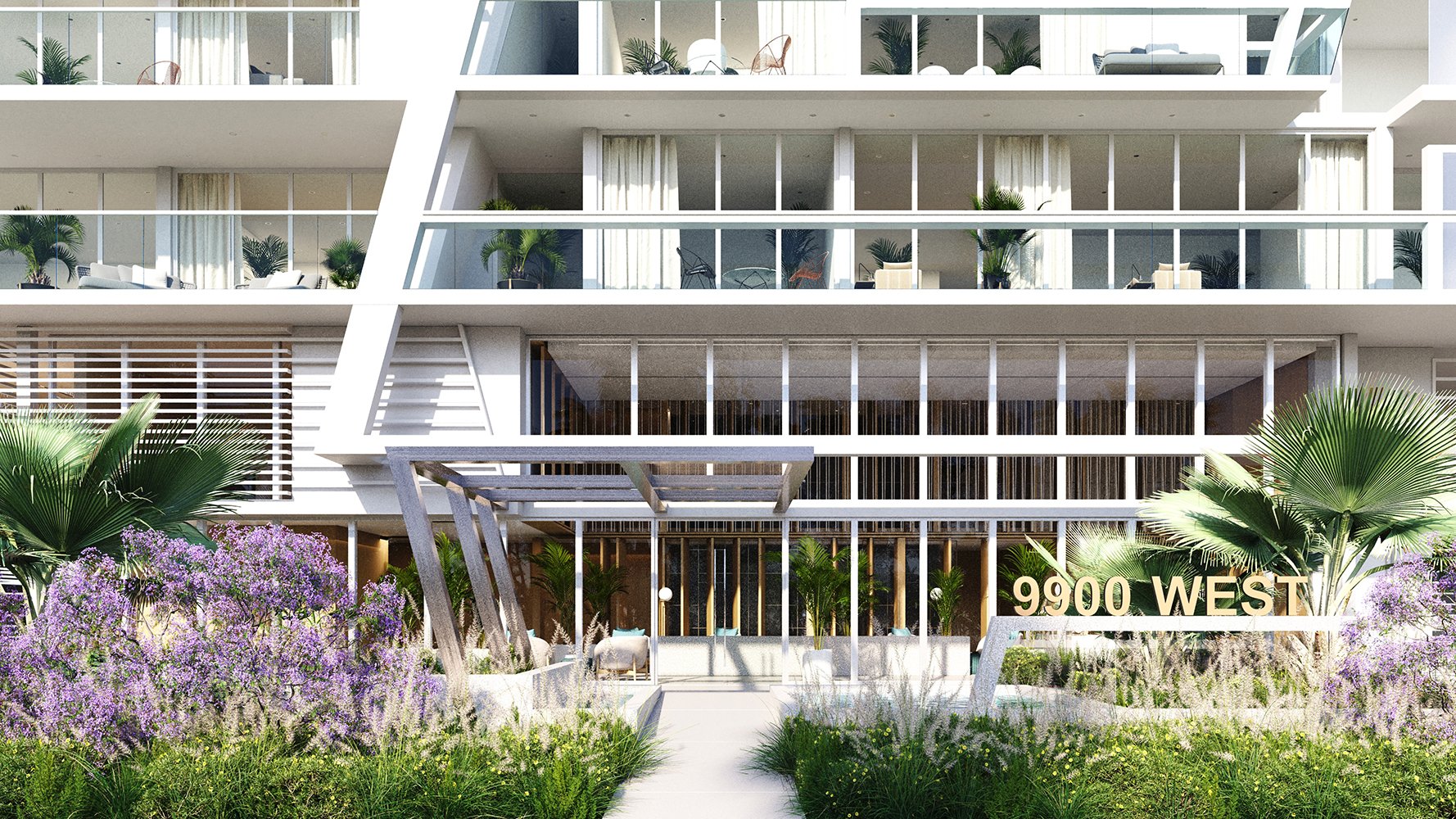
Bay Harbor Islands has become a touchstone for a particular South Florida buyer: someone who wants immediate Miami access without the constant tempo of a mega-tower. The appeal is not only waterfront location, but also low-density inventory and a local culture that prizes discretion. Here, “luxury” is often measured in quiet circulation, controlled entry, and the ability to leave the car parked for days while still feeling connected to Miami Beach, Bal Harbour, and the broader urban core.
That context matters because boutique buildings are not smaller copies of resort towers. They are a distinct product category with a different operating logic. Amenity programs are typically selective rather than sprawling, and staffing is designed to feel intentional, not excessive. The best boutique offerings focus on reducing daily friction: arrivals, storage, connectivity, and boating logistics. In Bay Harbor Islands, those details are not background. They are the product.
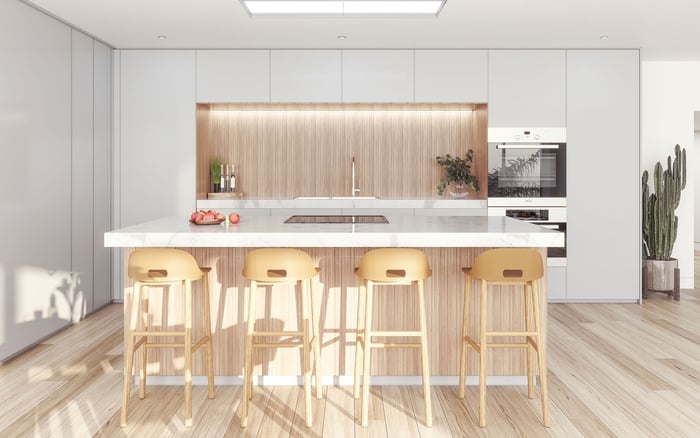
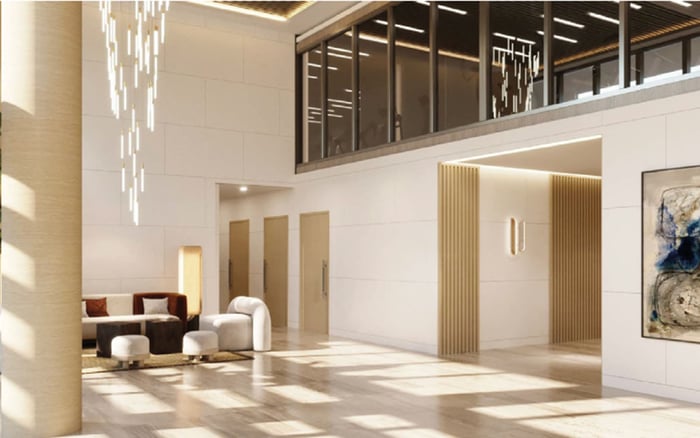
Origin Residences is positioned as a seven-story, 27-residence boutique condominium at 9760 W Bay Harbor Dr. Architecture is credited to Revuelta Architecture, with interiors and branding by Artefacto. In a neighborhood that rewards understatement, that team signals an effort to compete on finish quality and curated atmosphere, rather than sheer amenity volume.
Operationally, Origin is marketed around “personalized services” alongside 24-hour security. In a boutique setting, that combination reads as hospitality intent within a smaller headcount model. The day-to-day conveniences are also clearly prioritized: designated self-parking for all residences, EV charging stations, and Fiber-to-the-Home connectivity for voice, video, and high-speed internet. For buyers splitting time between homes, those are not small line items. They are what makes ownership feel turnkey instead of managerial.
Origin also highlights storage units on every residential floor, an understated advantage in boutique buildings where residents expect efficiency but not an oversized back-of-house. As a pre-construction story, one publicly reported milestone is a $30.5 million construction loan from S3 Capital, with 20 of 27 units under contract at the time of reporting.
In the local development conversation, Origin Bay Harbor Islands aligns with buyers who value a smaller resident roster, design authorship, and predictable daily ease.
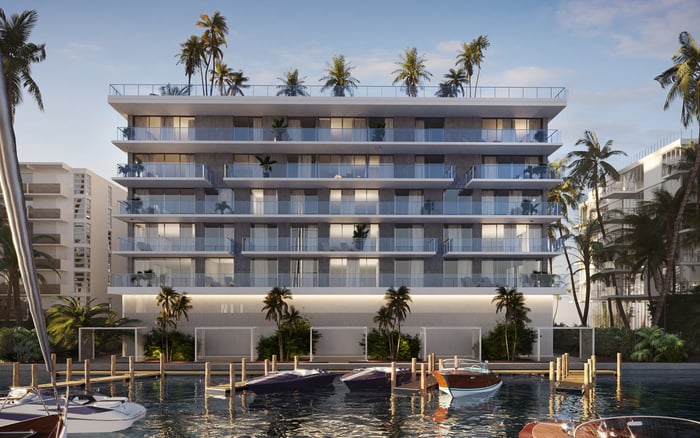
Onda is another boutique waterfront condominium at 1135 103rd St, marketed as 41 residences in an eight-story building. Design credits point to a more overtly modern signature: Arquitectonica (Bernardo Fort-Brescia) for architecture and A++ (Carlo and Paolo Colombo) for interiors.
Its amenity program is framed around wellness and “hotel-style” rhythm. As marketed, Onda includes a fitness center and spa with sauna and steam, plus an indoor yoga studio. The rooftop is positioned as a social extension of the home, with a rooftop pool, summer kitchens, and bar and lounge areas. In a low-density building, that kind of programming is less about excess and more about concentrated impact.
Operationally, Onda lists covered valet drop-off, 24-hour valet parking, a digital concierge, Wi‑Fi throughout public spaces, and 24-hour security with video surveillance. In practice, that combination suggests a building designed to feel actively serviced even when residents are away, a key emotional driver for second-home ownership.
Onda’s boating narrative is also central. It markets a private 14-slip marina for approximately 30 to 55-foot boats and emphasizes boating access via Haulover Inlet.
For buyers seeking boutique scale with a more robust service and wellness stack, Onda Bay Harbor is positioned as a clear reference point.
In South Florida, “waterfront” can mean anything from a view corridor to functional, daily access. In Bay Harbor Islands, boutique buildings increasingly compete on whether water is simply scenery or an operating asset.
Origin markets a private marina concept with eight boat slips for roughly 25 to 40-foot boats, plus a watersports launch for kayaks and paddleboards. Onda, by contrast, markets 14 slips sized for roughly 30 to 55-foot boats and highlights route logic through Haulover Inlet.
For serious boaters, slip count and size range are not decorative talking points. They influence whether ownership feels seamless or negotiated, especially in season when multiple residents may want to bring vessels in and out. For other buyers, the watersports launch can be the more telling detail, signaling an active waterfront lifestyle that is not necessarily yacht-centric. Either way, the Boat-slip conversation is where boutique offerings become truly comparable.
Both buildings market rooftop pools with summer kitchen and bar elements. In a boutique format, the rooftop often becomes the emotional centerpiece because it concentrates amenity value into one high-impact space.
The nuance is capacity and layout. A smaller resident count can make the pool deck feel private by default, but boutique rooftops also have less room for multiple zones. When evaluating any amenity deck, look closely at circulation, shade strategy, and whether the plan reads as calm and residential or more event-forward.
For buyers who want a broader, resort-scale Miami Beach amenity ecosystem rather than a neighborhood rooftop, an oceanfront alternative like 57 Ocean Miami Beach offers a useful contrast in how “amenities” scale when beachfront is the headline.
At the highest tier of ownership, buyers tend to remember not the lobby reveal, but the reliability of daily life.
Origin emphasizes Fiber-to-the-Home connectivity and storage units on every residential floor, along with designated self-parking for all residences and EV charging stations. Onda emphasizes tech-enabled service delivery with a digital concierge and Wi‑Fi throughout public spaces, paired with a valet-centric arrival experience. Both list 24-hour security, and Onda also specifies video surveillance.
The difference is philosophical. Self-parking and floor-level storage speak to autonomy, predictability, and fewer touchpoints. Valet and digital concierge speak to managed convenience and a more attended feel. Neither is inherently superior, but each aligns with a different definition of privacy. Some buyers prefer fewer interactions. Others prefer fewer tasks.
Across Florida, condominium ownership costs rose materially in 2024, with insurance increases and new reserve requirements widely cited as key drivers. In that environment, pre-construction HOA figures deserve disciplined interpretation.
Origin’s HOA or maintenance has been marketed at roughly $1.75 per square foot per month, while Onda’s has been marketed at roughly $0.75 per square foot per month. These figures are marketing estimates and can shift after turnover as insurance, staffing, and reserve funding stabilize.
Rather than treating one number as definitive, sophisticated buyers tend to pressure-test three areas. First, what service philosophy is embedded in the operating plan, since concierge-forward and valet-forward buildings often cost differently than self-parking models. Second, what amenities require ongoing maintenance and specialized vendors, including spa components, rooftop equipment, and marina operations. Third, how resilient the budget is to Florida’s insurance environment and evolving reserve expectations.
The most useful comparison is not only Origin versus Onda. It is boutique ownership versus the buyer’s tolerance for variable operating costs.
Bay Harbor Islands can be an ideal anchor for a primary residence, particularly for buyers who want waterfront calm with quick access to Bal Harbour and Miami Beach. Yet some buyers also want that serenity paired with a more formal, branded-residence cadence on the sand.
That is where Miami Beach offerings can function as a “weekend house” counterpart within a portfolio. Properties such as Setai Residences Miami Beach and The Ritz-Carlton Residences® Miami Beach illustrate a different service promise: more staffing density, more programmed hospitality, and a brand-driven operations culture. For the right buyer, Bay Harbor becomes the private daily retreat, and Miami Beach becomes the polished social address.
The cleanest comparison starts with lifestyle and operating preference.
Choose a smaller resident roster and a pragmatic, autonomy-oriented rhythm if you value self-parking certainty, floor-level storage, and the idea of “personalized services” delivered with discretion.
Choose a more resort-like boutique experience if you prioritize wellness features such as spa and yoga, a valet-first arrival, and a larger marketed marina program with clear emphasis on Haulover Inlet access.
Both are Boutique by design. The difference is what each considers the core luxury: fewer service touchpoints, or more service touchpoints.
Where is Origin Residences located? Origin Residences is a boutique condominium at 9760 W Bay Harbor Dr in Bay Harbor Islands.
How many residences are planned at Origin? Origin is marketed as having 27 residences in a seven-story building.
Who is credited with Origin’s design? Architecture is credited to Revuelta Architecture, with interiors and branding by Artefacto.
What are the headline amenities at Origin? Marketing highlights include a rooftop pool with summer kitchen and bar areas, plus a private marina concept with eight slips and a watersports launch.
Where is Onda located and how large is it? Onda is at 1135 103rd St and is marketed as 41 residences across eight stories.
Who designed Onda? Onda is credited to Arquitectonica for architecture, with interiors by A++ (Carlo and Paolo Colombo).
What wellness features does Onda market? Onda lists a fitness center, a spa with sauna and steam, and an indoor yoga studio.
How does the marina offering compare? Origin markets eight slips sized roughly for 25 to 40-foot boats, while Onda markets 14 slips sized roughly for 30 to 55-foot boats.
What should buyers know about HOA estimates? Pre-construction HOA numbers are marketing estimates and can change after turnover, especially in Florida where insurance and reserve requirements have been major cost drivers.
What is the simplest way to decide between them? Treat the choice as a lifestyle decision: Origin leans toward autonomy and practical luxury, while Onda leans toward valet-supported, wellness-forward living; for curated guidance on Bay-harbor inventory and Boutique pre-construction opportunities, connect with MILLION Luxury.
If branded residences are on your mind — as a home or as an allocation — we would be glad to share what we are seeing, privately.
Begin a quiet conversation