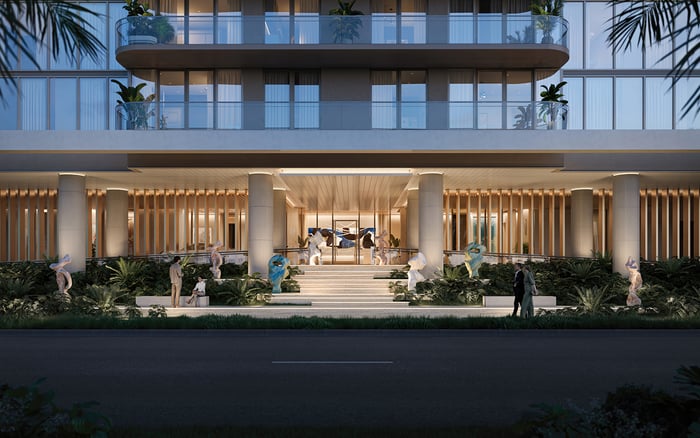
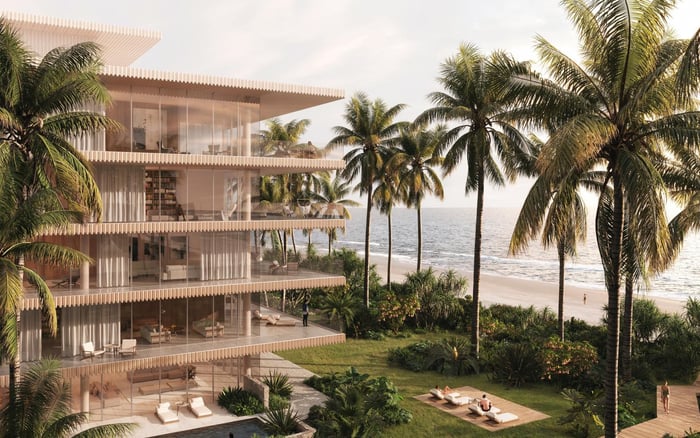
Barrier islands deliver the classic Florida ideal: walkable beaches, maritime light, and a sense of remove that mainland addresses rarely replicate. They also carry a different risk profile, because these sandy landforms are designed by nature to move, erode, and reshape with storms and rising seas. For today’s ultra-premium buyer, the decision is less about romance versus pragmatism and more about how to price lifestyle, maintenance, insurance, and time horizon. Here is how MILLION Luxury frames the trade-offs, plus why select mainland waterfront towers in West-palm-beach are increasingly part of the same conversation.
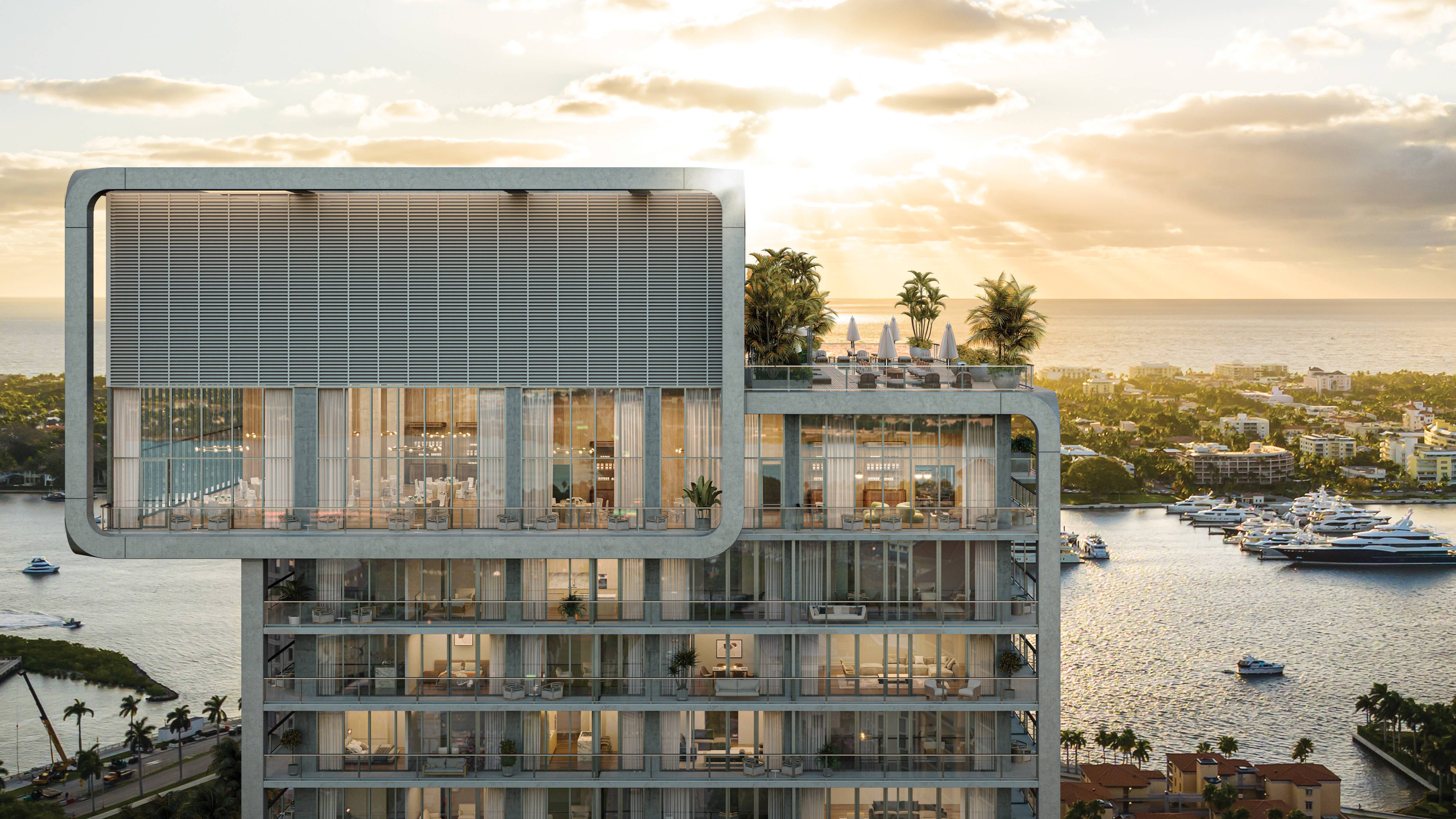
Barrier islands are long, narrow, low-lying sandy landforms that run parallel to the coast, typically separated from the mainland by bays, lagoons, or marshes. The landscape is the Florida postcard: ocean-facing beaches and dunes, then calmer bay-side habitats that support wildlife.
That setting is what creates the premium. A barrier island is not simply “near the water.” It is surrounded by it, with salt air, changing light, and a daily rhythm that reads more resort than suburb. In luxury real estate, the experiential difference can matter as much as square footage.
The same natural qualities that deliver romance also introduce complexity. Barrier islands are dynamic by design. They can migrate, erode, and change shape quickly as storms, currents, and sea-level rise rework the shoreline. For a buyer, the question is not whether an island is beautiful. It is whether the home can perform through extreme weather and shifting insurance conditions while still feeling effortless.
Sea-level rise is increasingly relevant to real estate because a higher baseline water level can amplify flooding frequency and extend storm-surge reach. On barrier islands, that amplification can be more consequential because the land is low, exposed, and heavily influenced by dunes and coastal infrastructure.
A USGS-focused analysis widely reported in 2025 estimated that with roughly 0.5 meters of sea-level rise, a significant share of barrier-island surface area could face daily flooding, with even higher shares flooding in annual and more extreme storm scenarios. For buyers, the point is not a countdown clock. It is that “nuisance” flooding can become a recurring operating condition, and the burden tends to accumulate in small, repeated ways: intermittent access issues, saltwater intrusion, landscape loss, and faster exterior wear.
Storm behavior adds another layer. Modeling of barrier-island breaching during storms suggests that larger breach areas can substantially increase mainland storm-surge inundation, with inundation increasing logarithmically with total breach area. The practical reminder is that island and mainland outcomes are connected. A barrier island’s protective role can shift quickly during extreme events, and consequences can cascade beyond the beach.
In the luxury bracket, buyers often track acquisition price closely while underestimating the cost of preserving optionality: the freedom to hold, rent, or sell without constraints.
Climate-driven losses are reshaping homeowners insurance markets, including higher premiums, tighter underwriting, and reduced availability, especially in high-risk coastal zones. After major storm damage, many homes must meet NFIP “substantial damage” requirements, commonly tied to a 50% damage threshold, to maintain compliant flood insurance. When that threshold is triggered, owners can be pushed toward elevation or major retrofits.
Yale Environment 360 has reported that elevating a flood-prone coastal home to comply with flood standards can run on the order of $100,000 to $200,000+ in some cases, and that public funding can be limited. For an ultra-premium buyer, the specific figure matters less than the timing. Post-event compliance can convert a lifestyle asset into a capital project at precisely the moment you least want one.
This is why barrier-island ownership increasingly resembles an investment decision even for personal-use buyers. It requires a clear time horizon, liquidity for contingencies, and a realistic assessment of how much operational friction you are willing to accept.
Barrier-island pricing often sits well above nearby mainland medians, even when broader regional markets soften.
Florida’s statewide median home price has been around $350,000 in recent statewide snapshots, which helps explain why the “island premium” can look dramatic. In Sarasota County, year-end 2025 data showed a single-family median price of $474,700 and a condo median of $325,000, both down year-over-year. Yet barrier-island submarkets nearby still reported markedly higher typical values: Anna Maria’s median sale price around $1.8M (late 2025 reporting), Siesta Key home values around the $800K range (early 2026), Longboat Key’s median sale price around $905,000 (Dec 2025), and Captiva’s median around $1.3M (late 2025).
At the very top, trophy properties can detach from mid-market softness. Sarasota Magazine reported that the county’s top 2025 sale was the La Serenissima estate at Longboat Key Club for $30.3M, all-cash. The pattern is familiar to South Florida buyers: scarcity, privacy, and prestige can keep the highest tier liquid even as the middle reprices.
Lifestyle is often the deciding factor. Some barrier islands cultivate “old Florida” character with a lower-rise, less commercial feel, and that identity itself can command a premium. In other cases, the appeal is seclusion. Well-known examples outside Florida include islands that are explicitly slower-paced or even car-free, reinforcing the core trade-off: you gain remove, and you give up convenience.
For Miami, Palm Beach, and West Palm Beach households, the modern question is less “island or mainland?” and more “what is your daily life optimized for?” One path prioritizes proximity to bridges, evacuation routes, and a deep service ecosystem. The other prioritizes waking up in a place that feels deliberately separate, with the ocean as a constant presence.
Across South Florida, demand for $5M+ waterfront single-family homes was described as strong in 2025, supported by constrained supply in coastal cities. That strength has a side effect: it pulls attention toward high-quality condos that can deliver waterfront presence with fewer moving pieces than a standalone house.
In West Palm Beach, new construction on waterfront and near-water corridors is increasingly positioned for buyers who still want a coastal lifestyle, but prefer shared resilience planning, professional management, and a more predictable maintenance cadence.
A buyer considering The Ritz-Carlton Residences® West Palm Beach is often weighing discretion and service against the operational complexity of a private coastal home. Similarly, Mr. C Residences West Palm Beach can appeal to owners who value a lock-and-leave profile while maintaining a strong connection to the water-oriented lifestyle that defines the region.
Barrier islands can be a magnificent choice when the purchase is structured with eyes open. The goal is to translate “risk” into underwriting.
First, separate elevation and exposure from brand or view. Two properties with the same oceanfront language can perform very differently depending on micro-topography and how water routes through surrounding streets.
Second, treat insurance as a primary diligence workstream, not a closing-day formality. Availability and pricing can move quickly, and the gap between “insurable on today’s terms” and “insurable after the next major event” is where long-term ownership stress often begins.
Third, understand post-storm compliance. If substantial damage rules are triggered, required scope can alter the economics of holding, renovating, or rebuilding.
Finally, be honest about usage. If you are a true second-home owner who visits selectively, the friction of storm preparation, access interruptions, and contractor scheduling may outweigh the romance. If you live on-island full time and value the identity, the premium can still feel rational.
Mainland coastal living works best when it is intentionally chosen, not treated as a compromise.
For buyers who want daily water views and walkability without island-style logistics, buildings like Alba West Palm Beach can be a contemporary answer: a primary residence that reads as modern, central, and convenient, while still delivering the psychological benefit of living beside the Intracoastal environment.
Along Flagler Drive, Forté on Flagler West Palm Beach and Shorecrest Flagler Drive West Palm Beach often enter the conversation for buyers who prioritize sunrise light, waterfront frontage, and a simpler ownership profile. For many West Palm Beach households, this is the sweet spot: coastal atmosphere with a more controlled operating environment.
Barrier islands remain an unmatched expression of the Florida ideal, and the best properties can be generational. Yet the market is steadily repricing what it means to own in a place that nature continually reshapes.
A clean framework helps.
Define the non-negotiables: privacy, beach access, boating, walkability, or service.
Put a number on friction: How many “ownership days” per year are you willing to spend on preparation, repair, and vendor coordination.
Underwrite the carry: insurance variability, potential retrofit exposure, and the probability that you will need liquidity at the wrong moment.
Match structure to life: For some, the island house is the point. For others, a well-chosen mainland condo delivers the same emotional payoff with fewer operational surprises.
What is a barrier island, in plain terms? A barrier island is a long, narrow sandy landform parallel to the coast, usually separated from the mainland by a bay or lagoon.
Why do barrier islands command such high prices? They offer direct coastal lifestyle benefits: beach access, immersion in the maritime setting, and a sense of separation that is hard to replicate.
Are barrier islands more vulnerable to storms? They are low-lying and dynamic, and storms can reshape them, which can increase disruption and damage risk relative to many mainland sites.
How does sea-level rise affect real estate decisions? Higher baseline water levels can increase flooding frequency and extend storm-surge reach, changing long-term carrying costs and usability.
Can barrier islands protect the mainland? Yes. Beaches, dunes, and vegetation can absorb wave energy and reduce surge impacts, although performance can change during extreme events.
Why is insurance such a big issue now? Climate-driven losses have contributed to higher premiums, tighter underwriting, and reduced availability in high-risk coastal areas.
What does “substantial damage” mean for owners? After major damage, some homes may need to meet NFIP compliance rules, which can require elevation or major retrofits.
Do trophy sales still happen in storm-sensitive markets? Yes. Ultra-luxury trades can remain active because scarcity and prestige can outweigh broader market softness for certain buyers.
Is mainland waterfront living a compromise? Not necessarily. For many, a managed condo on the water provides a coastal lifestyle with more predictable maintenance and access.
What should I decide first: lifestyle or risk tolerance? Decide lifestyle first, then buy the structure and location that deliver it with a risk profile you can comfortably carry.
For tailored guidance on South Florida waterfront living, connect with MILLION Luxury.
If branded residences are on your mind — as a home or as an allocation — we would be glad to share what we are seeing, privately.
Begin a quiet conversation