A buyer-oriented look at how lobby seating at Alba West Palm Beach should be evaluated for privacy, discretion, circulation, and day-to-day comfort.
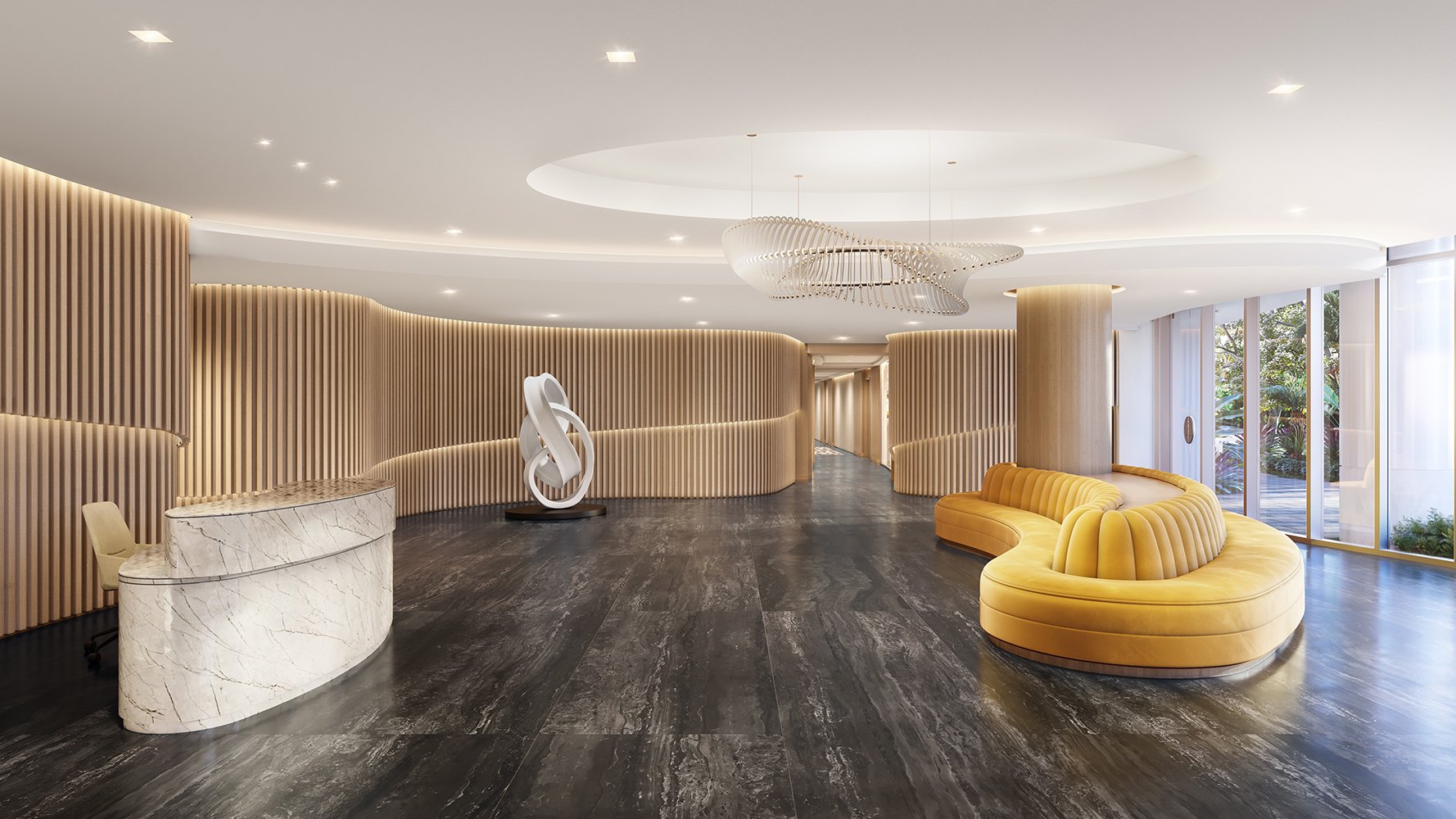
At Alba West Palm Beach, lobby seating is more than a decorative first impression. For a household considering a luxury condominium, it becomes part of the privacy experience: the place where arrivals are softened, guests are greeted, children pause, calls are taken, and daily transitions either feel composed or exposed.
Luxury buyers often focus first on residence interiors, views, amenity spaces, and service levels. Those elements matter, but the lobby is where private life meets the building’s shared environment. A beautifully designed lobby can still feel uncomfortable if every chair sits in full view of the entry, concierge, elevator bank, delivery path, or valet flow. Conversely, a quieter seating plan can make a building feel more residential, more discreet, and more aligned with the rhythms of an owner’s actual day.
For households evaluating Alba West Palm Beach, the question is not simply whether the lobby looks impressive. It is whether the seating gives residents choice. Can someone sit visibly while waiting for a guest, yet also find a calmer corner when privacy matters? Does the room support social ease without making every pause feel public? These are daily livability questions, not ornamental details.
A useful test is simple: imagine waiting for a car, greeting an arriving guest, or sitting briefly with a child. Would that moment feel observed from every major circulation path, or would the lobby allow a softer degree of separation?
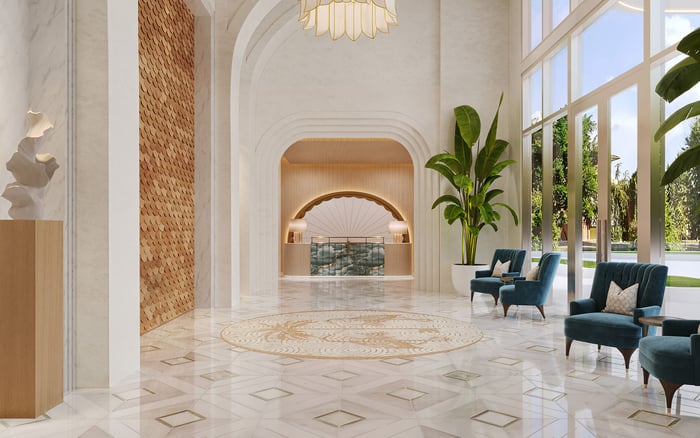
This is where sightlines matter. Open, dramatic layouts can create a strong arrival sequence, especially in luxury buildings where scale and visual impact are part of the experience. Yet that same openness can leave seated residents too visible if chairs face directly toward the main doors, concierge station, elevator approach, or guest reception flow. Privacy is not created only by doors. It can come from orientation, spacing, partial screening, corners, columns, plants, and subtle changes in furniture grouping.
Buyers should look for a balance between sociable seating and more tucked-away options. A pair of chairs near the heart of the lobby may be useful for greeting guests. A quieter grouping slightly removed from the most active path may be better for a phone call, a delayed pickup, or a family member who prefers not to sit in the center of the room. The best lobby seating does not force every resident into the same level of exposure.
A lobby is not a static showroom. It is a working threshold. Residents enter and leave, guests check in, staff assist, packages and deliveries move through controlled paths, and cars may be coordinated outside. Seating that looks elegant in a rendering can feel less private if it sits too close to those moving parts.
Seating near valet, drop-off, elevators, concierge, or delivery routes may be convenient, but convenience can come at the cost of discretion. If a resident is seated within the building’s most active zone, every passing interaction becomes part of the experience. That may be acceptable for a short wait, but it is less appealing when a household wants a calm transition from public life to home.
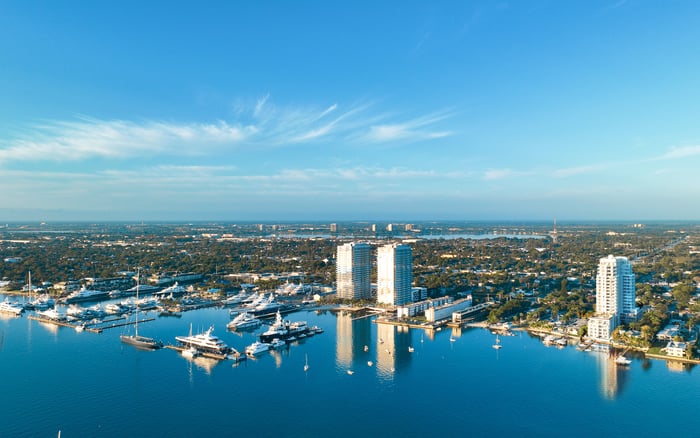
This is particularly important in a boutique luxury context. Boutique does not simply mean smaller or more intimate in a visual sense. It implies that common areas should feel like extensions of home rather than hotel-like public spaces. The lobby should support recognition and hospitality without producing the sensation of being on display. For a West Palm Beach household comparing Palm Beach expectations, the language may include boutique, new-construction, and waterview appeal, but the quiet measure is still how comfortably daily life moves through shared space.
Privacy is not only about solitude. It is also about ease. Households with children may need a place to pause while coordinating bags, strollers, rides, or visiting relatives. Older family members may appreciate seating that is calm, legible, and removed from heavy foot traffic. Frequent guests may need a welcoming place to wait that does not feel like a stage.
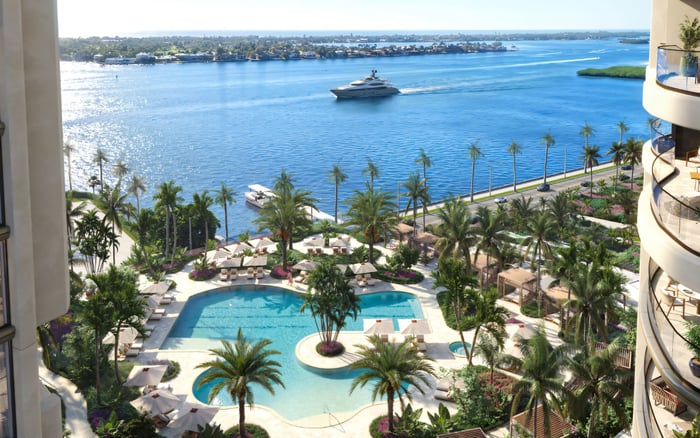
Waterfront living can add more arrival-and-waiting moments. Beach bags, outdoor plans, visiting friends, and transitional routines can all pass through the lobby. In that setting, seating should provide a sense of composure. The ideal is not to hide residents away, but to let them pause without feeling watched by every arriving guest or passing neighbor.
For buyers, this makes the tour more practical. Do not only admire materials and lighting. Stand where the seating is placed. Look toward the entrance, elevators, concierge, and primary walking routes. Consider whether a family member could wait there comfortably for five or ten minutes. Consider whether a guest could be greeted warmly without disrupting access-control activity. The right answer depends on the household, but the evaluation should be deliberate.
Renderings often emphasize symmetry, drama, and the most photogenic angle of a lobby. That can be useful, but it is not the same as understanding how the space will feel in use. A buyer should ask whether the seating is designed primarily for visual impact or for real resident behavior.
Look for clues. Are chairs grouped only in the center of the room, or are there varied zones? Are seats angled toward active circulation, or do some face inward for quieter conversation? Do architectural elements create natural privacy pockets? Is there a place to take a brief call without becoming part of the lobby’s social theater?
The most refined buildings understand that privacy has layers. A resident may want to be visible to a guest one moment and quietly removed the next. A lobby that offers both possibilities feels more considered than one that relies only on grandeur.
At Alba West Palm Beach, lobby seating should be judged as part of the residence experience. It belongs in the same conversation as finishes, views, amenities, and service because it affects daily comfort in subtle but repeated ways.
The strongest approach is to evaluate exposure, choice, and circulation together. A lobby can be beautiful and still miss the mark if seating conflicts with movement or access control. It can also be visually restrained and highly successful if it gives households calm, flexible places to pause. For discerning buyers, that distinction is often where true residential luxury begins.
Why does lobby seating privacy matter at Alba West Palm Beach? It shapes how exposed residents feel while entering, waiting, greeting guests, or coordinating daily arrivals.
Should buyers treat lobby seating as an amenity? Yes. It is part of the building’s livability, even when presented as a design feature.
What is the simplest privacy test during a tour? Sit where residents are expected to wait and check whether you feel visible from the entry, elevators, concierge, and main circulation paths.
Is open lobby design a problem for privacy? Not necessarily. Open layouts can feel elegant, but they need seating zones that soften exposure.
Where can lobby seating become too public? Seating near valet, drop-off, elevator approaches, concierge activity, or delivery paths may feel overly exposed.
What should families look for in lobby seating? Families should look for calm waiting areas where children, relatives, or guests can pause without blocking circulation.
Can furniture placement improve privacy? Yes. Orientation, spacing, plants, columns, corners, and partial screens can create more discreet seating zones.
Does boutique luxury make lobby privacy more important? Often, yes. Boutique living tends to heighten expectations that shared spaces feel residential rather than public.
Should buyers rely on renderings to judge the lobby? Renderings are useful, but buyers should focus on how seating will function in daily resident life.
What is the best way to shortlist comparable options for touring? Start with location fit, delivery status, and daily lifestyle priorities, then compare stacks and elevations to validate views and privacy.
For a discreet conversation and a curated building-by-building shortlist, connect with MILLION.
If branded residences are on your mind — as a home or as an allocation — we would be glad to share what we are seeing, privately.
Begin a quiet conversation