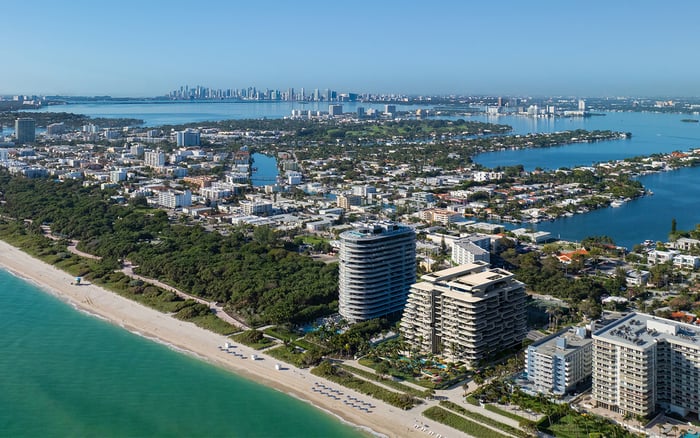
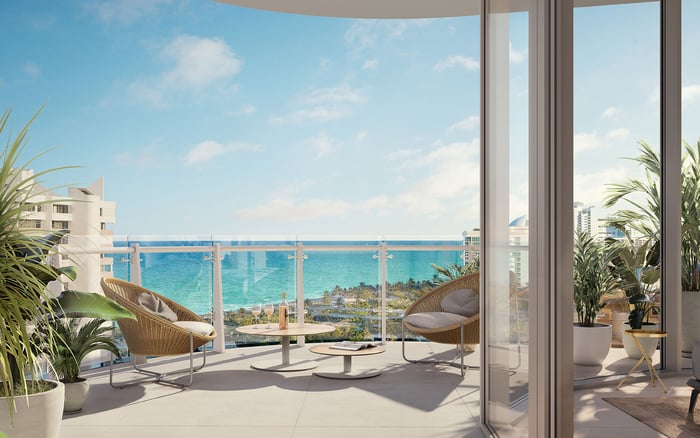
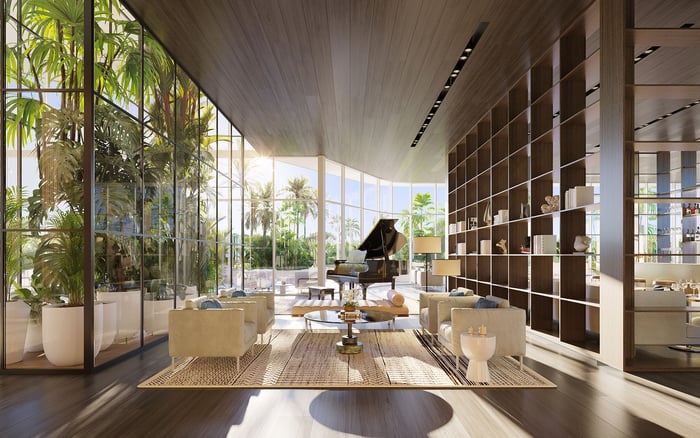
A buyer-focused comparison of The Delmore Surfside and Waldorf Astoria Residences Pompano Beach through the lens of smart-home readiness, privacy expectations, and service responsiveness.
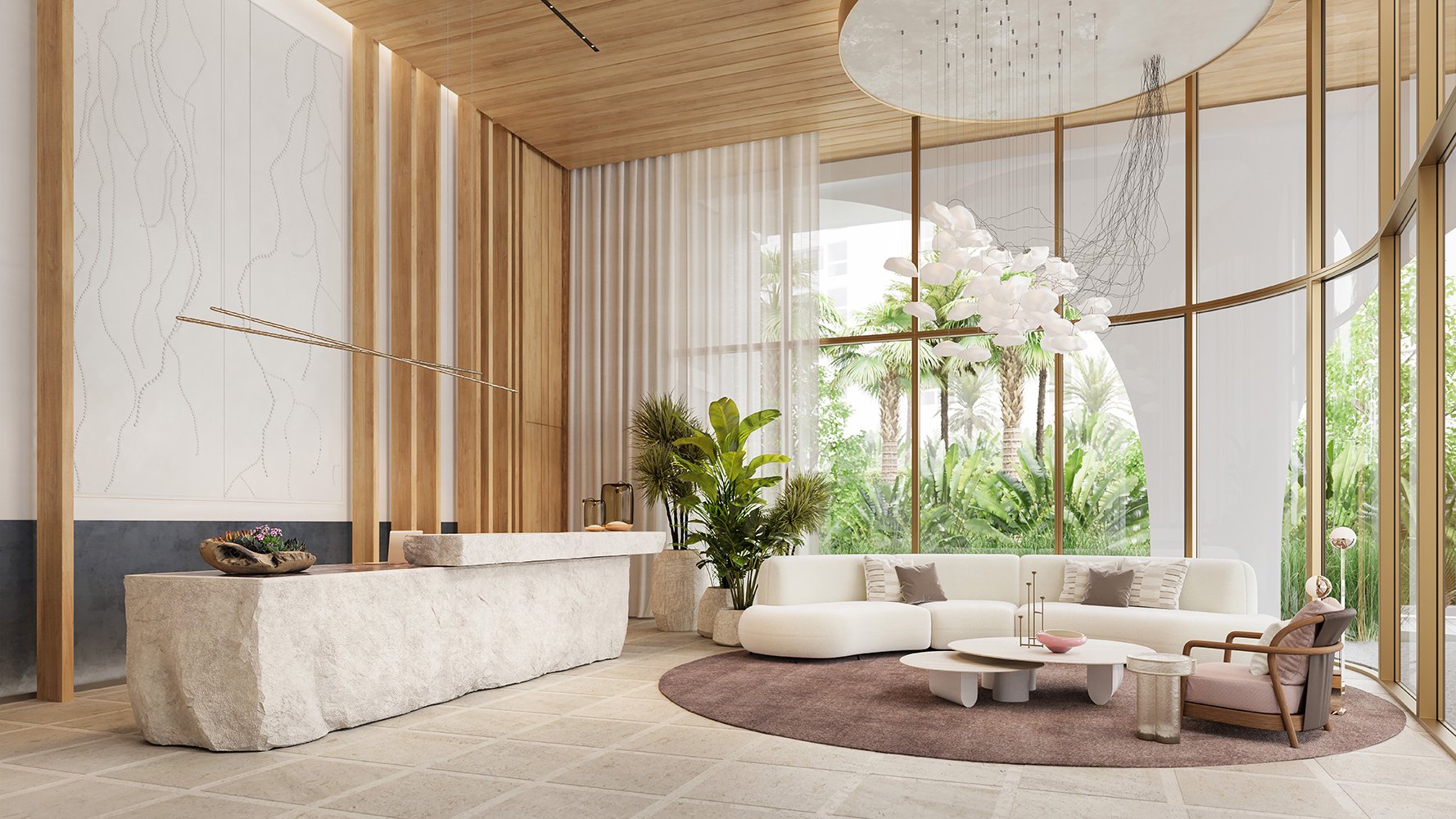
For South Florida’s most discerning condominium buyers, prestige still begins with place, proportion, arrival sequence, and the quiet confidence of a well-conceived residential experience. Yet the conversation now extends beyond finishes and views. At the highest level, a residence is expected to behave intelligently, protect personal information, and respond to service needs with the same composure it brings to design.
That is why a comparison between The Delmore Surfside and Waldorf Astoria Residences Pompano Beach is less about declaring a universal winner and more about asking sharper questions. Both names sit within a luxury vocabulary familiar to buyers who value privacy, branded or highly curated service, and a coastal way of living. The more revealing distinction is how each opportunity should be evaluated for smart-home readiness, data privacy, and operational responsiveness.
For buyers moving from a single-family estate, a pied-à-terre, or another high-service building, the decision is increasingly technical. The right residence must support daily life without making technology feel visible or burdensome. It must allow staff, family, guests, vendors, and management to interact with the home in controlled, legible ways. And it must make service feel immediate without making the owner feel exposed.
Smart-home readiness is often reduced to a sales phrase, but sophisticated buyers should treat it as a practical audit. The question is not simply whether a residence can accommodate lighting scenes, shades, climate control, security, audio, or access management. The more important question is whether those systems are designed to work together, to be upgraded, and to be serviced without disrupting the home.
At The Delmore Surfside, buyers should frame the conversation around discretion and integration. A Surfside residence is often chosen for composure, privacy, and a sense of sanctuary. In that context, the best technology is nearly invisible. Controls should feel intuitive, interfaces should remain consistent, and the home should avoid unnecessary complexity. If a buyer expects a retreat-like environment, smart-home infrastructure should reduce friction rather than introduce a technical learning curve.
At Waldorf Astoria Residences Pompano Beach, the evaluation may lean more toward service choreography and branded-residential expectations. A buyer considering Waldorf Astoria Residences Pompano Beach should ask how in-residence controls connect to the broader service environment, what can be requested digitally, and what remains best handled through direct staff interaction. The most polished buildings know when technology should support service and when a human response is the true luxury.
In either case, new-construction buyers should request clarity early. Prewiring, network architecture, equipment locations, third-party compatibility, warranty treatment, and upgrade pathways all matter. A residence may feel future-ready at launch, but the better test is whether it can remain elegant five or ten years after delivery.
Privacy in luxury real estate has traditionally meant controlled arrival, private elevators, secure parking, and limited visibility. Those elements still matter. But modern residential life adds a second layer: data privacy. Every connected thermostat, door system, camera, app, digital key, service platform, and building portal creates a question of access.
For a buyer at The Delmore Surfside, the privacy conversation should include who controls device credentials, how guest access is issued, how former vendors are removed, and how ownership transitions are handled. A beautifully designed residence can be undermined by casual password practices or unclear permissions. Buyers should expect a clean handover protocol that separates developer, installer, building, owner, and third-party access.
For Waldorf Astoria Residences Pompano Beach, the same issues apply with added emphasis on service touchpoints. If convenience is mediated through a digital platform, buyers should understand what personal data is collected, who can view service requests, how long records are retained, and whether household staff can be assigned limited permissions. True luxury allows an owner to delegate without surrendering control.
This is especially important for owners who divide time among several homes. A South Florida residence may be occupied by the owner, family members, guests, or staff at different times of the year. Smart access should allow temporary privileges, scheduled permissions, and swift revocation. It should not require sharing master credentials or relying on informal workarounds.
Oceanfront expectations often focus on the view, but the most sophisticated owners increasingly place digital exposure in the same category as physical exposure. If a building can explain its privacy approach with precision, that is a meaningful signal. If answers are vague, the buyer should slow down.
Architecture creates the first impression. Service creates the lasting one. The practical difference between good and exceptional residential service often appears in small moments: a climate issue before guests arrive, a package that requires special handling, a vendor who needs timed access, a recurring maintenance item, or a request made while the owner is out of state.
At The Delmore Surfside, service responsiveness should be evaluated through the lens of calm residential privacy. Buyers should ask how requests are logged, who receives them, how escalation works, and whether there is a clear distinction between building maintenance, in-residence technology support, and lifestyle service. A refined building should not require the owner to diagnose the problem before seeking help.
At Waldorf Astoria Residences Pompano Beach, buyers may have heightened expectations because the name itself suggests a hospitality-informed standard. The important question is how that standard translates in a private residential setting. A hotel sensibility can be powerful, but permanent residences require continuity, memory, and discretion. The best service teams remember preferences without overstepping, anticipate recurring needs without becoming intrusive, and coordinate vendors without exposing the owner to operational noise.
For Pompano Beach buyers comparing coastal options, responsiveness is also a measure of confidence. When technology, staff, and building protocols are aligned, the residence feels effortless. When they are not, even an impressive property can feel administratively demanding.
The Delmore Surfside may appeal to buyers who place exceptional value on restraint, privacy, and the quiet discipline of a Surfside address. For that buyer, smart-home readiness should be judged by invisibility, control, and the ability to create a serene environment. The ideal result is a residence that supports modern living without calling attention to its systems.
Waldorf Astoria Residences Pompano Beach may appeal to buyers who want prestige with a stronger service narrative and a lifestyle structure that feels more closely connected to hospitality. For that buyer, the critical test is whether technology enhances responsiveness without diluting privacy. Digital convenience should never feel like surveillance, and service should never depend solely on an app.
Neither answer is inherently superior. They solve different versions of the same luxury problem. One buyer may want the technological equivalent of a silent butler, always present and rarely visible. Another may want a more explicit service ecosystem, with faster coordination and a recognizable hospitality cadence.
The strongest purchase decision will come from matching the building’s operational personality to the owner’s real life. A family with staff, frequent guests, and multiple residences may prioritize access management and service escalation. A privacy-focused owner may prioritize system independence, limited data exposure, and quiet control. A design-led buyer may care most about whether keypads, speakers, sensors, and interfaces disappear into the architecture.
Before making a decision, buyers should ask for written clarity on several points. Which smart-home systems are standard and which are optional? Who installs, maintains, and updates them? Can the owner choose preferred vendors? Are building systems separated from in-residence systems? What happens when ownership changes? How are digital keys, guest access, and staff permissions managed?
Equally important is the human side. Who answers when something fails? Is there a single point of contact? What is the expected response pathway after hours? How are recurring issues tracked? Can the owner’s representative communicate directly with management? Does the building distinguish between urgent, scheduled, and concierge-style requests?
These questions may feel less glamorous than materials and amenities, but they often determine how a residence lives. In the ultra-premium market, the most valuable homes are not only beautiful. They are intelligible. They have rules, protocols, and service rhythms that protect the owner’s time.
For buyers weighing The Delmore Surfside against Waldorf Astoria Residences Pompano Beach, the choice should be approached as a comparison of operating systems as much as aesthetics. The most compelling residence is the one whose technology, privacy posture, and service culture align with the owner’s habits.
Is smart-home readiness the same as having smart devices installed? No. Readiness also includes wiring, network planning, service access, upgrade paths, and the ability for systems to work together elegantly.
Why does data privacy matter in a luxury condominium? Connected access, service requests, cameras, apps, and guest permissions can all reveal personal patterns if they are not properly controlled.
Should buyers compare The Delmore Surfside and Waldorf Astoria Residences Pompano Beach only by amenities? No. Amenities matter, but the more durable comparison includes privacy, service standards, technology integration, and day-to-day usability.
What should a buyer ask about digital access? Ask who can create credentials, how guest or staff access is limited, and how permissions are revoked when no longer needed.
Is branded residential service always more responsive? Not automatically. Buyers should understand the actual service pathway, staffing model, escalation process, and after-hours protocol.
Can smart-home systems affect resale appeal? Yes. Systems that are intuitive, maintainable, and upgradeable can support long-term desirability, while overly complex systems can become a burden.
What is the biggest technology risk for seasonal owners? The main risk is unclear remote management, especially if access, climate, vendors, and alerts are not controlled through secure protocols.
Should owners use one integrated platform or separate systems? The best answer depends on the residence, but buyers should favor stability, serviceability, and clear ownership of credentials over novelty.
How can a buyer evaluate service responsiveness before closing? Request a clear explanation of request handling, escalation, response expectations, and communication with owner representatives.
Which project is better for a privacy-focused buyer? The better choice is the one that provides clearer controls over access, data, vendors, and service interaction for that buyer’s lifestyle.
For a confidential assessment and a building-by-building shortlist, connect with MILLION.
If branded residences are on your mind — as a home or as an allocation — we would be glad to share what we are seeing, privately.
Begin a quiet conversation