A buyer-focused look at why proximity to refined retail can deepen the appeal, daily utility, and long-term positioning of luxury residences in and around Bal Harbour.

In Bal Harbour, proximity to shops is more than a convenience. For a certain buyer, it is part of the residential experience itself: the ability to move from a private home into a polished retail setting, handle an errand discreetly, meet for coffee, select a gift, or pass through an afternoon without relying on a car at every turn.
That ease matters because ultra-luxury real estate is increasingly measured by the quality of time it gives back to the owner. A residence may offer water views, refined finishes, and resort-caliber service, but its surrounding fabric determines how it lives day to day. When a home sits near elegant shopping, dining, and everyday services, it becomes more than a retreat. It becomes a base for a highly edited life.
Bal Harbour’s residential identity rests on that quiet balance: privacy without isolation, access without congestion inside the home, and a social rhythm that can be dialed up or down. For buyers comparing oceanfront and near-ocean residences, retail integration often becomes a subtle but meaningful differentiator.
The phrase “walkable” can feel too casual for this market. In Bal Harbour, the more precise idea is composed proximity. It is not density for its own sake. It is a select set of places close enough to use naturally, without sacrificing the serenity expected from a luxury address.
This is especially relevant for second-home owners and seasonal residents. They may arrive for a long weekend and need the residence to function immediately. Close retail reduces friction: fewer logistics, fewer scheduled drivers, fewer lost hours. The best locations allow an owner to move through the day with spontaneity, then return to a private, service-rich building.
That same ease shapes the guest experience. Family members can explore independently. Friends can meet nearby without complicated directions. A dinner reservation, boutique visit, or morning appointment becomes part of the neighborhood rhythm rather than a production.
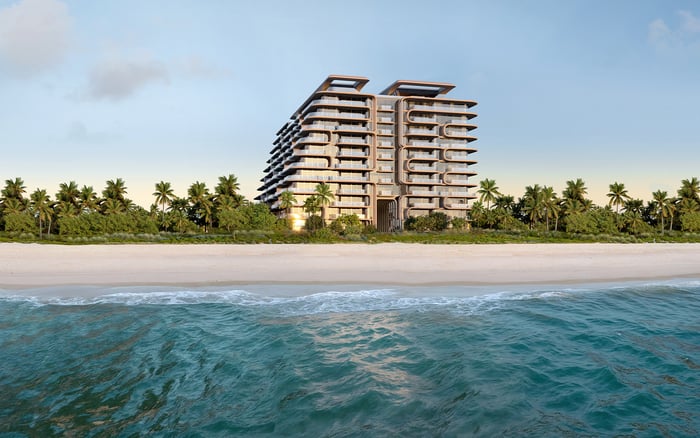
A luxury residence is never evaluated in isolation. Its architecture, amenity program, and interiors matter deeply, but surrounding context often determines how enduring the address feels. Buyers looking at Rivage Bal Harbour are not only considering the private residential offering. They are also weighing how the Bal Harbour setting supports a complete ownership lifestyle.
The same principle applies to Oceana Bal Harbour, where the residential conversation naturally includes access, privacy, and neighborhood prestige. In this segment, convenience is rarely framed as a bargain feature. It is understood as a form of refinement. The fewer compromises an address asks of its owner, the stronger its lifestyle proposition becomes.
Retail proximity can also clarify the emotion of a purchase. Buyers may be comparing several beautiful buildings along the coast. The residence that feels easiest to inhabit, easiest to return to, and easiest to share with family often rises to the top.
Investment in luxury real estate is not only about near-term market movement. It is about the durability of desirability. A home near strong retail has an everyday use case that remains legible across buyer profiles: primary residents, seasonal owners, international families, and those seeking a lock-and-leave coastal base.
This does not mean every residence near shops automatically holds a stronger position. The building still needs the fundamentals: architecture, privacy, service, floor plan quality, light, views, parking, arrival sequence, and maintenance standards. But when those fundamentals are paired with convenient access to a refined retail environment, the ownership story becomes easier to understand.
For resale, clarity matters. A future buyer should be able to grasp the lifestyle in minutes. If a property offers both sanctuary and immediate access to the neighborhood’s polished amenities, it communicates its value without excessive explanation. That is often the quiet strength of retail-integrated luxury living.
Bal Harbour’s retail adjacency also shapes how buyers view nearby Surfside. The two markets are distinct, yet close enough in lifestyle conversation that many sophisticated purchasers compare them carefully. Surfside can appeal to those who want a residential tone near the same northern Miami Beach orbit, while remaining connected to broader coastal convenience.
Residences such as Ocean House Surfside and Fendi Château Residences Surfside enter the discussion for buyers seeking a quieter coastal feel with proximity to Bal Harbour’s shopping and dining patterns. The deciding factor is often personal: some buyers prioritize the most direct Bal Harbour position, while others prefer the texture of Surfside with nearby access.
The key is not to reduce the decision to distance alone. A buyer should consider arrival experience, building scale, amenity tone, beach access, views, service culture, and how often retail proximity will be used in daily life. The right choice is the one that aligns with rhythm, not just geography.
Start with the walk itself. Is it comfortable, intuitive, and pleasant at the times of day the owner will actually use it? Luxury buyers should think beyond a map pin and consider the lived route from lobby to retail. Shade, traffic patterns, privacy, and the quality of the pedestrian experience all influence whether proximity becomes a true amenity or merely a talking point.
Next, examine the building’s threshold. A residence near shops should still feel protected from public energy. The best buildings preserve a sense of arrival, calm, and separation. Retail access should enhance the lifestyle, not blur the line between private home and public environment.
Finally, consider how the location serves different seasons of ownership. A residence used year-round may need practical daily convenience. A second home may need effortless weekend usability. A long-term hold may depend on the address staying relevant to future buyers who continue to prize both privacy and access.
The most compelling Bal Harbour residences do not shout their value. They reveal it through daily use. A morning walk, an impromptu lunch, a last-minute wardrobe need, a relaxed evening with guests: these are the moments when retail proximity becomes tangible.
For the ultra-premium buyer, the point is not simply being near shops. It is being near the right kind of environment, one that complements the discretion and polish of the residence itself. When the retail layer feels curated rather than chaotic, it supports the home’s identity.
That is why proximity remains such a nuanced value driver. It is not a universal formula. It is a lifestyle multiplier, most powerful when paired with architectural quality, privacy, service, and coastal access. In Bal Harbour, where expectations are already elevated, that multiplier can be decisive.
Why does proximity to shops matter for Bal Harbour luxury residences? It adds convenience, lifestyle depth, and a clearer daily use case. For many buyers, it makes the home feel easier and more complete.
Is retail proximity more important for second-home buyers? It can be especially valuable for second-home owners who want immediate ease upon arrival. Less planning often means more usable time.
Does being near shops reduce privacy? Not necessarily. The strongest luxury buildings maintain a private arrival sequence and calm residential environment while offering nearby access.
How should buyers compare Bal Harbour and Surfside? Buyers should weigh privacy, beach access, building character, service, and how often they expect to use nearby retail. The better fit depends on lifestyle rhythm.
Can retail proximity support resale appeal? It can strengthen the ownership narrative when paired with strong building fundamentals. Future buyers often understand the value of convenience quickly.
Is walking distance always better than a short drive? Not always. The quality, comfort, and privacy of the walk matter more than distance alone.
What building features matter most near retail? Secure arrival, attentive service, acoustic comfort, parking, and thoughtful circulation are important. The home should still feel like a retreat.
Should investors prioritize retail proximity over views? It depends on the asset. In luxury coastal markets, the strongest properties often combine compelling views, privacy, and convenient access.
Are branded or design-forward residences part of this conversation? Yes, when their identity aligns with the surrounding lifestyle. Design quality and neighborhood context should reinforce each other.
What is the main takeaway for Bal Harbour buyers? Retail proximity is most valuable when it feels effortless, discreet, and consistent with the residence’s level of refinement.
For a tailored shortlist and next-step guidance, connect with MILLION.
If branded residences are on your mind — as a home or as an allocation — we would be glad to share what we are seeing, privately.
Begin a quiet conversation