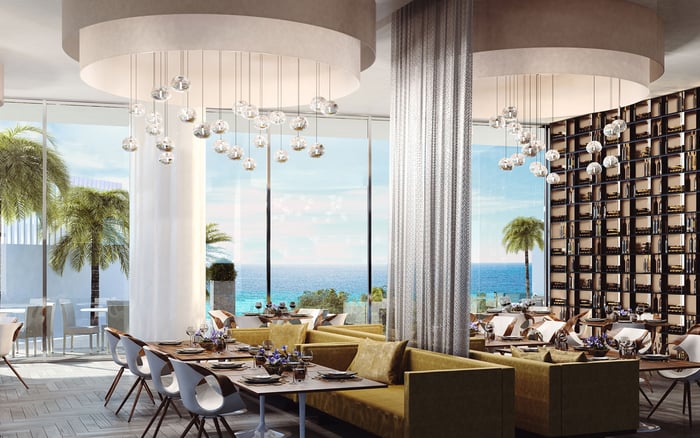
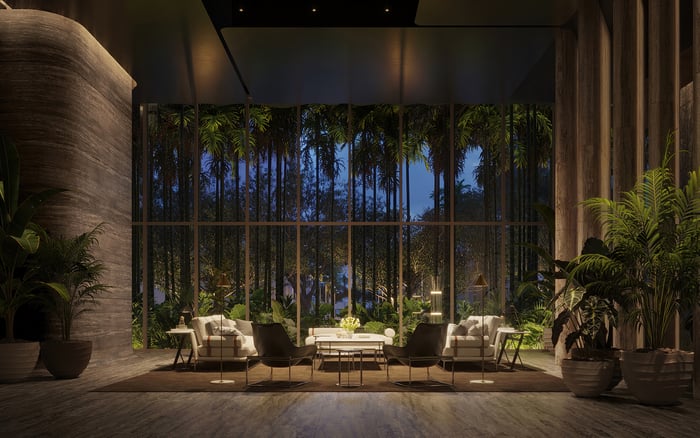
A disciplined framework for testing how 2200 Brickell may perform from curb to residence, with emphasis on privacy, service choreography, access control, and daily operational ease.
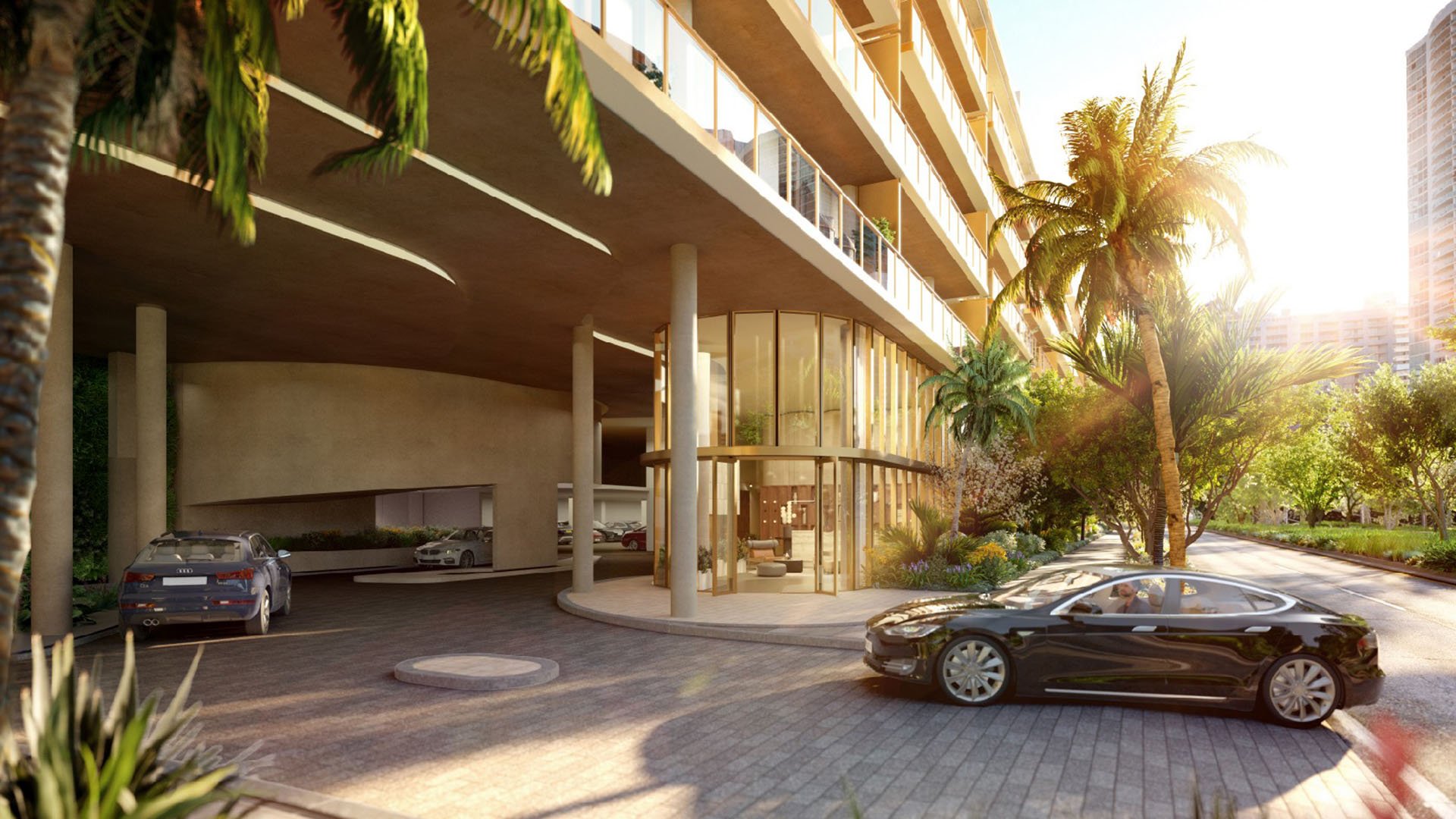
At a luxury residence, arrival is not simply the moment a car reaches the entrance. It is a sequence of transitions encompassing the street, vehicle handling, pedestrian access, reception, vertical circulation, and the home’s final threshold. Each transition can either preserve composure or introduce friction.
For buyers considering 2200 Brickell, the most useful approach is to assess that sequence as an operating system rather than a design vignette. Materials and lighting matter, but so do sightlines, wait times, staff positioning, access protocols, and the separation of residents from guests, deliveries, and vendors.
Begin outside. Observe how clearly a driver can identify the correct entry and how comfortably a vehicle can pause without creating pressure behind it. Ask what happens when several residents arrive at once, during rain, or while a delivery vehicle is being processed. A graceful entrance under ideal conditions is less revealing than its performance at a busy moment.
Continue through every threshold. Note where identities are confirmed, keys or vehicles change hands, guests wait, and residents enter shared circulation. The route should feel intuitive without feeling exposed. Walk it as a resident, then repeat it as a guest. Imagine making the journey with children, luggage, groceries, or a pet.
Privacy is rarely created by a single dramatic feature. It emerges from layered decisions involving visibility, access, acoustic separation, and staff discretion. At 2200 Brickell, buyers should ask who can see an arriving resident, who can enter each zone, and whether unrelated parties are likely to share the same path.
Study the relationship among the entrance, reception point, waiting areas, elevators, and residential corridors. Identify moments when names, unit destinations, conversations, or routines could become unnecessarily visible. Ask how guest authorization works and whether household staff, service providers, and deliveries follow distinct procedures.
For buyers comparing a boutique experience with larger alternatives, privacy should be evaluated operationally, not assumed from scale. Fewer residences may change traffic patterns, but the decisive questions concern access control, circulation, staffing, and enforcement.
A polished greeting is valuable, but service quality is better measured across ordinary days and imperfect situations. Buyers should understand which roles are present, what each team member is empowered to resolve, and how requests are recorded, escalated, and completed.
Ask practical questions. Who receives a guest when the expected team member is occupied? How are packages, food deliveries, contractors, and oversized items handled? What is the response path for a misplaced key, an after-hours arrival, or a resident who needs assistance between vehicle and residence?
The strongest service culture is calm and nearly invisible. It recognizes preferences without compromising confidentiality, anticipates recurring needs, and maintains standards across shifts. This is where lifestyle promises become measurable routines.
The resident entrance is only one part of the building’s daily choreography. Service access, loading activity, move procedures, waste handling, and contractor circulation can affect privacy and quiet, even when they remain out of view.
Request a clear explanation of how these flows intersect with resident areas. Determine where deliveries are held, how vendors are admitted, and whether move-ins are scheduled to reduce disruption. Buyers evaluating new construction should also ask which operating policies are fixed, which remain subject to refinement, and how future changes would be communicated.
Security warrants equally precise discussion. Focus on protocols rather than vague assurances: credential management, guest verification, lost-access procedures, camera coverage in common areas, and the handling of sensitive resident information.
A useful comparison keeps the questions constant. When touring Cipriani Residences Brickell, St. Regis® Residences Brickell, or Una Residences Brickell, trace the same curb-to-door route and present the same operating scenarios.
This prevents brand language or a dramatic lobby from dominating the decision. Score each option on vehicle ease, pedestrian clarity, guest handling, delivery separation, elevator transitions, acoustic calm, and staff accountability. Applied consistently, this framework turns an impression into a defensible comparison.
Allow enough time to walk slowly and revisit any ambiguous transition. If possible, experience the approach from more than one direction and consider how the sequence might feel at different times of day. Request policies in writing when they could materially affect privacy, access, staffing, or recurring routines.
The right residence should make arrival feel composed without requiring constant intervention. At 2200 Brickell, the buyer’s task is to determine whether architecture, operations, and service align from the public edge of Brickell to the private front door.
What is an arrival sequence in a luxury residence? It is the complete route from the street or vehicle entrance through access control, reception, elevators, corridors, and the residence door.
Why should buyers test the entrance during a busy period? Competing arrivals reveal whether vehicle flow, staffing, guest processing, and waiting areas remain composed under pressure.
How can a buyer evaluate privacy during a tour? Track who can observe, hear, or join each stage of the route, and ask how access is restricted at every threshold.
What should buyers ask about guest access? Ask how guests are authorized, verified, directed, and escorted, including the process for unexpected or after-hours visitors.
Are deliveries part of the privacy review? Yes. Their admission, holding, notification, and final handoff can materially affect resident exposure and common-area traffic.
How should service quality be judged? Focus on defined responsibilities, staffing continuity, response procedures, discretion, and the documented completion of requests.
Why inspect service and loading circulation? These routes can influence noise, congestion, security, and resident privacy, even when designed to remain discreet.
What access-control details matter most? Review credentials, guest verification, lost-access responses, common-area monitoring, and permissions for household staff and vendors.
How should 2200 Brickell be compared with other residences? Use identical scenarios and score each property on arrival ease, separation, privacy, service consistency, and accountability.
What should be confirmed before signing? Confirm the policies, responsibilities, costs, and procedures governing access, guests, deliveries, staffing, moves, and resident requests.
For a discreet conversation and a curated building-by-building shortlist, connect with MILLION.
If branded residences are on your mind — as a home or as an allocation — we would be glad to share what we are seeing, privately.
Begin a quiet conversation