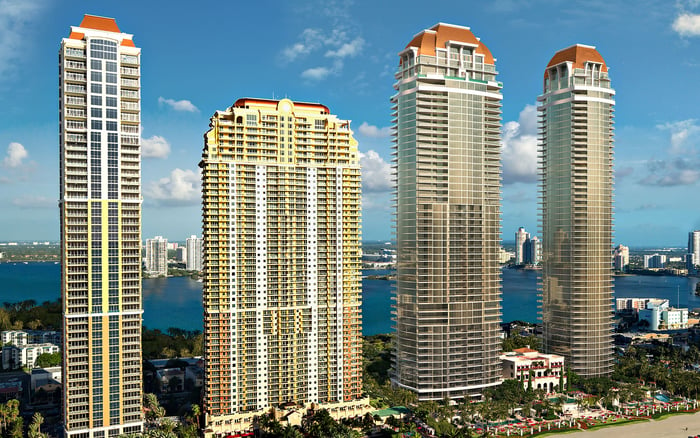
A discreet buyer’s guide to evaluating Acqualina and St. Regis residential positioning for fashion-week access near Bal Harbour, with emphasis on privacy, arrival choreography, service depth, and lifestyle continuity.

For South Florida’s luxury buyer, fashion-week access is not simply a matter of proximity. It is a matter of timing, discretion, arrival sequence, wardrobe readiness, security, and the ability to move from oceanfront calm to social intensity without friction. That is why the conversation around Acqualina residences and St. Regis-branded living near Bal Harbour feels so relevant for a particular owner: one who treats the residence as both sanctuary and operational base.
Bal Harbour has long occupied a distinct place in the region’s luxury imagination. It is polished, compact, and closely tied to the rituals of high fashion, fine dining, private shopping, and quiet social visibility. Yet many buyers who want access to that world do not necessarily want to live in the middle of every arrival. They want an address that lets them engage selectively, host elegantly, and retreat quickly.
That is where the northern oceanfront corridor becomes compelling. In buyer shorthand, the lifestyle may be described through terms such as Bal-harbour, Sunny Isles, Oceanfront, and Beach-access, but the real decision is more nuanced. The best residence is not always the closest one. It is the one that best supports the owner’s calendar.
An invitation is only the beginning. A fashion-week schedule can involve fittings, lunches, private appointments, evening presentations, after-hours dinners, and last-minute changes. For a primary resident, second-home owner, or seasonal guest, the residence has to absorb that pace without making it visible.
A serious buyer should evaluate three layers. First is movement: how efficiently a car can be called, staged, loaded, and received. Second is privacy: whether arrivals and departures can be handled with minimal exposure. Third is service intelligence: whether staff, management, and building protocols can anticipate needs without turning them into a production.
This is where the Acqualina and St. Regis comparison becomes less about logos and more about living systems. Both names evoke a high-service expectation, but a buyer should still ask practical questions. How are guests announced? Where do stylists, security, and drivers wait? Can deliveries be received without disrupting the residence? Is there a calm place to reset between events? Luxury is most persuasive when it removes the need to ask twice.
For buyers considering The Estates at Acqualina Sunny Isles, the draw is often oceanfront privacy paired with a highly serviced environment. The name sits naturally in conversations about Sunny Isles Beach, where many owners prioritize expansive water views, resort-style ease, and a measured distance from the denser pace of Miami Beach and Bal Harbour.
From a fashion-week perspective, that distance can be an advantage. A residence slightly removed from the immediate social core may offer a more restorative rhythm. The owner can prepare in privacy, arrive for the important moments, then return to a setting defined by quiet, water, and personal space.
The practical evaluation should focus on the details that matter during peak social periods. Consider the lobby sequence, valet choreography, elevator privacy, guest screening, and the ease of moving wardrobe pieces in and out. A beautiful residence becomes far more valuable when the building’s daily operations support a polished life without unnecessary exposure.
St. Regis carries its own associations: formality, ritual, service, and a hotel-born understanding of hospitality. For buyers weighing St. Regis® Residences Sunny Isles, the relevant question is how that service culture translates into private residential life. The answer matters because fashion-week access is not about constant spectacle. It is about being ready, composed, and precisely supported.
A St. Regis-oriented buyer may value structure. They may want clear protocols, refined common areas, polished arrival experiences, and a sense that the building understands high-profile guests without overperforming for them. In the best version of this lifestyle, service feels almost invisible. The car is ready, the guest is expected, the package has arrived, and the owner’s evening can proceed without a managerial interlude.
This is especially important for residents who split time among multiple homes. When a South Florida residence is used for concentrated social seasons, the building must function immediately. Owners do not want a learning curve. They want their preferences remembered and their privacy preserved.
The word perk can sound light, but at the top of the market it should be treated seriously. A valuable perk is not a novelty. It is a repeatable advantage that improves the owner’s life during real moments of pressure.
For fashion-week access, the strongest perks tend to fall into five categories. Arrival control comes first, because the difference between a graceful entrance and an irritating delay is often decided before the owner reaches the lobby. Privacy is second, especially for buyers who entertain recognizable guests or travel with stylists, family, assistants, or security. Third is amenity depth, not for spectacle, but for recovery: spa, fitness, pool, and quiet lounge environments that help residents move through a demanding schedule.
Fourth is hospitality memory. The most valuable service teams know preferences, patterns, and boundaries. Fifth is location balance. A residence should be close enough to Bal Harbour for convenience, yet serene enough to feel like a retreat. That balance can be more valuable than living at the center of the social map.
A polished sales presentation can make many properties feel similar. A disciplined buyer should walk the building as if arriving late for an event and returning after midnight. Where does the car wait? Who sees the resident? How far is the path from entrance to elevator? What happens if multiple guests arrive at once? Can staff manage overlapping needs with discretion?
Inside the residence, consider the backstage of luxury. Is there enough closet strategy for formalwear, resortwear, accessories, and luggage? Can the primary suite support preparation without clutter? Is there space for a stylist to work privately? Are there terraces or quiet rooms where guests can pause between commitments?
These questions are especially relevant in the Sunny Isles corridor, where many buyers are choosing between branded residential experiences, oceanfront towers, and larger private residences. The right decision is personal. A collector of fashion, a philanthropic host, and a low-visibility family office principal may all want Bal Harbour access, but each will define convenience differently.
The strongest fit is the buyer who values social access but does not want social dependency. They may attend the key moments, maintain relationships with boutiques and designers, and host selectively, yet they prefer to live in an environment that feels composed rather than performative.
This buyer also understands that service quality is revealed under pressure. A quiet Tuesday does not tell the full story. A building’s true character appears when cars stack, guests arrive early, deliveries are mistimed, and the owner still expects the evening to feel effortless.
For that reason, the Acqualina versus St. Regis conversation should not be reduced to brand preference alone. It should be framed around use case. If the residence will serve as a seasonal fashion-week base, the owner should prioritize operational elegance. If it will become a year-round home, the daily experience, beach rhythm, wellness offering, and privacy culture become equally important.
Is Bal Harbour access only about being closest to the shops? No. For luxury buyers, access also includes privacy, service timing, arrival flow, and the ability to retreat quickly after social commitments.
Why do buyers consider Sunny Isles for a Bal Harbour-oriented lifestyle? Sunny Isles can offer an oceanfront residential base with a calmer rhythm while keeping Bal Harbour within the broader luxury corridor.
What should I look for in an Acqualina-style residence? Focus on arrival privacy, service depth, residence scale, wardrobe functionality, and how well the building supports formal entertaining.
What should I look for in a St. Regis-style residence? Evaluate the consistency of service rituals, staff discretion, guest handling, and the ease of moving through the property without friction.
Are fashion-week perks the same as standard amenities? Not necessarily. The most useful perks are operational, such as discreet arrivals, staff coordination, privacy, and recovery-focused spaces.
Does Beach-access matter for fashion-week living? Yes. Beach-access can make a residence feel restorative during a packed social schedule, especially for owners who value wellness and quiet mornings.
Is Oceanfront living always better for this buyer profile? Oceanfront living is compelling for views, calm, and resort atmosphere, but the best choice depends on privacy, service, and personal routines.
Should I choose by brand name alone? No. Brand sets expectations, but the building’s day-to-day execution, staff culture, and physical layout determine the real residential experience.
How should second-home buyers think about this decision? They should prioritize residences that function immediately, with clear protocols, strong service memory, and minimal effort after arrival.
What is the best way to shortlist comparable options for touring? Start with location fit, delivery status, and daily lifestyle priorities, then compare stacks and elevations to validate views and privacy.
For a confidential assessment and a building-by-building shortlist, connect with MILLION.
If branded residences are on your mind — as a home or as an allocation — we would be glad to share what we are seeing, privately.
Begin a quiet conversation