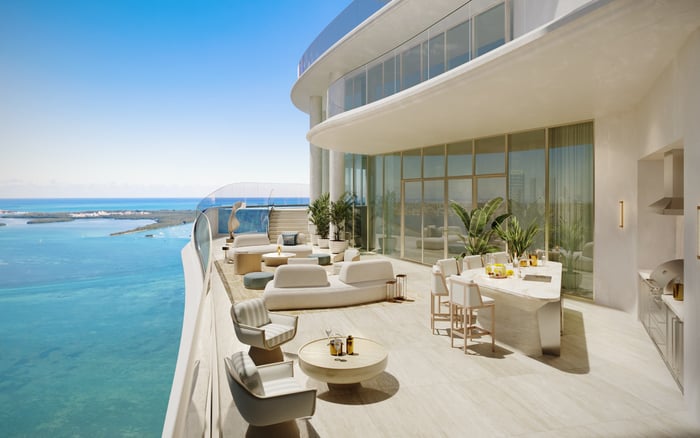
A buyer-oriented look at how luxury retail proximity shapes residential decision-making around Bal Harbour, Acqualina-style coastal living, and St. Regis shopping cues.
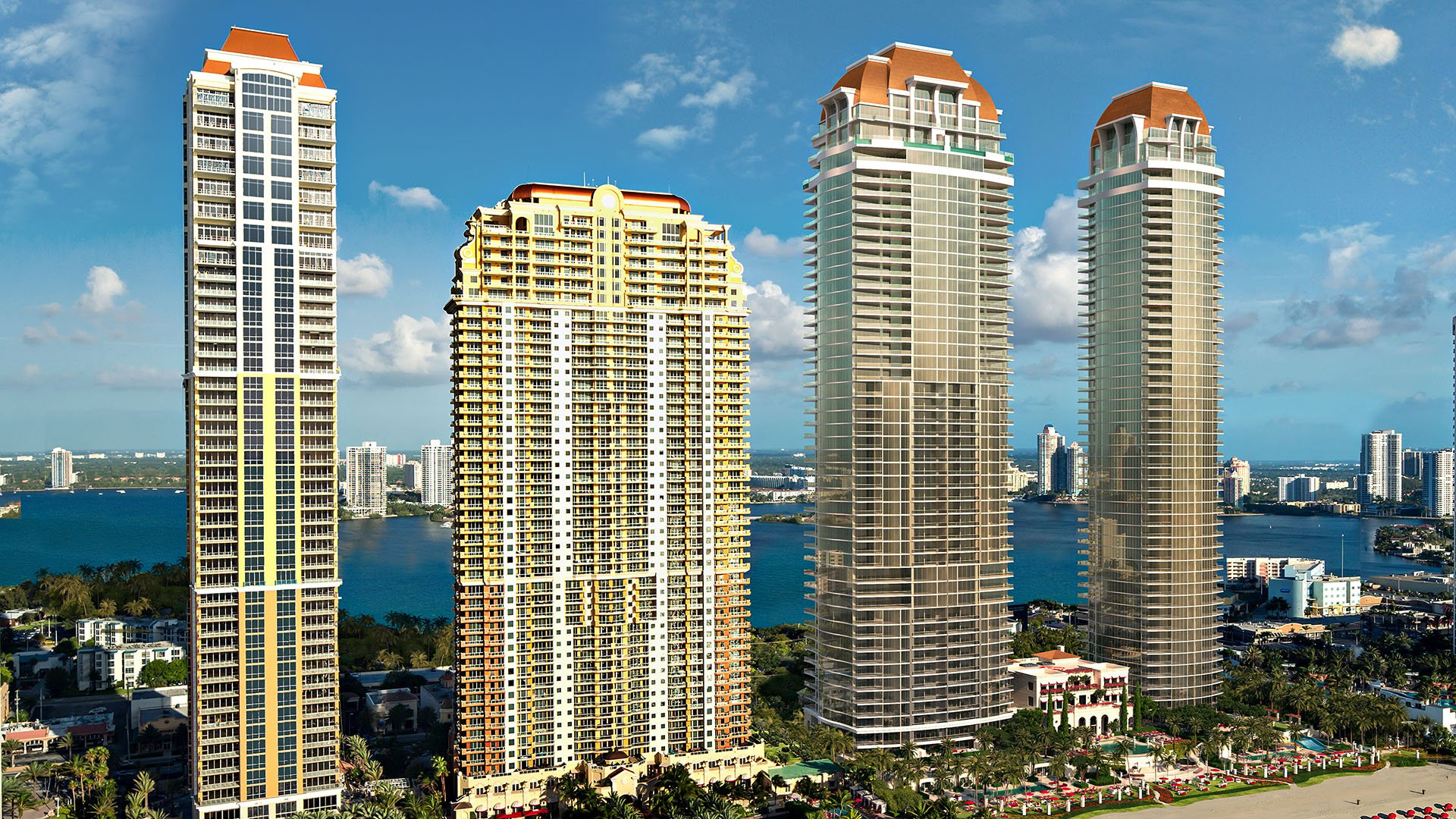
In South Florida’s most refined residential conversations, retail is no longer treated as an amenity outside the home. For a certain buyer, the ideal residence is measured not only by views, finishes, service, and privacy, but by the way daily life moves between home, wellness, dining, fashion, gifting, and social ritual. That is the deeper meaning behind Bal Harbour luxury retail integration: the home is expected to sit within a lifestyle circuit that feels seamless, discreet, and meticulously controlled.
The pairing of Acqualina Residences and The St. Regis shopping points to a broader buyer question rather than a single checklist item. How close should a residence be to the highest tier of retail? How should arrival, privacy, concierge coordination, valet movement, and family routines work together? And when a buyer is considering the coast from Bal Harbour to Sunny Isles, what kind of retail adjacency actually supports long-term enjoyment?
For MILLION readers, the answer is rarely as simple as being nearest to a boutique door. The true premium is the absence of friction.
Retail integration is often mistaken for convenience. Convenience matters, but the luxury version is more exacting. It is about whether a residence allows an owner to move through the day with minimal exposure, maximum control, and no sense of compromise. A quick errand, a private fitting, a dinner reservation, a jewelry consultation, or a last-minute gift should not feel like a production.
This is why buyers evaluate the entire sequence: leaving the residence, reaching the retail environment, parking or being driven, returning with discretion, and coordinating household staff or concierge support if needed. The residence does not need to be physically attached to retail to participate in this lifestyle. It needs to be well positioned within a polished network of services, routes, and preferences.
That distinction is important. A highly private oceanfront home may be more compelling than a more visible address if its access pattern is calmer, its arrival sequence is dignified, and its staff can support the owner’s rhythm. In this sense, oceanfront living and luxury retail access are complementary rather than competing priorities.
Bal Harbour functions as more than a place name in the luxury market. It signals restraint, selectivity, and a preference for established elegance over spectacle. Buyers who prioritize Bal Harbour are often not seeking constant activity. They are seeking the ability to engage with a rarefied retail and dining world on their own terms, then retreat quickly to a private residential environment.
This mindset rewards buildings and homes that understand the difference between visibility and access. A residence can be close to a coveted shopping destination without feeling public. It can offer social proximity without sacrificing quiet. It can support an owner who wants to be minutes from the experience, yet insulated from the performance of being seen.
Search language often reflects this layered geography. Terms such as Bal Harbour, Oceana Bal Harbour, Sunny Isles, The Estates at Acqualina Sunny Isles, and St. Regis® Residences Brickell cluster around buyers who are not merely shopping for a unit. They are mapping a way of life between beach, retail, service, wellness, and private entertaining.
Acqualina and St. Regis each evoke a specific expectation in the luxury buyer’s mind: hospitality-level service, refined arrival, brand discipline, and an assumption that the small details should already be solved. Whether a buyer is focused on an Acqualina-associated lifestyle in Sunny Isles or a St. Regis-inflected residential experience, the underlying demand is similar. The residence must feel managed, elegant, and responsive.
That expectation extends directly into retail behavior. A buyer accustomed to high-touch residential service will expect the shopping experience to be equally orchestrated. They may value private appointments, streamlined access, special deliveries, wardrobe support, or a concierge who understands timing and discretion. The residence becomes the base of operations for a larger luxury ecosystem.
This is where retail integration becomes soft infrastructure. It is not just roads and distance. It is habit, recognition, trust, and predictability. The best fit is the address that makes the buyer’s preferred routine feel natural.
A retail-oriented buyer should begin with lifestyle sequencing. How often will the household use luxury shopping, dining, wellness, or social venues? Will the residence be used seasonally, full time, or as a second-home base? Is the priority family convenience, private entertaining, personal shopping, or proximity to a broader network of coastal destinations?
Then comes access quality. A short distance can feel long if traffic patterns, valet queues, or exposed arrivals undermine the experience. A slightly longer route may be preferable if it is predictable, calm, and compatible with a chauffeured lifestyle. For some buyers, the most valuable feature is not being closest. It is being able to move with consistency.
Privacy should be weighed with equal seriousness. Retail proximity naturally brings energy. The right residence captures the benefit of that energy while preserving a sense of separation. Buyers should look carefully at arrival courts, garage access, lobby visibility, elevator flow, and how staff interface with residents and guests. These details shape daily comfort more than any marketing phrase.
Luxury retail adjacency can support resale appeal because it speaks to a durable preference: sophisticated buyers want ease without dilution of privacy. However, the premium is strongest when the residence itself is exceptional. Retail access cannot compensate for weak views, awkward layouts, limited outdoor living, or a building culture that does not match the buyer’s expectations.
The best long-term positioning usually combines three elements. First, a residence with architectural and service quality that stands on its own. Second, a location that makes high-end retail and dining feel accessible without intruding on daily calm. Third, a brand or building identity that will still read as desirable when trends change.
For investors and end users alike, the question is not whether retail is nearby. The sharper question is whether retail proximity reinforces the property’s core identity. When it does, the lifestyle story becomes easier to understand, easier to live, and easier to explain to a future buyer.
During a showing, buyers should test the day rather than simply tour the residence. Arrive as you would arrive in real life. Ask how packages, wardrobe deliveries, guests, drivers, and service providers are handled. Observe whether the path from vehicle to residence feels composed. Notice whether the building’s public spaces feel serene or overly theatrical.
If retail access is part of the acquisition thesis, complete the route at the time of day you expect to use it. A morning coffee run, a late-afternoon appointment, and an evening dinner reservation can each reveal different patterns. The point is not to chase perfection. The point is to know whether the residence supports your preferred tempo.
This is especially important along the coastal corridor, where buyers compare branded residences, established oceanfront buildings, and new-construction offerings. The right answer is personal, but the evaluation should be disciplined.
Does retail proximity always increase luxury residential value? Not always. It is most valuable when it enhances daily life without compromising privacy, views, service, or arrival quality.
Is being closest to shopping the best strategy? Not necessarily. Predictable access, discretion, and a calm residential setting can matter more than absolute distance.
How should buyers compare Bal Harbour and Sunny Isles? Buyers should compare lifestyle rhythm, privacy, building culture, service expectations, and the ease of reaching preferred retail and dining destinations.
Why do Acqualina and St. Regis matter in this conversation? They represent the branded-service expectations many luxury buyers associate with polished coastal living and curated daily routines.
What should a buyer test during a showing? Test arrival, valet or garage flow, elevator privacy, package handling, guest access, and the actual route to preferred retail destinations.
Can retail access conflict with privacy? Yes. The strongest residences capture the convenience of nearby activity while preserving quiet, controlled entries and private resident circulation.
Is this more important for seasonal owners? It can be. Seasonal owners often place a premium on efficiency, concierge coordination, and immediate access to dining, shopping, and services.
Should investors consider retail integration? Yes, but only as one part of the thesis. The residence must also have durable design, service quality, and a compelling location profile.
What is the biggest mistake buyers make? Focusing on proximity alone. The better measure is how elegantly the property supports the owner’s actual daily routine.
What is the best way to shortlist comparable options for touring? Start with location fit, delivery status, and daily lifestyle priorities, then compare stacks and elevations to validate views and privacy.
For a discreet conversation and a curated building-by-building shortlist, connect with MILLION.
If branded residences are on your mind — as a home or as an allocation — we would be glad to share what we are seeing, privately.
Begin a quiet conversation