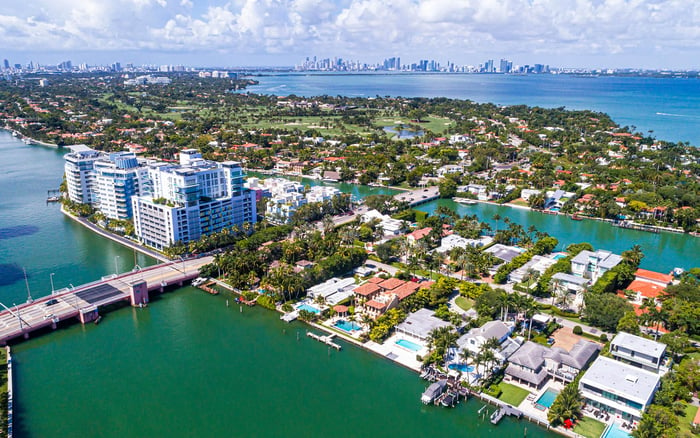
A disciplined acquisition review of Palazzo del Sol should look beyond the residence to contract mechanics, association governance, shared obligations, insurance structure, and Fisher Island access.

Palazzo del Sol Fisher Island occupies a distinctive position in Miami’s ultra-prime condominium market. The mid-rise, low-density property offers expansive three- to seven-bedroom configurations, substantial private terraces, private elevator access, and, in many residences, direct waterfront exposure. Its setting on Fisher Island, a controlled-access island off the southern tip of Miami Beach, further reinforces its privacy proposition.
For a family office, however, the residence is only one component of the acquisition. The full exposure encompasses the contract, condominium association, shared capital obligations, insurance program, access logistics, and the island’s broader governance environment. Lifestyle underwriting and institutional diligence must meet.
A rare address does not reduce the need for documentation; it increases the value of precise review. The Palazzo del Sol proposition should therefore be assessed as both a private home and a long-duration interest in a small residential enterprise.
The diligence file should begin with the declaration of condominium, bylaws, rules and regulations, amendments, current budget, recent audited financial statements, reserve materials, engineering and inspection records, insurance schedules, pending-litigation disclosures, and recent board minutes. Fisher Island master-association documents should be reviewed alongside the building-level package, not treated as a separate administrative detail.
Counsel should map approval rights, leasing restrictions, transfer procedures, use limitations, voting provisions, maintenance boundaries, and expense allocations. The review should distinguish among obligations belonging to the unit owner, the condominium association, and any island-level entity. That allocation can matter as much as the headline purchase price.
Comparable island options can sharpen the inquiry without replacing asset-specific records. Palazzo della Luna provides another Fisher Island reference point, while The Residences at Six Fisher Island can help frame questions around newer residential offerings. Each property demands its own document review.
No project-specific deposit terms are established here. The family office should treat every deposit amount, deadline, escrow arrangement, financing condition, default remedy, and closing adjustment as contract-specific. The signed agreement and escrow instructions must govern the analysis.
Before funds move, the acquisition team should identify the escrow holder, independently verify wiring procedures, calendar every contingency, and assign internal authority for notices and amendments. Counsel should examine the consequences if diligence is unsatisfactory, closing is delayed, association approval is not obtained, or a representation proves inaccurate. Treasury controls should also address fraud prevention and dual authorization.
Palazzo del Sol’s limited residence count supports privacy and exclusivity, but it also concentrates shared financial responsibility among fewer owners than a large mainland tower. Operating costs and capital obligations are distributed across a smaller ownership pool. This does not establish that costs are excessive; it makes the quality of budgeting, reserves, collection practices, and board decision-making especially consequential.
Minutes should be reviewed for recurring maintenance concerns, vendor disputes, owner delinquencies, proposed capital work, rule changes, and assessment discussions. Financial analysis should compare budgeted and actual spending, identify material receivables, and distinguish routine operations from anticipated capital needs. A family office may also wish to understand the concentration of voting influence and the procedures governing major expenditures.
For households considering a different ownership format on the island, The Links Estates at Fisher Island offers a useful contrast between condominium living and estate-style positioning. The comparison is strategic, not interchangeable: governance, maintenance, and insurance responsibilities can differ by ownership structure.
A proper insurance review goes beyond confirming that policies exist. The diligence team should obtain current declarations and schedules, then evaluate covered property, limits, deductibles, exclusions, named-storm provisions, flood treatment, loss-assessment implications, claims history, and the division between association and owner coverage. Any umbrella or excess layers should be reconciled with the primary program.
The owner’s adviser should test how a deductible or uninsured loss could flow through to an individual residence. The analysis should also coordinate building coverage with the buyer’s unit policy, contents, improvements, valuables, liability, and occupancy pattern. The waterfront location and substantial terrace areas make maintenance boundaries and water-intrusion responsibilities important subjects for counsel, engineers, and insurance advisers.
Fisher Island access depends primarily on private ferry or marine transportation. The island’s broader amenity environment includes a private club, golf facilities, and a marina, but acquisition diligence should distinguish residence ownership from any separate access, membership, fee, or use arrangements documented by the relevant entities.
The family office should model how staff, guests, contractors, deliveries, emergency planning, and vehicle movements function in practice. For a second home, these details affect household operations even when the residence is unoccupied. The final investment memorandum should record both financial exposures and operational dependencies.
The investment committee should require a closing memorandum summarizing title and contract status, deposit controls, association finances, reserves, planned work, insurance gaps, litigation, governance findings, and unresolved questions. Each material issue should have a named owner, deadline, and proposed remedy-whether a contract amendment, insurance solution, reserve for future costs, or decision not to proceed.
The objective is not to eliminate every uncertainty. It is to ensure that privacy, architecture, waterfront setting, and island amenities are evaluated alongside the obligations that preserve them.
What is Palazzo del Sol? It is a low-density, mid-rise luxury waterfront condominium on Fisher Island in Miami.
What residence sizes are typical? Configurations generally range from three to seven bedrooms, with expansive floor plans designed for the ultra-luxury market.
Which documents should a buyer request first? Begin with the declaration, bylaws, rules, amendments, budgets, financial statements, reserve materials, board minutes, inspection records, and insurance schedules.
Are deposit terms standardized? Deposit amounts, timing, escrow mechanics, and remedies should be confirmed in the specific purchase contract and escrow instructions.
Why does low density matter financially? Shared operating and capital obligations are allocated across a smaller ownership pool than in a large condominium tower.
What should board minutes reveal? Review them for maintenance issues, capital projects, delinquencies, disputes, assessments, rule changes, and major vendor decisions.
How should insurance be evaluated? Examine limits, deductibles, exclusions, claims history, named-storm and flood treatment, excess layers, and owner-association coverage boundaries.
Does unit insurance replace association coverage? No. The two programs should be coordinated so that improvements, contents, liability, deductibles, and potential gaps are understood.
Why review island-level documents? They may govern access, shared obligations, procedures, or amenities beyond the condominium association’s direct control.
What should the investment committee receive before closing? A concise memorandum should identify material findings, unresolved exposures, responsible advisers, deadlines, and proposed mitigants.
When you're ready to tour or underwrite the options, connect with MILLION.
If branded residences are on your mind — as a home or as an allocation — we would be glad to share what we are seeing, privately.
Begin a quiet conversation