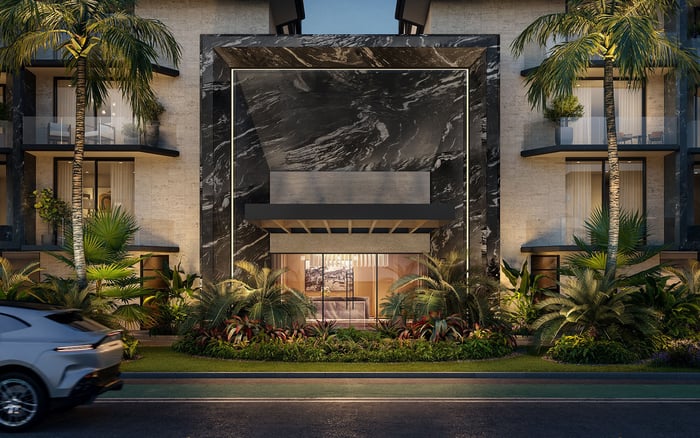
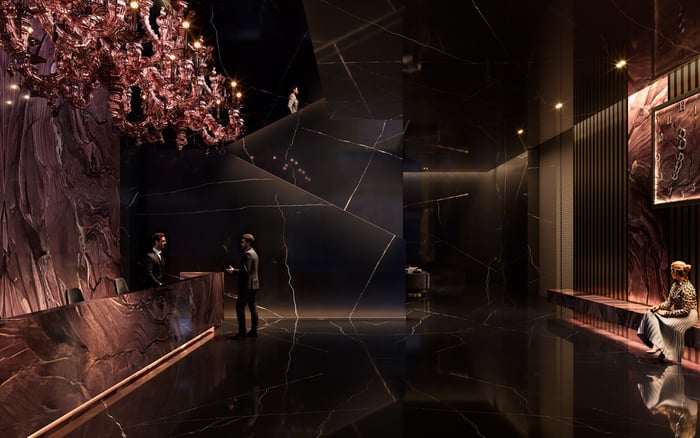
Colette Residences Brickell invites a more exacting definition of privacy. For 2026 buyers, the decisive questions concern elevator programming, visitor permissions, service circulation, rental controls, and the durability of governance after ownership transfers.

For the 2026 buyer, privacy in a vertical residence is not simply a beautiful arrival or a quiet elevator ride. It is a chain of controlled decisions extending from the lobby to the residence, service areas, guest credentials, leasing policy, and association enforcement.
That makes Colette Residences Brickell a compelling subject for disciplined review. For buyers evaluating Colette in Brickell, the central question is practical: can controlled circulation preserve privacy without diminishing the lifestyle advantages of the neighborhood?
The phrase “private elevator” can describe materially different arrangements. A car may open directly into a residence, a private foyer, or a vestibule shared with another home. Each configuration creates a distinct relationship among security, convenience, acoustic separation, and accidental encounters.
Buyers should request drawings and written programming details identifying the elevator’s precise destination. The review should also establish whether access is exclusive, restricted by credential, or simply designed for relatively low traffic. Renderings can convey an atmosphere, but they do not establish operating protocols.
A second-home buyer should apply the same standard as a full-time resident. If the residence will be periodically vacant, credential administration, guest authorization, staff access, and the cancellation of outdated permissions become even more important.
Floor-access controls matter as much as the elevator itself. Residents, guests, household staff, vendors, contractors, and management personnel may receive different permissions, and those distinctions define the tower’s lived privacy.
A buyer should ask how visitors are authenticated, who authorizes each trip to a residential floor, and whether access is limited by floor, residence, date, or time. The inquiry should extend beyond guests. Packages, deliveries, move-ins, maintenance visits, and domestic staff can materially alter elevator traffic if they share resident circulation.
The ideal review traces each journey from entry to destination. It should determine whether service functions use separate elevators and what happens when a service car is unavailable. Privacy is strongest when routine operations and exception procedures are equally clear.
An exclusive-feeling system can still disappoint if its capacity is poorly matched to demand. Elevator count, zoning, car capacity, estimated peak wait times, and backup power are all material considerations in a vertical neighborhood.
Buyers should examine morning demand, evening arrivals, large deliveries, contractor access, and move-in scheduling. They should also ask how the building operates during maintenance or a power interruption. These questions do not reduce luxury to engineering; they reveal whether the promised experience can withstand ordinary pressure.
The same framework is useful when considering other Brickell residences, including The Residences at 1428 Brickell and Cipriani Residences Brickell. The objective is not to assume identical systems, but to assess each property through the same operational lens.
Architecture establishes the possibility of privacy. Governance determines whether it endures. Condominium declarations, bylaws, rules, budgets, and management agreements should be examined for the mechanisms that support controlled access after turnover.
Rental policy deserves particular attention. Minimum lease terms and annual leasing limits can influence turnover, while guest-registration procedures, key credentials, access logs, and short-term-occupancy rules shape whether a property feels residential or transient. Investment analysis should therefore account for both flexibility and the effect repeated occupancy changes may have on shared spaces.
Enforcement powers are equally consequential. Buyers should identify available remedies, responsibility for credential misuse, and the process for addressing repeated violations. Amendment thresholds also matter because future boards may seek to change leasing, guest, or access policies. A low unit count or refined design cannot substitute for enforceable rules.
A meaningful comparison should consider the residential culture each buyer wants to preserve. St. Regis® Residences Brickell can be included in a broader Brickell review, but no project name can replace document-level diligence.
Some owners prioritize tightly managed guest movement. Others place greater weight on effortless hospitality, household staffing, or leasing flexibility. The right choice is not the building with the most restrictive language. It is the one whose permissions, service routes, and governance align with the owner’s daily life while remaining workable for management.
Before committing, buyers should seek written confirmation of elevator programming and access protocols. The file should include offering materials, proposed or recorded condominium documents, rules and regulations, the budget, elevator plans, and the management agreement, as applicable.
Counsel and technical advisers can then compare sales representations with controlling documents. Any unresolved point should be framed as a direct operational question: who may go where, by which route, with whose authorization, under what rule, and with what remedy if that rule is breached?
Does private-elevator access always mean the elevator opens inside the residence? No. It may open into a private foyer or shared vestibule, so buyers should verify the exact destination.
Why are floor-access permissions so important? They determine whether residents, visitors, staff, and vendors can reach only authorized floors and areas.
Should visitor trips require resident approval? Buyers should confirm the authentication process and whether each trip to a residential floor requires specific resident authorization.
What should buyers ask about deliveries and household staff? Ask whether packages, staff, contractors, move-ins, and deliveries use separate service circulation.
Which elevator performance details deserve review? Review elevator count, zoning, capacity, backup power, estimated peak waits, and procedures during maintenance.
How can leasing policy affect privacy? Frequent turnover can weaken residential continuity, making minimum lease terms and annual leasing limits material.
Which occupancy controls help a building feel residential? Guest registration, key credentials, access logs, and short-term-occupancy rules all influence the building’s character.
Why do amendment thresholds matter? They indicate how readily future boards or owners may change access, guest, or leasing policies.
Are sales presentations sufficient evidence of elevator privacy? No. Buyers should obtain written confirmation and compare it with plans and governing documents.
What is the core 2026 test for Colette? Determine whether controlled circulation and durable governance can coexist with the social advantages of Brickell.
For a discreet conversation and a curated building-by-building shortlist, connect with MILLION.
If branded residences are on your mind — as a home or as an allocation — we would be glad to share what we are seeing, privately.
Begin a quiet conversation