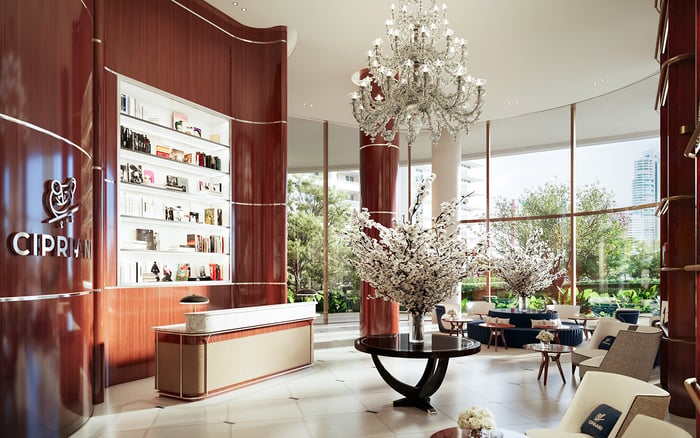
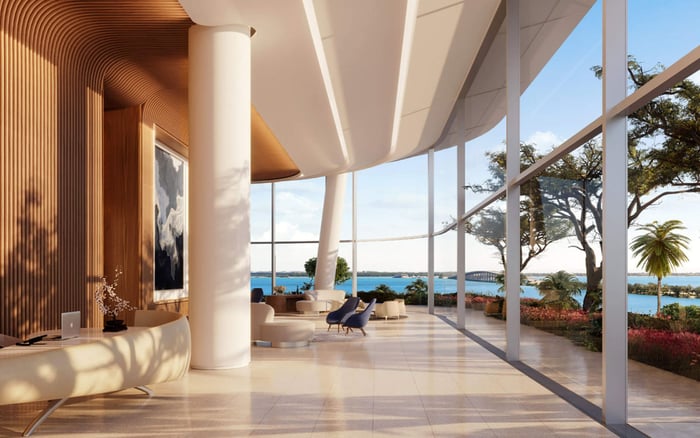
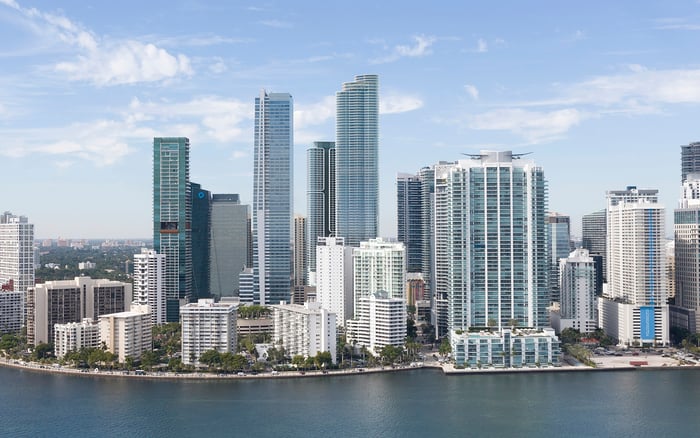
Baccarat Residences Brickell places the branded-residence premium under a sharper 2026 lens: not whether the building feels luxurious, but whether its private-club-style promise remains sufficiently exclusive when buyers evaluate access, capacity, rules, and long-term operating costs.
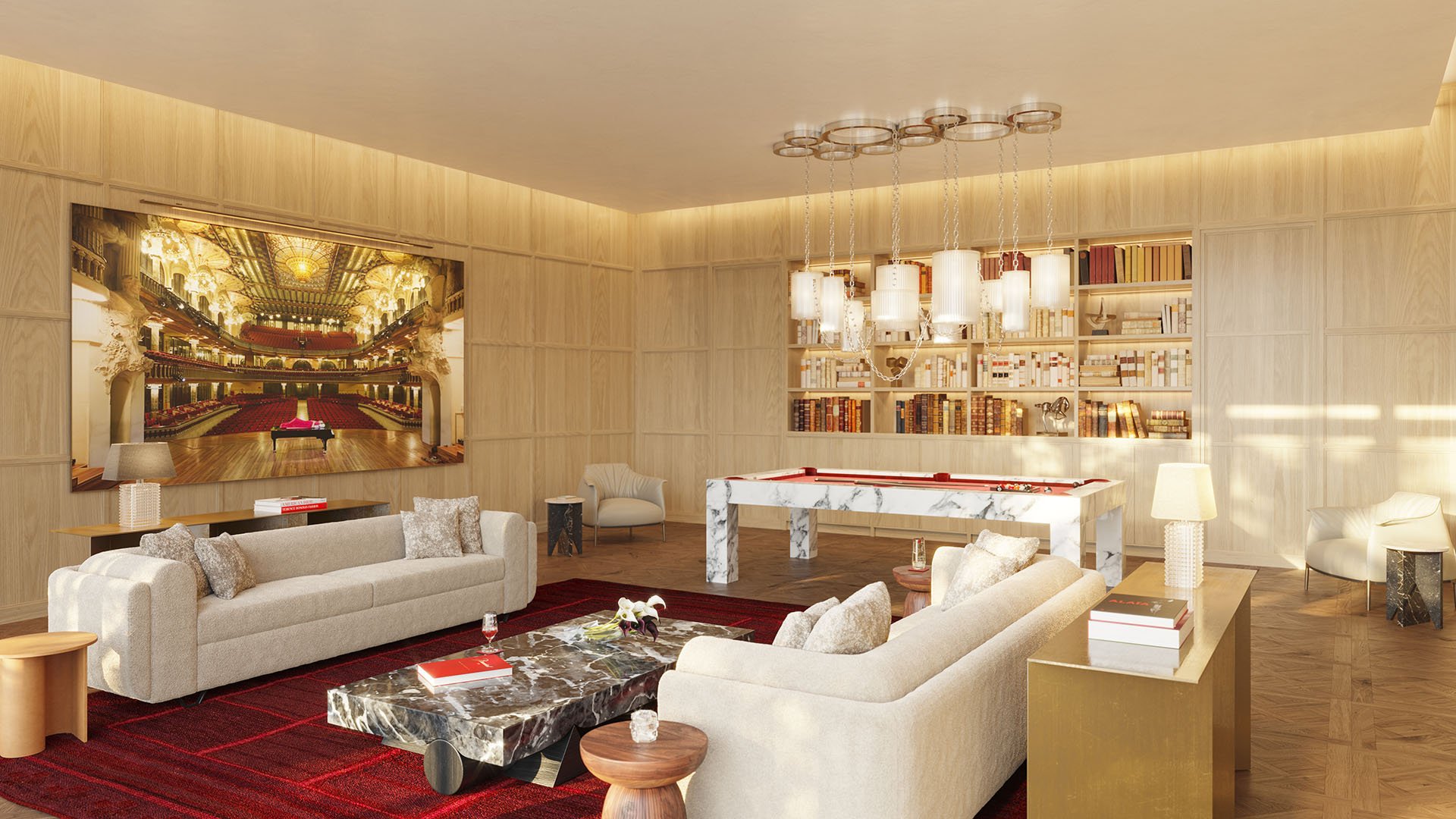
Baccarat Residences Brickell enters the conversation at a moment when Miami’s branded-condominium market is no longer judged by name recognition alone. For a certain buyer, the brand may open the door. It does not complete the diligence. In 2026, the sharper question is whether the private-club-style promise attached to a residence remains meaningfully scarce once every eligible user is counted.
The project sits within Miami’s Brickell market, where buyers often weigh hospitality-style service, elevated design language, and club-like amenities against the realities of day-to-day access. The issue for sophisticated buyers is not whether that proposition is attractive. It is whether the access structure protects the quiet, frictionless experience that ultra-premium buyers believe they are purchasing.
That distinction matters because branded residences have matured. A buyer comparing Baccarat Residences Brickell with other club-oriented or design-led properties is not merely comparing finishes. They are comparing operating systems: who may enter, when they may use the best spaces, how reservations are prioritized, and whether residents hold a true hierarchy over guests, club users, or other overlapping constituencies.
Private-club language is powerful because it suggests scarcity. It implies recognition, convenience, privacy, and a controlled social environment. But a club promise can mean very different things in practice. A lounge reserved only for residents has one valuation profile. A dining room with broader guest access has another. A spa, cinema, wellness area, or pool governed by tiered reservation rules may feel exclusive on paper yet constrained in peak-use moments.
For buyers, the central test is capacity. Amenity space can be spectacular and still become less valuable if too many user groups depend on it. When residents, guests, and club participants overlap, the experience can shift from private ease to managed access. That does not automatically diminish a building. It simply changes the due-diligence standard.
The strongest buyers will ask practical questions before emotional ones. Is the amenity resident-only, guest-accessible, or subject to priority windows? Are there caps on daily visitors? Can owners reserve prime dining or wellness times ahead of others? Are certain areas physically or operationally separated between residential and broader hospitality-style functions? These questions are less glamorous than brand storytelling, but they sit closer to how value is protected.
Brickell has evolved into one of Miami’s most closely watched luxury vertical markets, and its growing supply gives buyers more reasons to compare details. A brand that once stood almost alone in a buyer’s imagination now sits within a broader field of branded, amenitized, and service-led towers. That shift raises the burden of proof.
New-construction buyers in Brickell are increasingly fluent in the language of service menus, amenity decks, arrival sequences, and operating budgets. They know that a private elevator, curated lobby, or dramatic lounge is only part of the equation. They also understand that the day-to-day experience depends on staffing, scheduling, governance, and the cost structure supporting the amenities.
This is where comparable names become useful, not as direct substitutes, but as reference points. Cipriani Residences Brickell belongs in the broader conversation because it reflects how hospitality identity can shape residential expectations. One Thousand Museum Downtown Miami offers another reference in the high-design, ultra-luxury condominium category. Porsche Design Tower is also part of the mental map for buyers evaluating how a distinctive brand proposition translates into lived ownership.
The Baccarat question is therefore precise: does the brand create an environment that feels limited, curated, and privileged in actual use, or does the private-club concept rely too heavily on a broad pool of eligible users?
The most important documents are rarely the most seductive ones. Buyers should review the governing documents, reservation policies, guest privileges, usage caps, and any separation between residential and hospitality-style operations. The goal is not to search for a flaw. It is to understand the exact bargain being purchased.
If ownership is marketed with access to Baccarat-branded club or amenity facilities, buyers should determine whether that access is included, conditional, transferable, limited by membership category, or subject to change. They should also ask who controls rules over time. A beautifully written amenity program is strongest when supported by enforceable resident priorities and transparent operating procedures.
Guest privileges deserve particular attention. Luxury buyers often host family, business associates, and seasonal visitors. Yet generous guest access can also produce crowding if not carefully governed. The most resilient buildings tend to balance hospitality with control, allowing owners to entertain without making premium amenities feel public.
Reservation architecture is equally important. Priority booking, cancellation rules, blackout periods, peak-hour limitations, and private-event policies all affect how often residents can use the spaces they are paying to maintain. In a branded building, the difference between theoretical access and reliable access can become central to owner satisfaction.
Hotel-style service and private-club-style amenities do not operate themselves. Staffing, maintenance, programming, wellness operations, dining support, security, and cleaning can influence long-term carrying costs for condominium owners. For a buyer at this level, the question is not simply whether fees are high or low. It is whether the fees correspond to a durable, protected experience.
A premium monthly cost can be rational if it sustains service quality, limits friction, and maintains resident priority. The same cost can feel exposed if amenities are shared too broadly or operational responsibilities are unclear. Buyers should understand who pays for what, which expenses are allocated to residential owners, and whether nonresident use contributes meaningfully to the cost base.
This is the quiet financial side of the branded-residence premium. The crystal image, the concierge touch, the lounge culture, and the spa experience all sit on an operating platform. In 2026, the strongest buyers will underwrite that platform as carefully as they underwrite views, floor height, and floor plan.
The right buyer test is not skeptical for its own sake. It is disciplined. Baccarat Residences Brickell may appeal precisely because it offers a refined brand identity in a central Brickell setting, with hospitality-style service and amenities that speak to a private-club lifestyle. The question is whether the legal and operational framework preserves that lifestyle when demand is highest.
For buyers who value energy, service, and a cosmopolitan social setting, some degree of overlap may be acceptable or even desirable. For buyers seeking maximum seclusion, any shared-access structure may require closer scrutiny. Neither position is inherently right. The point is alignment.
In the next phase of Brickell luxury, the premium will likely belong to residences that can prove not only that their amenities are beautiful, but that they are usable, prioritized, and protected. Baccarat Residences Brickell is therefore more than a branded-condo offering. It is a buyer test for the entire private-club promise in Miami residential real estate.
What is the main buyer issue at Baccarat Residences Brickell? The key issue is whether private-club-style access remains genuinely exclusive or becomes diluted by overlapping user groups.
Why does amenity access matter so much in 2026? As branded luxury supply grows, buyers are looking beyond design and asking how often they can reliably use premium spaces.
Which amenities should buyers examine most closely? Buyers should review access to pool, wellness, spa, dining, cinema, and lounge-style spaces, including reservation rules.
Are shared amenities automatically a negative? No. Shared amenities can work well when priority, capacity, guest access, and cost allocation are clearly governed.
What documents should buyers review before purchasing? Buyers should examine governing documents, reservation policies, guest privileges, usage caps, and operating separations.
Why are maintenance fees important in a branded residence? Hotel-style staffing and premium amenities can increase carrying costs, so buyers should understand what those fees support.
How does Brickell’s luxury supply affect Baccarat’s positioning? More high-end choices make buyers more selective about exclusivity, resident priority, and branded-residence premiums.
How do comparable branded properties fit into the analysis? Properties such as Cipriani Residences Brickell and One Thousand Museum Downtown Miami help frame buyer expectations.
What type of buyer may be best suited to this model? A buyer who values service, brand identity, and social energy may appreciate it, provided the access rules fit their lifestyle.
What is the best way to shortlist comparable options for touring? Start with location fit, delivery status, and daily lifestyle priorities, then compare stacks and elevations to validate views and privacy.
To compare the best-fit options with clarity, connect with MILLION.
If branded residences are on your mind — as a home or as an allocation — we would be glad to share what we are seeing, privately.
Begin a quiet conversation